Bitcoin, gold and the debt ceiling — Does something have to give?

CointelegraphОпубліковано о 2023-05-19Востаннє оновлено о 2023-05-19

Анотація

Bitcoin bulls are in a better position as there has been weak demand from short-sellers and no sign of excessive leverage from buyers. In other words, Bitcoin’s market structure is bullish, so odds favor a rally toward $28,000 if the U.S. debt ceiling stand-off continues.

Bitcoin (BTC) has been trying to break above the $27,500 resistance for the past week, but to no avail. One of the reasons limiting Bitcoin’s upside is the risk of an eventual U.S. default as the government struggles to get the debt limit increase approved in Congress. 
Still, some analysts and investors argue that the U.S. debt ceiling standoff is merely a "show" because, ultimately, additional money will hit the markets.
The US Debt Ceiling talks are all show.

They're going to print the dollar into oblivion.

You need to own hard assets to protect your wealth.#Bitcoin is the fastest horse in the race.
— MacroJack (@macrojack21) May 17, 2023
Notice how MacroJack correlates Bitcoin’s digital scarcity to the next logical step: additional inflationary pressure. The stimulus measures, meaning, increasing the government debt limit, might initially sound positive because they avoid a default and favor more economic activity. However, the unintended consequences are future budget constraints as the debt interest payment increases.
Bitcoin price increases while gold breaks a 45-day low
Bitcoin’s gains above $27,000 happened while gold traded down 2.5% from May 15 to May 18, reaching its lowest level in 45 days at $1,970. Meanwhile, the U.S. Dollar Index (DYX), which measures the currency against a basket of foreign exchanges, reached its highest level in 2 months on May 18, meaning the U.S. currency gained strength relative to its global peers.
This data should not be interpreted as a vote of confidence in the government's ability to avoid a shutdown, as the global economy would be negatively impacted in the event of a U.S. debt default. For instance, Eurozone members hold $1.54 trillion in U.S. Treasuries, followed by Japan’s $1.1 trillion, China’s $860 billion and the United Kingdom’s $668 billion.
Strong macroeconomic data explains the resilience of equities markets
While the global economy may deteriorate in the coming months, recent macroeconomic data has been mostly positive, causing the S&P 500 index to hold modest gains in May, standing merely 13% below its all-time high.
For instance, China’s retail sales grew 18.4% year-over-year in April, while the Eurozone's first quarter gross domestic product increased by 1.3% versus the previous year. In the U.S., retail sales rose 0.5% year-over-year in April, slightly lower than expected but far from being a recession indicator.
Let’s look at Bitcoin derivatives metrics to better understand how professional traders are positioned in the current market environment.
Bitcoin margin and futures favor bullish momentum
Margin markets provide insight into how professional traders are positioned because they allow investors to borrow cryptocurrency to leverage their positions.
Traders can increase their exposure by borrowing stablecoins to buy Bitcoin. On the other hand, Bitcoin borrowers can only bet on the decline of a cryptocurrency’s price.

Stablecoin/BTC margin lending ratio.

The above chart shows that traders’ margin lending ratio increased between May 12 and May 17. Such data coincides with Bitcoin’s price recovery in the period, although it is not troublesome as the current 31 margin lending ratio nears its 30-day average.
Investors should also analyze the BTC futures long-to-short metric, as it excludes externalities that might have solely impacted the margin markets. There are occasional methodological discrepancies between exchanges, so readers should monitor changes instead of absolute figures.

Exchanges’ top traders Bitcoin long-to-short ratio. Source: CoinglassDespite Bitcoin trading down 8% since May 5, pro traders have recently increased their bullish positions to their highest level in two weeks, according to the long-to-short indicator.
For instance, the ratio

increased from 1.08 on May 12 to 1.25 on May 18. Meanwhile, at crypto exchange Binance, the long-to-short ratio increased from 1.14 on May 12 to the current 1.25.
Bitcoin bulls are in a better position as there has been weak demand from short-sellers and no sign of excessive leverage from buyers. In other words, Bitcoin’s market structure is bullish, so odds favor a rally toward $28,000 if the U.S. debt ceiling stand-off continues.
This article is for general information purposes and is not intended to be and should not be taken as legal or investment advice. The views, thoughts, and opinions expressed here are the author’s alone and do not necessarily reflect or represent the views and opinions of Cointelegraph.
This article does not contain investment advice or recommendations. Every investment and trading move involves risk, and readers should conduct their own research when making a decision.

Пов'язані матеріали

Solana Proposals Could Lead to Reduction in Staking Yields to 2.25% and Cut Emissions by $1.5 Billion

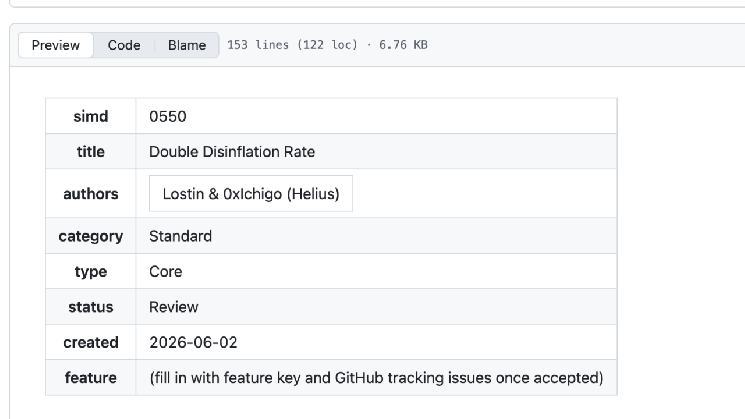
Solana is moving towards a stricter monetary model that could lead to a SOL deficit and significantly reduce staking rewards for holders. Two governance proposals drive these changes. SIMD-550, currently under vote, would double Solana's annual disinflation rate from 15% to 30%, accelerating the timeline to reach a final inflation rate of ~1.5% to the first half of 2029. The second, SIMD-553 (already approved), introduces additional token burning tied to computational units used on the network. Together, these measures could reduce SOL emission by an estimated $1.4-$1.5 billion over six years. The immediate impact would be lower staking yields, potentially falling from the current ~5.25% to approximately 4.34% in year one, 3% in year two, and 2.25% by year three. Analyst Matt Mena from 21Shares suggests inflation should be tied to economic metrics to help offset this decline. The changes also raise concerns for validator economics, with some potentially becoming unprofitable as inflation rewards decrease and voting costs may rise. However, the lower passive yield might push a significant portion of the 67.9% staked SOL into Solana's DeFi ecosystem for activities like lending and trading. This shift could boost network fee revenue to compensate for lower inflation rewards. The proposals aim to trade lower yield today for less dilution tomorrow, betting that network growth and usage will make this a worthwhile trade-off for SOL holders.

cryptonews.ru32 хв тому

Solana Proposals Could Lead to Reduction in Staking Yields to 2.25% and Cut Emissions by $1.5 Billion

cryptonews.ru32 хв тому

Chairman of Olympic Committee detained in Poland over crypto scandal

The Chairman of the Polish Olympic Committee, Radosław Piesiewicz, was detained in Warsaw in connection with a case involving the cryptocurrency exchange Zondacrypto. The detention was carried out on the order of the Katowice National Prosecutor's Office and the Central Bureau for Combating Cybercrime. Piesiewicz denies the allegations, claiming he never had accounts on the exchange or dealt in cryptocurrency, and links the detention to political persecution. He has led the Olympic Committee since 2023 and is also a parliamentarian for the Law and Justice party. The prosecutor's office initiated the case in April 2026 on grounds of fraud and money laundering amounting to approximately 350 million PLN (around €80 million). The investigation found the exchange was used to transfer funds abroad and cash out criminal proceeds, with clients unable to withdraw their assets. A total of 13 people are implicated, including the exchange's founder. Zondacrypto became the general sponsor of the Polish Olympic Committee and team in October 2025, with a contract lasting until 2028. In April 2026, Piesiewicz stated the committee could not terminate the agreement without incurring unaffordable penalties. The investigation revealed Piesiewicz received expensive gifts from exchange representatives, including a €40,000 watch, as well as paid trips to Monaco and Bergamo.

cryptonews.ru32 хв тому

Chairman of Olympic Committee detained in Poland over crypto scandal

cryptonews.ru32 хв тому

Bitcoin 'Basically Hopped' to $80K. What Will Happen to the Price in Autumn?

Bitcoin surged close to $80,000 in August, marking its fastest growth since 2024. Experts anticipate continued volatility for the autumn season, with price forecasts heavily dependent on macroeconomic conditions and regulatory developments in the US. Key drivers for the recent rise include a weakening US dollar, renewed capital inflows into spot Bitcoin ETFs, and liquidations of trading positions. The US Treasury's decision to increase long-term bond purchases has helped stabilize debt markets but pressured the dollar, leading investors to seek assets like Bitcoin as a hedge. Looking ahead, experts outline two primary scenarios for Bitcoin's price. A positive outcome, supported by favorable macroeconomics and the potential passage of the CLARITY Act regulating crypto in the US, could push Bitcoin toward $85,000-$100,000. Conversely, a negative scenario involving hawkish signals from the US Federal Reserve or regulatory setbacks could trigger a correction, potentially driving the price back down to the $62,000-$75,000 range. Institutional demand, reflected in consistent ETF inflows, is seen as a crucial stabilizing factor, gradually outweighing the influence of Bitcoin's traditional four-year cycles. Meanwhile, a broad rally in altcoins is not widely expected, as capital is likely to flow selectively into the most liquid projects. The central question for autumn is whether institutional buying can transform August's rapid surge into a sustainable upward trend.

cryptonews.ru36 хв тому

Bitcoin 'Basically Hopped' to $80K. What Will Happen to the Price in Autumn?

cryptonews.ru36 хв тому

Торгівля

Спот
活动图片