除了OpenSea,上榜《时代》百大影响力企业的还有哪些元宇宙公司?

区块律动Опубліковано о 2022-03-31Востаннє оновлено о 2022-03-31

Анотація

《时代》眼中的元宇宙翘楚是怎么样的?

今年《时代》杂志的 100 大最具影响力企业榜单已经出炉,律动 BlockBeats 整理翻译了其中和加密、元宇宙相关的公司以及《时代》给出的评语:
OpenSea:给 NFT 加把火
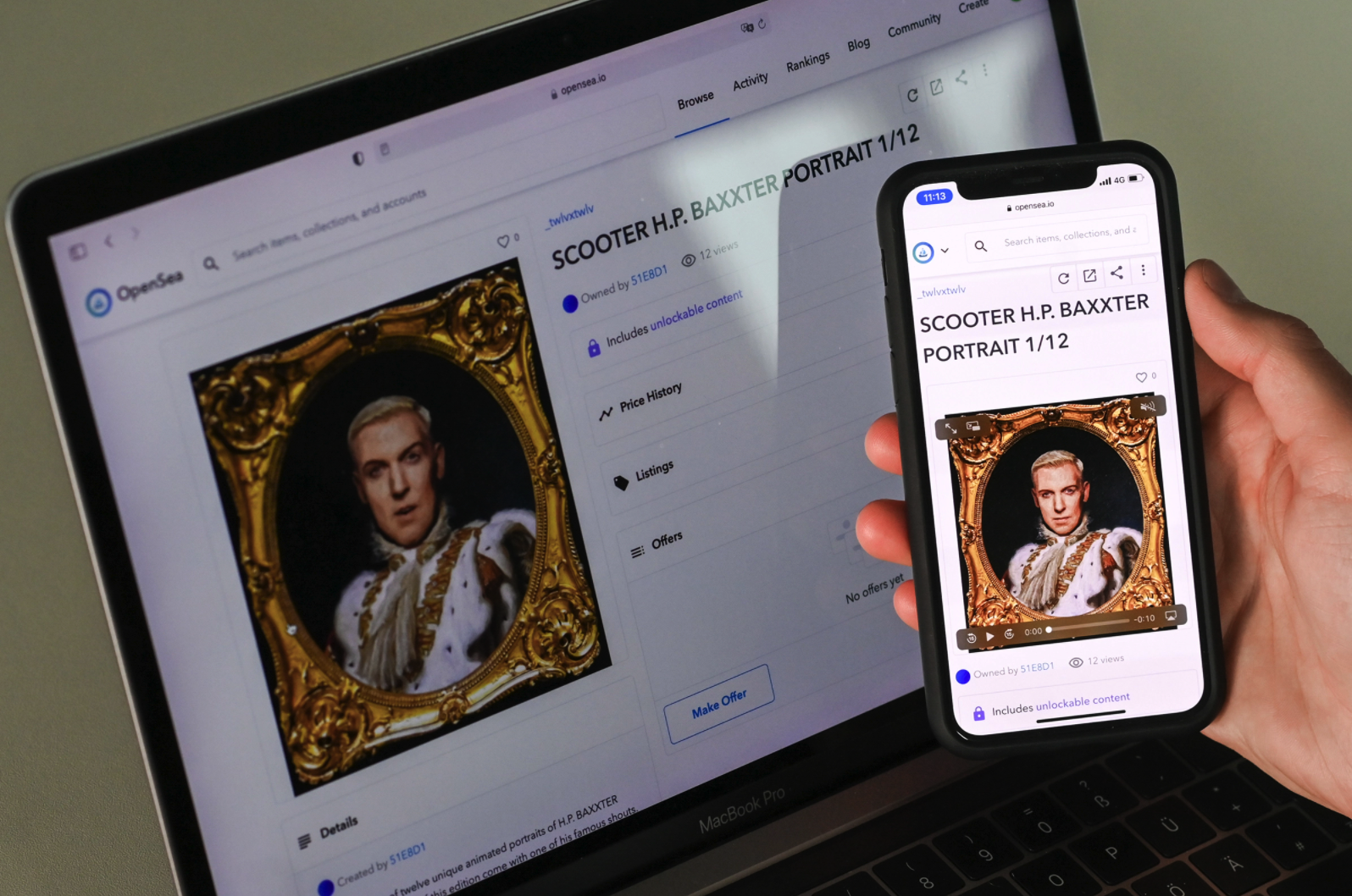
一件以 Scooter 主唱 H.P. Baxxter 为特色的数字艺术品在 OpenSea 上拍卖
OpenSea 2021 年的交易额超过 140 亿美元,是前一年总额的 646 倍。OpenSea 已经巩固了它全球最受欢迎的 NFT 市场地位,NFT 这种基于区块链的技术让对数字艺术、数据等的所有权主张成为可能。
OpenSea 首席执行官兼联合创始人 Devin Finzer 说:「除了艺术和创意工作,NFT 的用例正在扩展到票务、游戏、音乐和时尚。可能有一天,我们拥有的几乎所有东西都会在区块链上得到证明。」
OpenSea 现在有 100 多万用户,但它的迅速崛起并非完全顺利,例如它还在与平台上盗版侵权的行为作斗争。
苏富比:拍卖数字珍宝

Creation of My Metaverse (Between this World and the Next) by Serwah Attafuah,2021 年 6 月 4 日上拍苏富比
这家拥有 278 年历史的拍卖行在 2021 年卖出了价值 73 亿美元的艺术品,这要部分归功于它愿意投身于炙手可热的 NFT 业务。
苏富比的大部分销售仍然涉及更熟知的艺术形式,如波提切利或班克西的作品,但去年苏富比拍卖会上售出了 1 亿美元的 NFT,从「无聊猿」到万维网源代码。
虽然佳士得和其他拍卖行也对这种新技术表现出兴趣,但苏富比是第一家在元宇宙开设虚拟画廊的大拍卖行,这帮助它在一场颠覆几个世纪以来竞标和销售规范的技术革命发生时脱颖而出。
The Sandbox:数字圈地运动
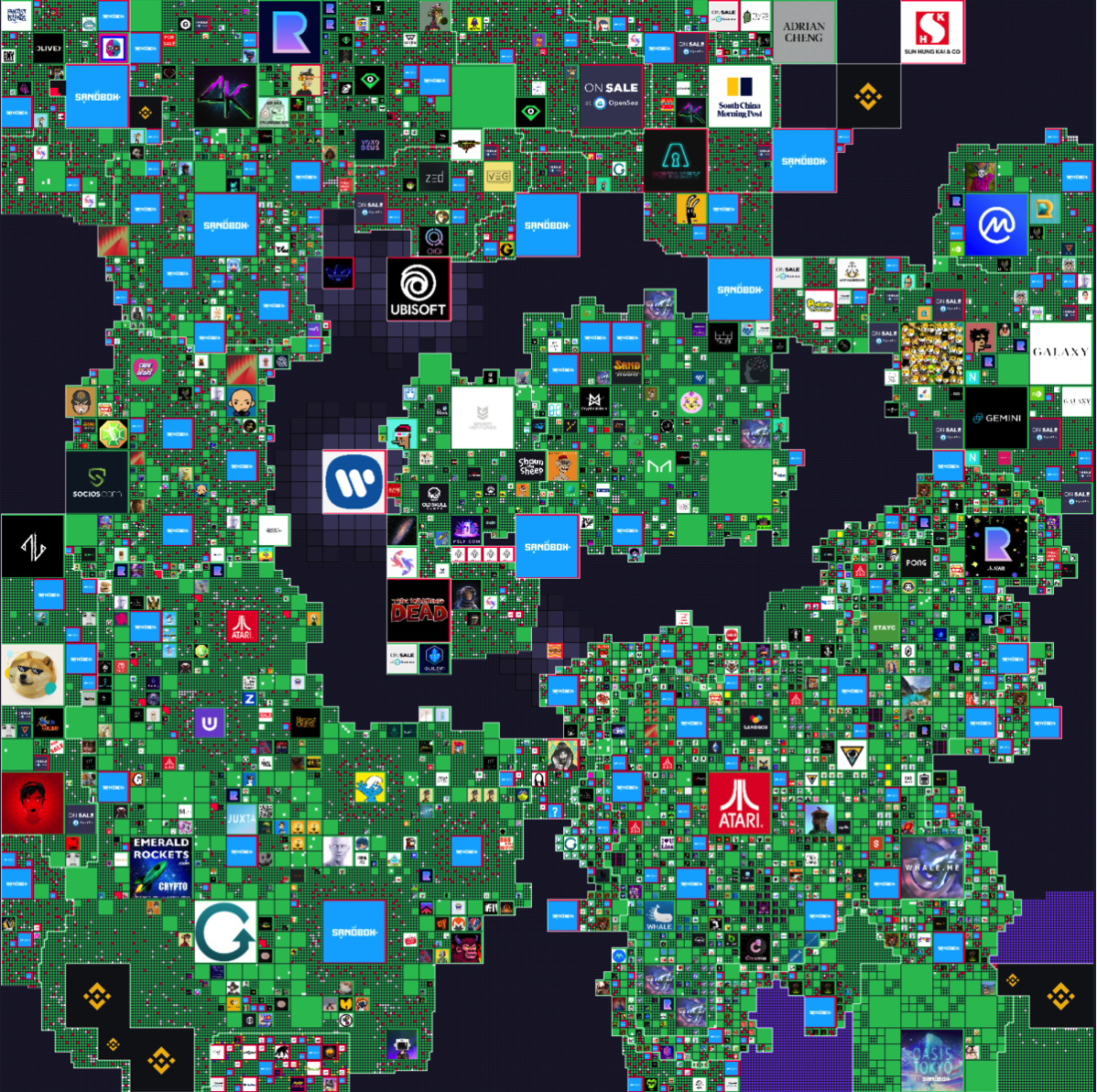
2022 年 2 月的 The Sandbox 地图
房地产几乎总是一种热门投资——在 The Sandbox 这个基于区块链的虚拟世界中似乎依旧如此。
The Sandbox 已经售出了至少 20 亿美元的数字「土地」。在 The Sandbox 的 210 万用户中,有 19,000 名(同比增长 375%)「拥有这个新世界的一部分,并正在为建设它做出贡献,」The Snadbox 联合创始人 Sebastien Borget 表示。
大品牌和名人也在参与其中:2 月,Gucci 以未披露金额购买了 The Sandbox 的土地,以建立互动购物体验,而 Snoop Dogg 则以大约 475 美元一个的价格售出了数千个可玩的 Avatar。
Meta:让元宇宙成为主流
2021 年 10 月 28 日,美国纽约举行的虚拟 Facebook Connect 活动上,Facebook 公司首席执行官马克 · 扎克伯格身着击剑服装
在去年 10 月的一次主题演讲中,当时的 Facebook 首席执行官马克 · 扎克伯格以一个卡通 Avatar 形象现身,并宣布了两项重大消息:Facebook 将更名为 Meta,并将自此专注于构建「元宇宙」。元宇宙是一个虚拟领域,信徒们说它是互联网的未来。
这一举动立即让元宇宙这一概念成为主流,迫使微软和谷歌等竞争对手同样大肆宣传类似的努力,也引发了对形形色色元宇宙相关公司的投资狂潮。但此后投资者对这一想法的降温,加之苹果的 Ad Targeting 禁令,现在 Meta 的市值几乎是去年 6 月万亿美元市值的半数。
除此之外,公众对吹哨人 Frances Haugen 的披露仍然感到担忧——他说该公司对 Facebook 伤害用户心理健康和全球民主的了解远比之前透露的要多。
Rec Room:虚拟游乐场
随着几乎所有技术主管都突然谈论元宇宙,Rec Room 被推到了风口浪尖。
3700 万名玩家用该公司的社交虚拟现实应用,创建和分享大量的游戏和其他数字体验,Rec Room 已成为元宇宙中最大、最多样化和最早的成功案例之一。
首席执行官兼联合创始人尼克-法伊特说:「这个平台已经成为人们可以聚在一起形成有意义的联系、建立社区和分享创造力的地方。」
Together Labs:元宇宙货币
Together Lab 的 VCOIN
社交平台 IMVU 一直是元宇宙游戏中的大玩家,有 700 万月活量。去年,IMVU 母公司 Together Labs 更进一步推出了 VCOIN,这是一种基于区块链的加密货币,用户可以在 IMVU 内消费或兑换成法币。Together Labs 首席执行官 Daren Tsui 表示,VCOIN 是唯一一个美国证券交易委员会发出无异议函(No-action Letter)的活跃使用加密货币,为其他元宇宙建立自己未来的加密货币奠定了「基石」。
Rendever:VR 的新用途
Rendever 的虚拟现实平台通过 VR 和直播节目,让社区老年居民能够再次享受生活
过去的两年里,老年人遭受了两种流行病的折磨:一种是新冠病毒,另一种是由旨在减少病毒传播的社会隔离。
Rendever 为后者提供了一种高科技解决方案:通过虚拟现实,Rendever 为老年人创造了共享体验,以对抗孤独(与痴呆和中风等健康风险息息相关)和改善身体健康。
Rendever 的技术已在美国、加拿大和澳大利亚的 400 多家疗养院中使用,联合创始人兼首席执行官凯尔·兰德 (Kyle Rand) 表示该技术正在「让全球参与者生活得更美好」。

Пов'язані матеріали

Miners Advised Not to Buy GPUs for AI and to Focus on Infrastructure

A founder at an energy investment forum advises bitcoin miners not to purchase GPUs for AI themselves, but to instead focus on infrastructure like power and data center space. Mike Alfred of Alpine Fox stated that while AI infrastructure demand is a long-term, 20-30 year trend, it presents a key choice for miners. The first, riskier model involves owning and operating GPUs, which requires financing expensive hardware that quickly becomes obsolete. The second, more conservative model is akin to real estate: providing colocation services where clients bring their own servers, and the miner sells space, power, cooling, and water. Alfred noted this model is easier to finance. Most existing bitcoin mining sites are difficult and expensive to convert for AI, as AI data centers require far higher construction costs, redundant fiber connections, backup power, complex cooling, and near 100% uptime. A hybrid model, where mining acts as a flexible load to use excess power during AI data center construction or from generation facilities, was discussed. However, participants concluded this is only viable with very cheap power; otherwise, developers are better off focusing solely on AI. Miners are increasingly being evaluated for their available power capacity and project portfolios rather than just bitcoin output. Panelists also warned of risks in the AI sector, predicting at least one major default or contract breach among AI tenants, lenders, or landlords before bitcoin's next halving in 2028.

cryptonews.ru3 хв тому

Miners Advised Not to Buy GPUs for AI and to Focus on Infrastructure

cryptonews.ru3 хв тому

Millisecond 'Pay-to-Cut': How Did Hyperliquid's Priority Fee Turn into a Multi-Million Dollar Business?

"Millisecond 'Paid Queue-Jumping': How Hyperliquid's Priority Fee Became a Multi-Million Dollar Annual Business" In traditional finance, high-frequency trading firms spend millions on infrastructure for millisecond advantages. Hyperliquid has translated this race onto the blockchain with its "Priority Fee" system, creating an open economic game for speed. This system auctions two types of priority: **Gossip Priority** for faster data feeds (via a Dutch auction every 3 minutes), and **Order Priority** for front-of-queue trade execution (users bid a fee for lower latency). This converts a hardware race into a transparent, market-priced mechanism. Since launch, this feature has generated over $5M in protocol revenue. Projected annualized buybacks from this income exceed $30M, accounting for ~7% of total protocol revenue. The demand stems from large traders and market makers on Hyperliquid, for whom milliseconds can mean the difference between profit/loss or avoiding liquidation. Market makers pay these fees as "protection" to ensure their orders execute first, which in turn improves liquidity for all users. Crucially, Hyperliquid internalizes Maximum Extractable Value (MEV) that typically leaks to external validators or searchers, creating a new revenue stream beyond trading fees. The mechanism also strengthens HYPE's tokenomics. While 97% of trading fees fund secondary market buybacks (via the Assistance Fund), Priority Fees are **directly burned**, adding a second deflationary engine. Furthermore, fees for order priority are deducted from users' undelegated HYPE balances, encouraging large traders to hold and lock up tokens, reducing circulating supply. However, a key challenge remains: balancing the speed needs of institutional players with fair market access for retail users, as those who cannot pay high fees may suffer worse slippage during volatility. In summary, Hyperliquid's Priority Fee is a novel model that monetizes latency, captures MEV for the protocol, and enhances its native token's value through burning and lock-ups.

marsbit8 хв тому

Millisecond 'Pay-to-Cut': How Did Hyperliquid's Priority Fee Turn into a Multi-Million Dollar Business?

marsbit8 хв тому

The Truth Behind Digital Banking: The Fragile Ecosystem Supporting 1.46 Billion Users

The article "The Truth About Digital Banks: The Fragile Ecosystem Behind 1.46 Billion Users" provides a data-driven analysis of the digital banking sector based on a verified list of 368 active neobanks as of July 2026. While these platforms collectively serve 1.46 billion users, with Asia (817 million users) and institutions like WeBank and Nubank dominating the landscape, the sector faces significant structural vulnerabilities. A key finding is that only 127 of the 368 neobanks hold full banking licenses. The majority operate atop third-party infrastructure providers like Banking-as-a-Service (BaaS) platforms, creating systemic risk where the failure of a single provider, as seen in past cases like Wirecard and Synapse, can jeopardize multiple consumer brands. Furthermore, the industry experiences a steady, quiet stream of failures, mergers, and shutdowns that often go unreported. The analysis also examines the adoption of artificial intelligence (AI), finding only 67 platforms (18%) have deployed AI at scale, with many innovators based in emerging markets like Nigeria and the Philippines. The infrastructure layer is highly concentrated, with 106 providers supporting the entire ecosystem of 368 consumer-facing brands. The article concludes with three predictions: the unlicensed gap will close through acquisitions or exits; an AI credit model is likely to fail in the next economic downturn; and a nascent but significant trend is the emergence of financial services designed for AI agents rather than humans.

marsbit23 хв тому

The Truth Behind Digital Banking: The Fragile Ecosystem Supporting 1.46 Billion Users

marsbit23 хв тому

Digital Asset Trading Platform Uphold Cuts 17% of Global Workforce Amid 'Crypto Winter'

Cryptocurrency trading platform Uphold has laid off approximately 17% of its global workforce, affecting 85 full-time employees and contractors. The cuts are part of a strategic shift to reallocate resources towards its rapidly growing corporate services business, as retail cryptocurrency trading activity has declined amid the ongoing market downturn. CEO Simon McLaughlin stated the company is restructuring after years of significant growth and remains confident in the long-term prospects of digital assets and blockchain technology. Founded in 2015, Uphold offers trading and custody services for cryptocurrencies, fiat, stocks, and precious metals. It has recently expanded to provide infrastructure for banks, fintech firms, and broker-dealers to integrate crypto services. The layoffs occur against a backdrop of a prolonged crypto market slump, with total market capitalization falling to around $2.1 trillion by Q2 2024. Factors include weakened trading volumes, reduced retail participation, interest rate hikes, geopolitical uncertainty, and net outflows from U.S. spot Bitcoin ETFs. Uphold clarified it is not shutting down its UK operations or any international offices. The company highlighted strong growth in its corporate platform and announced plans to evolve its consumer app into a broader blockchain-based financial assistant by 2026, offering U.S. stocks, tokenized securities, lending, credit cards, and DeFi yield opportunities.

cryptonews.ru23 хв тому

Digital Asset Trading Platform Uphold Cuts 17% of Global Workforce Amid 'Crypto Winter'

cryptonews.ru23 хв тому

Торгівля

Спот
活动图片