$100M Underground Remittance Network Using Crypto, WeChat Dismantled In South Korea

bitcoinistОпубліковано о 2026-01-20Востаннє оновлено о 2026-01-20

Анотація

South Korean authorities have dismantled an underground remittance network that moved approximately $102 million (150 billion won) across borders using mobile payment apps like WeChat Pay and Alipay and cryptocurrencies. The scheme, which operated from September 2021 to June 2023, involved collecting funds from customers via the apps, converting the money into crypto abroad, and then cashing it out into South Korean bank accounts after transferring the digital assets to local wallets. To evade detection, the group disguised the transactions as payments for common services such as cosmetic surgery, study abroad fees, and trade-related costs. Three Chinese nationals have been arrested and face charges under foreign exchange laws. The case highlights the growing use of combined traditional and digital payment channels for illicit fund movements, prompting South Korea to strengthen regulations on crypto exchanges and mobile wallets.

Seoul investigators say they have disrupted a secret money-transfer network that moved roughly 150 billion won—about $102 million—into and out of South Korea using a mix of mobile payment apps and cryptocurrencies.

Reports say three people have been formally accused under the country’s foreign exchange laws after a probe that traced the scheme over several years.

How Money Moved Through Apps

According to the Korea Customs Service, the group collected money from customers using platforms like WeChat Pay and Alipay, then used those funds to buy virtual coins abroad.

Those coins were shifted into digital wallets in Korea and converted to Korean won through many bank accounts.

The pattern was basic and careful. Cash or mobile transfers arrived from overseas. Crypto purchases followed in multiple countries to avoid any one regulator seeing the full trail.

Finally, the funds were funneled into local accounts under different names. This took place over a long window, from September of 2021 until June of last year, investigators say.

Bitcoin is currently trading at $92,895. Chart: TradingView

Covering Tracks With Everyday Costs

According to reports, the ring hid the origin of money by dressing transfers up as ordinary expenses — payments for cosmetic surgery, fees for overseas study, and trade-related charges. Those labels made the flows look normal on paper and helped the group slip past routine checks.

Bank transfers were layered with small, seemingly legitimate payments. That made suspicious activity harder to spot until customs officers pieced together patterns across accounts and platforms.

At that point, the scope became clear: these were not isolated transfers but a linked series of transactions designed to wash large sums.
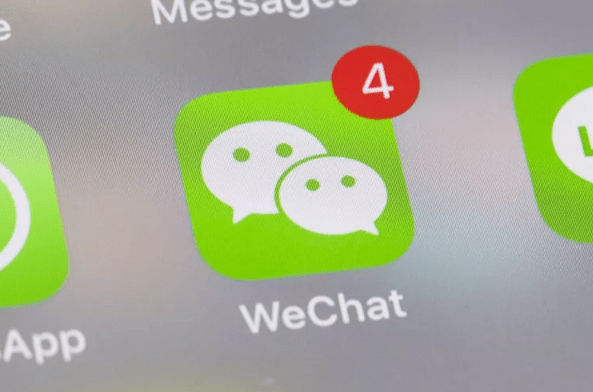
Image: Getty Images

What Authorities Recovered

Investigators arrested and referred three Chinese nationals for prosecution, saying the suspects handled the bulk of the scheme’s operations.

Records show almost 150 billion won was moved in the period under review. Authorities have opened cases under the foreign exchange transactions law and are seeking to trace the remaining funds.

The case underlines how easy it can be for cross-border payment tools and crypto markets to be used together.

Regulators in Korea have been tightening rules for both mobile wallets and exchanges in recent months, and courts have allowed seizures of crypto assets in criminal probes. That legal backdrop helped the customs office act when the patterns surfaced.

Featured image from Dao Insights, chart from TradingView

Пов'язані питання

QWhat was the total amount of money moved by the underground remittance network in South Korea, and what was the equivalent in US dollars?

AThe network moved approximately 150 billion won, which is equivalent to about $102 million.

QWhich mobile payment apps and methods were used by the group to collect money from customers?

AThe group used platforms like WeChat Pay and Alipay to collect money from customers.

QHow did the group disguise the illegal money transfers to avoid detection by authorities?

AThey disguised transfers as ordinary expenses such as payments for cosmetic surgery, fees for overseas study, and trade-related charges to make them appear normal and avoid routine checks.

QWhat was the role of cryptocurrencies in this underground remittance network?

AThe group used the collected funds to buy virtual coins abroad, which were then transferred to digital wallets in South Korea and converted to Korean won through multiple bank accounts.

QHow many people were formally accused in connection with this scheme, and what nationality were the main suspects?

AThree Chinese nationals were arrested and referred for prosecution, as they handled the bulk of the scheme's operations.

Пов'язані матеріали

In-Depth Report on the On-Chain Lending Market: When Off-Chain Credit Meets On-Chain Liquidation

The on-chain lending market has evolved from a peripheral DeFi niche into core financial infrastructure. As of early 2026, total value locked (TVL) in on-chain lending protocols has reached $64.3 billion, accounting for 53.54% of total DeFi TVL, making it the largest and most mature vertical within decentralized finance. Aave dominates the sector with approximately $32.9 billion in TVL, commanding nearly half of the market—a leadership position that is unlikely to be challenged in the foreseeable future. However, the path of on-chain lending forward is not without risk. Liquidation cascades, credit defaults, and cross-chain vulnerabilities remain systemic threats hanging over the industry. At the same time, a deeper structural transformation is underway: on-chain lending is shifting from a “leverage tool for crypto-native users” to a “compliant gateway for institutional capital”. The scale of RWA (Real World Asset) lending has surpassed $18.5 billion, with U.S. Treasuries and government securities increasingly serving as core collateral. Institutional capital inflows are reshaping both the user base and risk appetite of the sector. This report systematically analyzes the evolution of on-chain lending definitions, competitive dynamics, core risks, and future trends, providing a comprehensive industry outlook for investors and trade practitioners. Key findings suggest that the “one dominant player with several strong challengers” structure will persist in the short term, while fixed-rate lending, compliant collateral, and institutional credit underwriting will define the next phase of competition. For investors focused on DeFi infrastructure, three key opportunity tracks stand out, namely, the Aave ecosystem (Morpho, Spark), RWA lending protocols (Ondo, Maple) and fixed-rate innovation (Notional, Pendle).

HTX Learn12 хв тому

In-Depth Report on the On-Chain Lending Market: When Off-Chain Credit Meets On-Chain Liquidation

HTX Learn12 хв тому

Fu Peng's First Public Speech in 2026: What Exactly Are Crypto Assets? Why Did I Join the Crypto Asset Industry?

Fu Peng, a renowned macroeconomist and now Chief Economist at New火 Group, delivered his first public speech of 2026 at the Hong Kong Web3 Festival. He explained his perspective on crypto assets and why he joined the industry, framing it within the context of macroeconomic trends and financial evolution. Fu emphasized that crypto assets are transitioning from an early, belief-driven phase to a mature, institutionally integrated asset class. He drew parallels to the 1970s-80s, when technological advances (like computing) revolutionized traditional finance, leading to the rise of FICC (Fixed Income, Currencies, and Commodities). Similarly, current advancements in AI, data, and blockchain are reshaping finance, with crypto assets becoming part of a new "FICC + C" (C for Crypto) framework. He noted that institutional capital, including traditional hedge funds, avoided early crypto due to its speculative nature but are now engaging as regulatory clarity emerges (e.g., stablecoin laws, CFTC classifying crypto as a commodity). Fu predicted that 2025-2026 marks a turning point where crypto becomes a standardized, financially viable asset for diversified portfolios, akin to commodities or derivatives in traditional finance. Fu defined Bitcoin not as "digital gold" in a simplistic sense but as a value-preserving, financially tradable asset. He highlighted that crypto's future lies in regulated, institutional adoption, moving away from retail-dominated trading. His entry into crypto signals this maturation, where traditional finance integrates crypto into mainstream asset management.

marsbit1 год тому

Fu Peng's First Public Speech in 2026: What Exactly Are Crypto Assets? Why Did I Join the Crypto Asset Industry?

marsbit1 год тому

Justin Sun Sues Trump Family: What $75 Million Bought Was Only a Blacklist

Justin Sun, founder of Tron, has filed a lawsuit in federal court against World Liberty Financial (WLF), alleging he was made the "primary target of a fraudulent scheme" after investing $75 million. Sun claims the investment secured him an advisor title and WLFI tokens, which were later frozen by WLF, causing "hundreds of millions in losses." The dispute began in late 2024 when Sun's investment helped revive WLF's struggling token sale, which ultimately raised $550 million. Shortly after, the SEC dropped its lawsuit against Sun following Donald Trump's inauguration. However, relations soured when Sun refused WLF's demands for additional funding. In August 2025, WLF added a "blacklist" function to its smart contract, allowing it to unilaterally freeze tokens. Sun's holdings, worth approximately $107 million, were frozen, and he was threatened with token destruction. The lawsuit highlights WLF's structure, which directs 75% of token sale profits to the Trump family, who had earned $1 billion by December 2025. WLF's CEO is Zach Witkoff, son of U.S. Middle East envoy Steve Witkoff. The project faces scrutiny for opaque operations, including a controversial loan arrangement on the Dolomite platform, co-founded by a WLF advisor. Despite Sun's history with the SEC, the case underscores centralization risks within DeFi, as WLF controls governance and holds powers to freeze assets arbitrarily. Sun's tokens remain frozen as legal proceedings begin.

marsbit1 год тому

Justin Sun Sues Trump Family: What $75 Million Bought Was Only a Blacklist

marsbit1 год тому

Торгівля

Спот
Ф'ючерси
活动图片