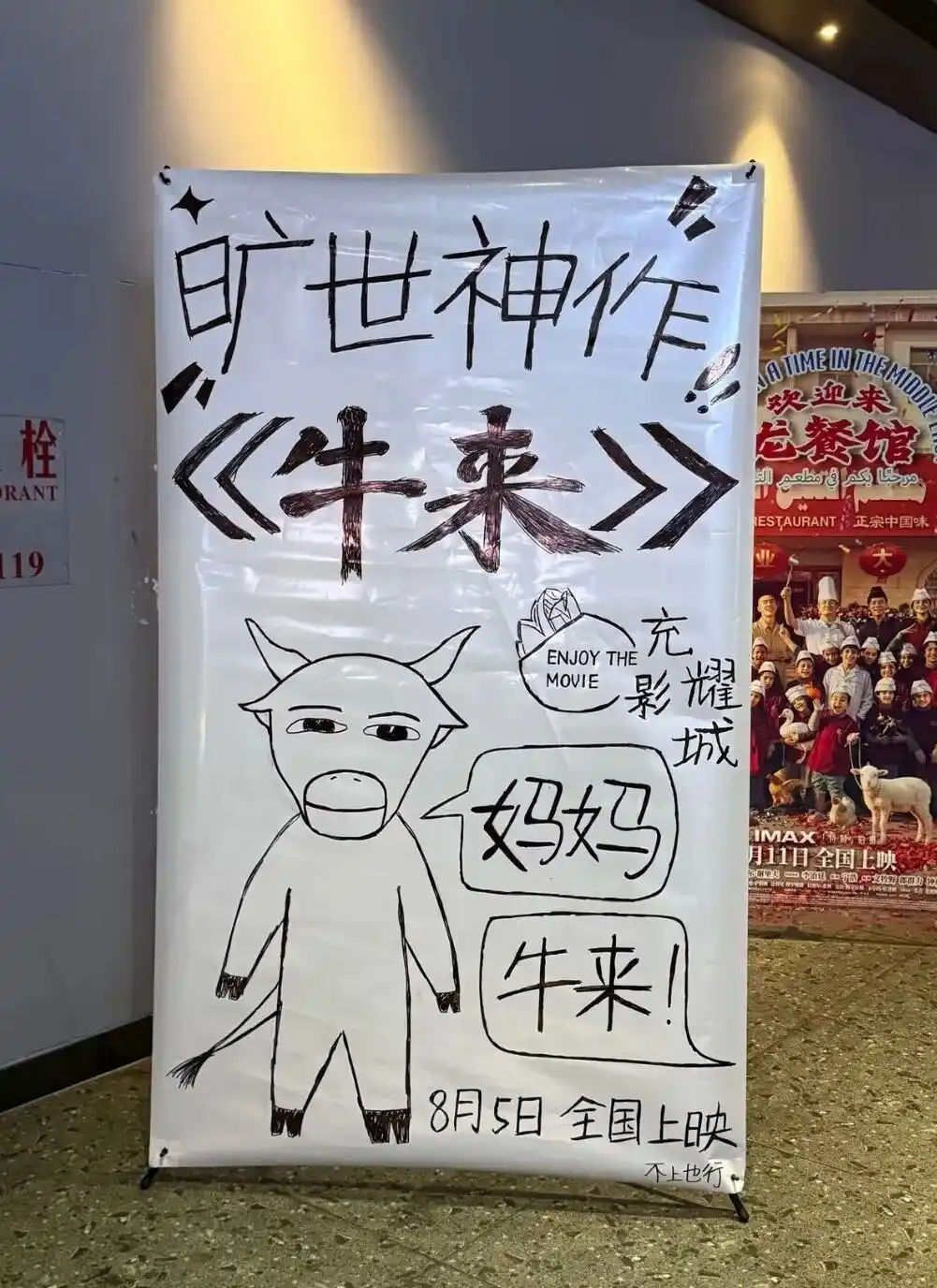
The bull is coming, the bull is coming, the bull is really here. Last weekend, the abstract dark horse of the summer box office, "The Bull is Coming," unexpectedly became a massive hit, with its box office revenue quickly breaking through 100 million yuan. Unexpectedly, when the market opened on Monday, the A-share market really welcomed the "bull."
On August 17th, the four major stock indices collectively closed higher. The Shanghai Composite Index closed at 3982.65 points, up 1.41%; the Shenzhen Component Index closed at 14704.27 points, up 2.44%; the ChiNext Index closed at 3740.16 points, up 3.14%; and the STAR Market Composite Index closed at 2099.06 points, up 3.89%.
Then today, the A-share market witnessed another astonishingly profitable new stock listing.
At 9:30 AM on August 18th, when the opening price of Pinzhun Laser popped up, many people were stunned.
With an issue price of 186.88 yuan, it opened at 1100 yuan, surging 488.61%. The stock price continued to climb during the session, hitting a high of 1300 yuan, with a maximum increase of nearly 596%. Based on the opening price, the profit per winning lot was 456,600 yuan; based on the intraday high, the paper profit per lot for winning investors reached 556,600 yuan, setting a new record for the first-day paper profit of new listings since the full implementation of the registration-based IPO system in China's A-share market.
8,109,600 accounts flooded in to subscribe. After the clawback mechanism was triggered, the final winning rate was 0.02013739%—roughly five thousand subscription numbers for just one winning lot.
Standing behind this hugely profitable new stock is a man named Zhang Lei. Born in 1986, he earned his Ph.D. in 2014 from the Shanghai Institute of Optics and Fine Mechanics (SIOM), Chinese Academy of Sciences, and stayed on as an associate researcher for a period after graduation. Leaving the institute, he and several former colleagues founded Pinzhun Laser in Shanghai. Among the company's five core technical personnel, including himself, all hold doctorates. After the issuance, he still holds 41.04% of the shares, which translates to a personal wealth of approximately 18 billion yuan based on the opening market capitalization.
What he makes is somewhat difficult to understand. Also called a laser, the kind used in industry for cutting and welding competes on power and energy, pursuing sheer "intensity"; the kind Pinzhun makes is called a precision laser, competing on "stability"—specific wavelengths, extremely narrow linewidths, extremely low noise, and an almost non-drifting frequency.
Perhaps it's clearer to put it another way: in the microscopic world, the energy levels of atoms are discrete. If the laser frequency deviates even a tiny bit, the atom simply ignores it, and the interaction between light and the atom fundamentally doesn't occur. Pinzhun has compressed the linewidth to the kilohertz (kHz) or even hertz (Hz) level.
This led to several outcomes: Harvard University's 3000-logical-qubit rubidium atom quantum computer uses Pinzhun's 852nm light source; Caltech's 6100-qubit cesium atom machine relies on its 1066nm laser; the French PASQAL, which built a 2088 optical tweezer-based cryogenic quantum computer, has a Pinzhun 813nm laser at its heart.
Several of the world's leading teams in quantum computation are using guns made by Zhang Lei.
A 1064nm Laser
Nine years isn't short, but the starting point of the story was actually quite small.
When the company was first established, domestic research teams were searching worldwide for domestic light sources that could replace imports. By chance, the quantum research team from the University of Science and Technology of China (USTC) became Pinzhun's first customer, not only proposing the need for a 1064nm laser but also prepaying most of the payment.
A company with nothing, relying on customer prepayments for R&D, adopted a "fund the war by fighting the war" strategy. Over the next two-plus years, the team repeatedly revised the product based on customer feedback, iterating version after version. Zhang Lei later recalled that after delivery, the customer's evaluation was "living up to expectations."
This machine set the company's future way of doing things. Starting from real research needs, continuously refining specific parameters, first turning a custom order into a product, then solidifying the product into a technology platform.
The hardest part for hard-tech companies is never the technology itself, but surviving long enough for the technology to become commercially viable. The solution Pinzhun stumbled upon involved some luck, but it turned that luck into a methodology.
Before Pinzhun entered the market, dominance was held by established players like Germany's Toptica, America's Spectra-Physics, Denmark's NKT, and America's RIO. In China's quantum field, imported products once accounted for over 90% of laser usage. They followed the path of semiconductor lasers and titanium-sapphire lasers, where light travels in free space, vulnerable to vibration and temperature drift, essentially instruments confined to the lab, needing readjustment after every move.
Zhang Lei's team chose another path: seed source plus fiber amplification, then nonlinear frequency conversion, and finally frequency stabilization. Light is confined within the fiber core for transmission, making it vibration-resistant, portable, mode-hop-free, with wavelength coverage from 177nm all the way to 5000nm. The achievement evaluation report issued by Zhongke Hechuang concluded—overall internationally advanced, with parts leading internationally.
This path brought about: quantum precision measurement could now leave the lab and go into harsh environments like the field. Portable equipment meant the market was no longer just research funding.
Around 2022, the company made an even more crucial move: into semiconductors.
This step might look like cross-industry from the outside, but technologically it was a natural progression. Process nodes keep shrinking, wafers keep getting larger, defect detection precision requirements are pushed from the micron level to the sub-nanometer level; since the intensity of defect scattering is inversely proportional to the laser wavelength, detection equipment must switch to deep ultraviolet light sources with shorter wavelengths and higher power.
And generating deep ultraviolet relies precisely on nonlinear frequency conversion—quantum experiments need 852nm, wafer inspection needs 266nm, the underlying technology is the same set. Invest in the tech base once, harvest across two industries. Pinzhun quickly launched high-power single-frequency ultraviolet lasers at 266nm, 313nm, 355nm, and a high-energy nanosecond pulsed laser at 1100nm for wafer stealth dicing. This market was previously dominated by a few players like America's Coherent and Japan's Oxide.
The results showed on the financials: from 2023 to 2025, semiconductor revenue grew from 25.1487 million yuan to 104 million yuan, a compound annual growth rate (CAGR) of 103.80%, increasing its share of main business revenue from 17.53% to 25.50%. During the same period, the company's overall revenue rose from 148 million yuan to 418 million yuan, net profit attributable to the parent company grew from 60.4636 million yuan to 159 million yuan, and gross margin on main business stayed above 69% for three consecutive years.
Only Two Funding Rounds
Zhang Lei directly held 54.71% before the IPO, plus the 7.33% held by the employee持股 platform Shanghai Guangtuan, totaling control of 62.04%. For a hard-tech company on the STAR Market, this level of dilution is abnormally low.
The reason lies in the gross margin. Nearly 70% gross margin means the company could become self-sustaining early on. Being self-sustaining means it didn't need to frequently raise funds. Not needing frequent fundraising naturally narrowed the window for external capital. Although the slogan "invest early, invest small, invest in hard tech" has been shouted for a long time, a closer look at the industry reveals: the hardest assets are precisely the ones that least lack money and least give opportunities.
Pinzhun only conducted two rounds of equity financing externally; the rest were transfers of existing shares.
In 2021, Huiguang Rixin, managed by Hangzhou Zhongke Shenguang, signed an investment agreement with the company, marking the first entry of external capital. In March 2023, Zhang Lei transferred part of the registered capital to Damei Jiuheng, whose fund manager was also Hangzhou Zhongke Shenguang. In 2024, SDIC Venture Capital entered via capital increase, with Yuanhe Puhua, Lianxin Investment, and Shenguang Yigong joining around the same time. In June 2025, Damei Jiuheng transferred its shares to Lianxin Investment, Puhua Investment, and Lianxin Phase V respectively, and Zhang Lei and other core personnel also transferred部分 shares to Lianxin Phase III and Lianxin Phase V.
On June 30th of the same year, all parties signed a supplementary agreement, terminating all special clauses previously agreed with shareholders, such as rights of first refusal, tag-along rights, drag-along rights, and buyback rights.
This strategic placement involved 1.886498 million shares, accounting for 18.86% of the total issuance. Apart from the subsidiaries related to the lead underwriter, China Securities Co., Ltd. Investment, and the employee asset management plan, the introduced external strategic investors were Tianjin BOE Innovation Investment, Shenzhen BIWIN Storage, Shanghai Xinzhi Times, AMEC (Shanghai), Wuxi Lead Intelligent Equipment, Suzhou Lianxun Instruments, Suzhou Delong Laser, and Shanghai Boning. BOE Innovation Investment, BIWIN Storage, Xinzhi Times, and AMEC each subscribed for 30 million yuan; Lead Intelligent and Lianxun Instruments subscribed for 20 million yuan each; Delong Laser and Boning subscribed for 15 million yuan each. The eight investors totaled about 190 million yuan, with a 12-month lock-up period.
The "Win-Win No. 95" plan, established with the participation of 23 senior executives and core technical personnel, received an allocation of 548,700 shares, worth approximately 103 million yuan, the highest among all strategic placement recipients, with a lock-up period of 36 months. Zhang Lei alone subscribed for 40 million yuan, accounting for nearly 40% of the plan's份额.
A storage module manufacturer, semiconductor equipment vendors, and a panel giant sat at the same table. This didn't look much like a posture for financial investment, more like downstream players securing their positions early.
The most intriguing name on the list is Delong Laser. Pinzhun launched a 1100nm high-energy nanosecond pulsed laser for wafer stealth dicing; Delong's wafer laser stealth dicing (SDBG) equipment developed for memory chips received the first domestic mass production order from a leading domestic memory manufacturer in 2025, and received small-volume replication orders in early 2026. One makes the light source, the other makes the equipment, now appearing on the same strategic placement list.
And just the day before Pinzhun's listing, ChangXin Technology closed at 61.8 yuan, up 12%, becoming the first A-share company with a market capitalization exceeding 4 trillion yuan.
The heat from memory chip production expansion is transmitting along this chain all the way to the most upstream component: a light source.
Hangzhou's Patient Run-Alongside
The full name of Huiguang Rixin is Hangzhou Huiguang Rixin Equity Investment Partnership Enterprise, Shenguang Yigong is Hangzhou Shenguang Yigong Venture Investment Fund, and Puhua Investment is SME Development Fund Puhua (Hangzhou) Venture Investment Partnership Enterprise. That is to say, three "Hangzhou" entities are crowded into Pinzhun Laser's shareholder list.
The earliest money came from Zhongke Shenguang under the Hangzhou Institute of Optics and Fine Mechanics. And the Hangzhou Institute of Optics and Fine Mechanics itself is a new type of R&D institution jointly established by the Chinese Academy of Sciences' Shanghai Institute of Optics and Fine Mechanics and the Fuyang District People's Government of Hangzhou, focusing on "investment-incubation-cultivation integration, selection-cultivation-transfer贯通", with angel investment as the牵引.
The institution's self-positioning is not that of an investor, but a "co-founder." Director Qi Hongji's words are blunt: scientists don't understand capital or the market; the platform's job is to accompany them through the "valley of death" from the lab to the market.
The具体 approach is to take a minority stake in the startup, then take on all the tasks needed for entrepreneurship—raising startup capital, connecting with social financing,挖掘 application scenarios, building a management team, refining the business model. The platform also allocates 3 million yuan annually to run entrepreneurship boot camps for scientists, covering food and lodging for systematic training, having already helped over fifty project leaders.
Qi Hongji himself is a sample product of this path, having led his team to scale fourth-generation semiconductor gallium oxide wafer sizes from 2 inches all the way to 12 inches. So far, the Hangzhou Institute of Optics and Fine Mechanics has attracted over 5 billion yuan in social capital, incubated and nurtured over 70 companies, with a total valuation exceeding 50 billion yuan.
Tomorrow, Unitree Technology will also list on the STAR Market. Looking at its shareholder list, Hangzhou's state-owned assets are同样 conspicuous.
According to local media回溯, in 2018, Unitree had only over 100,000 yuan left in its account. Wang Xingxing suspended his own salary to keep the company going as mainstream VCs collectively观望. Hangzhou's sci-tech financial platform under the state-owned asset system provided 20 million yuan in credit担保 debt support with "3 days of due diligence, 7 days for disbursement." Subsequently, the Hangzhou Sci-tech Innovation Fund and Hangzhou Innovation Fund, through market-oriented子 funds, participated in four consecutive funding rounds from B2 to C+, staying全程在场.
This playbook has an institutional foundation. In 2023, Hangzhou launched a "3+N" industrial fund cluster with a total scale exceeding 300 billion yuan. The Hangzhou Sci-tech Innovation Fund invests early, small, long-term, and in hard tech; the Hangzhou Innovation Fund invests big, strong, and in the future; the Hangzhou M&A Fund invests in listings, mergers and acquisitions, and synergies. In 2025, the rules were adjusted again, extending the maximum存续期限 for参股 funds, increasing the出资比例 for "other types of子 funds" from 25% to 30%, while reducing the返投比例 for funds参股 by the Hangzhou Sci-tech Innovation Fund from 2 times to 1.5 times.
Extending terms and lowering返投 requirements—these two moves signify something more important than the numbers themselves: local state-owned capital is transforming itself from a "return-seeking investor" into "patient capital that runs alongside."
The result is a remarkably dense network. Unitree Technology, BrainCo, CloudMinds among the "six little dragons"; Lingban Technology, Diweier, Xiwang among the new "eight steeds"; plus a large batch of semiconductor and AI companies like Fuxin Semiconductor, Arrow Yuan Technology, Qier Electromechanical—all can be seen under the shadow of this fund cluster.
So far this year, Hangzhou has added six new A-share listed companies including EasySight, Pure Ang Medical, Fu'en Shares, and Oulun Electric; as of the end of 2025, the city had 309 listed companies at home and abroad, ranking fourth among Chinese cities and first among provincial capitals. At the 2026 Lujiazui Forum, Hangzhou, along with Shanghai Pudong, Beijing Haidian, Shenzhen, and Suzhou, was selected as one of the first national practice samples for capital market sci-tech finance.
On the day ChangXin Technology listed, the market value of Hefei's state-owned assets holdings exceeded one trillion yuan. That city endured a decade of losses with it, winning with the depth of patience. Hangzhou, leveraging母 funds to撬动子 funds, then having new R&D institutions act as co-founders for scientists, wins with the density of patience.
The two paths are not about superiority or inferiority; for individuals, they come down to the same thing. Zhang Lei works on light in Shanghai, Wang Xingxing works on robots in Hangzhou. When they least resembled "good projects," money arrived first.
The 550,000-yuan money-making lot is a matter of one day. But accompanying someone from the lab to the bell-ringing podium, Hangzhou walked a very long way alongside.
This article is from WeChat public account "Rongzhong Finance" (ID: thecapital), author: Wang Tao