Winter for Crypto IPOs: Consensys and Ledger Withdraw Applications

marsbit2026-05-16 tarihinde yayınlandı2026-05-16 tarihinde güncellendi

Özet

The crypto IPO window is tightening significantly in 2026, marked by prominent companies delaying or pausing their public listing plans. Following a successful 2025 "harvest year" that saw Circle, Bullish, and Gemini go public amidst a bull market, the tide has turned. Consensys, developer of MetaMask, recently postponed its IPO until at least fall 2026. Hardware wallet leader Ledger also suspended its planned US listing due to unfavorable market conditions, with Kraken having previously delayed its own plans. This shift is driven by a cooling market in 2026, characterized by a significant Bitcoin price correction, declining trading volumes, and reduced investor risk appetite for crypto stocks. The poor post-IPO performance of 2025 listings like Circle and Bullish, which saw major share price declines, has heightened investor caution. This contrasts sharply with the current AI sector, where companies like SpaceX, OpenAI, and Anthropic are commanding massive valuations and investor enthusiasm based on narratives of stable, exponential growth. Crypto companies now face pressure to transition from hype-driven models to demonstrating reliable cash flows and robust compliance. While the paused IPO plans may lead to valuation resets and affect ecosystem liquidity, they also accelerate industry consolidation toward stronger, more compliant infrastructure players. A potential recovery in Bitcoin's price and clearer regulations could reopen the IPO window in the latter half of 2026.

Author: Ma Ke, Foresight News

On May 14th, Consensys, the developer of MetaMask wallet, temporarily postponed its IPO to at least the Fall of this year. Meanwhile, crypto hardware wallet giant Ledger also suspended its US IPO plan on May 13th. Previously, the exchange Kraken had repeatedly delayed its listing plans. This series of IPO postponements and suspensions signals a significant narrowing of the 2026 IPO window following the 2025 boom in crypto company listings.

2025 was considered a "bumper year for IPOs" in the industry: stablecoin issuer Circle successfully listed on the NYSE, and several companies including Bullish and Gemini completed their listings, initially opening an exit channel for crypto VCs. Crypto-related IPOs in 2025 raised approximately $14.6 billion, and VC deal volume soared to $19.7 billion. BTC price once surged to a record high of $126,000, institutional capital flowed in, the regulatory environment was relatively friendly, and multiple crypto stocks saw strong first-day performance.

Entering 2026, Bitcoin's price corrected significantly, trading volume declined, and investor risk appetite for crypto stocks cooled rapidly. BitGo, as the first crypto IPO of 2026, priced at $18 in January for its listing. Although it briefly rose on its debut, it subsequently fell back, once dropping to $7, and has now recovered to $11.9.

Specifically, the listing pace of several leading companies has clearly slowed. Payward, the parent company of Kraken, confidentially filed an S-1 form in November 2025, originally planning to proceed in Q1 2026 with a valuation target once aiming for $20 billion. On March 18th this year, the company paused its plans due to "difficult market conditions." Co-CEO Arjun Sethi stated that although the valuation dropped to $13.3 billion in a recent funding round, the IPO filing remains valid, awaiting the optimal window.

Arjun Sethi

Ledger's suspension was more abrupt. Known for its hardware wallets and enterprise-grade infrastructure, reports in January 2026 indicated it had hired investment banks to prepare for a US listing targeting a $4 billion valuation. Citing sources familiar with the matter, unfavorable market conditions led Ledger to decide to pause, without initiating the formal filing process. A company spokesperson declined to comment but suggested the possibility of turning to private financing to sustain growth.

Notably, just in March, Ledger appointed former Circle executive John Andrews as CFO and opened a New York office to strengthen its US business layout. This expansion shows its business strategy remains unchanged; the IPO pause is more due to external factors.

Meanwhile, MetaMask parent company Consensys also joined the wait-and-see ranks. The company had hired JPMorgan and Goldman Sachs as underwriters, originally planning to submit an S-1 form around the end of February with a target to list in 2026. However, due to market weakness, Consensys has postponed its IPO to at least this Fall.

Behind these crypto companies' IPO suspensions are, of course, the combined result of multiple factors.

The stock performance of the first wave of crypto IPOs in 2025 has intensified market caution toward the 2026 listing window.

This year, Circle's stock price has fallen from a high of $300 to below $50, Bullish dropped from $118 to below $25. Even BitGo, the first crypto IPO of 2026 opening the year, couldn't escape—after pricing at $18 and listing in January, it briefly rebounded but then fell all the way to near $7 at its lowest.

This year's performance collectively confirms that crypto-related stocks are prone to capital chasing at the tail end of a bull market but struggle to withstand valuation resets during cyclical downturns. Traditional institutional investors' required risk premium for "cycle-bound" assets has significantly increased.

In stark contrast to the "cooling-off period" for crypto IPOs, the AI sector in 2026 is in the midst of a dual boom in IPOs and fundraising.

SpaceX has begun IPO preparations, targeting a staggering valuation of $1.75 to $2 trillion, becoming one of the world's most anticipated tech listing projects.

OpenAI's valuation is approaching $1 trillion and is in close communication with several investment banks regarding its listing path; Anthropic's valuation has neared $900 billion and is also actively preparing IPO materials. The AI narrative, with its promise of a "productivity revolution," has attracted a massive influx of long-term capital. Even in an environment of macro uncertainty, AI-related IPOs can garner a much higher risk appetite than crypto assets.

In comparison, crypto companies are highly dependent on Bitcoin prices and trading volumes, with stronger revenue volatility, making it difficult to offer the "exponential growth" certainty promised by AI companies. This cross-sectoral divergence between hot and cold further amplifies investor wait-and-see sentiment towards crypto IPOs, also forcing crypto companies to accelerate their transition from "storytelling" to "telling cash flow stories, telling compliance stories."

Furthermore, crypto companies are shifting towards more pragmatic strategies: although private financing has shrunk in scale, it can still provide a buffer; some companies choose to first optimize product lines, expand into stablecoins or institutional services, and wait for Bitcoin to stabilize at a higher range and for market conditions to improve before proceeding with a listing.

The implications of this phenomenon for the industry warrant deeper thought.

On one hand, it accelerates survival of the fittest. Weaker projects face increased fundraising difficulty, and resources concentrate towards companies with strong compliance and solid infrastructure, such as Ledger's institutional-grade platform and Kraken's custody business. On the other hand, it highlights the crypto industry's transition from narrative-driven to performance-driven. Companies truly capable of weathering cycles are building anti-volatility cash flows and enhancing transparency to win long-term trust. However, in the short term, the narrowing IPO window may lead to valuation resets and affect confidence and liquidity across the entire ecosystem.

Looking ahead, if Bitcoin returns to $90,000 or higher, and regulatory bills are further enacted, the second half of 2026 may usher in a second wave of IPO windows.


İlgili Sorular

QWhich two major crypto companies have recently postponed or paused their IPO plans, and what is the timeline for one of them?

AConsensys, the developer of MetaMask, and Ledger, the hardware wallet giant, have both postponed or paused their IPO plans. Consensys has temporarily delayed its IPO until the earliest this fall.

QWhat was the total amount raised by crypto-related IPOs and the total VC deal volume in the year 2025, as mentioned in the article?

AIn 2025, crypto-related IPOs raised approximately $14.6 billion, and the total VC deal volume surged to $19.7 billion.

QWhat key factor is cited as contrasting with the crypto IPO 'cooling-off period' in 2026, and name one prominent example company in that sector?

AIn contrast to the crypto IPO 'cooling-off period', the AI sector is experiencing a dual climax of IPOs and financing in 2026. A prominent example is SpaceX, which has initiated IPO preparations with a target valuation of $1.75 to $2 trillion.

QAccording to the article, why are investors showing more caution towards crypto IPOs in 2026 compared to AI companies?

AInvestors are more cautious towards crypto IPOs because crypto companies are highly dependent on Bitcoin price and trading volume, resulting in stronger revenue volatility and an inability to provide the 'exponential growth' certainty promised by AI companies. AI's 'productivity revolution' narrative attracts long-term capital.

QWhat potential future developments could lead to a second wave of IPO opportunities in the second half of 2026, as per the article's outlook?

AAccording to the article's outlook, if Bitcoin returns to $90,000 or higher and regulatory legislation further materializes, the second half of 2026 could see a second wave of IPO opportunities.

İlgili Okumalar

U.S. Government Bans Foreign Nationals from Using Fable 5, Anthropic Issues Rebuttal

U.S. Government Bans Foreign Access to Fable 5, Anthropic Issues Rebuttal On June 12th, the U.S. government ordered AI company Anthropic to immediately suspend all foreign access—including foreign nationals within the U.S. and Anthropic's own foreign employees—to its newly released Fable 5 and Mythos 5 AI models, citing national security concerns. This forced Anthropic to temporarily disable access to both models for all users globally, as it cannot technically differentiate user nationality at scale. The models, released just three days prior, represent Anthropic's highest public capability tier. Fable 5 is the first publicly available model from the advanced "Mythos" family, while Mythos 5 is a less-restricted version for approved cybersecurity and critical infrastructure partners. The government's directive was reportedly triggered by claims from another company that it could "jailbreak" Mythos 5, raising alarm within the Trump administration. Anthropic, in a detailed public statement, strongly challenged this rationale. The company argues the demonstrated "jailbreak" is a narrow, non-generalized technique that merely involves identifying minor, known software vulnerabilities—a capability common to other publicly available models like OpenAI's GPT-5.5 and routinely used by cybersecurity defenders. Anthropic stated it has complied with the order but disagrees with the government's standard, warning that applying it industry-wide would halt all new frontier model deployments. The company criticized the lack of a transparent, fact-based legal process and expressed confidence the situation stems from a misunderstanding. It is working to restore access and will release more technical details within 24 hours. Other Anthropic models remain unaffected.

链捕手16 dk önce

U.S. Government Bans Foreign Nationals from Using Fable 5, Anthropic Issues Rebuttal

链捕手16 dk önce

The Revelation from the Raydium Theft Incident: New DeFi Vulnerabilities Lurking in Forgotten Old Contracts

**Raydium Exploit Reveals DeFi's Hidden Risk: Forgotten "Zombie" Contracts** A recent attack on Raydium's deprecated V3 AMM pools resulted in a loss of approximately $1.34 million. The hacker exploited pools that were no longer supported by Raydium's current UI or SDK but remained fully functional and accessible on-chain. This incident highlights a critical, often overlooked category of risk in DeFi: inactive or legacy smart contracts that projects fail to properly decommission. Since March 2025, there have been at least 8 publicly reported attacks targeting such abandoned contracts, with total losses around $10.8 million. Including older pools and deprecated features, the count rises to 10 incidents with roughly $22.5 million in losses. These "zombie contracts" represent a lifecycle management failure rather than a code vulnerability, yet they are typically misclassified under general "code bug" categories in security reports, masking the true scale of the problem. The root cause is that projects often merely document a contract as "deprecated" without taking essential technical steps to secure it: withdrawing remaining assets, disabling external call functions, and implementing ongoing monitoring. These forgotten, under-monitored components become prime targets for attackers. To address this, the industry needs to recognize "zombie contracts" as a distinct risk category and establish standardized decommissioning protocols. Essential steps should include: 1) a formal retirement announcement, 2) removal of all front-end integrations, 3) withdrawal of locked assets, 4) disabling key contract functions, 5) ongoing security monitoring, 6) clear user communication, and 7) a post-mortem analysis. The value of a DeFi project lies not only in its current TVL but also in the security of its historical codebase, which has now become a new attack surface.

Foresight News2 saat önce

The Revelation from the Raydium Theft Incident: New DeFi Vulnerabilities Lurking in Forgotten Old Contracts

Foresight News2 saat önce

Robots Begin to 'Consume Data': The Hidden Production Chain from Indian Data Factories to Billion-Dollar Humanoid Robots

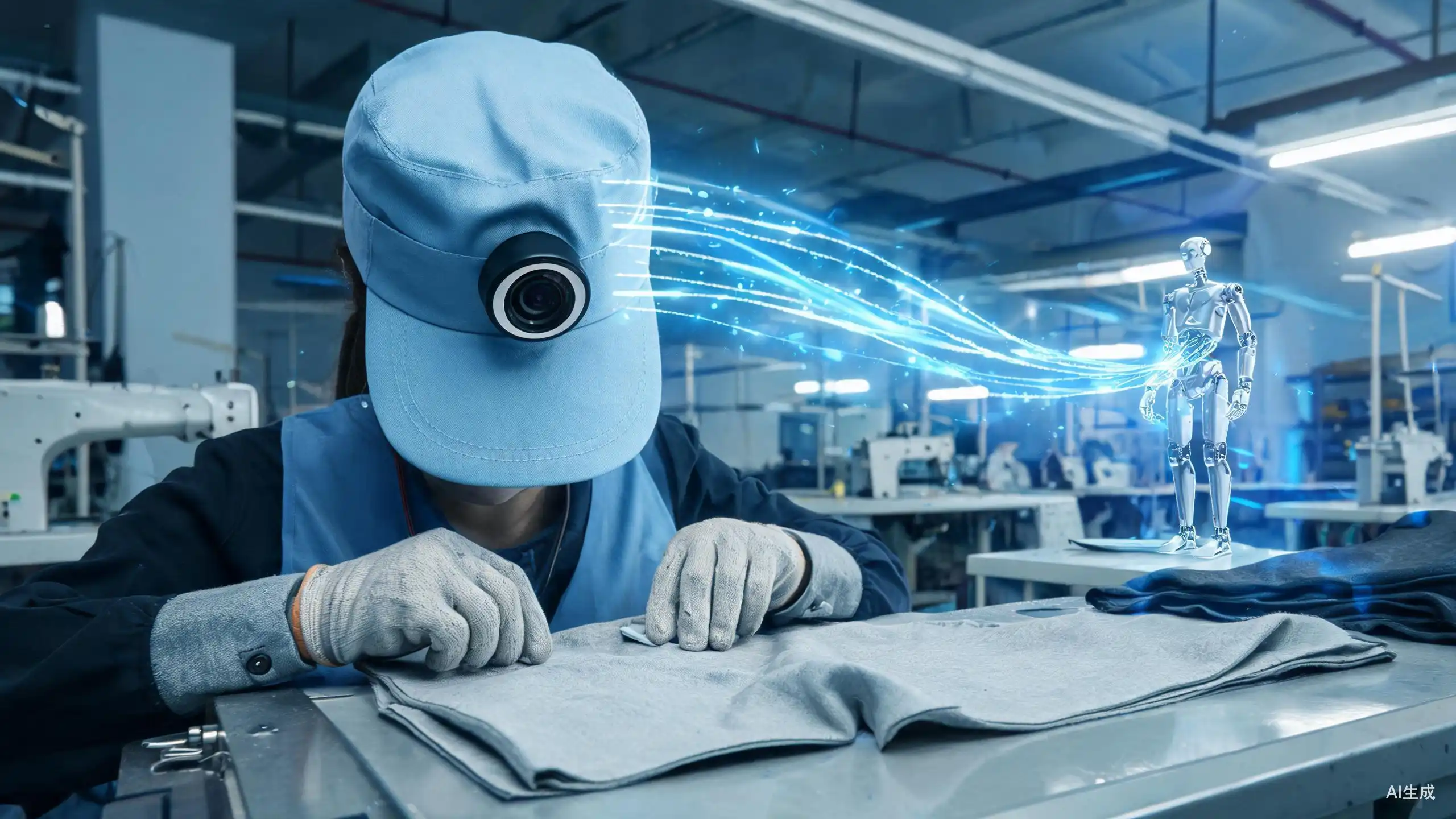
Robots have started to 'consume data,' driving the formation of a new industrial supply chain focused on producing training data for embodied AI. Unlike large language models, which are trained on vast internet text corpora, embodied AI models face a 'data desert' in the physical world. This has created a massive demand for first-person perspective video data (Ego Data), captured by workers wearing cameras in places like Indian garment factories. Companies like Neocambrian AI are establishing 'data factories' where workers perform standardized tasks (e.g., sorting clothes, kitchen organization) to generate thousands of hours of video. Research, such as NVIDIA's EgoScale, demonstrates that scaling this human demonstration data predictably improves robot performance, particularly for dexterous manipulation. This has validated a training path combining large-scale human data for pre-training with smaller amounts of robot-specific data for fine-tuning. The value of different data types varies significantly, forming a 'data pyramid.' The base consists of low-cost, large-scale internet and Ego Data. Higher layers include more expensive motion-capture data (e.g., from data gloves), simulation/synthetic data, and the most costly and scarce layer: real robot teleoperation data. This demand has spawned a layered ecosystem of data suppliers: low-cost data factories, motion capture and alignment specialists, robot-native teleoperation service providers, simulation data companies, and platforms aiming for data standardization. Robot companies themselves are adopting a 'layered procurement' strategy: outsourcing generic Ego Data while building in-house capabilities for robot-specific adaptation data and the critical deployment/failure data generated in real-world applications. The industry is shifting focus from hardware and basic mobility to the data pipelines required for general-purpose capability. While parallels exist to data labeling companies like Scale AI in the LLM boom, the physical complexity of robot data—involving action success ambiguity and sim-to-real gaps—requires more integrated solutions for data collection, annotation, and a continuous feedback loop. The race is on to build the data engines that will teach robots to operate reliably in the unstructured real world.

marsbit4 saat önce

Robots Begin to 'Consume Data': The Hidden Production Chain from Indian Data Factories to Billion-Dollar Humanoid Robots

marsbit4 saat önce

İşlemler

Spot
Futures
活动图片