When 'Odysseus' Encounters the Algorithm

marsbit2026-08-10 tarihinde yayınlandı2026-08-10 tarihinde güncellendi

Özet

Christopher Nolan's "Odyssey," a $250 million IMAX epic, premiered in July 2026, quickly grossing over $1 billion and setting box office and critical records. The film's production was defined by its physical scale: shooting across six countries with practical effects, custom-built IMAX cameras, and extensive use of film. Concurrently, the AI-generated film "Odysseus: The Fall," created by the independent studio Fountain0 for just $50,000, demonstrated the technical feasibility of AI in long-form filmmaking. This stark 5,000x cost difference highlights a broader industry conflict between traditional, experience-driven production and algorithmic efficiency. While the AI film achieved technical success, it revealed current limitations, such as unstable long shots, inconsistent characters, and a lack of nuanced emotional performance. More importantly, its infinite, low-cost nature lacks the scarcity and immersive "event" status that fuels the theatrical premium for films like Nolan's. The market strongly favored the traditional model's brand security, physical assets, and premium theatrical experience. The analysis suggests AI will not replace auteurs like Nolan but will significantly disrupt mid-tier productions and technical, labor-intensive roles (e.g., pre-visualization, VFX). This could erode the career pathways for future directors. Paradoxically, as AI content proliferates, the perceived value of "handcrafted," physically-shot cinema may rise, akin to artisanal goods. ...

By | Wan Dian Research

Athena's owl takes flight at dusk, while Nolan's camera roars at noon.

On July 17, 2026, Christopher Nolan's "Odyssey" was released in cinemas worldwide. As of August 9, this epic film with a budget of $250 million and a runtime of 172 minutes has grossed over $1.008 billion globally, becoming the director's second-highest-grossing work, second only to "The Dark Knight Rises." It opened with a global weekend box office of $264 million, setting a new personal record for Nolan. It holds a 98% fresh rating on Rotten Tomatoes and a 99% audience score, both Nolan's highest career scores. In mainland China, the film had not yet officially premiered (scheduled for August 14), but advance screenings and pre-sales had already generated over 60 million yuan. Showings with only 0.4% of the screenings accounted for over 17% of the box office, with IMAX screenings in first-tier cities reaching a 94% occupancy rate. Industry insiders predict the final box office will land between $1.2 and $1.5 billion.
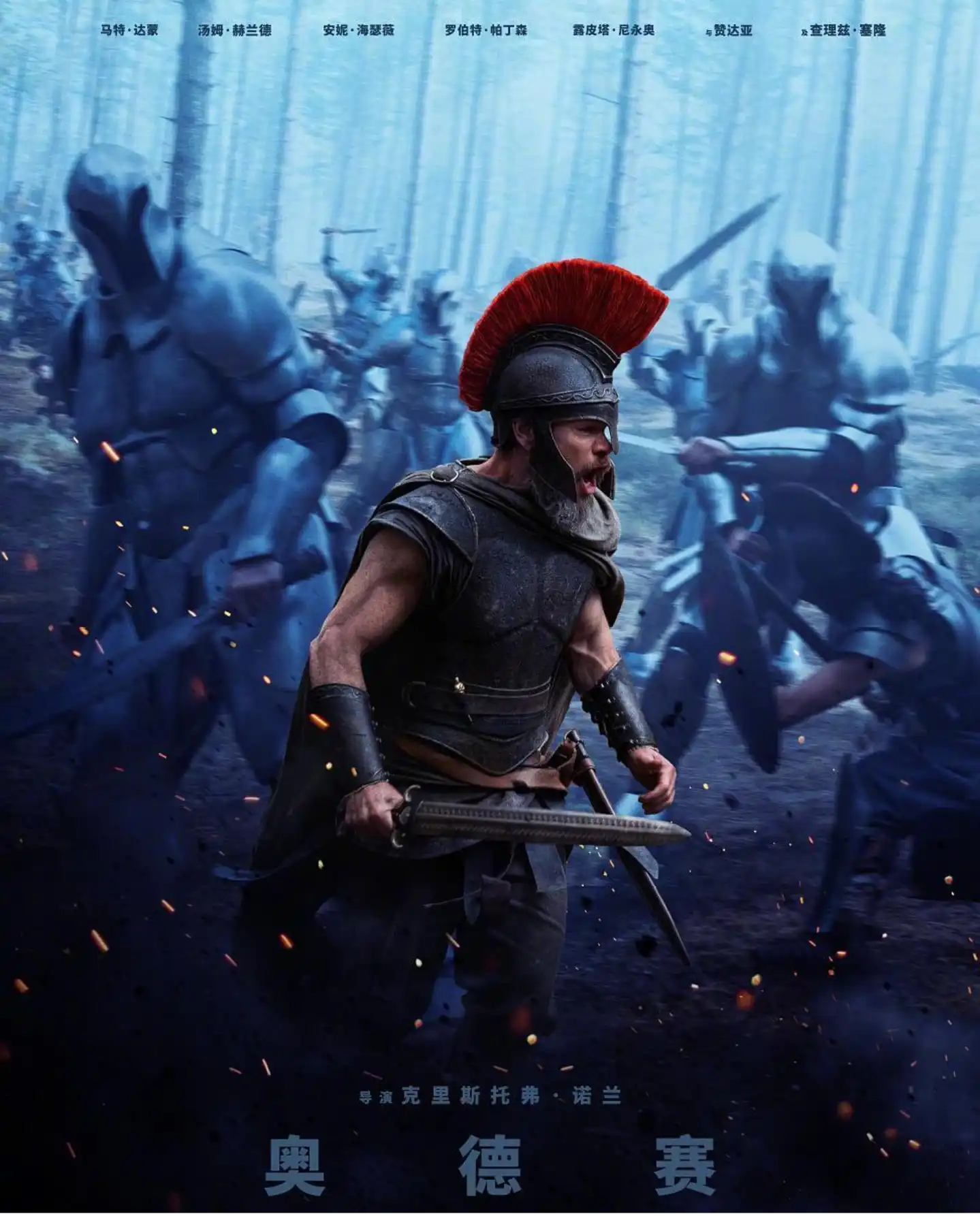
Meanwhile, another version of Odysseus was quietly setting sail in the digital world. Independent studio Fountain0 released a 135-minute feature film titled "Odysseus: The Fall," with a total cost of only $50,000, generated 100% by artificial intelligence. A team of 12 people completed it in three months, with zero live-action filming, zero studio use, and zero large crew. Almost simultaneously, Elon Musk announced on the X platform that his AI platform Grok Imagine would produce an AI-generated "Odyssey" feature film "faithful to Homer's original" by the end of the year.

A 5000-fold cost difference, same subject matter, same release window. This is not just a clash of artistic genres, but a divergence in industrial philosophy. However, delving deeper into Hollywood's balance sheets reveals that Christopher Nolan's $250 million is not a consumptive "expense," but a "leveraged investment" that moves the entire industry—securing exclusive IMAX agreements, long-tail home video rights, and copyright library value for the next half-century.

In contrast, while AI's $50,000 is cheap, its training datasets exist in legal gray areas, and the generated footage cannot claim strong copyright protection. "Low cost" without property barriers is, in the eyes of capital markets, precisely a liability lacking a moat.

Nolan's filming method is almost a deliberate provocation to efficiency-first proponents.

A 91-day shoot spanned six countries: Morocco, Greece, Italy, Iceland, Scotland, and the United States. The film used over 640 kilometers (over 2.1 million feet) of IMAX film—enough to stretch from Toronto to New York—and produced 5,300 costumes. For this film, IMAX spent two years developing its first new film camera in 25 years, named "Kelly" in honor of the late Chief Quality Officer David Kelly and his wife. The camera uses carbon fiber components (sourced from Formula 1 racing) and for the first time enables IMAX film to capture dialogue and close-up shots—previously, the immense operating noise of IMAX cameras made any dialogue scene impossible.

The Cyclops scene was not CGI. The crew built a 60-foot-tall practical animatronic puppet in Greece's Psychro Cave, combining mechanical effects and string-puppet techniques. The six-headed sea monster and massive whirlpool were also filmed practically—manned speedboats circled to create a physical water vortex, providing real-time dynamic references for the visual effects team. Actors wore bronze armor while submerged in 9°C seawater. As Matt Damon put it, "This is absolutely the biggest movie I've ever made in my career. It feels like it was made the way they would have 100 years ago, just with IMAX this time."

Independent studio Fountain0's working method belongs to another civilization.

They used large language models to generate the script and video diffusion models to render the visuals. Algorithms replaced the director, cinematographer, art director, lighting technicians, and even the entire post-production team. No morning meetings, no weather delays, no actor scheduling conflicts, no workers' compensation insurance. The total cost of $50,000 is roughly equivalent to a single day's catering expenses on Nolan's set. The film rents for $9.99 per view. It proves for the first time that generating a full-length narrative film with AI is technically feasible.

The capital markets have already cast their preliminary vote.

Nolan's "Odyssey" has grossed $257 million from IMAX screenings, accounting for nearly a quarter of its global total. IMAX's stock price surged 6.61% on August 3, breaking the $50 barrier for the first time to hit a record high; it's up 37.99% year-to-date and has doubled over the past 12 months. Thanks to this film, Universal Pictures became the first film studio in 2026 to surpass $4 billion in global box office. With a $20 million advance plus 20% of the box office gross, Nolan stands to earn between $75 million and $100 million personally.

Meanwhile, Fountain0's AI feature film garnered about 1.2 million views in its first week on streaming platforms. Converted to a subscription model, this translates to direct revenue of less than $1 million. Musk's Grok Imagine version has yet to materialize, and the capital markets have reacted tepidly—Tesla's stock price showed no significant movement, and xAI's valuation hasn't been repriced as a result.

The market favors a certain narrative.

Nolan spent two decades, over ten films, and a cumulative global box office exceeding $6 billion to build a predictable brand for investors. Securing a top-tier Hollywood deal of a "$20 million advance plus 20% of the box office" as a director is extremely rare in industry history. AI filmmaking, however, has yet to establish any sustainable business model. There is no director brand premium, no theatrical window, no IMAX exclusive revenue share, no peripheral merchandise chain. It remains in the ambiguous zone between "tech demo" and "complete product." More crucially, Nolan's seemingly "inefficient" practical filming method is, in essence, a "physical performance bond" delivered to investors. In an industry with an extremely high failure rate, footage shot on film is a definite physical asset. In contrast, AI's generation of a perfect shot depends on a probability-based lottery; this black-box unpredictability would be seen as a potential budget black hole and delay bomb in production audits.

The most honest answer to whether AI can replace traditional filmmaking currently is: it depends on how you define "replace."

First, look at AI's limitations. A frame-by-frame analysis of Fountain0's final product reveals no single shot lasting longer than three seconds. The high-frequency cuts are not an avant-garde editing style but a passive compromise of the technology—current mainstream AI video models cannot support long, stable single-shot generation; the longer a shot lingers, the more obvious the loss of detail becomes. Character consistency across scenes cannot be guaranteed; the same character may appear with different facial contours in different shots. Physical simulation remains superficial, with stiff, jerky body movements lacking force logic and natural texture. The deeper constraint lies in "visual entropy": the human brain is extremely sensitive to instantaneous changes in micro-expressions, and great performances often involve actors' extreme deviations from biological randomness. However, current diffusion models are essentially about "averaging probabilities"; algorithms, for stability, automatically avoid those low-probability moments of brilliance—this condemns AI to long-term mediocrity above the mean in the core domain of emotional close-ups. These are structural issues that might be resolved through iteration in the next three to five years.

But the deeper challenge lies in the consumption experience. All 70mm film screenings at London's BFI IMAX until September 10 are sold out. Some flew halfway across the world from Atlanta, others drove 12 hours to watch a midnight screening before catching an early flight back. IMAX CEO Richard Gelfond said, "In New York, you have to wait until September to get a ticket for a 70mm showing; it's almost become a luxury brand." People are paying not just the ticket price but also their time, travel, and attention. These investments themselves become part of the experience—scarcity creates a sense of ritual, and ritual creates a premium. It's more than just ritual. In the era of infinite supply on streaming platforms, "the physical expenditure of being present" is evolving into a new marker of class distinction. This "embodied cognition" generated by physical presence creates physiological memories that no digital algorithm can encode—the social sharing value it generates has long surpassed the price of the movie ticket itself.

AI-generated content is inherently an infinite supply. As long as the servers are on, it can generate Odysseus forever, the Cyclops forever, any shot forever. But infinite supply destroys scarcity, and scarcity is precisely the foundation of the entertainment industry's premium pricing. When algorithms make images as free and limitless as air, people are instead willing to pay more for a real silver screen.

This is not to say AI will be without impact. On the contrary, its efficiency advantages will profoundly transform the middle and later stages of the film and television industry chain.

Pre-visualization (Previs) already uses AI to generate storyboards and dynamic previews; background filling, scene extensions, and dynamic fixes in post-production VFX are increasingly handled by algorithms; virtual production technology combining game engines with AI, as seen in series like "The Mandalorian," has significantly reduced location costs. These applications don't compete for the "director" title but are eroding the profit margins of repetitive, labor-intensive segments in the traditional film industry.

Oxford University economist Carl Benedikt Frey offers a noteworthy observation: technological replacement is never all or nothing; it tends to replace "tasks that can be codified," not entire professions.

AI can replace background artists, but it's difficult to replace the person who decides "why shoot this shot." It can optimize production cost structures, but it struggles to create a new narrative paradigm. Nolan's choice to shoot dialogue scenes on IMAX film—seemingly absurd from an efficiency standpoint—is precisely this "irrational" choice that creates unique value distinct from streaming content. In a content market dominated by algorithm recommendations and short-video formats, this distinction itself becomes a scarce resource.

But a colder point must be added: AI may not replace Nolan at the finish line, but it will block Nolan's apprentices at the starting line. When producers can use AI to generate "good enough" previews for medium-budget genre films, young directors who traditionally gained experience through $50-$100 million practical shooting projects will find it extremely difficult to secure budgets for green-screen shoots. AI isn't replacing masters at the endpoint; it's draining the soil for new masters to grow at the source. When the future holds only Nolan's "handcrafted luxury goods" and AI's "infinite fast-fashion products," the middle ground of cinema as a popular art will severely erode.

Interestingly, AI might reinforce the value of figures like Nolan in another dimension.

When AI-generated feature films become cheap and common, "live-action filming" itself may gain a premium label akin to "handmade." Just as after the Industrial Revolution, handmade goods didn't disappear but instead found a new market position as "artisan." Those elements irreplicable by algorithms—an actor's gaze, the light on a real set, the serendipity created by a group of people in the same physical space—might become even more precious as AI imagery proliferates.

Odysseus wandered the sea for ten years before returning home. Today's film and television industry is also adrift.

One path leads toward the infinite convenience of algorithm generation, the other toward the finite scarcity of film and giant screens. Nolan chose the latter, and the market affirmed it with $1 billion. But this is not the final verdict. AI video models are iterating monthly—perhaps in three years, an AI-generated Odysseus will have consistent facial features, realistic physics, and single-shot narratives lasting two hours. When that happens, will Nolan-style film epics become even more expensive due to increased scarcity, or will they become expensive nostalgia?

If we are honest enough, we must admit the essence of this confrontation is the incommensurability between the "logic of efficiency" and the "logic of experience." Algorithms pursue the "optimal solution"—producing the visual stimuli most aligned with audience expectations within the shortest computational power. Nolan pursues the "unique solution"—that soul-stirring moment possible only on that screen, at that instant, with that specific film grain.

While industrial capital frantically chases the certainty of algorithms, they overlook a brutal truth: humans are willing to pay a premium for "unexpected surprises" but will only pay cheap subscription fees for "precise conformity to expectations." Odysseus rejected the immortality and ease offered by Calypso, choosing instead the thorns and risks of the journey home. This is perhaps the oldest metaphor for the current predicament of film and television: what we ultimately choose are always the difficult voyages that make us truly feel "alive," not the smooth algorithmic path to nothingness.


Trend Kriptolar

İlgili Sorular

QWhat are the key differences in cost, production methods, and market performance between Christopher Nolan's 'Odyssey' and the AI-generated 'Odysseus: The Fall'?

AChristopher Nolan's 'Odyssey' had a budget of $250 million, involved a 91-day live-action shoot across six countries, used 640 km of IMAX film, and utilized elaborate practical effects like a 60-foot animatronic cyclops. As of August 9th, 2026, its global box office exceeded $1.008 billion. In contrast, 'Odysseus: The Fall' by Fountain0 cost only $50,000, was produced in three months by a 12-person team using AI models for the script and visuals with zero live-action filming. It earned an estimated less than $1 million in its first week through streaming rentals.

QAccording to the article, what are the main technological and artistic limitations of current AI-generated feature-length films?

ACurrent AI films face several key limitations: 1) No single shot can last longer than three seconds due to model instability; 2) Inconsistent character appearance across different scenes; 3) Stiff and illogical physical movements and animations; 4) An inability to capture nuanced, low-probability emotional expressions (like great acting moments), as diffusion models inherently average towards probabilistic stability, leading to visual mediocrity. These are considered structural issues that may take 3-5 years to potentially resolve.

QHow does the article contrast the 'efficiency logic' of AI with the 'experience logic' of traditional filmmaking like Nolan's?

AThe article contrasts 'efficiency logic'—where AI aims to produce the most expected visual stimuli with minimal computational power—with 'experience logic'—exemplified by Nolan's pursuit of a 'unique solution' that creates soul-stirring moments achievable only through specific mediums (like IMAX film), locations, and moments. It argues that while capital chases algorithmic certainty, humans are willing to pay a premium for the 'unexpected surprise' and embodied experience (scarce, ritualistic, physically demanding) that traditional filmmaking can offer, as opposed to the cheap subscription fee for algorithmically precise, infinitely reproducible content.

QWhat is the article's argument about how AI might impact the future ecosystem for filmmakers, particularly newcomers?

AThe article argues that AI may not replace master filmmakers like Nolan at the peak of their careers, but it risks 'draining the soil' for the growth of new masters. If studios can use AI to generate 'good enough' previews for mid-budget genre films, it will become extremely difficult for young directors to secure the $50-100 million budgets needed for live-action projects to gain crucial experience. This could lead to a polarized ecosystem with only Nolan-like 'handcrafted luxury' at one end and AI's 'infinite fast-fashion' at the other, causing the middle ground of film as a popular art form to severely erode.

QIn what ways does the article suggest AI could paradoxically strengthen the value of traditional, live-action filmmaking?

AThe article suggests that as AI-generated content becomes cheap and ubiquitous, 'live-action filmmaking' itself could gain a premium label, similar to 'artisan' or 'handcrafted' goods after the Industrial Revolution. Elements that algorithms cannot replicate—such as an actor's gaze, natural lighting on location, and the spontaneous creativity of a group of people sharing a physical space—may become more珍贵 and valued precisely because of the flood of AI imagery, creating a new market distinction based on authenticity and human craft.

İlgili Okumalar

Wall Street 'Conspiracy Theory': Did Powell Deliberately Push Up Long-Term U.S. Treasury Yields?

Bank of America refutes market speculation that Federal Reserve Chair Warsh deliberately pushed up long-term U.S. Treasury yields via press conferences to tighten financial conditions. Their report argues such action contradicts the Fed's established policy framework and would lack FOMC support. According to the report, some market participants interpreted the post-July FOMC meeting rise in long-end yields and inflation breakevens as a deliberate strategy by Warsh to combat inflation by tightening financial conditions. Analysts Mark Cabana and Aditya Bhave directly reject this, stating the FOMC's core policy tool remains the federal funds rate, as outlined in its long-term strategy statements. They emphasize Warsh cannot unilaterally alter the Fed's operational approach, which would require full FOMC consensus—a high bar. The analysis highlights the Fed's precise control over overnight rates versus its limited, indirect influence on long-term yields, which operate through policy expectations and the hard-to-manage term premium channel. The recent sharp move in long-end rates serves as a reminder of the risks of operating outside the Fed's direct control. The report concludes the FOMC is unlikely to abandon its proven, controllable tools for unverified methods, dismissing the "four-dimensional chess" theory of long-rate manipulation as market overinterpretation.

marsbit51 dk önce

Wall Street 'Conspiracy Theory': Did Powell Deliberately Push Up Long-Term U.S. Treasury Yields?

marsbit51 dk önce

Third Quarter Beijing Office Market: Investment and Owner-occupier Acquisition Demand to Recover in Parallel

Third Quarter Beijing Office Market: Investment and Owner-Occupier Acquisition Demand to Recover in Parallel Structural shifts in the domestic economy are reshaping office leasing demand. While expansion in high-tech sectors like AI, semiconductors, and new energy will drive demand, traditional industries may downsize to cut costs. Rents are expected to continue declining due to new supply and landlords' concessions, but prime submarkets attracting high-tech tenants will see slower rental declines and faster absorption. Tenants increasingly favor submarkets with strong industry clusters and supportive policies. The adoption of AI may also lead some firms to reduce their office footprint as they optimize workforce efficiency. The investment sales market is showing signs of recovery. Investor-buyers are becoming more active, targeting properties with stable rental income in key tech hubs. Simultaneously, owner-occupier demand is emerging from high-tech firms seeking headquarters. They prefer buildings in relevant industry locations with good renovation potential. Market Strategy for Q3 2026: * For Tenants: Those for whom office image is critical should consider prime buildings in the CBD. Leverage strong brand positions to negotiate favorable terms, including landlord contributions to fit-out costs. * For Landlords: Transition to service providers by offering industry-specific support like financing connections. Proactively engage expiring tenants with renewal incentives and dedicated account management. * For Buyers: Investor-buyers should target stable, well-occupied assets in submarkets like Zhongguancun. Owner-occupiers from high-tech sectors can seek value in properties with good locational fit but financially pressured sellers, carefully assessing renovation costs. Q2 2026 Market Snapshot: The average effective rent for Beijing Grade A offices fell 2.7% QoQ to RMB 197/sqm/month, with vacancy at a high 16.3%. High-tech sectors drove major leases in submarkets like Zhongguancun and Wangjing-Jiuxianqiao. Total investment sales volume reached RMB 14.2 billion, boosted by investor interest in tech areas and owner-occupier acquisitions by high-tech firms. The average sales price rose 24% QoQ to RMB 38,312/sqm, partly due to premium prices paid for owner-occupier purchases in key financial submarkets.

marsbit51 dk önce

Third Quarter Beijing Office Market: Investment and Owner-occupier Acquisition Demand to Recover in Parallel

marsbit51 dk önce

BofA Research Report Insights: Bull & Bear Indicator Rises to 9.7, Liquidity Backstop and Midterm Elections Form Market's Core Contradiction

Bank of America's Bull & Bear indicator rose to 9.7 in early August, its highest since 2021 and nearing a "sell" signal. Weekly flows showed $52.9B into cash, $32.9B into equities, and $23.1B into bonds. The report highlights a core market contradiction: clear policy intent to backstop financial conditions (evidenced by recent coordinated FX intervention, termed a "poor man's LTCM event") versus extreme bullish sentiment, widening credit spreads for AI mega-cap firms, and rising political uncertainty ahead of the midterm elections. Fund flows were mixed: while equity inflows are on a record annualized pace, the tech sector saw its first outflow in six weeks. Bank of America's strategy advises a "summer retreat or rotation"—exiting risk assets or rotating into defensive sectors (consumer staples), duration assets (REITs, small caps, biotech), and the USD to hedge against potential financial tightening. The midterm election is identified as the key macro variable for H2 2026, acting as a referendum on populist fiscal policies. A Republican-held Senate is viewed as market-positive. The report also notes that AI capital expenditure momentum requires the Mag 7 index to recover above 50 to counter threats from cheap Chinese computing. Near-term market direction may hinge on July payroll data, influencing the Fed's Jackson Hole stance. Overall, while liquidity backstops provide downside protection, the extreme Bull & Bear reading suggests limited upside.

marsbit55 dk önce

BofA Research Report Insights: Bull & Bear Indicator Rises to 9.7, Liquidity Backstop and Midterm Elections Form Market's Core Contradiction

marsbit55 dk önce

İşlemler

Spot

Popüler Makaleler

$S$ Nedir

SPERO'yu Anlamak: Kapsamlı Bir Genel Bakış SPERO'ya Giriş İnovasyonun manzarası gelişmeye devam ederken, web3 teknolojilerinin ve kripto para projelerinin ortaya çıkışı dijital geleceği şekillendirmede önemli bir rol oynamaktadır. Bu dinamik alanda dikkat çeken projelerden biri SPERO, $$s$$ olarak adlandırılmaktadır. Bu makale, SPERO hakkında ayrıntılı bilgi toplamak ve sunmak amacıyla, meraklılar ve yatırımcıların web3 ve kripto alanlarındaki temellerini, hedeflerini ve yeniliklerini anlamalarına yardımcı olmayı amaçlamaktadır. SPERO,$$s$$ Nedir? SPERO,$$s$$, kripto alanında merkeziyetsizlik ve blok zinciri teknolojisi ilkelerini kullanarak etkileşimi, faydayı ve finansal kapsayıcılığı teşvik eden bir ekosistem yaratmayı amaçlayan benzersiz bir projedir. Proje, kullanıcıların yenilikçi finansal çözümler ve hizmetler sunarak eşler arası etkileşimleri yeni yollarla kolaylaştırmayı hedeflemektedir. SPERO,$$s$$'nin temel amacı, bireyleri güçlendirmek ve kripto para alanındaki kullanıcı deneyimini artıran araçlar ve platformlar sağlamaktır. Bu, daha esnek işlem yöntemlerini mümkün kılmayı, topluluk odaklı girişimleri teşvik etmeyi ve merkeziyetsiz uygulamalar (dApp'ler) aracılığıyla finansal fırsatlar yaratmayı içermektedir. SPERO,$$s$$'nin temel vizyonu kapsayıcılık etrafında dönmekte olup, geleneksel finansal sistemlerdeki boşlukları kapatmayı ve blok zinciri teknolojisinin faydalarından yararlanmayı hedeflemektedir. SPERO,$$s$$'nin Yaratıcısı Kimdir? SPERO,$$s$$'nin yaratıcısının kimliği bir miktar belirsizdir, çünkü kurucusu(ları) hakkında ayrıntılı arka plan bilgisi sağlayan sınırlı kamuya açık kaynaklar bulunmaktadır. Bu şeffaflık eksikliği, projenin merkeziyetsizlik taahhüdünden kaynaklanabilir—birçok web3 projesinin paylaştığı bir etik anlayışı, bireysel tanınmanın yerine kolektif katkıları önceliklendirmektedir. Topluluk ve onun kolektif hedefleri etrafında tartışmaları merkezileştirerek, SPERO,$$s$$, belirli bireyleri öne çıkarmadan güçlendirme özünü taşımaktadır. Bu nedenle, SPERO'nun etik anlayışını ve misyonunu anlamak, tek bir yaratıcının kimliğini belirlemekten daha önemlidir. SPERO,$$s$$'nin Yatırımcıları Kimlerdir? SPERO,$$s$$, kripto sektöründe yeniliği teşvik etmeye adanmış girişim sermayedarlarından melek yatırımcılara kadar çeşitli yatırımcılar tarafından desteklenmektedir. Bu yatırımcıların odak noktası genellikle SPERO'nun misyonuyla uyumlu olup, toplumsal teknolojik ilerlemeyi, finansal kapsayıcılığı ve merkeziyetsiz yönetimi vaat eden projeleri önceliklendirmektedir. Bu yatırımcı temelleri, yalnızca yenilikçi ürünler sunan projelere değil, aynı zamanda blok zinciri topluluğuna ve ekosistemlerine olumlu katkılarda bulunan projelere de ilgi duymaktadır. Bu yatırımcıların desteği, SPERO,$$s$$'yi hızla gelişen kripto projeleri alanında dikkate değer bir rakip haline getirmektedir. SPERO,$$s$$ Nasıl Çalışır? SPERO,$$s$$, onu geleneksel kripto para projelerinden ayıran çok yönlü bir çerçeve kullanmaktadır. İşte benzersizliğini ve yeniliğini vurgulayan bazı temel özellikler: Merkeziyetsiz Yönetim: SPERO,$$s$$, kullanıcıların projenin geleceğiyle ilgili karar alma süreçlerine aktif olarak katılmalarını sağlayan merkeziyetsiz yönetim modellerini entegre etmektedir. Bu yaklaşım, topluluk üyeleri arasında sahiplik ve hesap verebilirlik duygusunu teşvik etmektedir. Token Kullanımı: SPERO,$$s$$, ekosistem içinde çeşitli işlevler sunmak üzere tasarlanmış kendi kripto para token'ını kullanmaktadır. Bu token'lar, işlemleri, ödülleri ve platformda sunulan hizmetlerin kolaylaştırılmasını sağlayarak genel etkileşimi ve faydayı artırmaktadır. Katmanlı Mimari: SPERO,$$s$$'nin teknik mimarisi, modülerlik ve ölçeklenebilirliği destekleyerek projenin evrimi sırasında ek özelliklerin ve uygulamaların sorunsuz bir şekilde entegrasyonuna olanak tanımaktadır. Bu uyum sağlama yeteneği, sürekli değişen kripto manzarasında geçerliliği sürdürmek için hayati öneme sahiptir. Topluluk Katılımı: Proje, işbirliği ve geri bildirim teşvik eden mekanizmalar kullanarak topluluk odaklı girişimlere vurgu yapmaktadır. Güçlü bir topluluk oluşturarak, SPERO,$$s$$, kullanıcı ihtiyaçlarını daha iyi karşılayabilir ve piyasa trendlerine uyum sağlayabilir. Kapsayıcılığa Odaklanma: Düşük işlem ücretleri ve kullanıcı dostu arayüzler sunarak, SPERO,$$s$$, daha önce kripto alanında yer almamış bireyler de dahil olmak üzere çeşitli bir kullanıcı tabanını çekmeyi hedeflemektedir. Bu kapsayıcılık taahhüdü, erişilebilirlik yoluyla güçlendirme misyonuyla uyumludur. SPERO,$$s$$ Zaman Çizelgesi Bir projenin tarihini anlamak, gelişim yolculuğu ve kilometre taşları hakkında kritik bilgiler sağlar. Aşağıda, SPERO,$$s$$'nin evriminde önemli olayları haritalayan önerilen bir zaman çizelgesi bulunmaktadır: Kavram Geliştirme ve Fikir Aşaması: SPERO,$$s$$'nin temelini oluşturan ilk fikirler, blok zinciri endüstrisindeki merkeziyetsizlik ve topluluk odaklılık ilkeleriyle yakından uyumlu olarak geliştirildi. Proje Beyaz Kağıdının Yayınlanması: Kavramsal aşamayı takiben, SPERO,$$s$$'nin vizyonunu, hedeflerini ve teknolojik altyapısını ayrıntılı bir şekilde açıklayan kapsamlı bir beyaz kağıt yayımlandı ve topluluk ilgisini ve geri bildirimini toplamak amacıyla sunuldu. Topluluk Oluşturma ve Erken Katılımlar: Projenin hedefleri etrafında tartışmalar yürüterek destek toplamak ve erken benimseyenler ile potansiyel yatırımcılar için bir topluluk oluşturmak amacıyla aktif iletişim çabaları gerçekleştirildi. Token Üretim Etkinliği: SPERO,$$s$$, yerel token'larını erken destekçilere dağıtmak ve ekosistem içinde başlangıç likiditesini sağlamak amacıyla bir token üretim etkinliği (TGE) gerçekleştirdi. İlk dApp'in Yayınlanması: SPERO,$$s$$ ile ilişkili ilk merkeziyetsiz uygulama (dApp) faaliyete geçti ve kullanıcıların platformun temel işlevleriyle etkileşimde bulunmalarını sağladı. Sürekli Gelişim ve Ortaklıklar: Projenin tekliflerine sürekli güncellemeler ve iyileştirmeler yapılmakta olup, blok zinciri alanındaki diğer oyuncularla stratejik ortaklıklar, SPERO,$$s$$'yi rekabetçi ve gelişen bir oyuncu haline getirmiştir. Sonuç SPERO,$$s$$, web3 ve kripto paranın finansal sistemleri devrim niteliğinde dönüştürme ve bireyleri güçlendirme potansiyelinin bir kanıtıdır. Merkeziyetsiz yönetime, topluluk katılımına ve yenilikçi tasarlanmış işlevselliğe olan bağlılığıyla, daha kapsayıcı bir finansal manzaraya doğru bir yol açmaktadır. Hızla gelişen kripto alanındaki herhangi bir yatırımda olduğu gibi, potansiyel yatırımcılar ve kullanıcılar, SPERO,$$s$$ içindeki devam eden gelişmelerle ilgili olarak kapsamlı bir araştırma yapmaları ve düşünceli bir şekilde katılmaları teşvik edilmektedir. Proje, kripto endüstrisinin yenilikçi ruhunu sergileyerek, sayısız olasılığını keşfetmeye davet etmektedir. SPERO,$$s$$'nin yolculuğu hala devam ederken, temel ilkeleri, teknoloji, finans ve birbirimizle etkileşim biçimimizi etkileyebilir.

360 Toplam GörüntülenmeYayınlanma 2024.12.17Güncellenme 2024.12.17

$S$ Nedir

AGENT S Nedir

Agent S: Web3'te Otonom Etkileşimin Geleceği Giriş Web3 ve kripto para dünyasında sürekli gelişen manzarada, yenilikler bireylerin dijital platformlarla etkileşim biçimlerini sürekli olarak yeniden tanımlıyor. Bu tür öncü projelerden biri olan Agent S, açık ajans çerçevesi aracılığıyla insan-bilgisayar etkileşimini devrim niteliğinde değiştirmeyi vaat ediyor. Otonom etkileşimlerin yolunu açarak, Agent S karmaşık görevleri basitleştirmeyi ve yapay zeka (AI) alanında dönüştürücü uygulamalar sunmayı hedefliyor. Bu detaylı inceleme, projenin karmaşıklıklarına, benzersiz özelliklerine ve kripto para alanındaki etkilerine dalacaktır. Agent S Nedir? Agent S, bilgisayar görevlerinin otomasyonunda üç temel zorluğu ele almak üzere özel olarak tasarlanmış çığır açıcı bir açık ajans çerçevesidir: Alan Spesifik Bilgi Edinimi: Çerçeve, çeşitli dış bilgi kaynaklarından ve iç deneyimlerden akıllıca öğrenir. Bu çift yönlü yaklaşım, alan spesifik bilgi açısından zengin bir veri havuzu oluşturmasını sağlar ve görev yürütmedeki performansını artırır. Uzun Görev Ufukları Üzerinde Planlama: Agent S, karmaşık görevlerin verimli bir şekilde parçalanmasını ve yürütülmesini kolaylaştıran deneyim artırımlı hiyerarşik planlama kullanır. Bu özellik, çoklu alt görevleri etkili ve verimli bir şekilde yönetme yeteneğini önemli ölçüde artırır. Dinamik, Homojen Olmayan Arayüzlerle Başlama: Proje, ajanlar ve kullanıcılar arasındaki etkileşimi geliştiren yenilikçi bir çözüm olan Ajan-Bilgisayar Arayüzü'ni (ACI) tanıtmaktadır. Çok Modlu Büyük Dil Modellerini (MLLM'ler) kullanarak, Agent S çeşitli grafik kullanıcı arayüzlerini sorunsuz bir şekilde gezinebilir ve manipüle edebilir. Bu öncü özellikler aracılığıyla, Agent S, makinelerle insan etkileşimini otomatikleştirmede karşılaşılan karmaşıklıkları ele alan sağlam bir çerçeve sunarak, AI ve ötesinde birçok uygulama için zemin hazırlıyor. Agent S'nin Yaratıcısı Kimdir? Agent S'nin kavramı temelde yenilikçi olsa da, yaratıcısı hakkında spesifik bilgiler belirsizliğini koruyor. Yaratıcı şu anda bilinmiyor, bu da projenin yeni aşamasını veya kurucu üyeleri gizli tutma stratejik tercihini vurguluyor. Anonimlikten bağımsız olarak, odak çerçevenin yetenekleri ve potansiyeli üzerinde kalıyor. Agent S'nin Yatırımcıları Kimlerdir? Agent S, kriptografik ekosistemde oldukça yeni olduğundan, yatırımcıları ve finansal destekçileri hakkında ayrıntılı bilgiler açıkça belgelenmemiştir. Projeyi destekleyen yatırım temelleri veya organizasyonları hakkında kamuya açık bilgilerdeki eksiklik, finansman yapısı ve gelişim yol haritası hakkında sorular doğuruyor. Destekleyicilerin anlaşılması, projenin sürdürülebilirliğini ve potansiyel pazar etkisini değerlendirmek için kritik öneme sahiptir. Agent S Nasıl Çalışır? Agent S'nin temelinde, çeşitli ortamlarda etkili bir şekilde çalışmasını sağlayan son teknoloji bir sistem yatmaktadır. İşleyiş modeli birkaç ana özellik etrafında inşa edilmiştir: İnsan Benzeri Bilgisayar Etkileşimi: Çerçeve, bilgisayarlarla etkileşimleri daha sezgisel hale getirmeyi amaçlayan gelişmiş AI planlaması sunar. Görev yürütmedeki insan davranışını taklit ederek, kullanıcı deneyimlerini yükseltmeyi vaat eder. Anlatı Belleği: Yüksek düzeyde deneyimlerden yararlanmak için kullanılan Agent S, görev geçmişlerini takip etmek amacıyla anlatı belleğini kullanarak karar verme süreçlerini geliştirir. Episodik Bellek: Bu özellik, kullanıcılara adım adım rehberlik sağlayarak, çerçevenin görevler gelişirken bağlamsal destek sunmasına olanak tanır. OpenACI Desteği: Yerel olarak çalışabilme yeteneği ile Agent S, kullanıcıların etkileşimleri ve iş akışları üzerinde kontrol sağlamasına olanak tanır ve Web3'ün merkeziyetsiz felsefesiyle uyumlu hale gelir. Dış API'lerle Kolay Entegrasyon: Çeşitli AI platformlarıyla uyumluluğu ve çok yönlülüğü, Agent S'nin mevcut teknolojik ekosistemlere sorunsuz bir şekilde entegre olmasını sağlar ve geliştiriciler ile organizasyonlar için cazip bir seçenek haline getirir. Bu işlevsellikler, Agent S'nin kripto alanındaki benzersiz konumuna katkıda bulunarak, karmaşık, çok aşamalı görevleri minimum insan müdahalesi ile otomatikleştirir. Proje geliştikçe, Web3'teki potansiyel uygulamaları dijital etkileşimlerin nasıl gelişeceğini yeniden tanımlayabilir. Agent S'nin Zaman Çizelgesi Agent S'nin gelişimi ve kilometre taşları, önemli olaylarını vurgulayan bir zaman çizelgesinde özetlenebilir: 27 Eylül 2024: Agent S'nin kavramı, “Bilgisayarları İnsan Gibi Kullanan Açık Bir Ajans Çerçevesi” başlıklı kapsamlı bir araştırma makalesi ile tanıtıldı ve projenin temelini sergiledi. 10 Ekim 2024: Araştırma makalesi arXiv'de kamuya açık olarak yayınlandı ve çerçevenin derinlemesine bir incelemesini ve OSWorld benchmark'ına dayalı performans değerlendirmesini sundu. 12 Ekim 2024: Agent S'nin yetenekleri ve özellikleri hakkında görsel bir içgörü sağlayan bir video sunumu yayımlandı ve potansiyel kullanıcılar ve yatırımcılarla daha fazla etkileşim sağlandı. Bu zaman çizelgesindeki işaretler, sadece Agent S'nin ilerlemesini değil, aynı zamanda şeffaflık ve topluluk katılımına olan bağlılığını da göstermektedir. Agent S Hakkında Ana Noktalar Agent S çerçevesi gelişmeye devam ederken, birkaç ana özellik öne çıkmakta ve yenilikçi doğasını ve potansiyelini vurgulamaktadır: Yenilikçi Çerçeve: İnsan etkileşimine benzer bir bilgisayar kullanımı sağlamak üzere tasarlanan Agent S, görev otomasyonuna yeni bir yaklaşım getiriyor. Otonom Etkileşim: GUI aracılığıyla bilgisayarlarla otonom olarak etkileşim kurabilme yeteneği, daha akıllı ve verimli hesaplama çözümlerine doğru bir sıçrama anlamına geliyor. Karmaşık Görev Otomasyonu: Sağlam metodolojisi ile karmaşık, çok aşamalı görevleri otomatikleştirerek süreçleri daha hızlı ve daha az hata payı ile gerçekleştirebilir. Sürekli İyileştirme: Öğrenme mekanizmaları, Agent S'nin geçmiş deneyimlerden öğrenmesini sağlar ve sürekli olarak performansını ve etkinliğini artırır. Çok Yönlülük: OSWorld ve WindowsAgentArena gibi farklı işletim ortamlarında uyumlu olması, geniş bir uygulama yelpazesine hizmet edebilmesini sağlar. Agent S, Web3 ve kripto alanında kendini konumlandırırken, etkileşim yeteneklerini artırma ve süreçleri otomatikleştirme potansiyeli, AI teknolojilerinde önemli bir ilerlemeyi temsil etmektedir. Yenilikçi çerçevesi aracılığıyla, Agent S dijital etkileşimlerin geleceğini örneklemekte ve çeşitli sektörlerde kullanıcılar için daha sorunsuz ve verimli bir deneyim vaat etmektedir. Sonuç Agent S, AI ve Web3'ün birleşiminde cesur bir sıçramayı temsil ediyor ve teknoloji ile etkileşim biçimimizi yeniden tanımlama kapasitesine sahip. Henüz erken aşamalarında olmasına rağmen, uygulama olanakları geniş ve çekici. Kritik zorlukları ele alan kapsamlı çerçevesi ile Agent S, otonom etkileşimleri dijital deneyimin ön plana çıkmasına taşımayı hedefliyor. Kripto para ve merkeziyetsizlik alanlarına daha derinlemesine girdikçe, Agent S gibi projelerin teknoloji ve insan-bilgisayar işbirliğinin geleceğini şekillendirmede önemli bir rol oynayacağı kesin.

813 Toplam GörüntülenmeYayınlanma 2025.01.14Güncellenme 2025.01.14

AGENT S Nedir

S Nasıl Satın Alınır

HTX.com’a hoş geldiniz! Sonic (S) satın alma işlemlerini basit ve kullanışlı bir hâle getirdik. Adım adım açıkladığımız rehberimizi takip ederek kripto yolculuğunuza başlayın. 1. Adım: HTX Hesabınızı OluşturunHTX'te ücretsiz bir hesap açmak için e-posta adresinizi veya telefon numaranızı kullanın. Sorunsuzca kaydolun ve tüm özelliklerin kilidini açın. Hesabımı Aç2. Adım: Kripto Satın Al Bölümüne Gidin ve Ödeme Yönteminizi SeçinKredi/Banka Kartı: Visa veya Mastercard'ınızı kullanarak anında Sonic (S) satın alın.Bakiye: Sorunsuz bir şekilde işlem yapmak için HTX hesap bakiyenizdeki fonları kullanın.Üçüncü Taraflar: Kullanımı kolaylaştırmak için Google Pay ve Apple Pay gibi popüler ödeme yöntemlerini ekledik.P2P: HTX'teki diğer kullanıcılarla doğrudan işlem yapın.Borsa Dışı (OTC): Yatırımcılar için kişiye özel hizmetler ve rekabetçi döviz kurları sunuyoruz.3. Adım: Sonic (S) Varlıklarınızı SaklayınSonic (S) satın aldıktan sonra HTX hesabınızda saklayın. Alternatif olarak, blok zinciri transferi yoluyla başka bir yere gönderebilir veya diğer kripto para birimlerini takas etmek için kullanabilirsiniz.4. Adım: Sonic (S) Varlıklarınızla İşlem YapınHTX'in spot piyasasında Sonic (S) ile kolayca işlemler yapın.Hesabınıza erişin, işlem çiftinizi seçin, işlemlerinizi gerçekleştirin ve gerçek zamanlı olarak izleyin. Hem yeni başlayanlar hem de deneyimli yatırımcılar için kullanıcı dostu bir deneyim sunuyoruz.

2.1k Toplam GörüntülenmeYayınlanma 2025.01.15Güncellenme 2026.06.02

S Nasıl Satın Alınır

Tartışmalar

HTX Topluluğuna hoş geldiniz. Burada, en son platform gelişmeleri hakkında bilgi sahibi olabilir ve profesyonel piyasa görüşlerine erişebilirsiniz. Kullanıcıların S (S) fiyatı hakkındaki görüşleri aşağıda sunulmaktadır.

活动图片