U.S. Treasury Department Publishes Rules Regulating Stablecoins Under the GENIUS Act

cryptonews.ru2026-08-19 tarihinde yayınlandı2026-08-19 tarihinde güncellendi

Özet

The U.S. Treasury Department has published draft rules for regulating payment stablecoins under the GENIUS Act. The proposal, announced on August 17, 2026, mandates federal or state licensing for all U.S.-based issuers starting January 18, 2027. A 60-day public comment period is open until October 19, 2026. For foreign stablecoins, access to the U.S. market will be heavily restricted; providers cannot offer them unless the issuer can comply with U.S. legal orders and is registered with the OCC, with a full ban on unlicensed stablecoin sales taking effect from July 18, 2028. Treasury Secretary Scott Bessent stated the rules aim to provide regulatory certainty, foster innovation, and strengthen the dollar's global role. The article's AI analysis notes parallels to the EU's MiCA framework and suggests stringent rules could push global liquidity to softer jurisdictions rather than consolidating the market under U.S. control.

The U.S. Department of the Treasury has published a draft rule regulating the issuance and circulation of payment stablecoins in the American market, establishing mandatory licensing for issuers and strict requirements for foreign tokens. The Notice of Proposed Rulemaking (NPRM) for implementing Section 3 of the $GENIUS Act appeared on the agency's official website on August 17, 2026, and defines a new framework for the entire digital asset industry within the jurisdiction of the United States.

Key Dates and Licensing Requirements

The document was officially filed in the Federal Register on August 18, 2026, which started the 60-day period for public comments, ending on October 19, 2026. According to the draft text, as of January 18, 2027, issuing a payment stablecoin in the U.S. will only be possible if the issuer holds the appropriate federal or state license. This date is the statutory deadline for the regime to take effect if final implementing rules are not adopted earlier by the primary regulators.

The $GENIUS Act was signed on July 18, 2025, and stipulates that the norms will take effect 18 months after enactment or 120 days after the release of final rules, whichever occurs first. The full text of the proposed regulations is available on the Treasury Department's website and contains detailed definitions of key terms, including the concept of "issuance" as the initial transfer of a coin by an issuer, as a result of which another person obtains the right to use, transfer, or redeem the asset.

Regulation of Foreign Issuers and Prohibitions

Separate conditions are established for foreign providers seeking access to the American market. Digital asset providers will not be able to offer or sell foreign stablecoins to customers in the U.S. if the issuer does not have the technical capability to comply with lawful orders from U.S. authorities and does not meet the conditions of mutual agreements between jurisdictions. Admission of foreign companies is also possible if the Treasury Department recognizes the supervisory regime in the country of origin as comparable to the American one and if the issuer registers with the Office of the Comptroller of the Currency (OCC).

Effective July 18, 2028, a complete ban is introduced for digital asset service providers on offering or selling any payment stablecoins to persons in the U.S. if such coins are issued by an unlicensed issuer. This date directly follows from the provisions of the law and is indicated by the agency in the explanatory notes to the draft. However, the regulatory act contains exceptions for direct transfers of digital assets between individuals without an intermediary and for certain operations involving users' self-custodied wallets, preserving room for decentralized trading.

Position of U.S. Treasury Leadership

U.S. Treasury Secretary Scott Bessent stated that the new rules are designed to provide businesses with regulatory certainty, stimulate innovation and economic growth within the country, and strengthen the role of the dollar as the world's reserve currency. According to him, the administration aims to maintain America's status as the cryptocurrency capital of the world and is moving quickly to implement the framework system created by Congress. He published a similar message on social network X, emphasizing the importance of stakeholder input in shaping the final standards.

The presented draft creates a clear legal architecture for the stablecoin market, replacing previous uncertainty with specific licensing procedures and adaptation timelines. The established requirements form a basis for integrating digital dollar assets into the traditional financial system while maintaining mechanisms of state control and protection of the national currency.

AI Opinion

From the perspective of machine data analysis, the American Treasury initiative repeats a trajectory already taken by the European Union: in 2024, the region introduced mandatory reserve and licensing requirements for stablecoin issuers under the MiCA regulation, and practice has shown that even the largest market player, Tether, chose to leave the region rather than undergo licensing. A similar scenario is not excluded for the U.S.: strict requirements for foreign issuers may push part of global liquidity towards jurisdictions with softer oversight, rather than bringing the entire market under the control of the dollar. A technical aspect remaining outside the scope of the article is the requirement for foreign issuers to provide U.S. regulators with the technical capability to block or freeze transactions, which requires architectural changes in the token protocols themselves. Will the structure of stablecoins remain flexible enough for such integration, or will the market split into "American" and "rest of the world" contours?


Trend Kriptolar

İlgili Sorular

QWhat is the key date for the implementation of the stablecoin licensing regime according to the proposed U.S. rules, and what is the condition for earlier implementation?

AAccording to the proposed rules, January 18, 2027, is the statutory deadline for the stablecoin licensing regime to take effect. However, an earlier implementation is possible if the final implementing rules are adopted by the main regulators before that date.

QWhat are the primary regulatory requirements for foreign stablecoin issuers seeking access to the U.S. market under the proposed rules?

AForeign stablecoin issuers must possess the technical capability to comply with lawful U.S. orders, operate under regulatory regimes that the U.S. Treasury deems comparable to the American system, and register with the Office of the Comptroller of the Currency (OCC).

QWhat major prohibition comes into effect on July 18, 2028, as stipulated by the U.S. Treasury's proposed stablecoin regulations?

AStarting July 18, 2028, digital asset service providers will be prohibited from offering or selling any payment stablecoin to persons in the United States if the coin is issued by an unlicensed issuer.

QAccording to the article, what potential market consequence is suggested in the 'AI Opinion' section regarding the U.S. regulatory approach?

AThe 'AI Opinion' section suggests that the strict requirements for foreign issuers might push a portion of global liquidity to jurisdictions with softer oversight, potentially splitting the market into 'American' and 'other' segments rather than bringing the entire market under dollar control.

QWhat specific technical challenge is highlighted for foreign stablecoin issuers in the proposed U.S. regulations?

AForeign issuers are required to provide U.S. regulators with the technical ability to block or freeze transactions, a requirement that may necessitate architectural changes within the token protocols themselves.

İlgili Okumalar

BONK Crypto Treasury Company Has Only $2.14 Million Cash Left, 70% of Revenue Comes from Founder's Own Platform

BONK Inc. (BNKK), the NASDAQ-listed company associated with the Solana meme coin BONK, reported stark financials for the first half of the year. While revenue skyrocketed 6,218% year-over-year to $5.5 million, the company posted a net loss of $7.88 million and its cash reserves plummeted to just $214,000. Its auditors issued a "going concern" warning, citing cumulative losses of $191.4 million, negative operating cash flow, and critically low liquidity. A critical detail is that $3.92 million, or 71%, of its revenue came from an "affiliate revenue share" with LetsBonk.fun, a meme coin launchpad. This platform is linked to founder Mitchell Rudy, whose entity, Lucky Dog Holdings, beneficially owns approximately 40.2% of common stock and all C Series preferred shares. These preferred shares grant the holder the right to elect half of the company's board. The company's financial structure is further intertwined with Rudy; it sold $50 million worth of stock to his entities, accepting payment in BONK tokens. Fluctuations in the value of these and other held digital assets led to an $8.17 million unrealized loss, the primary driver of the net loss. With operating cash outflows of $4.17 million for the half-year, the remaining cash covers roughly nine days of operations at the current burn rate, highlighting severe financial strain despite top-line growth.

marsbit24 dk önce

BONK Crypto Treasury Company Has Only $2.14 Million Cash Left, 70% of Revenue Comes from Founder's Own Platform

marsbit24 dk önce

CryptoQuant Noted a Signal of a Bitcoin Reversal

CryptoQuant has highlighted a potential reversal signal for Bitcoin, suggesting the bearish phase might be nearing its end as on-chain metrics show initial signs of spot demand recovery. Their analysis indicates that the 30-day spot demand metric has recovered from -206,000 BTC in late July to approximately -5,000, close to turning positive for the first time since February 2026. Historically, such a reversal has been followed by a median 60-day price gain of 18.1%, with a win rate of 78% (increasing to 87% when valuations are depressed). However, they caution that this is a favorable sign, not a guarantee. Analysts from Bitfinex Alpha note that two of three conditions for a sustainable Bitcoin recovery are already met: improved Federal Reserve rate expectations and relatively accommodative financial conditions, thanks to easing inflation and reduced odds of a near-term rate hike. The missing third catalyst is a capital rotation from traditional markets (like stocks and AI infrastructure) into cryptocurrencies. If this occurs, Bitcoin could reclaim $70,000. Conversely, continued negative flows might see support tested around $57,000. Current headwinds include significant weekly outflows from US spot Bitcoin ETFs (roughly $385 million) and reduced stablecoin supply. Wintermute offers a more cautious outlook, pointing to the same large ETF outflows and ongoing miner selling pressure. They note that Bitcoin has failed to rally despite the improved Fed outlook, which is typically bullish for risk assets. As an example, they cite miner Riot Platforms, which sold a substantial portion of its Bitcoin reserves in Q2 as its mining cost (~$91,000 per BTC) remains far above the current market price, forcing sales for liquidity. This combination of ETF outflows and miner selling is suppressing new demand.

cryptonews.ru26 dk önce

CryptoQuant Noted a Signal of a Bitcoin Reversal

cryptonews.ru26 dk önce

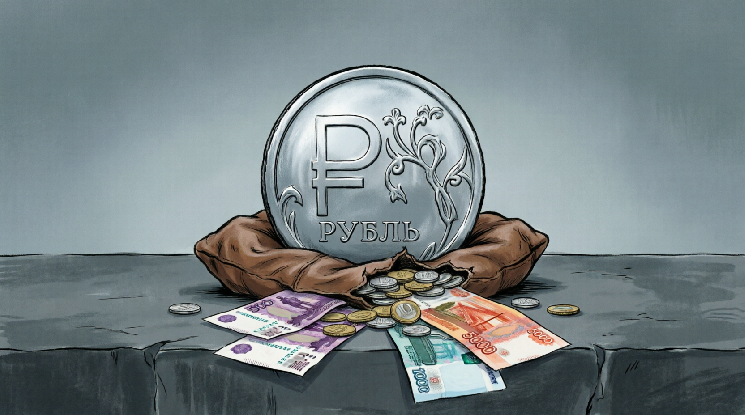
Is a Strong Ruble Good? Not for the Budget: Treasury Already Short 1.5 Trillion

The Russian budget has lost about 1.5 trillion rubles in revenue since the start of 2026 due to the ruble being stronger than the government's planned exchange rate. The budget was based on an average annual rate of 92.2 rubles per US dollar, but the actual average for the first seven and a half months was just 76.9 rubles. This discrepancy creates a significant shortfall, as every ruble of appreciation against the dollar reduces annual budget revenues by 140–160 billion rubles. When accounting for oil and gas revenues, the sensitivity is even higher, with potential annual losses reaching up to 2.5 trillion rubles. So far this year, the budget has already missed out on roughly 1.7 trillion rubles. The ruble's exchange rate has shown considerable volatility in 2026, ranging from a low near 71 rubles per dollar in May to over 85 rubles by mid-August. Despite this recent weakening, the year's average remains well below the budget target, creating a structural deficit in oil and gas revenues. Forecasts suggest the final average rate for 2026 will be around 80–82 rubles, which would result in a budget shortfall of about 1.6 trillion rubles. A strong ruble reduces import costs and inflation but also cuts the ruble earnings of exporters and threatens the funding of social obligations. The gap between the planned and actual rate is attributed not only to oil price dynamics but also to the fiscal rule mechanism, which can influence the currency's direction. The Ministry of Finance recently halted foreign currency sales under this rule, removing dollar supply from the market and contributing to pressure on the exchange rate. The budget policy is now forced to adapt to a stronger ruble than originally planned.

cryptonews.ru27 dk önce

Is a Strong Ruble Good? Not for the Budget: Treasury Already Short 1.5 Trillion

cryptonews.ru27 dk önce

İşlemler

Spot

Popüler Makaleler

GENIUS Nasıl Satın Alınır

HTX.com’a hoş geldiniz! Genius (GENIUS) satın alma işlemlerini basit ve kullanışlı bir hâle getirdik. Adım adım açıkladığımız rehberimizi takip ederek kripto yolculuğunuza başlayın. 1. Adım: HTX Hesabınızı OluşturunHTX'te ücretsiz bir hesap açmak için e-posta adresinizi veya telefon numaranızı kullanın. Sorunsuzca kaydolun ve tüm özelliklerin kilidini açın. Hesabımı Aç2. Adım: Kripto Satın Al Bölümüne Gidin ve Ödeme Yönteminizi SeçinKredi/Banka Kartı: Visa veya Mastercard'ınızı kullanarak anında Genius (GENIUS) satın alın.Bakiye: Sorunsuz bir şekilde işlem yapmak için HTX hesap bakiyenizdeki fonları kullanın.Üçüncü Taraflar: Kullanımı kolaylaştırmak için Google Pay ve Apple Pay gibi popüler ödeme yöntemlerini ekledik.P2P: HTX'teki diğer kullanıcılarla doğrudan işlem yapın.Borsa Dışı (OTC): Yatırımcılar için kişiye özel hizmetler ve rekabetçi döviz kurları sunuyoruz.3. Adım: Genius (GENIUS) Varlıklarınızı SaklayınGenius (GENIUS) satın aldıktan sonra HTX hesabınızda saklayın. Alternatif olarak, blok zinciri transferi yoluyla başka bir yere gönderebilir veya diğer kripto para birimlerini takas etmek için kullanabilirsiniz.4. Adım: Genius (GENIUS) Varlıklarınızla İşlem YapınHTX'in spot piyasasında Genius (GENIUS) ile kolayca işlemler yapın.Hesabınıza erişin, işlem çiftinizi seçin, işlemlerinizi gerçekleştirin ve gerçek zamanlı olarak izleyin. Hem yeni başlayanlar hem de deneyimli yatırımcılar için kullanıcı dostu bir deneyim sunuyoruz.

616 Toplam GörüntülenmeYayınlanma 2026.04.29Güncellenme 2026.06.02

GENIUS Nasıl Satın Alınır

Tartışmalar

HTX Topluluğuna hoş geldiniz. Burada, en son platform gelişmeleri hakkında bilgi sahibi olabilir ve profesyonel piyasa görüşlerine erişebilirsiniz. Kullanıcıların GENIUS (GENIUS) fiyatı hakkındaki görüşleri aşağıda sunulmaktadır.

活动图片