US Stock Market Trend (June 16): SpaceX Rises 42% in Two Days, New Fed Chairman Takes Office Today

marsbit2026-06-16 tarihinde yayınlandı2026-06-16 tarihinde güncellendi

Özet

**U.S. Stocks Trend (June 16): SpaceX Soars 42% in Two Days, New Fed Chair Takes Office Today** Markets surged on Monday following former President Trump's social media announcement of a completed U.S.-Iran deal to reopen the Strait of Hormuz, pending a June 19 signing. The news triggered a broad risk-on rally: oil prices crashed, tech stocks soared, bond yields fell, and defensive sectors lagged. **Market Performance:** The Nasdaq jumped 3.07%, led by semiconductor stocks like Micron (+9.2%). The S&P 500 gained 1.65%, and the Dow rose 0.92% to a record high. However, the Russell 2000 small-cap index underperformed (+0.72%). SpaceX continued its hot streak, rising another 5% pre-market after disclosures of large buys by an Australian billionaire and Cathie Wood's ARK. Boeing also rallied on the transportation optimism. Conversely, energy stocks like Chevron fell over 3% on the oil price plunge, with other defensive sectors also selling off. The day's action showed a clear rotation of funds from energy/defensive plays into AI and tech narratives. **Macro & Outlook:** The VIX fear index fell 8.37%. Treasury yields declined, and WTI crude dropped over 5%. Attention now shifts to a packed schedule: the Bank of Japan is widely expected to hike rates to 1.0% on Tuesday. The Fed's June meeting concludes Wednesday, marking new Chair Wash's debut. While rates are expected to hold, his tone on stubborn inflation and the "dot plot" will be crucial for gauging the 2024 rate path. The ...

Author: Trend Research

On Monday, Washington set Wall Street alight with a social media post. Trump announced late Sunday night that a US-Iran deal "has been completed," with both sides reaching a 60-day agreement to reopen the Strait of Hormuz, scheduled to be signed in Switzerland on June 19. This Middle East news pressed all the buttons: oil prices collapsed, tech stocks soared, bond yields fell, and defensive sectors were left behind alone. The market didn't wait for the signing; it priced in all the good news upfront.

Market Performance

The Dow Jones closed up 469 points (+0.92%) at 51,671 points, hitting a new record high. The S&P 500 rose 1.65% to 7,554 points, and the Nasdaq surged 3.07% to 26,684 points, marking its best single-day performance since March 31. However, the small-cap Russell 2000 only gained 0.72% to 2,965 points, lagging behind on a broadly positive day. While all indices were in the green, the winners were far more concentrated than the index names suggested, with Technology and Consumer Discretionary leading the gains, while Energy and defensive sectors were outsiders in this feast. Beneath the surface, money is quietly changing teams.

Chip stocks led the charge, spearheaded by Micron. Micron skyrocketed 9.2% in a single day, driving the Philadelphia Semiconductor Index up 4.5% to a record high. Even NVIDIA, which had been sluggish recently, closed up 3%. Chip stocks are the highest-beta proxy for AI demand; once geopolitical risks eased and discount rates fell, they rebounded the fastest. The US-Iran deal didn't change any balance sheet but managed to add hundreds of billions in market value back to the entire sector with a single piece of news.

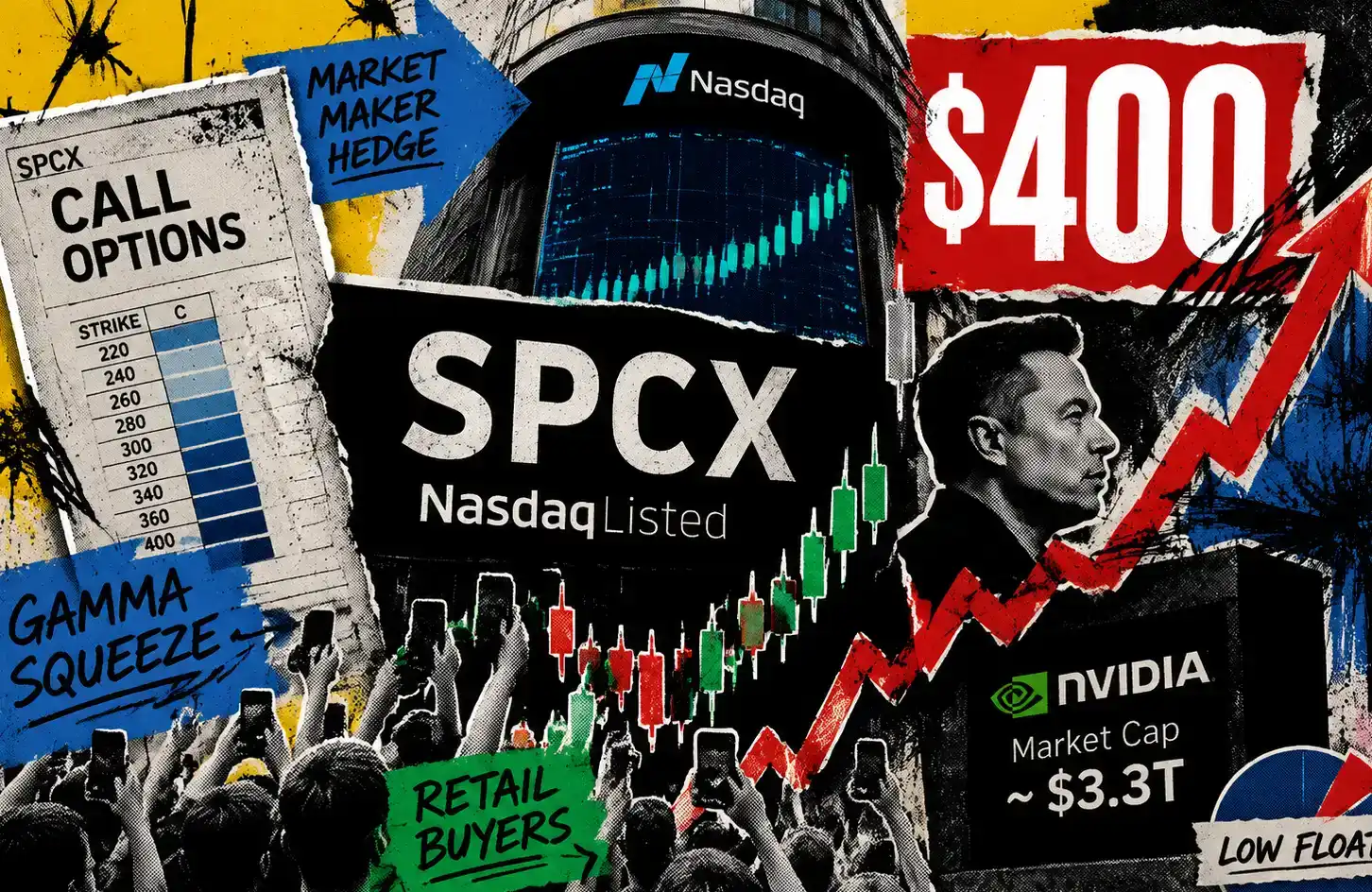
SpaceX (SPCX) was another major theme. Gina Rinehart, Australia's richest person and a mining magnate, was revealed to have built a position worth over $1 billion. The news sent the stock up over 5% pre-market to $169.48. On the same day, Cathie Wood's ARK also disclosed purchases exceeding $500 million. The heat from its 19% surge on its IPO debut last week hadn't faded, and institutional investors' collective rush to buy this largest-ever IPO at a moment of peace and positive news is itself a clear snapshot of risk appetite returning.

Within the Dow, Boeing led the components with a 4.66% surge. The reopening of Hormuz means potential repair in global shipping and commercial aviation demand, placing this company, plagued by safety and production issues in recent years, on the side of good news for a change.

In contrast to the tech stock frenzy was the bleeding in the energy sector. Chevron fell 3.60%, Merck dropped 3.37%, and Verizon declined 2.06%. The oil price crash directly dragged down energy stocks, while defensive sectors like healthcare and telecoms also saw selling. Money flowed out of these slow-moving variables and rushed straight towards AI.

Tech and small caps leading, traditional defensives and energy closing down - this was the clearest capital logic on Monday. On the S&P 500, 299 constituents rose, led by Technology, Consumer Discretionary, and Industrials. The energy sector was collectively sold off as oil prices plummeted, with capital from the old economy being herded in batches towards the AI narrative. The market is betting on whether the narrative of "loosening inflation, a pivot in rates" can be passed on, rather than simply a retreat of risk-off sentiment. In other words, what unfolded this day was a clear directional migration. Funds flowed out of defensive and resource sectors like energy, healthcare, and telecoms, concentrating into semiconductors and the AI supply chain, rather than a broadly distributed, evenly spread rally. The underperformance of small caps also confirms that preference remains firmly locked onto large-cap tech.

Macro & Outlook

The VIX fear index closed at 16.20, down 8.37% for the day, returning near pre-war average levels, with sentiment clearly relaxing from weeks of tension. The 10-year US Treasury yield fell over 2 basis points to 4.459%, and the 2-year yield dropped over 3 basis points to 4.054%. The peace deal reopened the imagination of slowing inflation, drawing bond buyers. WTI crude oil settled around $80.30 per barrel, falling over 5% in a single day to its lowest since mid-March, marking the most dramatic asset volatility of the day and the source of this round of loosening inflation expectations. Gold futures rose 2.81% to $4,357, and BTC gained about 2% from Sunday to $65,710. A weaker dollar combined with returning risk appetite made precious metals and crypto marginal beneficiaries of this geopolitical thaw.

The celebration won't last long, with two central bank meetings landing back-to-back this week. The Bank of Japan's June 15-16 meeting results will be announced Tuesday. The market is almost uniformly betting on a 25 basis point hike, raising the policy rate from 0.75% to 1.0%, with about 94% of economists expecting this move. This would be the BOJ's first hike since last December, with the focus shifting to the pace and endpoint of subsequent tightening.

The Federal Reserve's June 16-17 meeting will be the debut for new Chairman Warsh. Maintaining the 3.50% to 3.75% range is the consensus. The real focus is on how he characterizes the 4.2% inflation rate, which touched a three-year high in May, and whether the dot plot completely shuts the window for rate cuts this year. This relates to the entire market repricing of the interest rate path for the second half of the year. With two meetings back-to-back and the market closed Friday for the Juneteenth holiday, all pricing must be compressed into four trading days.

Trend Perspective

The peace deal is real positive news, but the market is trading a 3%-up Nasdaq day as if "the inflation problem is solved," moving too fast. The real test is that this shortened trading week has to cram three major events into four days: the BOJ's likely hike to 1.0% on Tuesday, tightening the world's last source of cheap liquidity; Warsh's FOMC on Wednesday presenting a directional divergence of global monetary policy (one tightening, one holding); and the Hormuz signing on Friday moving the "deal is done" expectation into textual details. Chip stocks, having just rebounded from early-month plunges with valuations stretched tight again, are the most vulnerable link among these three events. Any disappointment could hit them hardest. Monday's broad rally feels more like an advance payment of optimism for this intensive price discovery. The real accounting begins with the BOJ's statement on Tuesday and Warsh's press conference on Wednesday. Watch the nuance in the wording, not just the rate decision itself.


İlgili Sorular

QWhat were the main reasons behind the Nasdaq's strong performance of 3.07% on the day discussed in the article?

AThe Nasdaq's surge was primarily driven by the announced U.S.-Iran agreement to reopen the Strait of Hormuz, which reduced geopolitical risk and led to lower discount rates. This boosted high-beta sectors like tech and semiconductors. Specifically, chip stocks (e.g., Micron up 9.2%) and AI-related plays saw massive inflows as money rotated out of defensive and energy sectors into tech narratives.

QWhich specific stock or event was highlighted as a clear indicator of returning risk appetite in the market?

AThe significant institutional buying in SpaceX (SPCX) was highlighted as a clear indicator. Following its recent IPO, Australian mining billionaire Gina Rinehart was disclosed to have built a position worth over $1 billion, and Cathie Wood's ARK Invest bought over $500 million. This aggressive buying on a geopolitical peace catalyst signaled a sharp return of risk appetite.

QAccording to the article, what is the key concern for the market following the initial rally, and what are the imminent events that pose a test?

AThe key concern is that the market rallied too aggressively, pricing in a 'solved inflation' narrative prematurely. The imminent tests are three major events packed into a short trading week: 1) The Bank of Japan's expected rate hike to 1.0% on Tuesday, 2) New Fed Chair Wash's first FOMC meeting and press conference on Wednesday, and 3) The formal signing of the Strait of Hormuz agreement on Friday. The article suggests chip stocks are particularly vulnerable to any disappointment from these events.

QWhat was the contrasting performance between different market sectors, and what does this indicate about fund flows?

AThere was a stark contrast: Technology, consumer discretionary, and industrials led the gains (e.g., Philadelphia Semiconductor Index up 4.5%), while energy (Chevron down 3.60%), healthcare, and telecom sectors declined. This indicates a clear 'rotation' or 'directional migration' of funds. Money flowed out of traditional defensive, resource, and slow-growth sectors and was concentrated into semiconductor and AI-related growth narratives, rather than a broad-based rally.

QWhat were the significant movements in key macroeconomic indicators (like oil, bonds, VIX) mentioned, and what triggered them?

AThe trigger was the U.S.-Iran agreement news. Key movements included: WTI crude oil prices plummeting over 5% to around $80.30/barrel (a 3-month low). The 10-year and 2-year Treasury yields fell by 2+ and 3+ basis points respectively. The VIX fear index dropped 8.37% to 16.20. Gold and Bitcoin rose (~2.8% and ~2% respectively). These moves reflected collapsing geopolitical risk premia, lower inflation expectations, a softer dollar, and returning risk appetite.

İlgili Okumalar

After Tokenization of Assets, How to Exit?

Title: How to Exit After Asset Tokenization? Author: Symbiotic Compiled by: Hu Tao, ChainCatcher Summary: Tokenization addresses how assets go on-chain but largely leaves the redemption question unresolved. While tokenized assets can settle instantly, the underlying redemption for assets like treasuries, private credit, or real estate can take from T+1 to 180 days. This gap hinders DeFi adoption of Real World Assets (RWAs). Three emerging models aim to provide instant exit liquidity, differing primarily in their capital structure and efficiency: 1. **Balance Sheet Model (e.g., Grove Basin):** A single entity (like Sky) provides immediate liquidity from its balance sheet, acting as a bridge during the settlement period. It offers simplicity and deep initial liquidity but is constrained by a single entity's capacity and risk appetite. 2. **Asset-Specific Vault Model (e.g., Upshift Clear):** Independent liquidity providers fund dedicated vaults for each supported asset, earning fees. It decentralizes capital sources but isolates liquidity and capital per asset, leading to potential fragmentation. 3. **Shared Liquidity Layer Model (e.g., Symbiotic Liquid Lane):** A shared capital pool supports multiple RWA types simultaneously. Funds remain productive between redemptions (e.g., earning yield in lending markets). Exits are settled via a competitive RFQ market. This model aims for higher capital efficiency, scalability across assets, and serves longer-duration assets like private credit. Key differentiators are: 1) Source of capital and risk bearer, 2) Redemption pricing mechanism, 3) Capital efficiency, 4) Scalability to new asset types, and 5) Composability. The shared liquidity layer model represents a move from piecemeal solutions toward scalable infrastructure, enabling T+0 exits by pooling capital, maintaining yield, and using competitive pricing, thus enhancing RWA utility in DeFi.

marsbit13 dk önce

After Tokenization of Assets, How to Exit?

marsbit13 dk önce

After Tokenizing Assets, How to Exit?

After tokenization, a key unresolved issue is providing holders with a reliable exit mechanism, as underlying asset settlement (taking days to months) lags far behind on-chain token settlement. Three primary models for instant liquidity have emerged, differing in their capital structure and efficiency: 1. **Balance Sheet Model (e.g., Grove Basin):** A single, well-capitalized entity (like Sky) provides immediate liquidity from its own reserves. This offers simplicity and deep initial liquidity but is constrained by that single balance sheet's capacity and risk appetite, limiting scalability. 2. **Dedicated Vault Model (e.g., Upshift Clear):** Independent liquidity providers (LPs) fund separate vaults for each supported asset. This decentralizes capital sources but isolates liquidity and capital, which becomes inefficient as the number of tokenized assets grows. 3. **Shared Liquidity Layer Model (Symbiotic Liquid Lane):** Independent capital providers fund shared vaults that can support multiple tokenized assets simultaneously. Capital remains productive between redemptions (e.g., earning yield in DeFi markets). Exits are settled via a competitive RFQ market where market makers bid. The article argues that the shared layer model offers superior capital efficiency and scalability. It transforms exit liquidity from an asset-specific patch into shared market infrastructure, allowing liquidity capacity to grow with overall market participation rather than being fragmented per asset. This is particularly valuable for longer-duration assets like private credit, where reliable T+0 exits can significantly enhance their utility in DeFi.

链捕手26 dk önce

After Tokenizing Assets, How to Exit?

链捕手26 dk önce

Anthropic's Triple Moment: Code Leak, Government Confrontation, and Weaponization

This article analyzes Anthropic's recent conflicts and strategic moves following the U.S. government's emergency halt of its new Fable model, citing national security concerns over potential "jailbreaks." The author argues this incident reveals deeper tensions between AI labs, governments, and the software industry. While critics view Anthropic's safety-focused rhetoric as marketing fear, the author suggests it serves as a commercial moat masking the company's core economic imperative: moving closer to end-users and their valuable data to avoid being commoditized. The piece outlines a coming clash between frontier AI labs like Anthropic and established software companies. Labs need real-world usage data for model improvement via reinforcement learning, creating a cycle where better products attract more users and more data. This threatens software firms who, as Microsoft's Satya Nadella warns, risk having their value captured by a few dominant models. Anthropic's controversial policy changes—initially secretly degrading Fable's performance for LLM development and expanding data retention—are framed as assertions of control, justified by its safety narrative. The company's foundational belief that it alone is sufficiently concerned about superintelligent AI dangers legitimizes its actions, from resisting government demands to shaping usage policies. The author concludes that this alignment of mission, talent, and business strategy is powerful but concerning, as it concentrates immense potential power in the hands of those convinced of their own righteous understanding.

marsbit36 dk önce

Anthropic's Triple Moment: Code Leak, Government Confrontation, and Weaponization

marsbit36 dk önce

İşlemler

Spot
Futures
活动图片