The 'Trump Paradox' in the Midterm Elections: The Stronger He Is, the More Dangerous It Is for the GOP

marsbit2026-05-21 tarihinde yayınlandı2026-05-21 tarihinde güncellendi

Özet

"The Trump Paradox: What's Good for Him Is Weighing Down His Party" This article examines the "Trump paradox": as former President Donald Trump's national approval declines, his grip on the Republican Party intensifies. However, his strategy of enforcing personal loyalty through primary challenges and endorsements risks harming the GOP's broader electoral prospects. Trump's recent victories in ousting critics like Representatives Thomas Massie and Bill Cassidy demonstrate his enduring command over the party's base. Yet, this focus on loyalty may alienate independent and moderate voters crucial for winning general elections. Furthermore, Trump's political weakness limits his ability to advance legislative priorities, creating tension with congressional Republicans. While solidifying his internal authority, Trump's influence may be pushing the party into a more difficult position for the upcoming midterms, where Democratic voters currently show higher enthusiasm. The article concludes that the GOP's greatest challenge may not be Democrats, but the narrowing electoral path shaped by Trump's dominance.

Original Title: The Trump paradox: What's good for him is weighing down his party

Original Author: the Washington Post

Translator: Peggy

Editor's Note: The political paradox surrounding Trump is becoming increasingly clear: while his approval rating among the national electorate continues to decline, his dominance within the Republican Party is growing ever stronger.

The core discussion of this article is not whether Trump can still influence the Republican Party, but rather how this influence is reshaping the party's electoral prospects. On one hand, he forces party candidates to pledge allegiance to him through endorsements, primary challenges, and political purges. On the other hand, this political vetting centered on personal loyalty may also weaken the Republican Party's competitiveness in the general election.

From Thomas Massie and Bill Cassidy, to the Indiana state senate and Texas Senate primaries, Trump's "politics of vengeance" continues to demonstrate his ability to mobilize the Republican grassroots. The problem, however, is that winning a party primary does not equate to winning a national election. For the GOP, the real risk is not that Trump cannot control the party, but that the deeper his control, the narrower the party's appeal may become among independent and moderate voters.

What is more noteworthy is that Trump's strength has not translated into effective legislative capabilities. On issues such as the gas tax, voting rights bills, immigration funding, and military action against Iran, there remains significant tension between him and congressional Republicans. This means that while Trump can force party members to declare their loyalty, he may not be able to make them bear the full political cost for his agenda.

Trump has built a party that is highly loyal to him. Even when his executive actions anger the broader public, Republicans still choose to follow him. This political structure, in turn, undermines his influence with voters beyond his base.

For the midterm elections, the biggest variable the Republican Party currently faces may not be the Democrats, but Trump himself. For Trump, victories in primaries are consolidating his authority within the party; but for the GOP, these victories may also be pushing it towards a more difficult general election to win.

The following is the original text:
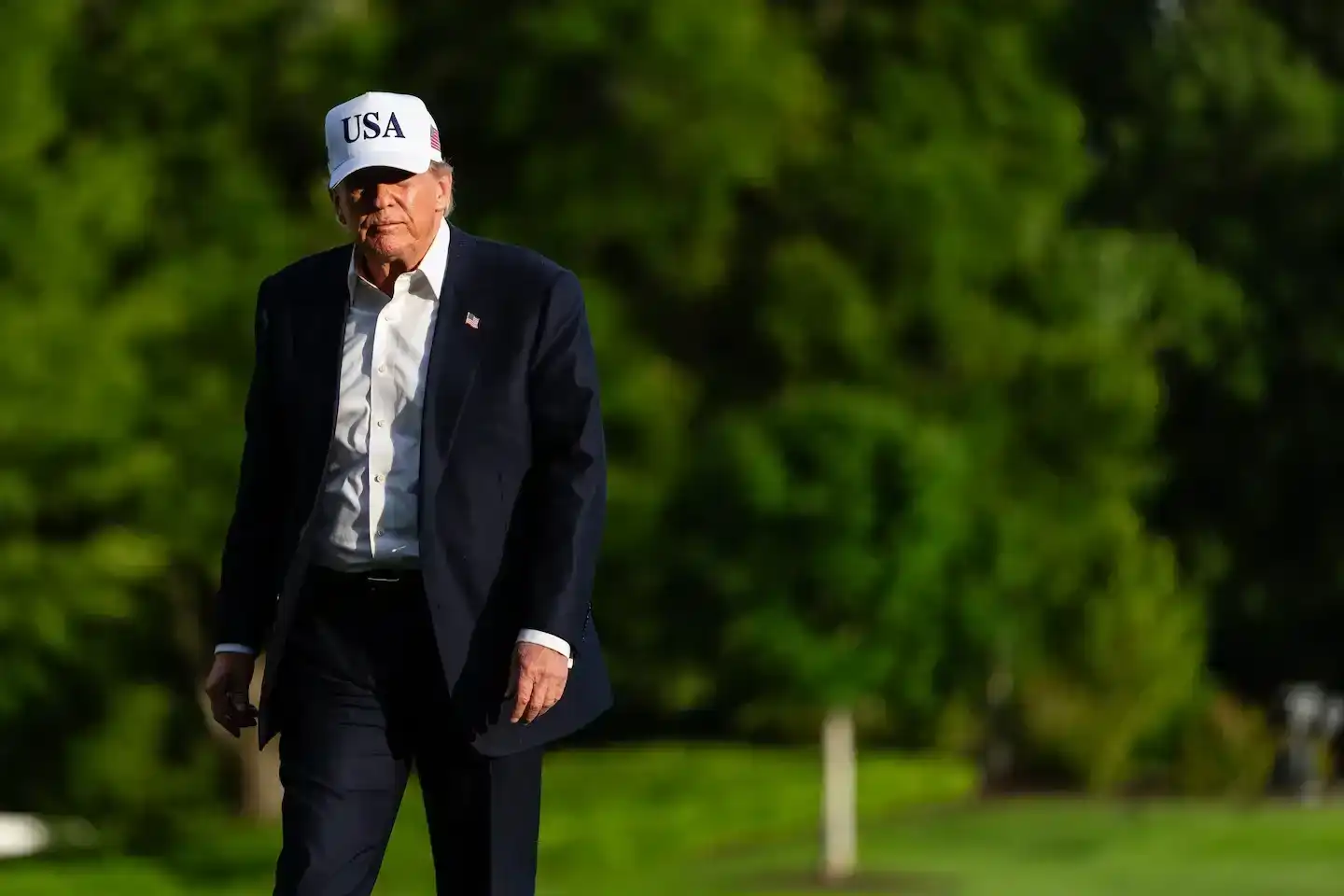
U.S. President Donald Trump walks on the South Lawn of the White House after arriving on Marine One on Friday. (Eric Lee/Pool/The Washington Post)

President Donald Trump does not believe in the so-called "laws of political gravity."

Nationally, as his standing sinks—multiple polls show his approval rating near historic lows—he is tightening his grip on the Republican Party, jeopardizing the electoral prospects this fall of the party that now obeys his will through a series of unpopular, and at times brazen, actions.

The result: a president who is historically powerful in demanding political fealty within his party, yet whose frequent executive actions continue to alienate the broader public. This paradox leaves him increasingly unwilling, and less able, to work through Congress on issues that matter most to voters. And it is a cycle that Trump appears neither willing nor able to break.

On Tuesday, Trump claimed one of his most coveted trophies: Libertarian Republican Rep. Thomas Massie (R-Ky.), an eight-term congressman who was one of Trump's most prominent GOP critics in the House and who led an effort to force the release of government files on the convicted sex offender Jeffrey Epstein, was ousted. Trump initially opposed the move, changing his stance only after he realized he could not stop it.

Massie was soundly defeated in the primary by a previously little-known political newcomer, former Navy SEAL Ed Garlean, who was personally selected by Trump and backed by tens of millions of dollars from Trump-aligned groups.

Massie's defeat came three days after Louisiana Republican Sen. Bill Cassidy also lost his race. Trump had called Cassidy "very disloyal." Five years ago, Cassidy voted to convict Trump in his second impeachment trial over the Jan. 6, 2021, attack on the U.S. Capitol. Though the senator had spent years trying—often awkwardly—to repair the relationship, he ultimately failed even to make a runoff.

Earlier this month, Trump's "revenge tour" swept through Indiana, where Republican voters heeded his call to oust five of seven state senators who had refused Trump's demands to redraw the state's congressional maps. One race remains unresolved, with the latest vote count showing just a two-vote margin between the two candidates.

On Tuesday, Trump again flexed his political muscle: In the Texas Republican Senate primary runoff, he announced his support for Texas Attorney General Ken Paxton over incumbent Sen. John Cornyn. The move frustrated many Republicans on Capitol Hill, who view Cornyn as the stronger general-election candidate; if Paxton wins, the GOP may have to spend hundreds of millions of dollars to ensure its candidate prevails in the deep-red state, money that may be needed to support candidates elsewhere.

But as often is the case, Trump made clear that the decision was personal, not tactical or policy-driven. Cornyn has occasionally criticized Trump in the past, though he has worked hard recently to curry favor, even recently introducing legislation to name one of the country's longest highways after Trump.

It did not work. In a social media post endorsing Paxton, Trump wrote, "John Cornyn is a good guy, and I have worked well with him, but he was not supportive of me during my difficult times."

"I actually think MAGA has never been more united," Trump told reporters Tuesday. But if Republicans are to maintain control of Congress in the fall election, they will need to secure a significant share of other voters. And in Trump's view, the election is tied to his own political survival.

In January, he told a gathering of Republican House members, "You've got to win the midterms, because if we don't win the midterms, then it's going to be—I mean, they'll find a reason to impeach me. I'll be impeached."

But right now, the biggest drag on Republicans' ability to maintain their narrow House and Senate majorities is Trump himself. A New York Times/Siena poll released Monday is just the latest evidence: The public is deeply unhappy with his handling of the war in Iran and the cost of living, and even on immigration, his strongest issue, Trump trails by 15 points.

Among crucial independent voters, Trump's approval rating has sunk to 26 percent. Forty-seven percent of respondents said his policies have hurt them, up from 41 percent last fall. And perhaps the most alarming poll number for Republicans: Democratic voters are more enthusiastic about voting this year, leading by 11 points on the hypothetical question of which party they would support if the election were held today.

At the same time, even Republicans have been unnerved by some of Trump's recent attention-grabbing actions. These include his $100 billion lawsuit against the IRS this year over leaked tax returns, which he settled.

The settlement will create an $1.8 billion taxpayer-funded compensation fund for those who claim they have been persecuted by a "weaponized justice system" like Trump. Beneficiaries are likely to include some of those charged in connection with the Jan. 6, 2021, attack on the U.S. Capitol, when Trump supporters tried to overturn his loss in the 2020 presidential election.

Senate Majority Leader John Thune (R-S.D.) told reporters Tuesday when asked about the fund, "I'm not a big fan."

Democrats were more blunt.

"The corruption has never been more naked, or more broad. But here is what is happening now: You write the checks, Trump and his cronies cash them. And the American taxpayer, already struggling with high prices, will pay the bill," said Sen. Patty Murray (D-Wash.) at a hearing featuring acting Attorney General Todd Branch.

Under the settlement, Trump and his sons are barred from personally receiving payments from the so-called "anti-weaponization" fund. But the IRS will also be "permanently barred and precluded" from collecting any unpaid taxes owed by Trump, his family members or his businesses that accrued before the settlement was reached.

And for all of Trump's strength on unilateral executive actions, his political weakness is also sapping his influence to get things done through the legislative branch. Much of his agenda is stalled in Congress.

Neither Thune nor House Speaker Mike Johnson (R-La.) has embraced Trump's call for a gas tax holiday. The Senate has resisted his demands to end the filibuster, which Trump wants to use to pass his high-priority Save America Act, which includes a provision requiring people to prove their citizenship when registering to vote. Trump has called the bill necessary to secure elections, but opponents argue it would lead to voter suppression.

Another recent point of frustration for Trump: The Senate parliamentarian has refused to allow hundreds of millions of dollars for security costs for his deeply unpopular White House ballroom project to be tucked into an immigration enforcement funding bill under consideration.

For Trump, beyond the "golden halo" that comes with defeating incumbent Republicans, there may also be a shadow. These members will remain in office until January, and presumably will be less afraid of him.

On Tuesday, Cassidy, who just lost his primary, mounted one act of public defiance: For the first time, he voted to advance a resolution to stop Trump from continuing to order strikes against Iran.

"In Louisiana, I've heard from many, including supporters of President Trump, who are concerned about this war," Cassidy said in a statement.

In February, Massie told The Washington Post, "I have colleagues who are just waiting for their primary to be over before they start to develop a more independent voice."

For their own political survival, they may have to.

Original link

İlgili Sorular

QWhat is the core argument of the article regarding Donald Trump's influence on the Republican Party?

AThe article argues that while Donald Trump has gained near-total dominance over the Republican Party, this influence paradoxically makes the party more vulnerable in general elections by alienating independent and moderate voters, thereby jeopardizing its electoral prospects.

QAccording to the article, how did Trump demonstrate his political strength within the GOP through primary elections?

ATrump demonstrated his strength by successfully endorsing and helping to defeat incumbent Republican critics in primaries, such as Representatives Thomas Massie and Bill Cassidy, several Indiana state senators, and by backing Texas Attorney General Ken Paxton over incumbent Senator John Cornyn.

QWhat is one key legislative area where Trump's agenda has stalled in Congress, as mentioned in the article?

AOne key area is his proposed 'Save America Act,' which includes a proof-of-citizenship requirement for voter registration. This bill has faced resistance in Congress, with opponents viewing it as voter suppression.

QWhat specific action by Trump, related to the IRS, caused concern even among some Republicans?

ATrump's settlement with the IRS, which created an $1.8 billion taxpayer-funded 'anti-weaponization' compensation fund potentially benefiting individuals charged in the January 6 Capitol attack, caused concern. Senate GOP leader John Thune stated he was 'not a fan' of the fund.

QWhat does the article suggest is the 'shadow' or potential downside for Trump after he defeats incumbent Republicans in primaries?

AThe article suggests that defeated incumbents, who will remain in office until January, may feel less beholden to Trump and could become more independent and vocal in their opposition to his agenda, as hinted by actions from Bill Cassidy and Thomas Massie.

İlgili Okumalar

Bloomberg Uncovered: How Do China's Wealthy Circumvent the Annual $50,000 Limit to Transfer Assets?

**Summary: How Wealthy Chinese Circumvent $50,000 Annual Foreign Exchange Limits** Despite China's strict capital controls, including an annual $50,000 per person foreign exchange quota, an estimated $150 billion in funds still leaves the country annually via various gray and underground channels. This report outlines the evolution of China's "capital wall" and the methods used to bypass it. **The Evolving Capital Controls:** * **Foundation (1994):** The system of "current account convertibility with strict capital account controls" was established. * **Quota Set (2007):** The $50,000 individual annual forex purchase limit was formalized. * **Crackdown Begins (2015-2017):** Following market volatility, enforcement tightened. Banks were required to scrutinize transactions, and channels like using UnionPay cards for Hong Kong insurance premiums or buying overseas property were blocked. * **Digital & Legal Upgrades (2024-2026):** Enhanced algorithms now flag suspicious patterns (e.g., "smurfing"). The Common Reporting Standard (CRS) provides Chinese tax authorities with data on citizens' offshore accounts. Unlicensed cross-border brokers have been targeted. **Five Primary Methods for Moving Capital:** 1. **Underground Banking / "Hawala" (Duiqiao):** The largest-scale method. No money crosses borders. Clients pay RMB to a domestic account; an overseas associate deposits equivalent foreign currency into the client's offshore account. Risks include high fees, account freezes, and legal penalties. 2. **"Smurfing" or "Ant Moving":** Using multiple individuals' $50,000 quotas to pool funds for one offshore recipient. Increasingly detected by anti-money laundering algorithms. 3. **Trade Invoice Manipulation:** Businesses over-invoice imports or under-invoice exports via offshore shell companies, creating a pretext to transfer excess funds abroad under the guise of trade. 4. **Channel Migration:** After a crackdown on internet brokers, funds flow toward more compliant but costly channels like major banks' cross-border wealth management services or Qualified Domestic Institutional Investor (QDII) quotas. 5. **Structural Arrangements:** High-net-worth individuals use complex, high-cost legal structures involving offshore trusts, insurance, and investment migration programs to transfer asset ownership. **Regulatory Response: Focusing on People, Not Just Money** The current strategy extends oversight from enterprises to **individual residents**. Tools like CRS allow retroactive visibility into offshore assets. Cryptocurrencies, once seen as a potential loophole, are now actively monitored and prosecuted as an illegal channel. The underlying driver remains: with significant wealth concentrated among millions of affluent households seeking diversification amid domestic economic shifts, the incentive to move assets offshore persists despite regulatory barriers.

marsbit10 dk önce

Bloomberg Uncovered: How Do China's Wealthy Circumvent the Annual $50,000 Limit to Transfer Assets?

marsbit10 dk önce

Ethereum's Ballmer Moment: As Everyone Is Bearish, the Circulating Supply Is Disappearing

"Ethereum's Ballmer Moment: Circulation Shrinks Amid Bearish Sentiment" Amid widespread bearish sentiment, with prominent figures like Bankless founder David Hoffman selling ETH and young developers flocking to Solana, some argue Ethereum is entering its "Ballmer era"—akin to Microsoft's perceived stagnation under Steve Ballmer. While surface-level criticisms about slow protocol development, cautious leadership, and competitive pressure are valid, underlying fundamentals tell a different story. Approximately 30% of ETH is staked, major holders like BitMine are accumulating, and spot ETFs continue to absorb supply. Regulatory clarity, including the SEC/CFTC's March ruling on staking rewards and the potential passage of the CLARITY Act, is transforming crypto from a regulatory threat into a legitimized framework. This institutionalization, alongside a shrinking circulating supply (with net issuance around 0.23% annually), creates significant buy-side pressure independent of fee-based value capture. The broader crypto total addressable market is expanding through regulated stablecoins, tokenized assets, and institutional adoption. While public chains face competition from permissioned alternatives, the winning model appears to be permissioned assets settling on public chains like Ethereum and Solana. The author advocates a non-maximalist, barbell strategy: holding ETH for its institutional role and supply squeeze, SOL for consumer/throughput trends, BTC as a macro hedge, and a basket of next-gen L1s. Key bullish drivers for ETH include rapid circulation shrinkage, potential Q2 staked ETF approvals, regulatory tailwinds solidifying its role as a default settlement layer, and the optionality of an eventual "Satya moment" leadership shift. Despite bearish consensus, the current setup—where crypto is "not hot" and regulatory groundwork is being laid—presents a compelling investment opportunity. The crypto cycle's focus may have shifted to AI, but blockchain infrastructure is gaining a legal and institutional foothold precisely while attention is elsewhere.

marsbit10 dk önce

Ethereum's Ballmer Moment: As Everyone Is Bearish, the Circulating Supply Is Disappearing

marsbit10 dk önce

Claude Code Introduces Dynamic Workflows: Enabling AI to Form Teams and Collaborate

Claude Code introduces dynamic workflows, enabling AI to coordinate teams of specialized agents for complex tasks. This transforms Claude from a code assistant into a programmable workbench. Workflows address key limitations of single-agent systems: agentic laziness (premature task completion), self-preferential bias (favoring own outputs), and goal drift (losing sight of original objectives). The system allows Claude to dynamically create execution frameworks using JavaScript. It can split tasks, dispatch parallel agents for isolated work (e.g., in separate worktrees), implement adversarial validation, run tournaments, and synthesize results. This multi-agent approach is valuable for tasks requiring deep research, factual verification, code migration, root cause analysis, large-scale triage, and qualitative sorting. Key patterns include: classify-and-route, fan-out-and-synthesize, adversarial verification, generate-and-filter, tournaments, and loop-until-done. While token usage is higher, workflows excel where tasks resemble programming—needing problem decomposition, isolated context, hypothesis testing, and handling many details. They extend Claude Code's utility beyond technical work to areas like business plan review, resume screening, and naming brainstorm. The feature is not a universal solution but points to a future where AI tool competitiveness depends on organizing reliable, reusable, and auditable execution flows for complex goals.

marsbit52 dk önce

Claude Code Introduces Dynamic Workflows: Enabling AI to Form Teams and Collaborate

marsbit52 dk önce

Hyperliquid, Wall Street's 24/7 Trading Convenience Store

Hyperliquid: The 24/7 Trading "Convenience Store" for Wall Street Hyperliquid, a decentralized cryptocurrency exchange, has become a go-to platform for Wall Street traders seeking to trade around the clock, especially during traditional market closures. Founded by Jeff Yan, a former quantitative trader, after the FTX collapse, the platform emphasizes user self-custody of assets. It offers a wide range of perpetual contracts—leveraged derivatives with no expiry—on assets from Bitcoin and crude oil to the S&P 500 and even pre-IPO companies like SpaceX. A notable example involves a hedge fund trader who capitalized on geopolitical news over a weekend, securing a 243% return on oil derivatives before markets reopened. The platform, run by just 11 employees, generated approximately $800 million in revenue last year, and its native token HYPE has seen significant growth. Its rise highlights the merging of traditional finance and crypto. While U.S. users are currently restricted, recent CFTC rule changes could open access. The platform is known for its transparency, having processed $10 billion in liquidations during a market crash while competitors faltered. Regulators warn of the high risks and complexity of perpetual contracts for retail investors. Key to its appeal is a strong community culture, direct engagement with founders, and a simple interface. Despite rules against VPN use, it attracts global users with its permissionless approach. Hyperliquid plans to expand into prediction markets and options, aiming to eventually host all financial activity.

marsbit52 dk önce

Hyperliquid, Wall Street's 24/7 Trading Convenience Store

marsbit52 dk önce

İşlemler

Spot
Futures
活动图片