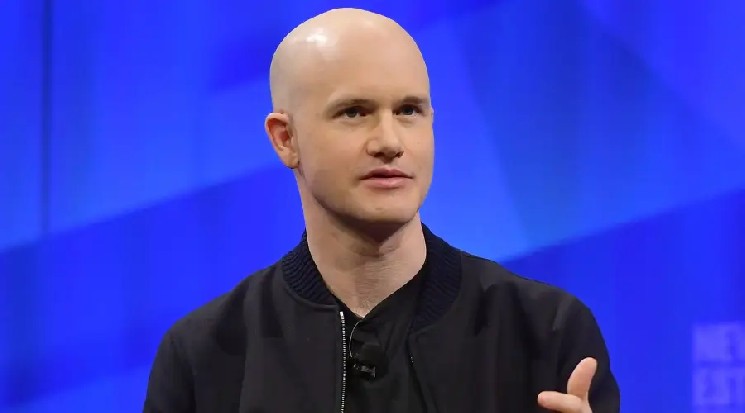
The New Rules of the AI Race: Nvidia Shifts from Chips to Energy Resources and Construction Sites

cryptonews.ru2026-08-21 tarihinde yayınlandı2026-08-21 tarihinde güncellendi

Özet

Nvidia is providing a $105 billion financial guarantee for the construction of OpenAI's data center campus in Ohio, signaling a strategic shift in the AI industry from competing on chips to battling for physical infrastructure and energy resources. The guarantee, detailed in an SEC filing, acts as insurance against tenant default rather than direct construction funding. OpenAI must repay any sums drawn. Nvidia will also invest $1.5 billion in SB Energy for the project's power component. The planned campus has a capacity of 4.25 GW, with OpenAI's current commitments to Nvidia reaching 12 GW. This move underscores that leading AI development now requires securing space, power, and financial backing for massive, long-term projects. Tech giants are taking on roles akin to developers and financial institutions. Concurrently, AI firms are diversifying suppliers: OpenAI and Anthropic have signed major deals with AMD for GPU deployments. Nvidia is also scaling its financial model through partnerships with investment firms to mobilize over $500 billion in external capital. The paradigm in AI is shifting from hardware supremacy to building comprehensive ecosystems. Future industry growth will depend on balancing innovation with real-world infrastructure capabilities, turning abstract computations into tangible industrial projects. An AI analysis notes the deal's resemblance to vendor financing schemes from the telecom bubble of the late 1990s and questions the long-term viability of ...

Nvidia has announced a $105 billion financial guarantee for the construction of OpenAI's data center in Ohio, marking the artificial intelligence industry's shift from competing on chips to battling for physical infrastructure and energy resources. The electronics manufacturer is taking on risks related to equipment leasing and residual value to secure the exclusive placement of its systems at the 4.25 GW facility. This move shows that for further AI development, tech companies are no longer sufficient by simply creating powerful processors—they are now forced to become financial guarantors and de facto co-investors in massive construction projects.

The New Role of Tech Giants in the Real Economy

In an official report filed with the Securities and Exchange Commission (SEC), Nvidia clarified that the guarantee is not direct construction financing but serves as insurance in case of tenant default. Payments are only possible if OpenAI becomes insolvent and after confirming the facilities' operational readiness. The AI developer is obligated to reimburse any spent amounts, turning the deal into a risk management tool rather than charity. Additionally, Nvidia will direct $1.5 billion to SB Energy to develop the project's energy component.

In a corporate blog post, Nvidia CEO Jensen Huang emphasized that the support is limited to specific obligations and does not cover the site's full cost. Each equipment refresh cycle can generate $150–200 billion in revenue with the deployment of about 1.5 million GPUs. OpenAI's current obligations to the vendor reach 12 GW with a potential increase to 16 GW. However, the deal's final terms turned out more modest than July expectations: sources earlier reported discussions of $250 billion support for a 10 GW project. The reduced sum indicates tough negotiations and the existence of limits even for the market's largest players.

The project's energy foundation is being created by SB Energy and SoftBank, which plan to build at least 10 GW of new generation capacity. About 9.2 GW will be supplied by natural gas, and investments in grid infrastructure will be at least $4.2 billion. The launch of the first capacities is scheduled for 2028. For the broader observer, this means that the development of digital technologies is now inextricably linked to large-scale construction in the real sector and the consumption of traditional energy resources.

Supplier Diversification as a Survival Strategy

Major AI developers are actively reducing dependence on a single supplier by distributing orders among several vendors. As early as October 6, 2025, OpenAI entered a strategic partnership with AMD to deploy up to 6 GW of Instinct GPUs. The first gigawatt on MI450 Series chips is planned for the second half of 2026. On July 22, 2026, Anthropic made a similar move, agreeing to deploy up to 2 GW of MI450 Series GPUs. The start is scheduled for the first half of 2027, with AMD committing to invest up to $5 billion in Anthropic.

In parallel, Nvidia is scaling its financial model through external partners. On August 10, 2026, the company signed memoranda with Apollo, BlackRock, Blackstone, Brookfield, Goldman Sachs, and KKR to mobilize over $500 billion in third-party capital. In such deals, Nvidia is prepared to take on residual value support within 25% of transaction volume. The business scale is confirmed by record data center revenue of $75.2 billion for the first quarter of fiscal year 2027, which the company achieved thanks to growing demand.

A Paradigm Shift in the Artificial Intelligence Industry

Events around the Ohio campus illustrate a fundamental shift: leadership in the AI field is no longer determined solely by silicon chip specifications. The key success factor is now the ability to provide physical space, electricity, and financial stability for multi-year projects. Tech companies are forced to integrate into the real sector of the economy, taking on the functions of developers and financial institutions. The distribution of orders between Nvidia and AMD confirms that the monopoly at the "hardware" level is eroding, giving way to comprehensive ecosystem solutions.

The future of the industry now depends on balancing innovation with real infrastructure capabilities. Financial guarantees and energy contracts are becoming assets as important as processor architecture patents. It is this combination that will determine the pace of technological development in the coming decade, turning abstract computations into tangible industrial facilities.

AI Opinion

From a macroeconomic analysis perspective, the Nvidia deal resembles a scheme from the late 1990s, when major telecommunications equipment manufacturers lent money to their own clients to boost sales. Lucent, Nortel, and Cisco then collectively promised clients billions in vendor financing, which Wikipedia later described as an industry collapse with nearly a trillion dollars in debt write-offs. Formally, Nvidia's guarantee is structured differently—as default insurance, not a direct loan—but the economic logic is similar: the equipment seller takes on part of the buyer's risk to ensure demand for its own products. A separate question is how much the energy infrastructure, reliant on natural gas, will be in demand by 2028 given potential changes in the AI market's growth rate. Will such a financing model persist if expectations for AI adoption do not materialize as quickly as planned?

end-content

İlgili Sorular

QWhat is the new direction of competition in the AI industry highlighted by Nvidia's recent actions?

AThe competition is shifting from a focus on semiconductor chips to a battle for physical infrastructure and energy resources. Nvidia's financial guarantee for the OpenAI data center construction exemplifies this shift, requiring companies to become financial guarantors and co-investors in large-scale construction projects.

QWhat are the specifics of Nvidia's financial guarantee for the OpenAI data center project in Ohio?

ANvidia has provided a $105 billion financial guarantee. This is not direct funding for construction but serves as insurance in case of tenant (OpenAI) default. Payments are only triggered if OpenAI becomes insolvent and after the facility is confirmed operational. Nvidia also invested $1.5 billion in SB Energy for the project's energy component.

QWhat does the article say about AI developers reducing dependency on a single supplier?

AMajor AI developers are actively diversifying their suppliers. For example, OpenAI signed a deal with AMD in October 2025 for up to 6 GW of Instinct GPUs. Similarly, Anthropic agreed with AMD in July 2026 for up to 2 GW of MI450 Series GPUs, with AMD investing up to $5 billion in Anthropic.

QHow is Nvidia scaling its financial model according to the article?

ANvidia is scaling its financial model through external partners. On August 10, 2026, it signed memorandums with firms like Apollo, BlackRock, Blackstone, Brookfield, Goldman Sachs, and KKR to mobilize over $500 billion in third-party capital. In such deals, Nvidia is willing to take on residual value support for up to 25% of the transaction volume.

QWhat potential historical parallel is drawn in the article's 'AI Opinion' section regarding Nvidia's deal structure?

AThe 'AI Opinion' section draws a parallel to the late 1990s when major telecom equipment manufacturers like Lucent, Nortel, and Cisco provided vendor financing to their customers to boost sales, which later contributed to an industry crash with nearly a trillion dollars in debt written off. While Nvidia's guarantee is structured as default insurance rather than a direct loan, the economic logic is similar: the seller assumes some of the buyer's risk to ensure demand for its own products.

İlgili Okumalar

RWA Tokenization Enters the Next Phase: What is the Truly Time-Consuming Advantage to Build?

The article argues that as tokenization frameworks for Real-World Assets (RWA) mature, the ability to issue assets is becoming less of a competitive advantage. The focus is shifting to what happens *after* issuance: which RWA operations can build enduring trust, maintain stable operations, and remain integrated into the financial ecosystem over the long term. The piece introduces the concept of a **Reserve Layer**—infrastructure that connects tokenized assets to the necessary verification, liquidity, and operational systems for on-chain finance. For an asset to serve as a reliable reserve (e.g., short-term U.S. Treasuries, gold), it needs predictable value, standardized features, deep markets, and observable pricing. However, the true, hard-to-replicate advantage lies not just in the underlying asset but in the **operational track record** built over time. This includes consistent reserve management, independent audits, successful redemptions, maintained liquidity, and protocol integrations. Each successful operation adds evidence, creating a reinforcing cycle: more evidence builds stronger institutional confidence, leading to wider distribution, deeper liquidity, and more use cases as collateral. The article presents a framework combining two dimensions: an asset's suitability as a reserve and the issuer's operational capability. The most sustainable model combines **high-quality reserve assets with strong, long-term operational discipline**. A critical blind spot is an asset with high reserve suitability (like gold) issued by an entity with a limited operational track record; the quality of the infrastructure is separate from the quality of the asset itself. In conclusion, the next phase of RWA will be defined by participants who can pair appropriate reserve assets with the operational rigor to support them through market cycles, thereby transforming tokenized RWAs into durable financial infrastructure.

marsbit18 dk önce

RWA Tokenization Enters the Next Phase: What is the Truly Time-Consuming Advantage to Build?

marsbit18 dk önce

İşlemler

Spot
活动图片