Author: imToken
Original Title: The New Narrative of the $5000 Era: The 'Old King' Returns to the Throne, How to Understand the Tokenization Logic of Gold?
If someone had told you a year ago that gold would quickly rise to $5000 per ounce, most people's first reaction would probably have been that it was wishful thinking.
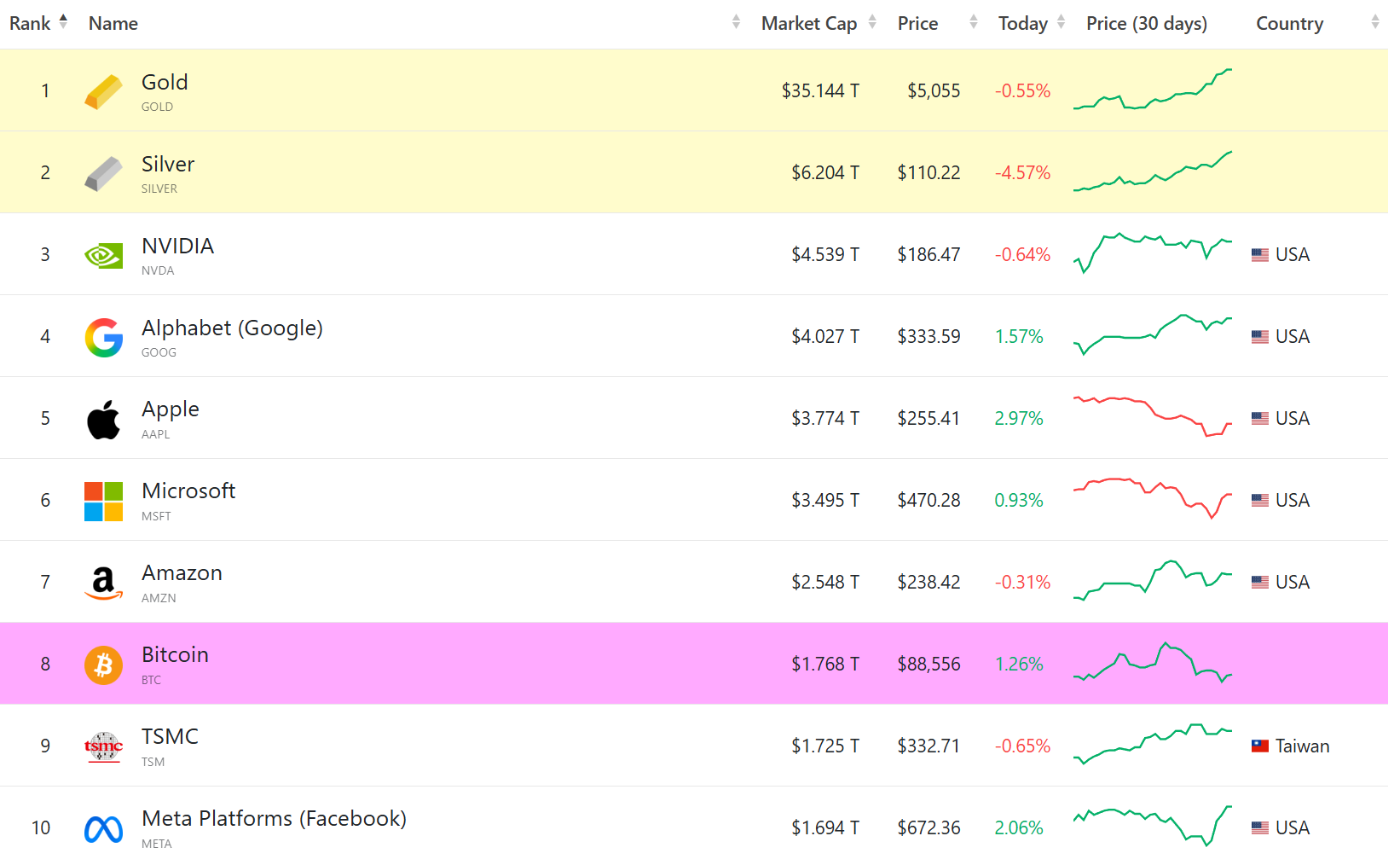
But that's exactly what happened. In just half a month, the gold market has been like a runaway horse, successively breaking through multiple historical barriers at $4700, $4800, and $4900 per ounce, and heading toward the $5000 moment that the market collectively anticipated with almost no looking back.
Source: companiesmarketcap.com
It can be said that after global macroeconomic uncertainties have been validated repeatedly, gold has returned to its most familiar position—as a consensus asset that does not rely on any single sovereign promise.
But at the same time, a more practical question is emerging: as the gold consensus returns, are traditional methods of holding it no longer sufficient to meet the demands of the digital age?
I. The Inevitability of the Macro Cycle: The 'Old King' Returns to the Throne
From a longer macroeconomic cycle perspective, this round of gold's upward cycle is not short-term speculation but a structural return against the backdrop of macroeconomic uncertainty and a weakening US dollar:
Geopolitical risks have extended from Russia-Ukraine to key resource and shipping lane regions such as the Middle East and Latin America; the global trade system has been repeatedly interrupted by tariffs, sanctions, and policy games; the US fiscal deficit continues to expand, and the long-term stability of the US dollar's credit is being discussed more frequently. In such an environment, the market will undoubtedly accelerate its search for a value anchor that does not rely on any single country's credit and does not require endorsement from others.
From this perspective, gold does not need to prove that it can generate returns; it only needs to repeatedly prove one thing: in an era of credit uncertainty, it still exists.
This also partly explains why BTC, which was once expected to be a 'digital gold,' has not fully assumed the same consensus role in this cycle—at least in the dimension of macroeconomic hedging, the choices of capital have already provided the answer, which we will not elaborate on here (for further reading, see 'From Trustless BTC to Tokenized Gold: Who Is the Real 'Digital Gold'?').
However, the return of the gold consensus does not mean that all problems have been solved. After all, for a long time, investors have almost had to choose between two imperfect ways of holding gold.
The first is physical gold. It is secure enough and sovereign, but it almost lacks liquidity. Locking gold bars in a safe means high storage, anti-theft, and transfer costs, and it also means that it can hardly participate in real-time trading or daily use.
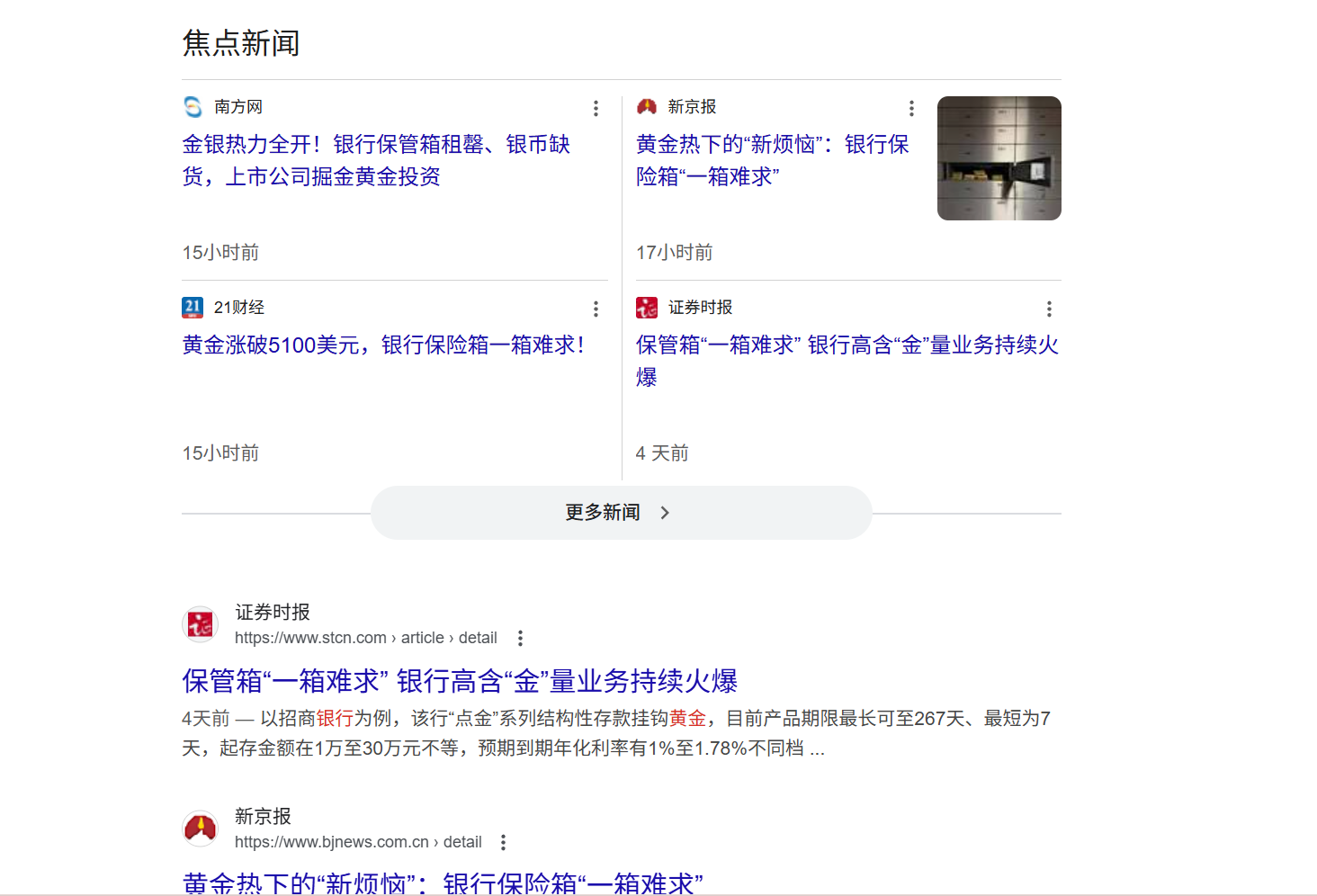
The recent phenomenon of 'no safe deposit boxes available' in many banks precisely illustrates that this contradiction is being amplified, meaning that more and more people want to hold gold in their own hands, but reality does not always cooperate.
The second is paper gold or gold ETFs. They somewhat make up for the physical holding threshold of physical gold. For example, paper gold products issued by bank accounts or brokerage systems are essentially a claim on financial institutions, giving you a settlement promise backed by the account system.
However, the problem is that this liquidity itself is not complete—what paper gold and gold ETFs provide is only liquidity locked within a single financial system. It can be bought and sold within a specific bank, exchange, or clearing system but cannot be freely transferred outside this system.
This means it cannot be split, combined, or collaborated with other assets across systems, let alone used directly in different scenarios. It is only 'in-account liquidity,' not true asset liquidity.
For example, the first gold investment product I owned, 'Tencent Micro Gold,' was like this. From this perspective, paper gold does not truly solve the liquidity problem of gold but only temporarily replaces the inconvenience of physical form with counterparty credit.
In the end, security, liquidity, and sovereignty have long been in a state where it is difficult to have all three. And in a highly digitalized and cross-border era, such trade-offs are becoming increasingly unsatisfactory.
It is against this background that tokenized gold has begun to enter the视野 of more people.
II. Tokenized Gold: Returning 'Complete Liquidity' to the Asset Itself
Tokenized gold, represented by XAUt (Tether Gold) issued by Tether, attempts to solve not just the surface-level problem of 'making gold easier to hold/trade,' which paper gold can also achieve, but a more fundamental proposition:
How can gold achieve the same complete liquidity and composability as crypto assets that can flow across systems, without sacrificing its 'physical backing'?
If we take XAUt as an example and dissect its design logic, we will find that it is not radical but even quite traditional and restrained: each XAUt token corresponds to 1 ounce of physical gold in a London vault, and the physical gold is stored in professional vaults, auditable and verifiable, while tokenized gold holders have the right to claim the underlying gold.
This design does not introduce complex financial engineering, nor does it attempt to amplify gold's attributes through algorithms or credit expansion. Instead, it deliberately maintains respect for the traditional gold logic—first ensuring the physical attribute is established, then discussing the changes brought by digitization.
In the final analysis, tokenized gold like XAUt and PAXG is not 'creating a new gold narrative' but is repackaging the oldest asset form in a blockchain way. So in this sense, XAUt is more like a 'digital physical gold' than a speculative derivative in the crypto world.
But at the same time, the more important change lies in the fundamental shift in the liquidity level of gold. As mentioned above, in the traditional system, whether it is paper gold or gold ETFs, the so-called liquidity is essentially in-account liquidity—it exists within a specific bank, brokerage, or clearing system and can only be bought, sold, and settled within set boundaries.
The liquidity of XAUt is directly attached to the asset itself. Once gold is mapped as an on-chain token, it naturally possesses the basic attributes of crypto assets: it can be freely transferred, split, combined, and circulated among different protocols and applications without needing permission from any centralized institution.
This means that for the first time, gold no longer relies on an 'account' to prove its liquidity but exists as the asset itself, circulating freely globally 24/7. In the on-chain environment, XAUt and others are no longer just 'tradable gold tokens' but basic asset units that can be recognized, called, and combined by other protocols:
-
It can be freely exchanged with stablecoins and other assets;
-
It can be incorporated into more complex asset allocation and combination strategies;
-
It can even be used as a value carrier to participate in consumption and payment scenarios;
This is precisely the part of 'liquidity' that paper gold has never been able to provide.
III. From 'On-Chain' to 'Usable': The True Watershed for Digital Physical Gold
For this reason, if tokenized gold only completes the step of 'going on-chain,' it is far from reaching the finish line.
The true watershed lies in whether this 'digital physical gold' can truly be easily held, managed, traded, and even used as 'currency' for consumption and payment by users? That is, returning to the point mentioned above, if tokenized gold remains just a string of code on the chain and is ultimately encapsulated within a centralized platform or a single entry point, then it is no different from paper gold.
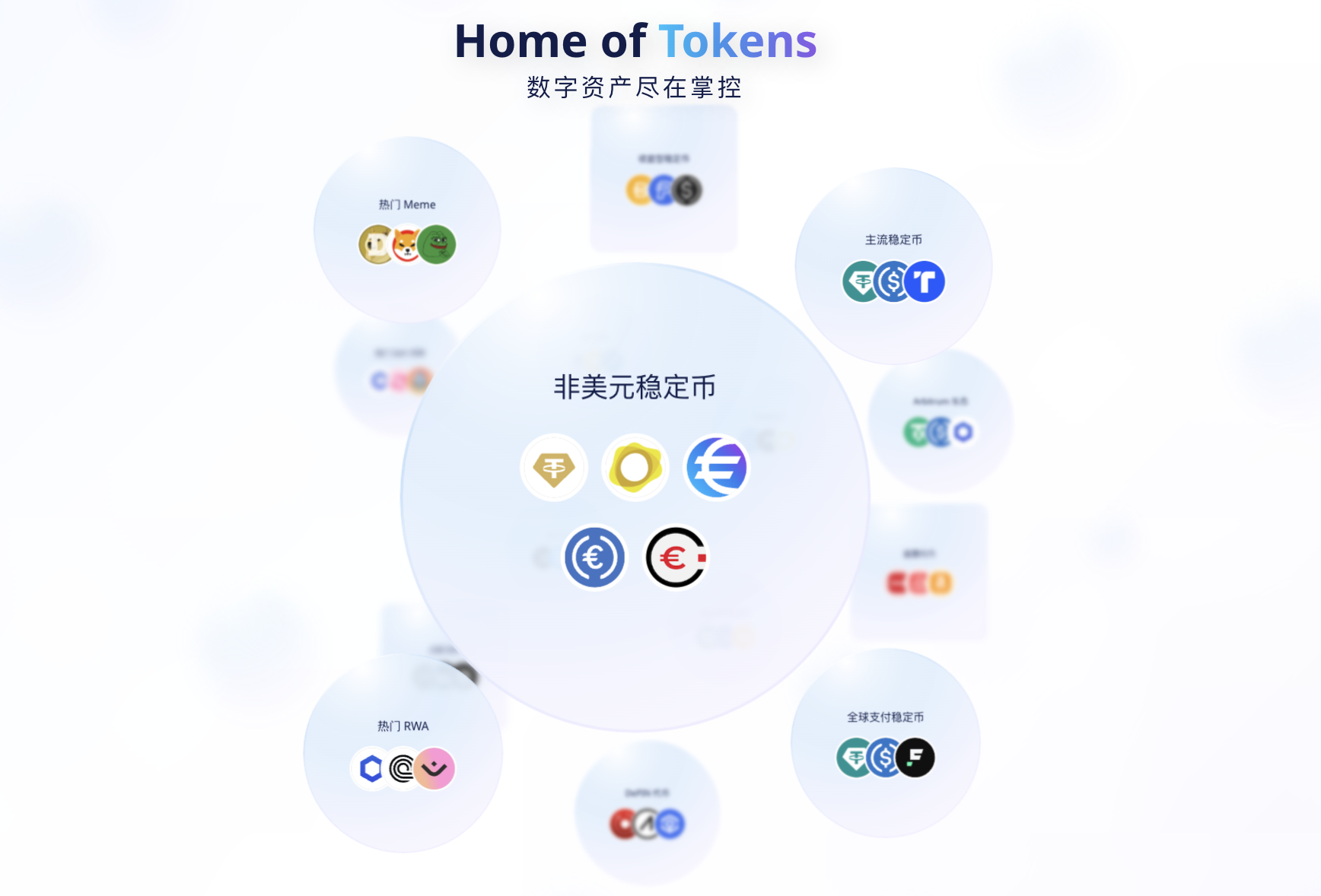
Against this background, the significance of lightweight self-custody solutions like imToken Web begins to emerge. Taking imToken Web's exploration as an example, it allows users to access it through a browser—like opening a webpage, instantly managing their tokenized gold and other crypto assets on any device.
Moreover, in a self-custody environment, the private key is entirely controlled by the user. Your gold does not exist on any service provider's server but is truly in a blockchain address.
Additionally, thanks to the interoperability of Web3 infrastructure, XAUt is no longer a heavy metal sleeping in a safe. It can be used as a flexible small-asset purchase and can also, when needed, release gold's purchasing power into global consumption scenarios in real time through payment tools like the imToken Card.
Source: imToken Web
In short, in the Web3 environment, XAUt can not only be traded but also combined with other assets, exchanged, and even connected to payment and consumption scenarios.
And when gold simultaneously possesses extremely high storage certainty and modern usage potential for the first time, it truly completes the leap from an 'old-school safe haven' to a 'future currency.'
After all, gold, as a consensus that can span millennia, is not inherently outdated; what is outdated is only the way of holding it.
Therefore, when gold enters the chain in the form of XAUt and returns to personal control through self-custody environments like imToken Web, what it continues is not a new narrative but a logic that spans eras:
In an uncertain world, true value is to rely as little as possible on the promises of others.
Twitter:https://twitter.com/BitpushNewsCN
Bitpush TG Discussion Group:https://t.me/BitPushCommunity
Bitpush TG Subscription: https://t.me/bitpush