The AI Stock Genius Who Made 60x Bets $7.7 Billion on Nvidia Topping Out

链捕手2026-05-20 tarihinde yayınlandı2026-05-20 tarihinde güncellendi

Özet

An AI-focused hedge fund named Situational Awareness LP, known for its 60x returns, has taken a significant bearish stance on semiconductor stocks in Q1 2026. Its 13F filing reveals a massive 148% quarterly increase in nominal exposure to $13.677 billion, with over 60% of the new exposure directed towards put options on major chip players. Key bearish bets include $2.04 billion in puts on the VanEck Semiconductor ETF (SMH) and $1.56 billion on NVIDIA, alongside positions against Broadcom, Oracle, AMD, and others. The fund simultaneously increased its long equity holdings in AI infrastructure and compute providers like CoreWeave and Bitcoin mining companies repurposing for compute. The core thesis behind this positioning is a shift in the primary constraint for AI expansion. The fund argues that while GPU supply was the critical bottleneck in previous years, the new limiting factors for large-scale AI cluster deployment are physical infrastructure: electrical grid access (with multi-year backlogs in the US), power availability, land, and data center construction timelines. The fund is not betting against AI's success but rather hedging against potential valuation corrections in semiconductor stocks whose prices may have run ahead, while directly investing in the downstream physical bottlenecks—power and data center capacity—it believes will capture value next. This move translates a previously theoretical narrative about infrastructure constraints into a concrete, high-convic...

Author: BiBi News

On May 18, 2026, Situational Awareness LP submitted its 13F filing for the first quarter of 2026.

The fund's nominal exposure to U.S. stocks and options expanded from $5.52 billion at the end of 2025 to $13.677 billion, a single-quarter growth of 148%.

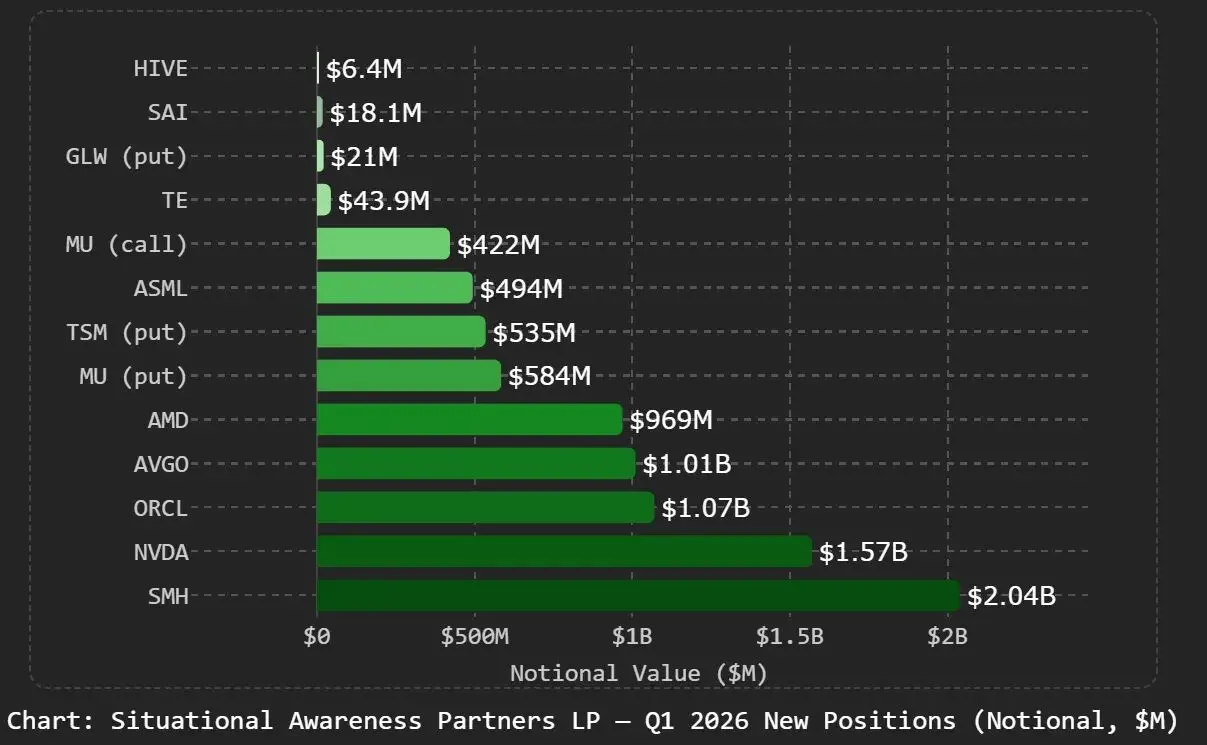
However, what caught market attention was not the size, but the structure: over 60% of the new nominal exposure was entirely placed in put options on the semiconductor sector.
What Q1 Did

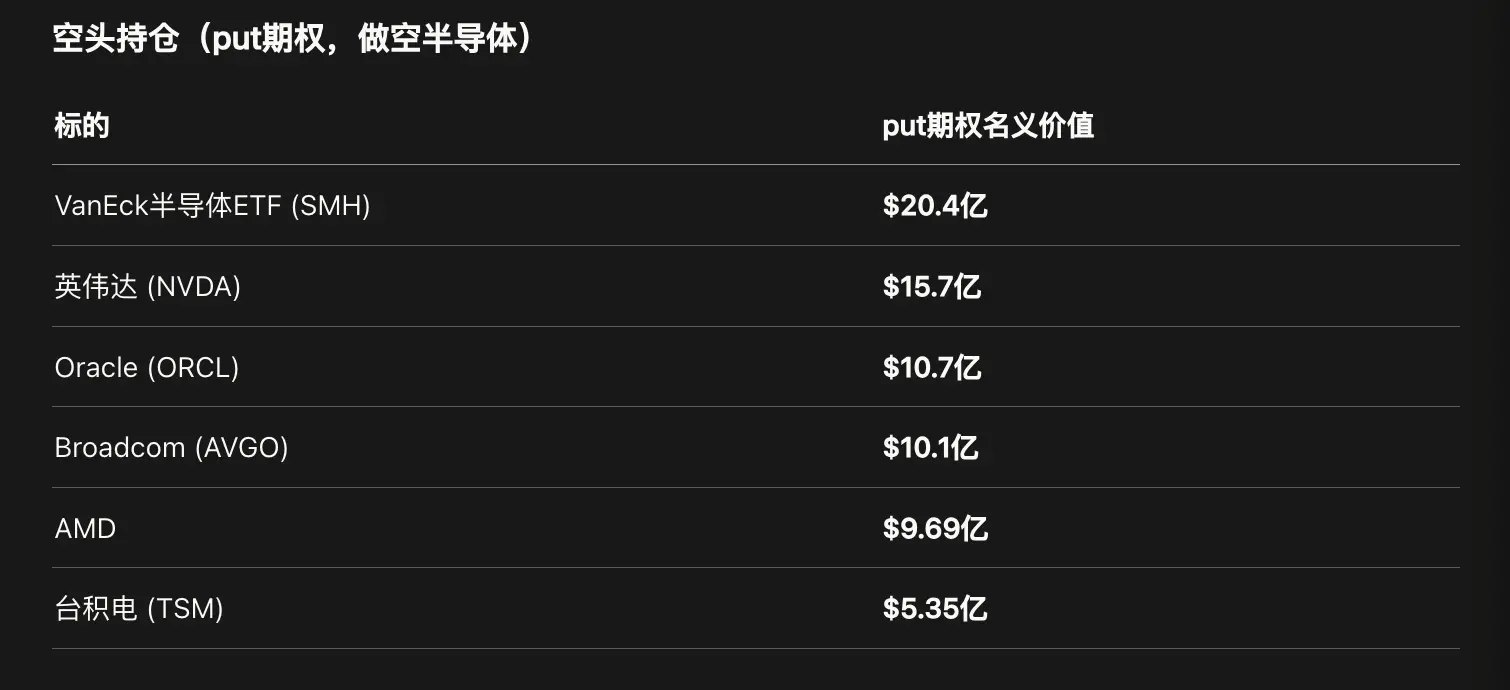
The put options cover nine targets: VanEck Semiconductor ETF (SMH), NVIDIA, Broadcom, Oracle, AMD, Micron, TSMC, ASML, Intel.

Among them, SMH has the largest put nominal size at $2.04 billion, followed by NVIDIA at $1.56 billion. Micron and TSMC hold both call and put options, indicating a bet on volatility rather than a one-sided short.

It should be noted that the 13F filing only discloses the nominal value of options, making it impossible to directly determine the net short size. These put positions could be active shorting or could be hedging protection purchased while holding long positions.

The full intent cannot be reconstructed from the filing alone.
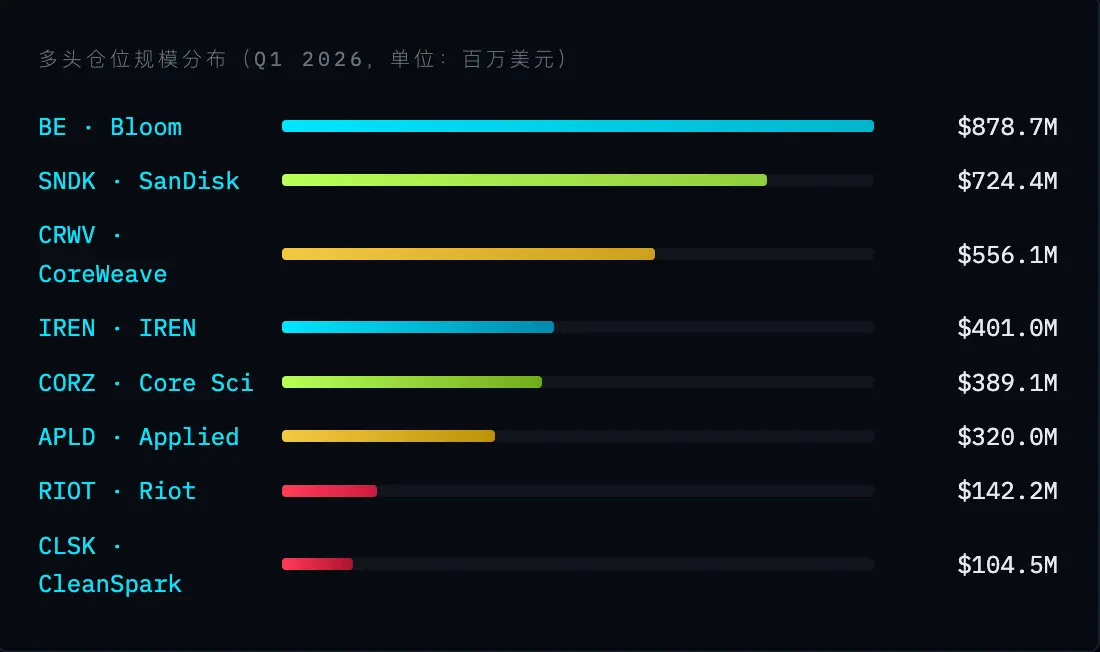
In the stock direction, the fund continued to bet on computing infrastructure.

CoreWeave holdings increased from 6.1 million shares to 7.18 million shares; IREN and Applied Digital were similarly increased;

The expansion was most pronounced in the miner direction: Bitfarms (now renamed Keel Infrastructure) increased from 6.9 million shares to 19.88 million shares, CleanSpark increased from 1.64 million shares to 12.28 million shares, Riot Platforms increased from 6.17 million shares to 11.5 million shares.

Bloom Energy reduced holdings by 3.59 million shares but still holds about $879 million in market value, while retaining 408.5 thousand call options. This is profit-taking, not a change in direction.

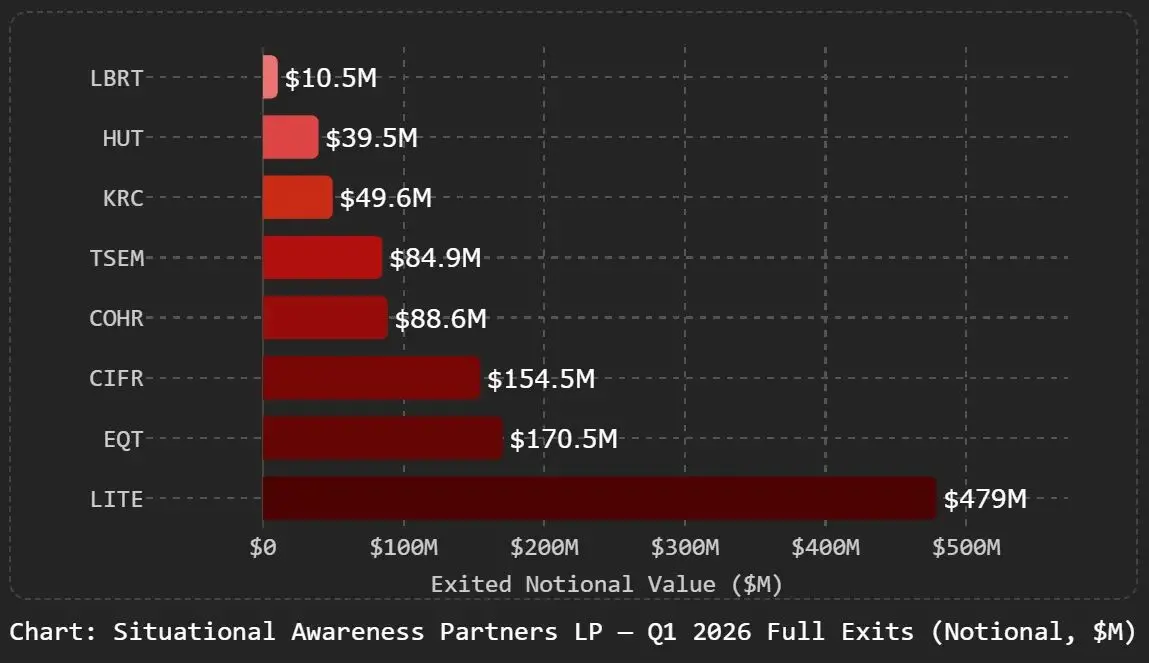
Exits were concentrated in the optical communication direction.

Lumentum and Coherent were completely liquidated; last quarter, Lumentum's position accounted for as much as 8.68%, this quarter it is zero.

Intel's operation deserves separate attention: last quarter held about 20 million call options, all liquidated this quarter, while establishing new put option positions.

Not a flat position, but a complete reversal in direction, from bullish to bearish.
Where the Bottleneck Is, the Money Is

The logic behind this 13F is a specific judgment on supply and demand: the constraints on AI expansion are shifting.

Over the past two years, the core constraint limiting AI scale was GPU shortage, so the market persistently traded NVIDIA, HBM memory, advanced manufacturing, and optical communication. During this phase, the semiconductor sector as a whole received a significant premium.

However, as computing clusters scale towards hundreds of thousands or even millions of GPUs, new constraints are emerging.

Grid connection applications in the US currently have a backlog exceeding 2TW, with an average wait time of over five years; transformer capacity is limited, and new data center construction cycles are measured in years; chips can continue to expand production, but the electricity, land, and construction capabilities needed to support their operation cannot keep pace.
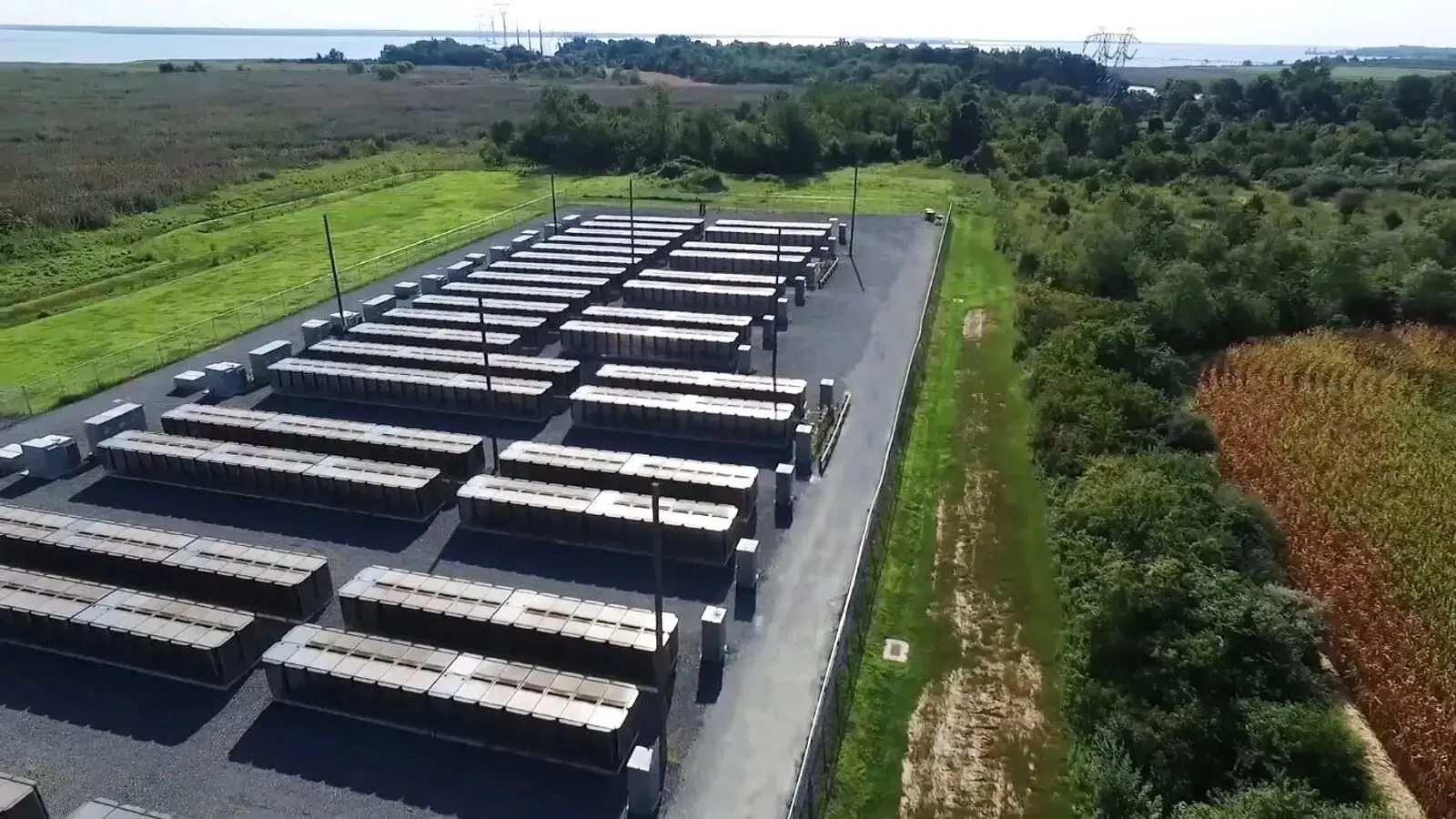
Under this judgment, the logic of shorting the semiconductor sector is not the belief that AI will fail, but that valuations in the chip sector have already priced in expectations, and value is migrating to downstream physical infrastructure.

Buying puts on SMH and NVIDIA hedges against potential valuation corrections in the chip sector; continuing to hold CoreWeave, transformed miner companies, Bloom Energy, is betting on the real bottlenecks: electricity and data center capacity.

CoreWeave's operation also confirms this thinking: call options were slashed from 10.81 million to 1.81 million, while common shares increased from 6.1 million to 7.18 million shares.

The direction hasn't changed, only the high-leverage option positions were swapped for common stock to reduce portfolio volatility impact.
From $225 Million to $13.677 Billion

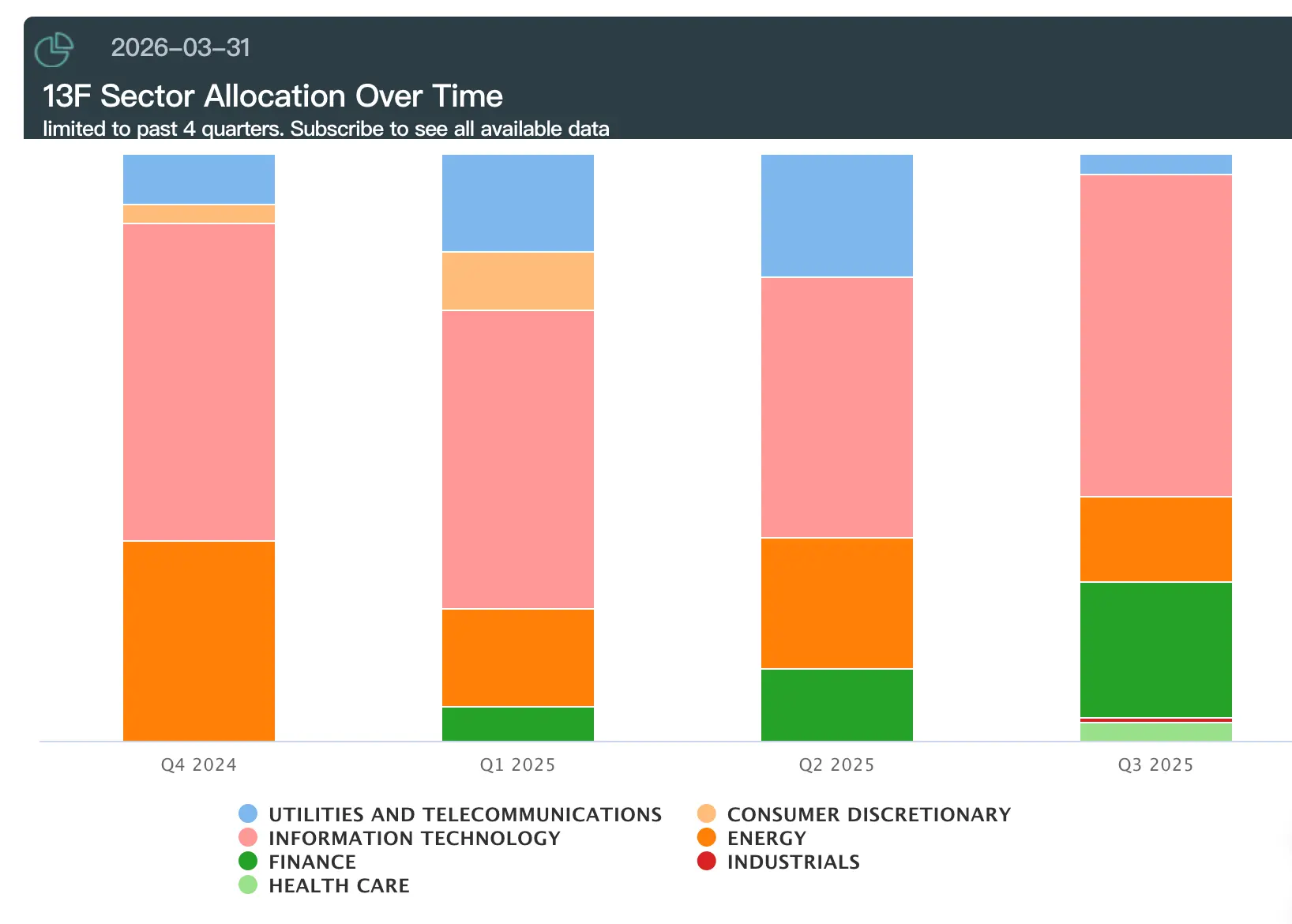
This fund was founded in September 2024; its first 13F disclosed U.S. stock exposure of about $225 million. By the end of 2025, this number had grown to $5.52 billion; as of March 31, 2026, the nominal exposure reached $13.677 billion.

In the first half of 2025, the fund achieved a return of about 47%, while the S&P 500 rose only about 6%; for the full year, it outperformed the S&P 500 by about 12.5 percentage points.
Before founding the fund, this 24-year-old German published a 165-page paper titled "Situational Awareness: The Decade Ahead," outlining judgments on the AGI timeline and that power and computing infrastructure would become the biggest bottlenecks. The fund's early capital came from Nat Friedman, Daniel Gross, and Stripe co-founders Patrick and John Collison.

The significance of this quarterly report is that it translates a judgment that was previously more narrative into concrete portfolio structure.

Chips are merely the entry point for expansion; what truly determines the speed of AI expansion is whether, in the real world, power can be connected, data centers can be built, and grid connection approvals can be obtained within five years.

If this judgment holds, the keywords for AI investment over the past two years were GPU and models; in the coming years, they may be electricity, land, and construction time.


İlgili Sorular

QWhat was the most significant action taken by Situational Awareness LP in Q1 2026, as revealed by its 13F filing?

AOver 60% of the fund's new nominal exposure was placed in put options on the semiconductor sector, signaling a major directional bet against or a hedge for the chip industry. This includes significant put positions on VanEck Semiconductor ETF (SMH) and NVIDIA.

QWhich physical infrastructure sectors did Situational Awareness LP increase its long positions in, and why?

AThe fund increased long positions in power and data center infrastructure companies like CoreWeave, IREN, Applied Digital, and bitcoin miners transitioning to data centers (e.g., Bitfarms, CleanSpark, Riot Platforms). This was based on the belief that constraints for AI expansion are shifting from GPU shortages to bottlenecks in electricity, land, and construction capacity.

QWhat was Situational Awareness LP's specific action regarding Intel in Q1 2026, and what does it indicate?

AThe fund completely closed its approximately 20 million call option positions on Intel from the previous quarter and simultaneously established new put option positions. This indicates a complete reversal in view, from bullish to bearish on the company.

QAccording to the article's analysis, what is the core logic behind the fund's seemingly contradictory moves of holding puts on chips while being long on infrastructure?

AThe core logic is that the valuation for chip companies has already priced in high expectations, while the real constraint for future AI growth is the availability of physical infrastructure like power grids and data centers. Therefore, the fund is hedging potential chip valuation pullbacks while betting on the rising value of the downstream infrastructure bottlenecks.

QHow has Situational Awareness LP's performance been since its inception, and who were its notable early backers?

ASince its founding in September 2024, the fund's nominal exposure grew from $225 million to $13.677 billion by Q1 2026. It significantly outperformed the S&P 500, delivering ~47% returns in H1 2025 versus the index's ~6%. Early backers included prominent figures like Nat Friedman, Daniel Gross, and Stripe co-founders Patrick and John Collison.

İlgili Okumalar

Raising Interest Rates Is Not a Tech Killer, EPS Is: A Strategy for Discarding the Weak and Retaining the Strong After the AI Theme's Sharp Decline

**Summary: Rising Interest Rates Are Not the Killer of Tech; EPS Is: The "Keep the Strong, Ditch the Weak" Strategy After the AI Theme Plunge** The author argues that the sharp sell-off in tech and AI-related stocks, triggered by a strong US jobs report that heightened Fed rate hike fears, represents a "pullback to pick up passengers" rather than a "car crash." The true end of a tech bull market is not determined by an extra 25 basis point hike, but by industry overcapacity and the disproval of earnings per share (EPS) expectations. Historical analysis shows that during past rate hike cycles, the Nasdaq-100 often outperformed, provided EPS growth remained strong. The current phase is seen as a shift from a "broad narrative-driven rally" to a "focused verification stage" for AI. The investment strategy should be to "keep the strong, ditch the weak." * **Retain exposure** to high-conviction AI infrastructure leaders with clear order visibility, stable margins, strong cash flow, and upward EPS revisions (e.g., AI servers, advanced packaging, optical modules, key cloud suppliers). * **Reduce exposure** to high-beta, narrative-driven stocks with unclear profit paths (e.g., some quantum computing, space, or speculative chip stocks), especially on rebounds. Valuation concerns should focus on whether earnings can catch up to high multiples, not on high P/E alone. Crowded positioning signals a concentration into quality assets, not necessarily a market top. The upcoming Q2 earnings season will be a key validation point. The core principle is to hold stocks with proven EPS, while using macro events (CPI data, central bank meetings) to manage timing and risk.

marsbit32 dk önce

Raising Interest Rates Is Not a Tech Killer, EPS Is: A Strategy for Discarding the Weak and Retaining the Strong After the AI Theme's Sharp Decline

marsbit32 dk önce

The Largest IPO in History Ignites Heated Debate: Is SpaceX Worth $1.77 Trillion?

SpaceX's potential IPO is priced at $135 per share, aiming to raise $75 billion and valuing the company at approximately $1.77 trillion, which would make it the largest IPO in history. This valuation has sparked intense debate among investors. Bullish analysts, including major underwriters Goldman Sachs and Morgan Stanley, argue the valuation is justified by SpaceX's long-term potential. They see it not just as a rocket company but as a future leader in space infrastructure, with key growth drivers being Starlink satellite internet, low-cost rocket launches, and future AI-related ventures. They project revenues reaching hundreds of billions to trillions of dollars by 2030-2040. ARK Invest's model suggests a 2030 enterprise value could reach $2.5 trillion. Bearish analysts from independent research firms like Morningstar, PitchBook, and New Constructs contend the IPO price is excessively high, already pricing in unrealistic future growth. Using DCF and sum-of-the-parts models, they estimate fair value between $780 billion and $1.7 trillion, significantly below the IPO target. They highlight risks such as the speculative nature of AI projections, over-dependence on Elon Musk, high growth expectations, and corporate governance concerns. Trefis set a target price of just $79 per share. While both sides acknowledge SpaceX's unique position in commercial space, the core disagreement centers on whether the $135 share price offers a reasonable margin of safety or is overly optimistic. Despite the valuation controversy, reported strong demand for the IPO indicates significant market interest.

marsbit2 saat önce

The Largest IPO in History Ignites Heated Debate: Is SpaceX Worth $1.77 Trillion?

marsbit2 saat önce

After the Passage of the GENIUS Act and the CLARITY Act, What Is the Correct Architecture for On-Chain Yield?

The article discusses the evolution of on-chain credit, distinguishing three markets: overcollateralized crypto lending, unsecured lending (largely unsuccessful), and asset-backed credit (ABC). ABC, backed by identifiable real-world collateral with legal recourse, is identified as the fastest-growing category and the only one credibly addressing adverse selection—the core problem in credit where the riskiest borrowers self-select. Current growth in on-chain Real World Assets (RWAs), particularly tokenized private credit funds (e.g., Maple Finance, Centrifuge), is substantial but often merely "wraps" existing fund structures, inheriting their risks rather than solving adverse selection at the protocol level. The regulatory landscape is a key driver, with the US GENIUS Act (prohibiting stablecoin issuers from paying yield) and the proposed CLARITY Act (closing loopholes on indirect yield) set to redefine permissible yield-bearing products. This makes vaults (like ERC-4626) the critical architecture—they become the primary compliant vehicle for delivering yield, functioning as issuance, disclosure, distribution, and recovery mechanisms. The author's thesis is that the correct post-GENIUS/CLARITY architecture involves building ABC solutions where credit assessment, structure, and recovery are encoded directly into the smart contract vault layer, moving beyond mere tokenized fund wrappers to solve adverse selection fundamentally and ensure regulatory compliance.

Foresight News2 saat önce

After the Passage of the GENIUS Act and the CLARITY Act, What Is the Correct Architecture for On-Chain Yield?

Foresight News2 saat önce

İşlemler

Spot
Futures

Popüler Makaleler

GENIUS Nasıl Satın Alınır

HTX.com’a hoş geldiniz! Genius (GENIUS) satın alma işlemlerini basit ve kullanışlı bir hâle getirdik. Adım adım açıkladığımız rehberimizi takip ederek kripto yolculuğunuza başlayın. 1. Adım: HTX Hesabınızı OluşturunHTX'te ücretsiz bir hesap açmak için e-posta adresinizi veya telefon numaranızı kullanın. Sorunsuzca kaydolun ve tüm özelliklerin kilidini açın. Hesabımı Aç2. Adım: Kripto Satın Al Bölümüne Gidin ve Ödeme Yönteminizi SeçinKredi/Banka Kartı: Visa veya Mastercard'ınızı kullanarak anında Genius (GENIUS) satın alın.Bakiye: Sorunsuz bir şekilde işlem yapmak için HTX hesap bakiyenizdeki fonları kullanın.Üçüncü Taraflar: Kullanımı kolaylaştırmak için Google Pay ve Apple Pay gibi popüler ödeme yöntemlerini ekledik.P2P: HTX'teki diğer kullanıcılarla doğrudan işlem yapın.Borsa Dışı (OTC): Yatırımcılar için kişiye özel hizmetler ve rekabetçi döviz kurları sunuyoruz.3. Adım: Genius (GENIUS) Varlıklarınızı SaklayınGenius (GENIUS) satın aldıktan sonra HTX hesabınızda saklayın. Alternatif olarak, blok zinciri transferi yoluyla başka bir yere gönderebilir veya diğer kripto para birimlerini takas etmek için kullanabilirsiniz.4. Adım: Genius (GENIUS) Varlıklarınızla İşlem YapınHTX'in spot piyasasında Genius (GENIUS) ile kolayca işlemler yapın.Hesabınıza erişin, işlem çiftinizi seçin, işlemlerinizi gerçekleştirin ve gerçek zamanlı olarak izleyin. Hem yeni başlayanlar hem de deneyimli yatırımcılar için kullanıcı dostu bir deneyim sunuyoruz.

310 Toplam GörüntülenmeYayınlanma 2026.04.29Güncellenme 2026.06.02

GENIUS Nasıl Satın Alınır

Tartışmalar

HTX Topluluğuna hoş geldiniz. Burada, en son platform gelişmeleri hakkında bilgi sahibi olabilir ve profesyonel piyasa görüşlerine erişebilirsiniz. Kullanıcıların GENIUS (GENIUS) fiyatı hakkındaki görüşleri aşağıda sunulmaktadır.

活动图片












