The AI Industrial Revolution: Where Are We Now?

marsbit2026-05-27 tarihinde yayınlandı2026-05-27 tarihinde güncellendi

Özet

This article explores the current stage of the AI industrial revolution, arguing we are still merely attaching new tools to old workflows rather than fundamentally redesigning production. The author compares this to the early Industrial Revolution, where factories simply replaced waterwheels with steam engines without changing their core structure. Similarly, today we embed AI chat windows into existing software but leave organizational processes unchanged. While massive investment floods into AI infrastructure (data centers, chips), akin to railway manias of the past, the real transformation lies in "dismantling the old workshop"—reorganizing companies around AI. Examples include Notion's use of hundreds of AI Agents and Y Combinator's experiments with self-improving AI systems that operate autonomously. The author notes a critical gap: while China has vast AI user growth, few companies have rebuilt core workflows. AI is beginning to impact entry-level jobs, and early adopters are gaining a compounding advantage. The conclusion is that the pivotal moment will not be the invention of better models, but when organizations decide to tear down old structures and rebuild around AI, shifting the bottleneck from human coordination to computing power. The future workplace and job titles are yet to be defined, but the imperative is to move away from legacy processes and position oneself where the new "railway" is being built.

Written by: Will Awang

Over the past year, I've attended several AI-themed industry conferences. Guests on stage took turns demonstrating the wonders of AI, while people in the audience held up their phones to film the screen, posted on social media, and then went back to scrolling. But back in the office, it was the same weekly meetings, the same approval processes, the same status reports. Big tech companies have already written token consumption into KPIs; some become model employees by writing scripts to inflate usage. Those same people on social media—Claude revolution today, Codex amazing tomorrow, Gemini long live the day after—is this embracing revolution, or just rushing from one spectacle to another?

All of this is noise, not the answer I'm looking for.

The real question isn't whether AI is powerful enough—the steam engine has been built. The question is who will be the first to tear down the old workshop.

The day the Industrial Revolution truly began wasn't when Watt improved the steam engine; it was when the factory owners in Lancashire decided to move away from the river and rebuild their workshops around the steam engine. The most important moment for AI is the same—not the day the large language model was invented, but the day the first organization decides to dismantle its old processes and rebuild its mode of production around AI. That day hasn't arrived yet. But it's on its way.

Two people saw this early. Notion CEO Ivan Zhao wrote an article at the end of 2025 titled "Steam, Steel, and Infinite Minds", offering a cold judgment: we are still in the "replacing the waterwheel" stage—attaching AI chatbots to existing tools, but no one is redesigning the factory. Former OpenAI employee Leopold Aschenbrenner took another path: he wrote a 165-page document titled "Situational Awareness", then started a fund that grew from $225 million to $13.68 billion, all betting on AI infrastructure. One looks inward, the other bets outward.

This article is not about them. It's about us—where we stand now, and which part of history we are repeating.
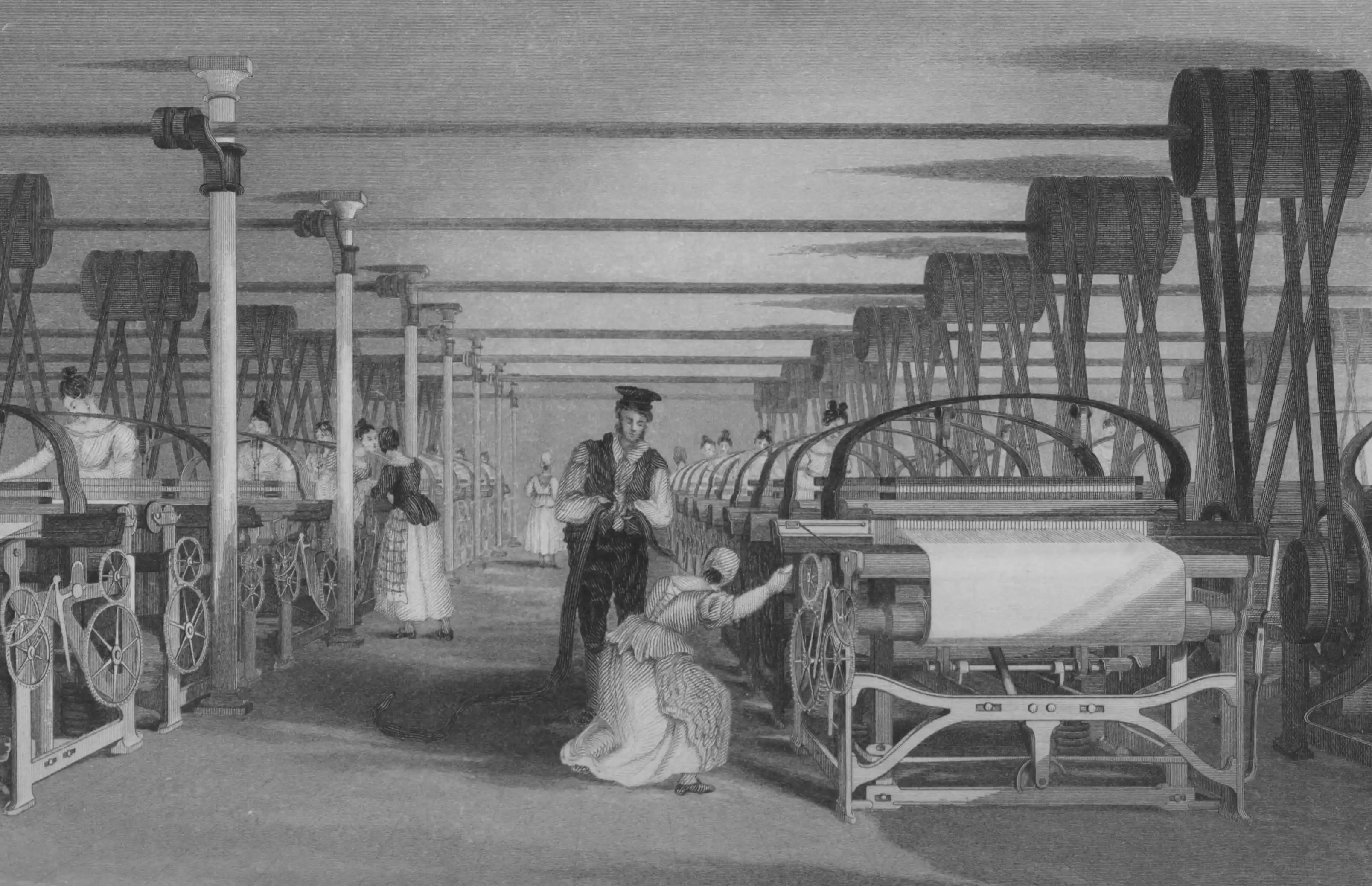
( Power-loom weaving, engraving by J. Tingle after Thomas Allom, 1835 / Wikimedia Commons )

I. The Workshop Is Still Old

Most people's day goes like this: use AI to write an email in the morning, saving ten minutes; then spend two hours in an unnecessary weekly meeting; copy and paste the same set of data between three tools in the afternoon; post on social media at night saying "AI is so great." The ten minutes saved are completely eaten back by the old processes.

Similarly, when the steam engine first appeared, factory owners initially just replaced the waterwheel with the steam engine, leaving everything else unchanged—factories were still built by the river, still multi-story buildings, still with a central drive shaft powering the entire production line. We embed ChatGPT into Slack, add Copilot to Office, place AI chat windows into workflows—we're doing the same thing. The tool is upgraded, but the workshop remains the same.

But replacing the machine is not the same as replacing the workshop. As McLuhan famously said:

We look at the present through a rear-view mirror. We march backwards into the future. Using old processes to accommodate new tools is like early films being merely recorded stage plays. The real breakthrough comes when someone completely frees the steam engine from the river and redesigns the entire production system around the new power source.

Looking at the Industrial Revolution timeline and comparing it to AI, we can roughly locate where we are on the map:
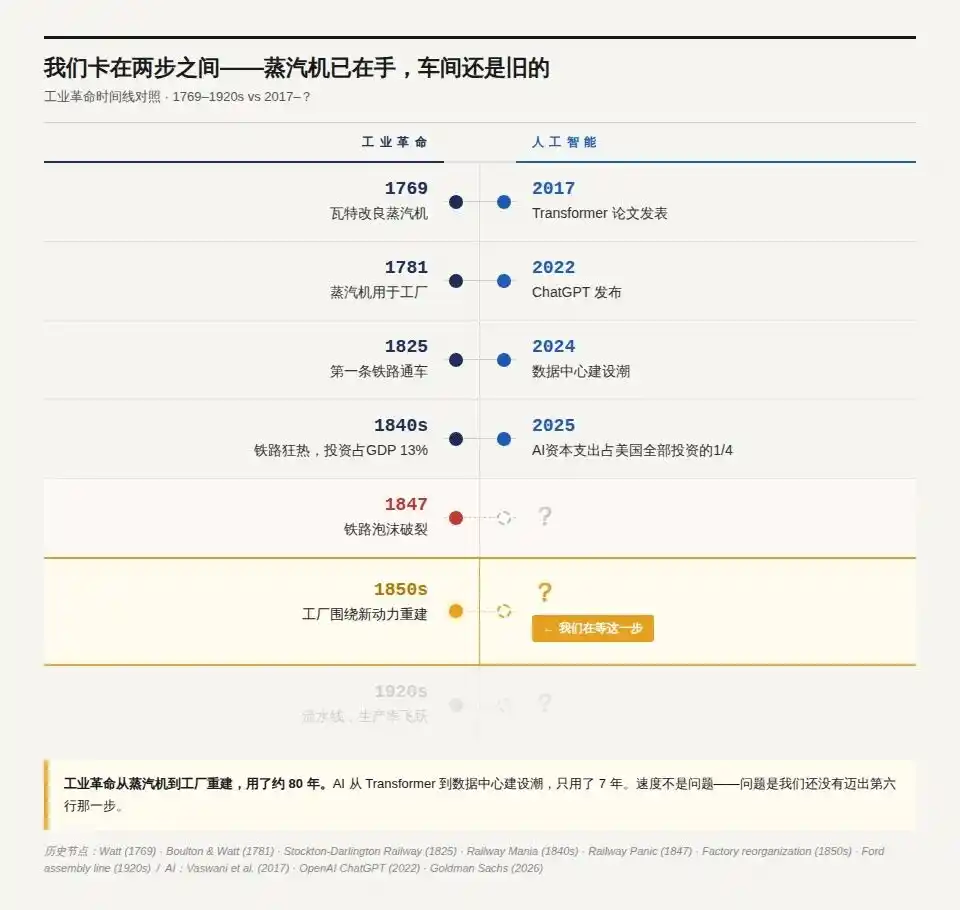
Now the timeline is extremely compressed. The Industrial Revolution took 60 years from the steam engine to the railway mania; AI took only 7 years from Transformer to the data center construction boom.

Speed is not the problem; the problem is where we are stuck—the first four rows are still the stage of installing new machines in old workshops. The steam engine is installed, railways are being laid, but the mode of production remains intact. The sixth row is the real watershed. We are most likely stuck between these two steps.

The steam engine is in our hands, but the workshop is still old.

II. All the Money Is Bet on the Layer Farthest from the Factory

Infrastructure is always overbuilt. It's the investors who go bankrupt, not the infrastructure.

In 1846, the British Parliament passed 263 Railway Acts, approving the construction of 9,500 miles of new railway. At its peak, railway investment accounted for 13% of Britain's GDP. Railway shares could be bought with only a 10% down payment, and the middle class flocked to invest. The bubble burst in 1847. One-third of the approved lines were never built, and countless investors lost everything. Darwin lost 60% on railway stocks, and he was luckier than most.

But the railways remained.

Today's AI infrastructure is following the same path. Goldman Sachs' latest estimate puts global AI infrastructure capital expenditure at $765 billion in 2026, projected to reach $1.6 trillion annually by 2031. The proportion of capital expenditure to operating cash flow for hyperscale cloud providers has risen from about 40% in 2023 to nearly 70% in 2025. AI-related investments already account for about a quarter of all US investment. Aschenbrenner's $13.68 billion is betting on this layer—he's not betting on which application will win, but on the underlying compute power itself.

This capital cycle is isomorphic to real estate development. Building data centers is like building buildings: land is electricity, building materials are GPUs and storage, contractors are data center builders, developers are cloud providers, tenants are AI application companies, and rent is API revenue. The cloud providers' business model is to "rent to cover the loan"—using API revenue to cover data center capital expenditure, waiting for the valuation leap brought by the explosion of AI applications.
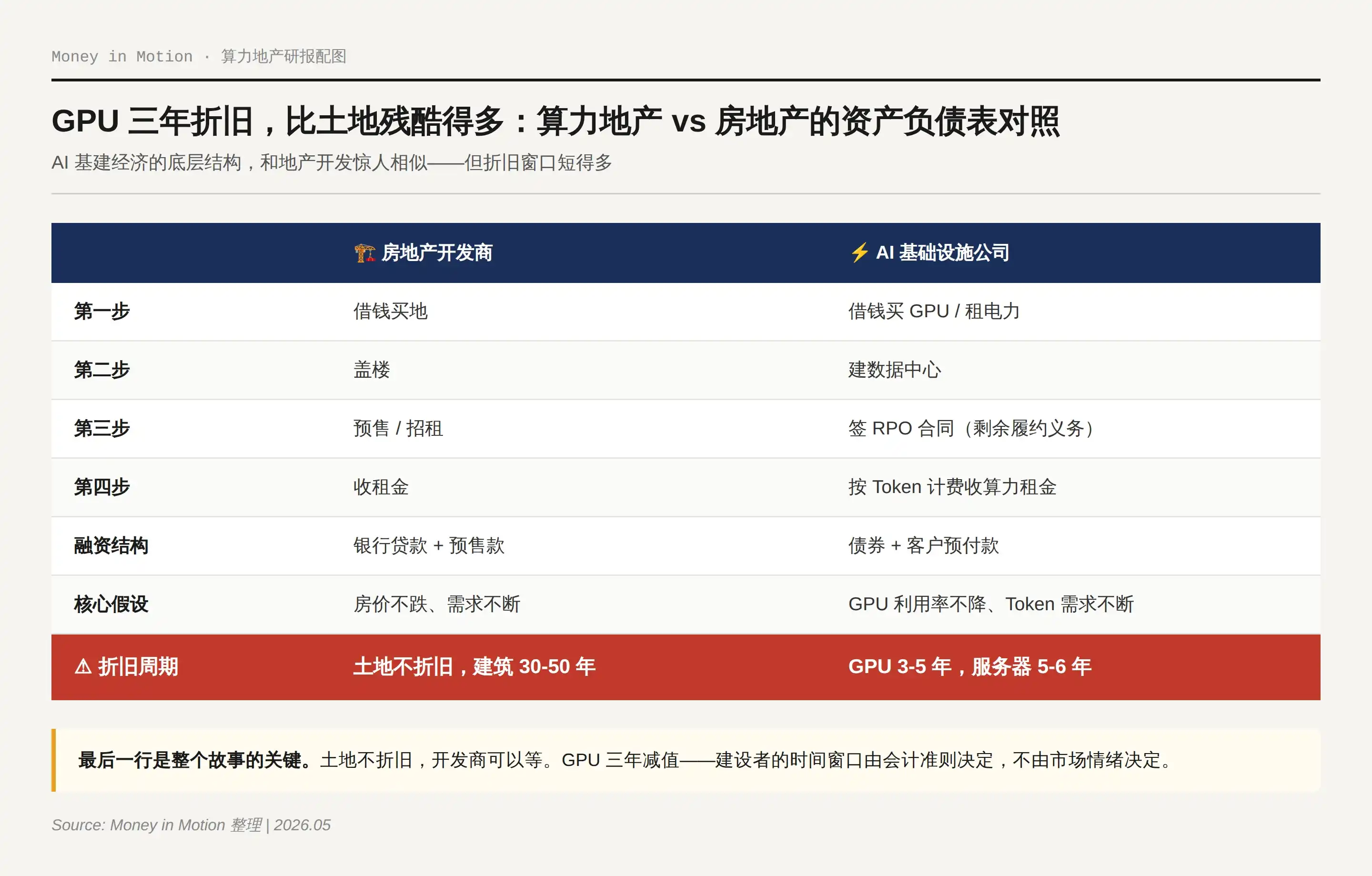
(Compute Power Real Estate: Each generation has its own infrastructure)

The core risk is the same: is the growth rate of API call volume offsetting the decline in API unit price? If rent falls below the loan repayment line—this is a nightmare familiar to real estate developers. The lesson of 2008 was not that too many houses were built, but that the structure of the houses built did not match the structure of real demand. The equivalent risk for AI is: an oversupply of general-purpose compute power, while specialized capabilities that can truly handle high-value scenarios like financial compliance or medical diagnosis remain scarce.

Railways, real estate, AI—infrastructure investments across three eras share the same rule: overbuilding is the norm, material suppliers always lose pricing power, and long-term returns always belong to the owners of "prime locations." Look at the Q1 fund holdings on Wall Street—probably 80% is concentrated in this infrastructure layer: NVIDIA, data centers, cloud infrastructure. But the railway mania teaches us: this is not the full picture of the AI revolution, and it's not even the layer with the highest returns.

What is the prime location for AI? It's unique industry data and deeply embedded workflows. For individuals, the real "prime location" is not the stocks you hold, but your own irreplaceable judgment and industry knowledge—provided you have already rebuilt the way you use them around AI.

The real returns are in the next layer. But between infrastructure and value creation, there is no seamless connection. There is a gap in the middle—historically, this gap has swallowed decades.

III. Who Is Tearing Down the Workshop

Those tearing down the workshop and those "using AI for efficiency" are not doing the same thing.

Notion co-founder Simon used to be a "10x programmer"; now he rarely writes code himself—he simultaneously controls three or four AI coding agents, achieving 30x to 40x efficiency. Notion now has 1,000 employees and over 700 AI agents. The gap isn't the tools; it's that Simon tore down his old workshop, while most people just replaced their waterwheel.

600 million Chinese users have used generative AI tools, a year-on-year increase of 142%—this is the world's largest pool of AI demand. But almost no Chinese company has rebuilt its core workflows around AI. The world's largest demand side, paired with a nearly stagnant supply side in terms of organizational change. This contrast itself is a signal: it's not that the tools are lacking, it's that organizations haven't kept up. The context of knowledge work is scattered across dozens of tools and dozens of minds, outputs are not verifiable, and no one knows how to judge whether a strategic memo is effective.
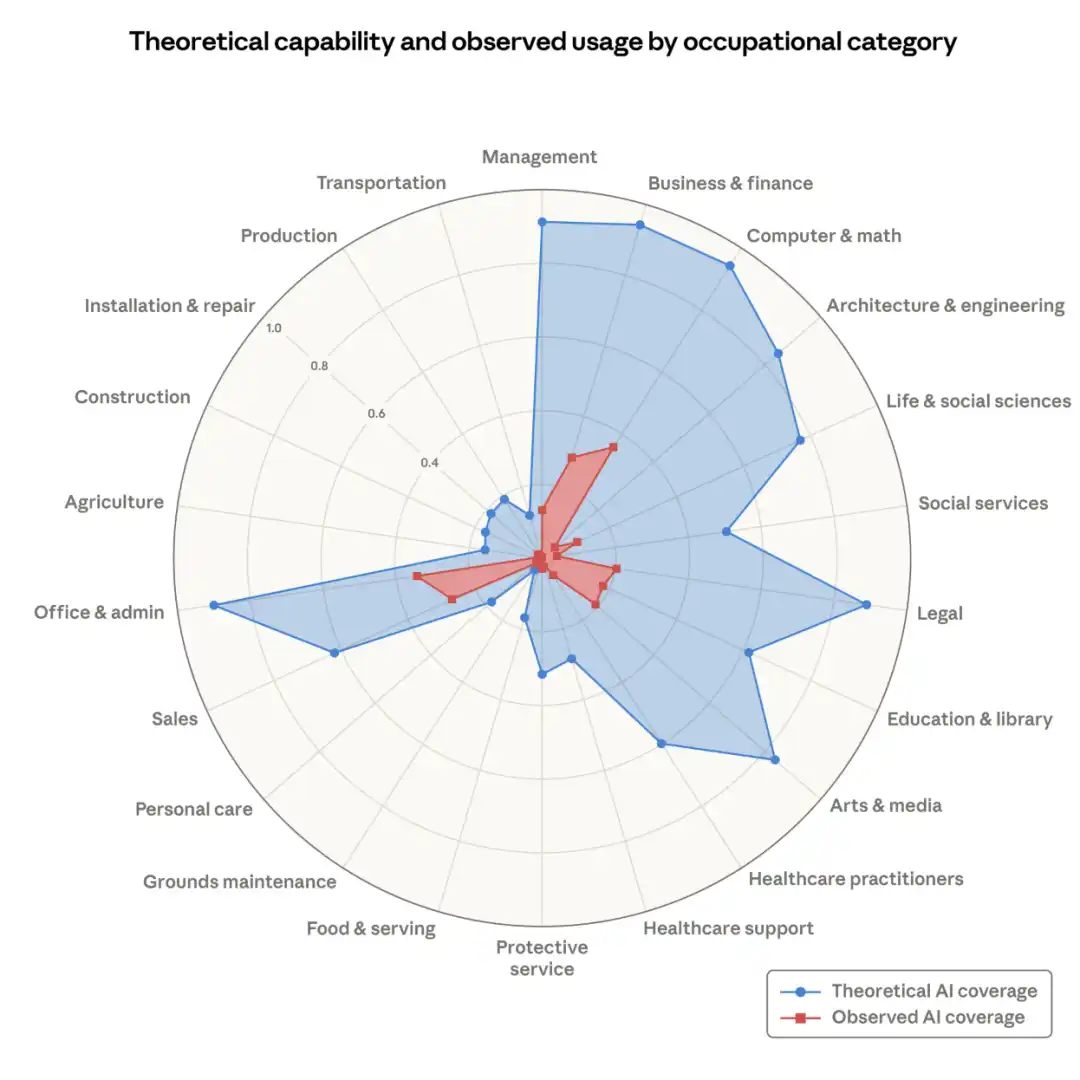
(Labor market impacts of AI: A new measure and early evidence)

Anthropic is already moving on a larger scale. They released an Economic Index, using real usage data to depict which tasks and industries AI is replacing first, then building according to this blueprint: forming a joint venture AI-native enterprise services company with Goldman Sachs, Blackstone, and Hellman & Friedman; establishing a global alliance with KPMG, connecting 276,000 employees to Claude; Accenture forming a business group, training 30,000 people, focusing on finance, life sciences, and healthcare.

The role these consulting firms play is not that of AI users, but AI railway engineers—they don't build steam engines or lay tracks; they help enterprises tear down old factories and rebuild production lines around the new power source. Without this role, most factory owners wouldn't know where to start.

The signals are already flashing. One of the sharpest comes from the job market.

Young people aged 22-25 entering AI-high-exposure professions are 14% less likely to find a job than their peers entering low-exposure professions. Junior positions are already being squeezed.

If I were a new graduate, this number would directly affect my job search. If I were a manager, the next batch of junior positions I hire might not be people.

Organizations are dismantling. What about individuals? My degree, my resume, the industry experience I've accumulated over the years—these are my waterwheels. They once drove my entire production line, but the steam engine has arrived. A degree from a top university is no longer a moat; it just proves I once built a decent factory by the river.

Now the question is, do we have the ability to leave that river?

Anthropic's data shows that users who have used AI tools for more than 6 months have a task success rate 10% higher than new users. Those who started half a year earlier are already leading by 10%, and this gap compounds over time.

But no company has gone bankrupt yet from not using AI, at least my law firm is still advancing full steam ahead around AI. The winners haven't been selected by the market yet. The learning curve is real—early adopters are already accumulating advantages, but most are still at the starting line.

IV. My Next Job Doesn't Have a Name Yet

Will my current job title exist ten years from now? How many of the tools I used daily five years ago are still used today? The answers are likely both negative. But I don't know what the things that replace them are called—because those things don't exist yet.

It's been this way every time in history. New things aren't planned; they grow on their own after old constraints disappear.

Before railways were built, Britain was a collection of isolated local economies. The price of cotton cloth in Manchester and London could differ by 30%. Each city had its own time standard, and no one saw a problem. In the twenty years after railways were built, everything changed. A national unified market appeared for the first time, price differences were smoothed out; standard time was forced by railways, not invented; stationmasters, telegraph operators, travel agents—these jobs didn't exist at all before railways.

No one foresaw department stores when laying railways. No one foresaw standard time when building steam engines.

(Steam, Steel, and AI Infinite Intelligence)

The history of cities tells the same story. Cities hundreds of years ago were human-scale—forty minutes to walk across Florence. Steel frames made skyscrapers possible, railways connected cities to their hinterlands, and elevators, subways, and highways followed. Tokyo, Chongqing, Dallas—these are not bigger versions of Florence; they are entirely new ways of life.

Current knowledge work is also human-scale. Teams of a few dozen people, meetings and emails set the rhythm, becoming unmanageable beyond a few hundred people. We are building Florence with stone and wood. AI makes "Tokyo" possible—organizations composed of thousands of AI agents and people, with workflows running continuously across time zones. Old weekly meetings, quarterly planning, annual reviews may no longer make sense.

Simon no longer writes code—his job has become "managing AI agents." This position didn't exist two years ago. My next job title might not have a name yet. But someone is already building that future we cannot yet name.

V. What Does the New Workshop Look Like

After tearing down the old workshop, what do you build? Y Combinator's answer is: let the company improve itself.

Their internal system now modifies its own code at night. An employee ran a query during the day that failed. A supervising agent read about this failure, deduced the cause, wrote code to fix it, submitted it for review, and deployed it. The same query ran successfully the next day. The whole thing happened while everyone was asleep.

This isn't AI helping people produce 30% more. This is the system running through an entire closed loop on its own, figuring out how to become better.

In an internal talk, YC partner Tom Blomfield called this company form a "recursive self-improving AI loop." His judgment is direct: most companies are still Roman legions—information trickles down layer by layer and aggregates up layer by layer, with people acting as conduits. What AI breaks is not the efficiency of a certain link, but the very premise of this entire hierarchical structure.

His new logic is: burn tokens, not headcount. The bottleneck is shifting from manpower to compute power. The data YC sees shows that companies reaching Demo Day have about 5 times higher revenue per capita than 18 months ago. The role of middle management is being taken over by AI—"coordination" no longer requires humans. Everyone should be an IC, a builder, an operator. Every task has a named owner, not a committee.

There's another prerequisite: the company must be "readable" to AI. Things that aren't recorded are, to AI, as if they never happened. YC now archives all partner emails, records all Slack messages and office hour recordings. One partner used 2,000 hours of recordings accumulated over three months to have AI regenerate a 150-page internal manual—much better than the old version. This manual updates automatically every month, becoming a perpetually fresh "living brain."

Tom left a question:

If you were building your company from scratch today, would you set it up in this form? If your company already has a hierarchical structure, you face a harder question—will the pain of rebuilding be less than the cost of continuing to operate as a Roman legion?

People are not at the center of the workshop; they are on the periphery—responsible for the places AI can't yet reach: on-the-ground judgment, entirely new situations, high-stakes, high-emotion moments. The center of the company is a "corporate brain" pieced together from data, records, and industry knowledge. The software running on it is consumable—if it can be generated, it can be regenerated. What's valuable resides in people's minds—how the business runs, which steps involve judgment; this understanding is the real asset.

What Ivan Zhao describes in "Steam, Steel, and Infinite Minds" is the other side of this direction—an organization of 1,000 employees and over 700 AI agents collaborating, where people are responsible for judgment, and agents are responsible for execution. Aschenbrenner bets on compute infrastructure; Zhao bets on organizational reconstruction. Both paths ultimately point to the same destination: a new mode of production rebuilt around AI.

VI. Conclusion

Between the 1840s and 1850s—the railways were laid, but the factories hadn't been rebuilt.

Where are we? Simon no longer writes code. He tore down his own waterwheel.

The question has never been whether the steam engine is good enough. The question is who will be the first to tear down the old workshop.

I don't intend to predict the future department stores. I only intend to take care of myself—ensuring I stand along the railway line, not guarding a river that is drying up.

What about you?

İlgili Sorular

QWhat is the central argument of the article regarding our current phase in the 'AI Industrial Revolution'?

AThe central argument is that we are currently in the 'steam engine' phase of the AI revolution. We have powerful new tools like Large Language Models, but are largely using them to perform old tasks within existing organizational structures and workflows ('the old workshop'). The real revolution hasn't begun yet. It will start not when AI is invented, but when organizations fundamentally dismantle old processes and rebuild their core production methods around AI.

QAccording to the author, what is the key difference between simply 'using AI for efficiency' and truly transforming work?

AThe key difference is between 'replacing the waterwheel' and 'dismantling the old workshop.' Using AI for efficiency means attaching AI chatbots to existing tools (like adding ChatGPT to Slack) to save time on discrete tasks, but leaving the underlying workflows and organizational logic unchanged. True transformation involves redesigning the entire 'factory' around the new 'engine'—reimagining processes, roles, and structures from the ground up with AI as the core driver, as exemplified by individuals like Notion's Simon who manage AI agents instead of writing code.

QWhat historical parallel does the author draw to the massive investment in AI infrastructure (like data centers and GPUs), and what warning does this imply?

AThe author draws a parallel to the British 'Railway Mania' of the 1840s. This implies a warning of a potential investment bubble where capital is overwhelmingly poured into foundational infrastructure (the 'rail lines' and 'real estate' of AI—data centers, chips, cloud capacity), far ahead of proven, high-value applications. The risk is that the 'rent' (API revenue) may not cover the 'mortgage' (capital expenditure) if the growth in usage doesn't outpace price declines, leading to overcapacity in generic compute while specialized, industry-transforming capabilities remain scarce.

QWhat does the author suggest is the 'core location' or most valuable asset for individuals in the AI era, and why?

AFor individuals, the author suggests the true 'core location' is not stock holdings in infrastructure companies, but their own 'irreplaceable judgment and industry knowledge.' This is because AI commoditizes execution and information retrieval. The unique value lies in human capabilities like offline judgment, navigating novel situations, and high-stakes emotional intelligence—areas where AI currently cannot reach. However, this knowledge is only a valuable asset if the individual has already rebuilt their way of working to leverage AI effectively.

QWhat is the 'recursive self-improving AI loop' described in the Y Combinator example, and what does it signify about future organizations?

AThe 'recursive self-improving AI loop' is when an AI system autonomously identifies a failure in its own operations, diagnoses the cause, writes and deploys code to fix it, and verifies the solution—all without human intervention. This signifies a move beyond AI as a productivity tool for humans. It points to future organizations where AI forms a 'company brain' from data and communications, enabling systems to self-optimize. This undermines traditional hierarchical ('Roman legion') structures, as coordination and middle-management tasks are automated. The future organization is 'AI-readable,' with humans focused on high-judgment roles at the periphery.

İlgili Okumalar

Bankless Co-founder: Why I Sold All My ETH

Author David Hoffman, founder of Bankless, explains his decision to sell all his ETH, despite being a prominent figure in the Ethereum ecosystem. He clarifies that his move is not a bearish take on Ethereum itself, which he remains highly optimistic about as a network. His core argument is that the "ETH is money" thesis, which he helped popularize, has largely played out. Hoffman argues that ETH has achieved the market valuation it deserves based on Ethereum's current success and competitive position. He details several reasons for this view. First, the path for ETH to become global money required nearly flawless execution and sustained dominance across Ethereum's entire technical and social stack—a coordination challenge he now believes had a narrower window for success than anticipated. Second, market data shows a strong correlation between L1 chain activity/fees and the price of its native asset; Ethereum's fee dominance has been challenged by competitors like Solana. Third, the "strong version" of crypto (decentralized, native crypto economies) that ETH's monetary thesis relied upon has struggled to maintain a positive mainstream narrative and stable adoption beyond a brief period. Finally, Ethereum's architecture as a "giver"—providing secure block space and tokenization capabilities at cost to L2s and applications—means it doesn't capture premium value directly. Its rollup-centric roadmap further directs most profits to L2s and applications ("fat app theory"). In conclusion, Hoffman believes the opportunity for ETH to be revalued significantly upward as money has diminished. He sold not because ETH will fail, but because its monetary thesis has matured, and he seeks to allocate capital to other opportunities he finds more compelling.

链捕手1 saat önce

Bankless Co-founder: Why I Sold All My ETH

链捕手1 saat önce

From Issuer to Infrastructure Owner: Circle's Arc Strategy and the Fatal Gap in the GENIUS Act

Circle raised $222 million for its proprietary Layer-1 blockchain, Arc, positioning itself not just as a stablecoin issuer but as the owner of the settlement infrastructure USDC relies on. This move, backed by investors like BlackRock and Apollo, highlights a significant structural conflict unaddressed by the GENIUS Act of 2025. While the act focuses on stablecoin reserves and issuer oversight, it remains silent on the market structure implications of an issuer controlling the underlying network—a scenario akin to a currency issuer also owning the payment rails. Traditionally, financial regulations separate issuers from settlement infrastructure to ensure neutrality. With Arc, Circle gains control over transaction ordering, fees, and network rules, potentially favoring USDC over competitors. The article argues that this creates a permanent structural temptation, even if no abuse occurs. The solution lies in applying established market infrastructure principles: mandating neutral transaction ordering, transparent fee schedules, and governance separated from Circle’s commercial interests. The current pre-mainnet phase offers a critical window for regulators to establish these rules before Arc becomes entrenched. Once operational, enforcing changes would be costly and disruptive. The core question remains: should a regulated stablecoin issuer be allowed to own the settlement network its competitors must use? The GENIUS Act doesn’t answer this, but Circle’s Arc strategy makes it urgent.

marsbit1 saat önce

From Issuer to Infrastructure Owner: Circle's Arc Strategy and the Fatal Gap in the GENIUS Act

marsbit1 saat önce

What Are the Key Variables Determining the AI Bull Market?

Title: What Determines the AI Bull Market? Key Variables Revealed Despite rising oil prices above $100/barrel, persistent inflation, and fragile Fed rate cut expectations—a traditionally hostile environment for high-valuation tech stocks—the AI sector continues to drive the market to new highs. According to analysts, the current AI boom is in a phase of "rational fervor": while bubbles exist, they are not yet out of control. The crucial shift is the emergence of Agentic AI, which is evolving from an assisting tool (Copilot) to an autonomous execution tool (Autopilot), creating a clearer commercial path from investment to revenue. This shift accelerates Token consumption and inference computing demand while boosting revenue forecasts for leading firms. The market is now rewarding capital expenditure as it transforms from a burden into a competitive moat, supporting hardware chains like GPUs, optical modules, and storage. However, valuations have already priced in growth expectations for 2027-2028. The forward P/E ratio for the "Magnificent Seven" tech giants is about 35x, compared to 25x for the rest of the S&P 500. This premium implies AI adoption must occur 5 to 8 times faster than past technological revolutions—a scenario with little room for error. The sustainability of the AI bull market hinges on three key variables: 1. **Short-term liquidity shocks**: Risks include sustained high oil prices, resurgent inflation, rising interest rates, and potential unwinding of the yen carry trade. The critical question is whether the upward revision speed of Annual Recurring Revenue (ARR) can outpace the rise in interest rates. 2. **Mid-term industry realization**: Can the actual pace of AI adoption and commercialization match the current lofty valuations? Historically, general-purpose technology revolutions follow a non-linear path with periods of acceleration and deceleration. 3. **Long-term structural constraints**: These include energy and power grid limitations, employment displacement and consumer purchasing power, social acceptance and potential backlash, and potential hardware technology breakthroughs that could disrupt current supply chains. While the long-term prospects for AI remain optimistic with potential for significant productivity gains, the stock market's pricing depends not just on the vision but on the actual speed of realization amid these growing constraints. The direction is clear, but the pace of execution will determine whether the bubble remains controlled or spirals out of control.

marsbit1 saat önce

What Are the Key Variables Determining the AI Bull Market?

marsbit1 saat önce

İşlemler

Spot
Futures

Popüler Makaleler

GROK AI Nedir

Grok AI: Web3 Döneminde Konuşma Teknolojisini Devrim Niteliğinde Yenilik Giriş Hızla gelişen yapay zeka alanında, Grok AI, ileri teknoloji ve kullanıcı etkileşimi alanlarını birleştiren dikkate değer bir proje olarak öne çıkıyor. Ünlü girişimci Elon Musk'ın liderliğindeki xAI tarafından geliştirilen Grok AI, yapay zeka ile etkileşim şeklimizi yeniden tanımlamayı hedefliyor. Web3 hareketi devam ederken, Grok AI, karmaşık sorgulara yanıt vermek için konuşma yapay zekasının gücünden yararlanmayı amaçlıyor ve kullanıcılara sadece bilgilendirici değil, aynı zamanda eğlenceli bir deneyim sunuyor. Grok AI Nedir? Grok AI, kullanıcılarla dinamik bir şekilde etkileşimde bulunmak üzere tasarlanmış sofistike bir konuşma yapay zeka sohbet botudur. Birçok geleneksel yapay zeka sisteminin aksine, Grok AI, genellikle uygunsuz veya standart yanıtların dışında kabul edilen daha geniş bir sorgu yelpazesini benimsemektedir. Projenin temel hedefleri şunlardır: Güvenilir Akıl Yürütme: Grok AI, bağlamsal anlayışa dayalı mantıklı yanıtlar sağlamak için sağduyu akıl yürütmeyi vurgular. Ölçeklenebilir Denetim: Araç yardımı entegrasyonu, kullanıcı etkileşimlerinin hem izlenmesini hem de kalite için optimize edilmesini sağlar. Resmi Doğrulama: Güvenlik en önemli önceliktir; Grok AI, çıktılarının güvenilirliğini artırmak için resmi doğrulama yöntemlerini entegre eder. Uzun Bağlam Anlayışı: AI modeli, kapsamlı konuşma geçmişini saklama ve hatırlama konusunda mükemmel bir performans sergileyerek anlamlı ve bağlamsal olarak farkında tartışmaların yapılmasını kolaylaştırır. Saldırgan Dayanıklılık: Manipüle edilmiş veya kötü niyetli girdilere karşı savunmalarını geliştirmeye odaklanarak, Grok AI kullanıcı etkileşimlerinin bütünlüğünü korumayı hedefler. Özünde, Grok AI sadece bir bilgi alma cihazı değil; dinamik diyalogu teşvik eden, etkileyici bir konuşma partneridir. Grok AI'nın Yaratıcısı Grok AI'nın arkasındaki beyin, otomotiv, uzay yolculuğu ve teknoloji gibi çeşitli alanlarda yenilikle özdeşleşen Elon Musk'tır. Yapay zeka teknolojisini faydalı yollarla geliştirmeye odaklanan xAI çatısı altında, Musk'ın vizyonu, yapay zeka etkileşimlerinin anlaşılmasını yeniden şekillendirmeyi amaçlıyor. Liderlik ve temel etik, Musk'ın teknolojik sınırları zorlamaya olan bağlılığı tarafından derinden etkilenmektedir. Grok AI'nın Yatırımcıları Grok AI'yi destekleyen yatırımcılarla ilgili spesifik detaylar sınırlı kalmakla birlikte, projenin kuluçka merkezi olan xAI'nin, esasen Elon Musk tarafından kurulduğu ve desteklendiği kamuya açık bir şekilde kabul edilmektedir. Musk'ın önceki girişimleri ve mülkleri, Grok AI'nın güvenilirliğini ve büyüme potansiyelini daha da artıran sağlam bir destek sağlar. Ancak, şu anda Grok AI'yı destekleyen ek yatırım fonları veya kuruluşlarıyla ilgili bilgiye kolayca erişim sağlanamamaktadır; bu da potansiyel gelecekteki keşif alanını işaret etmektedir. Grok AI Nasıl Çalışır? Grok AI'nın operasyonel mekanikleri, kavramsal çerçevesi kadar yenilikçidir. Proje, benzersiz işlevselliklerini kolaylaştıran birkaç son teknoloji ürünü teknolojiyi entegre eder: Sağlam Altyapı: Grok AI, konteyner orkestrasyonu için Kubernetes, performans ve güvenlik için Rust ve yüksek performanslı sayısal hesaplama için JAX kullanılarak inşa edilmiştir. Bu üçlü, sohbet botunun verimli çalışmasını, etkili bir şekilde ölçeklenmesini ve kullanıcılara zamanında hizmet vermesini sağlar. Gerçek Zamanlı Bilgi Erişimi: Grok AI'nın ayırt edici özelliklerinden biri, X platformu (önceden Twitter olarak biliniyordu) aracılığıyla gerçek zamanlı verilere erişim yeteneğidir. Bu yetenek, yapay zekaya en son bilgilere erişim sağlar ve diğer yapay zeka modellerinin gözden kaçırabileceği zamanında yanıtlar ve öneriler sunmasına olanak tanır. İki Etkileşim Modu: Grok AI, kullanıcılara “Eğlenceli Mod” ve “Normal Mod” arasında seçim yapma imkanı sunar. Eğlenceli Mod, daha eğlenceli ve mizahi bir etkileşim tarzı sağlarken, Normal Mod, kesin ve doğru yanıtlar vermeye odaklanır. Bu çok yönlülük, çeşitli kullanıcı tercihlerine hitap eden özelleştirilmiş bir deneyim sağlar. Özünde, Grok AI performansı etkileşimle birleştirerek, hem zenginleştirici hem de eğlenceli bir deneyim yaratmaktadır. Grok AI'nın Zaman Çizelgesi Grok AI'nın yolculuğu, gelişim ve dağıtım aşamalarını yansıtan önemli dönüm noktalarıyla işaretlenmiştir: İlk Geliştirme: Grok AI'nın temel aşaması, modelin ilk eğitim ve ince ayarının yapıldığı yaklaşık iki ay boyunca gerçekleşmiştir. Grok-2 Beta Yayını: Önemli bir ilerleme olarak, Grok-2 beta duyurulmuştur. Bu sürüm, sohbet etme, kodlama ve akıl yürütme yetenekleriyle donatılmış iki versiyon—Grok-2 ve Grok-2 mini—sunmuştur. Halka Açık Erişim: Beta geliştirmesinin ardından, Grok AI X platformu kullanıcılarına sunulmuştur. Telefon numarasıyla doğrulanan ve en az yedi gün aktif olan hesap sahipleri, sınırlı bir versiyona erişim sağlayarak teknolojiyi daha geniş bir kitleye ulaştırmaktadır. Bu zaman çizelgesi, Grok AI'nın kuruluşundan kamu etkileşimine kadar sistematik büyümesini kapsar ve sürekli iyileştirme ve kullanıcı etkileşimine olan bağlılığını vurgular. Grok AI'nın Ana Özellikleri Grok AI, yenilikçi kimliğine katkıda bulunan birkaç ana özelliği kapsamaktadır: Gerçek Zamanlı Bilgi Entegrasyonu: Güncel ve ilgili bilgilere erişim, Grok AI'yı birçok statik modelden ayırarak, etkileyici ve doğru bir kullanıcı deneyimi sağlar. Çeşitli Etkileşim Tarzları: Farklı etkileşim modları sunarak, Grok AI çeşitli kullanıcı tercihlerine hitap eder ve yapay zeka ile konuşurken yaratıcılığı ve kişiselleştirmeyi teşvik eder. Gelişmiş Teknolojik Altyapı: Kubernetes, Rust ve JAX kullanımı, projeye güvenilirlik ve optimal performans sağlamak için sağlam bir çerçeve sunar. Etik Tartışma Dikkati: Görüntü üreten bir işlevin dahil edilmesi, projenin yenilikçi ruhunu sergiler. Ancak, aynı zamanda tanınabilir figürlerin saygılı bir şekilde tasvir edilmesi ve telif hakkı ile ilgili etik konuları da gündeme getirir—bu, yapay zeka topluluğunda süregelen bir tartışmadır. Sonuç Konuşma yapay zekası alanında öncü bir varlık olarak Grok AI, dijital çağda dönüştürücü kullanıcı deneyimlerinin potansiyelini kapsar. xAI tarafından geliştirilen ve Elon Musk'ın vizyoner yaklaşımıyla yönlendirilen Grok AI, gerçek zamanlı bilgiyi gelişmiş etkileşim yetenekleriyle birleştirir. Yapay zekanın neler başarabileceği konusunda sınırları zorlamayı hedeflerken, etik konulara ve kullanıcı güvenliğine odaklanmayı sürdürmektedir. Grok AI, sadece teknolojik ilerlemeyi değil, aynı zamanda Web3 manzarasında yeni bir konuşma paradigmasını da temsil eder ve kullanıcılara hem yetkin bilgi hem de eğlenceli etkileşim sunma vaadinde bulunur. Proje gelişmeye devam ederken, teknolojinin, yaratıcılığın ve insan benzeri etkileşimin kesişim noktasında nelerin başarılabileceğinin bir kanıtı olarak durmaktadır.

363 Toplam GörüntülenmeYayınlanma 2024.12.26Güncellenme 2024.12.26

GROK AI Nedir

ERC AI Nedir

Euruka Tech: $erc ai ve Web3'teki Hedefleri Üzerine Bir Genel Bakış Giriş Blockchain teknolojisi ve merkeziyetsiz uygulamaların hızla gelişen manzarasında, her biri benzersiz hedefler ve metodolojilerle yeni projeler sıkça ortaya çıkmaktadır. Bu projelerden biri, kripto para ve Web3 alanında faaliyet gösteren Euruka Tech'tir. Euruka Tech'in, özellikle $erc ai token'ının ana odak noktası, merkeziyetsiz teknolojinin büyüyen yeteneklerinden yararlanmak için tasarlanmış yenilikçi çözümler sunmaktır. Bu makale, Euruka Tech'in kapsamlı bir genel görünümünü, hedeflerini, işlevselliğini, yaratıcısının kimliğini, potansiyel yatırımcılarını ve Web3'teki daha geniş bağlam içindeki önemini keşfetmeyi amaçlamaktadır. Euruka Tech, $erc ai Nedir? Euruka Tech, Web3 ortamının sunduğu araçlar ve işlevsellikleri kullanan bir proje olarak tanımlanmaktadır ve operasyonlarında yapay zekayı entegre etmeye odaklanmaktadır. Projenin çerçevesine dair spesifik detaylar biraz belirsiz olsa da, kullanıcı etkileşimini artırmayı ve kripto alanındaki süreçleri otomatikleştirmeyi amaçlamaktadır. Proje, yalnızca işlemleri kolaylaştırmakla kalmayıp, aynı zamanda yapay zeka aracılığıyla öngörücü işlevsellikleri de entegre eden merkeziyetsiz bir ekosistem yaratmayı hedeflemektedir; bu nedenle token'ının adı $erc ai'dir. Amaç, büyüyen Web3 alanında daha akıllı etkileşimleri ve verimli işlem işleme süreçlerini kolaylaştıran sezgisel bir platform sunmaktır. Euruka Tech'in Yaratıcısı Kimdir, $erc ai? Şu anda, Euruka Tech'in arkasındaki yaratıcı veya kurucu ekip hakkında bilgi verilmemiştir ve bu durum biraz belirsizdir. Bu veri eksikliği, ekibin geçmişi hakkında bilgi sahibi olmanın genellikle blockchain sektöründe güvenilirlik oluşturmak için gerekli olduğu endişelerini doğurmaktadır. Bu nedenle, somut detaylar kamuya sunulana kadar bu bilgiyi bilinmeyen olarak sınıflandırdık. Euruka Tech'in Yatırımcıları Kimlerdir, $erc ai? Benzer şekilde, Euruka Tech projesinin yatırımcıları veya destekleyen organizasyonları hakkında mevcut araştırmalarla kolayca sağlanan bir bilgi yoktur. Euruka Tech ile etkileşimde bulunmayı düşünen potansiyel paydaşlar veya kullanıcılar için kritik bir unsur, kurumsal finansal ortaklıklar veya saygın yatırım firmalarından gelen destekle sağlanan güvencedir. Yatırım ilişkileri hakkında açıklamalar olmadan, projenin finansal güvenliği veya sürdürülebilirliği hakkında kapsamlı sonuçlar çıkarmak zordur. Bulunan bilgilere paralel olarak, bu bölüm de bilinmeyen durumundadır. Euruka Tech, $erc ai Nasıl Çalışır? Euruka Tech için detaylı teknik spesifikasyonların eksik olmasına rağmen, yenilikçi hedeflerini göz önünde bulundurmak önemlidir. Proje, yapay zekanın hesaplama gücünden yararlanarak kripto para ortamında kullanıcı deneyimini otomatikleştirmeyi ve geliştirmeyi hedeflemektedir. AI'yi blockchain teknolojisiyle entegre ederek, Euruka Tech otomatik ticaret, risk değerlendirmeleri ve kişiselleştirilmiş kullanıcı arayüzleri gibi özellikler sunmayı amaçlamaktadır. Euruka Tech'in yenilikçi özü, kullanıcılar ile merkeziyetsiz ağların sunduğu geniş olanaklar arasında kesintisiz bir bağlantı yaratma hedefinde yatmaktadır. Makine öğrenimi algoritmaları ve AI kullanarak, ilk kez kullanıcı zorluklarını en aza indirmeyi ve Web3 çerçevesindeki işlem deneyimlerini düzene sokmayı amaçlamaktadır. AI ve blockchain arasındaki bu simbiyoz, $erc ai token'ının önemini vurgulamakta ve geleneksel kullanıcı arayüzleri ile merkeziyetsiz teknolojilerin gelişmiş yetenekleri arasında bir köprü işlevi görmektedir. Euruka Tech, $erc ai Zaman Çizelgesi Maalesef, Euruka Tech hakkında mevcut olan sınırlı bilgiler nedeniyle, projenin yolculuğundaki önemli gelişmeler veya kilometre taşları hakkında detaylı bir zaman çizelgesi sunamıyoruz. Genellikle bir projenin evrimini haritalamak ve büyüme eğrisini anlamak için değerli olan bu zaman çizelgesi şu anda mevcut değildir. Önemli olaylar, ortaklıklar veya işlevsel eklemeler hakkında bilgiler belirgin hale geldikçe, güncellemeler kesinlikle Euruka Tech'in kripto alanındaki görünürlüğünü artıracaktır. Diğer “Eureka” Projeleri Üzerine Açıklama Birden fazla projenin ve şirketin “Eureka” benzeri bir isimlendirmeye sahip olduğunu belirtmek önemlidir. Araştırmalar, robotlara karmaşık görevler öğretmeye odaklanan NVIDIA Research'ten bir AI ajanı gibi girişimleri, ayrıca eğitim ve müşteri hizmetleri analitiğinde kullanıcı deneyimini geliştiren Eureka Labs ve Eureka AI'yi tanımlamıştır. Ancak, bu projeler Euruka Tech'ten farklıdır ve hedefleri veya işlevleri ile karıştırılmamalıdır. Sonuç Euruka Tech, $erc ai token'ı ile birlikte, Web3 manzarasında umut verici ancak şu anda belirsiz bir oyuncuyu temsil etmektedir. Yaratıcısı ve yatırımcıları hakkında detaylar açıklanmamış olsa da, yapay zekayı blockchain teknolojisiyle birleştirme konusundaki temel hedefi ilgi odağı olmaktadır. Projenin, gelişmiş otomasyon aracılığıyla kullanıcı etkileşimini teşvik etme konusundaki benzersiz yaklaşımları, Web3 ekosistemi ilerledikçe onu farklı kılabilir. Kripto piyasası gelişmeye devam ederken, paydaşların Euruka Tech etrafındaki gelişmelere dikkat etmeleri önemlidir; belgelenmiş yeniliklerin, ortaklıkların veya tanımlanmış bir yol haritasının gelişimi, önümüzdeki dönemde önemli fırsatlar sunabilir. Şu an itibarıyla, Euruka Tech'in potansiyelini ve rekabetçi kripto manzarasındaki konumunu açığa çıkarabilecek daha somut içgörüler beklemekteyiz.

329 Toplam GörüntülenmeYayınlanma 2025.01.02Güncellenme 2025.01.02

ERC AI Nedir

DUOLINGO AI Nedir

DUOLINGO AI: Dil Öğrenimini Web3 ve AI İnovasyonu ile Entegre Etmek Teknolojinin eğitimi yeniden şekillendirdiği bir çağda, yapay zeka (AI) ve blok zinciri ağlarının entegrasyonu dil öğrenimi için yeni bir ufuk açmaktadır. DUOLINGO AI ve ona bağlı kripto para birimi $DUOLINGO AI ile tanışın. Bu proje, önde gelen dil öğrenme platformlarının eğitimsel yeteneklerini merkeziyetsiz Web3 teknolojisinin faydalarıyla birleştirmeyi hedefliyor. Bu makale, DUOLINGO AI'nın temel yönlerini, hedeflerini, teknolojik çerçevesini, tarihsel gelişimini ve gelecekteki potansiyelini incelerken, orijinal eğitim kaynağı ile bu bağımsız kripto para girişimi arasındaki netliği korumaktadır. DUOLINGO AI Genel Görünümü DUOLINGO AI'nın temelinde, öğrenicilerin dil yeterliliğinde eğitimsel kilometre taşlarına ulaşmaları için kriptografik ödüller kazanabilecekleri merkeziyetsiz bir ortam oluşturma hedefi yatmaktadır. Akıllı sözleşmeler uygulayarak, proje beceri doğrulama süreçlerini ve token tahsislerini otomatikleştirmeyi amaçlamakta, şeffaflık ve kullanıcı sahipliğini vurgulayan Web3 ilkelerine uymaktadır. Model, dil edinimindeki geleneksel yaklaşımlardan ayrılarak, token sahiplerinin kurs içeriği ve ödül dağıtımları üzerinde iyileştirmeler önermesine olanak tanıyan topluluk odaklı bir yönetişim yapısına dayanmaktadır. DUOLINGO AI'nın bazı dikkat çekici hedefleri şunlardır: Oyunlaştırılmış Öğrenme: Proje, dil yeterlilik seviyelerini temsil etmek için blok zinciri başarıları ve değiştirilemez tokenleri (NFT'ler) entegre ederek, katılımcıları motive eden dijital ödüller sunmaktadır. Merkeziyetsiz İçerik Üretimi: Eğitmenler ve dil meraklılarının kendi kurslarını katkıda bulunmalarına olanak tanıyarak, tüm katkıda bulunanların fayda sağladığı bir gelir paylaşım modeli oluşturmaktadır. AI Destekli Kişiselleştirme: Gelişmiş makine öğrenimi modellerini kullanarak, DUOLINGO AI dersleri bireysel öğrenme ilerlemesine uyacak şekilde kişiselleştirmekte, köklü platformlarda bulunan uyarlamalı özelliklere benzer bir deneyim sunmaktadır. Proje Yaratıcıları ve Yönetişim Nisan 2025 itibarıyla, $DUOLINGO AI'nın arkasındaki ekip takma isimler kullanmaktadır; bu, merkeziyetsiz kripto para alanında sıkça görülen bir uygulamadır. Bu anonimlik, bireysel geliştiricilere odaklanmak yerine kolektif büyümeyi ve paydaş katılımını teşvik etmek amacıyla tasarlanmıştır. Solana blok zincirinde dağıtılan akıllı sözleşme, geliştiricinin cüzdan adresini not etmekte, bu da yaratıcıların kimliğinin bilinmemesine rağmen işlemlerle ilgili şeffaflık taahhüdünü simgelemektedir. Yol haritasına göre, DUOLINGO AI, Merkeziyetsiz Otonom Organizasyon (DAO) haline gelmeyi hedeflemektedir. Bu yönetişim yapısı, token sahiplerinin özellik uygulamaları ve hazine tahsisleri gibi kritik konularda oy kullanmalarına olanak tanımaktadır. Bu model, çeşitli merkeziyetsiz uygulamalarda bulunan topluluk güçlendirme ethosu ile uyumlu olup, kolektif karar verme sürecinin önemini vurgulamaktadır. Yatırımcılar ve Stratejik Ortaklıklar Şu anda, $DUOLINGO AI ile bağlantılı olarak kamuya açık tanımlanabilir kurumsal yatırımcılar veya risk sermayedarları bulunmamaktadır. Bunun yerine, projenin likiditesi esas olarak merkeziyetsiz borsa (DEX) kaynaklıdır ve bu, geleneksel eğitim teknolojisi şirketlerinin finansman stratejileriyle keskin bir zıtlık oluşturmaktadır. Bu tabandan gelen model, merkeziyetsizliğe olan bağlılığını yansıtan topluluk odaklı bir yaklaşımı işaret etmektedir. DUOLINGO AI, beyaz kitabında, kurs tekliflerini zenginleştirmeyi amaçlayan belirsiz “blok zinciri eğitim platformları” ile işbirlikleri kurmayı planladığını belirtmektedir. Belirli ortaklıklar henüz açıklanmamış olsa da, bu işbirlikçi çabalar, blok zinciri yeniliğini eğitim girişimleri ile birleştirmeyi amaçlayan bir stratejiyi ima etmektedir ve çeşitli öğrenme yollarında erişimi ve kullanıcı katılımını genişletmektedir. Teknolojik Mimari AI Entegrasyonu DUOLINGO AI, eğitimsel tekliflerini geliştirmek için iki ana AI destekli bileşen içermektedir: Uyarlanabilir Öğrenme Motoru: Bu sofistike motor, kullanıcı etkileşimlerinden öğrenmekte olup, büyük eğitim platformlarından gelen özel modellere benzer. Belirli öğrenici zorluklarını ele almak için ders zorluğunu dinamik olarak ayarlamakta ve zayıf alanları hedeflenmiş alıştırmalarla pekiştirmektedir. Konuşma Ajanları: GPT-4 destekli sohbet botlarını kullanarak, DUOLINGO AI kullanıcıların simüle edilmiş konuşmalara katılmalarına olanak tanıyarak, daha etkileşimli ve pratik bir dil öğrenme deneyimi sunmaktadır. Blok Zinciri Altyapısı $DUOLINGO AI, Solana blok zincirinde inşa edilmiş kapsamlı bir teknolojik çerçeve kullanmaktadır: Beceri Doğrulama Akıllı Sözleşmeleri: Bu özellik, yeterlilik testlerini başarıyla geçen kullanıcılara otomatik olarak token ödülleri vermekte, gerçek öğrenim sonuçları için teşvik yapısını güçlendirmektedir. NFT Rozetleri: Bu dijital tokenler, öğrenicilerin kurslarının bir bölümünü tamamlamak veya belirli becerileri ustalaşmak gibi ulaştıkları çeşitli kilometre taşlarını simgelemekte ve bunları dijital olarak takas etmelerine veya sergilemelerine olanak tanımaktadır. DAO Yönetişimi: Token sahibi topluluk üyeleri, anahtar öneriler üzerinde oy kullanarak yönetişime katılabilir, bu da kurs teklifleri ve platform özelliklerinde yeniliği teşvik eden katılımcı bir kültürü kolaylaştırmaktadır. Tarihsel Zaman Çizelgesi 2022–2023: Kavramsallaştırma DUOLINGO AI için temel, dil öğrenimindeki AI ilerlemeleri ile blok zinciri teknolojisinin merkeziyetsiz potansiyeli arasındaki sinerjiyi vurgulayan bir beyaz kağıdın oluşturulmasıyla başlar. 2024: Beta Lansmanı Sınırlı bir beta sürümü, popüler dillerdeki teklifleri tanıtarak, erken kullanıcıları token teşvikleri ile ödüllendirir ve projenin topluluk katılım stratejisinin bir parçası olarak sunulmaktadır. 2025: DAO Geçişi Nisan ayında, tokenlerin dolaşıma girmesiyle tam bir ana ağ lansmanı gerçekleşir ve topluluk, Asya dillerine ve diğer kurs gelişmelerine olası genişlemeler hakkında tartışmalara başlar. Zorluklar ve Gelecek Yönelimleri Teknik Engeller Hırslı hedeflerine rağmen, DUOLINGO AI önemli zorluklarla karşı karşıyadır. Ölçeklenebilirlik, AI işleme ile merkeziyetsiz bir ağı sürdürme maliyetleri arasında denge kurma konusunda sürekli bir endişe kaynağıdır. Ayrıca, merkeziyetsiz bir teklif arasında kaliteli içerik üretimi ve moderasyonu sağlamak, eğitim standartlarını koruma konusunda karmaşıklıklar yaratmaktadır. Stratejik Fırsatlar İleriye dönük olarak, DUOLINGO AI, akademik kurumlarla mikro yeterlilik ortaklıkları kurma potansiyeline sahiptir ve dil becerilerinin blok zinciri ile doğrulanmış onaylarını sağlamaktadır. Ayrıca, çapraz zincir genişlemesi, projenin daha geniş kullanıcı tabanlarına ve ek blok zinciri ekosistemlerine erişim sağlamasına olanak tanıyabilir, böylece birlikte çalışabilirliğini ve erişimini artırabilir. Sonuç DUOLINGO AI, yapay zeka ve blok zinciri teknolojisinin yenilikçi bir birleşimini temsil etmekte olup, geleneksel dil öğrenim sistemlerine topluluk odaklı bir alternatif sunmaktadır. Takma isimli geliştirme süreci ve ortaya çıkan ekonomik modeli bazı riskler taşısa da, projenin oyunlaştırılmış öğrenme, kişiselleştirilmiş eğitim ve merkeziyetsiz yönetişim konusundaki taahhüdü, Web3 alanında eğitim teknolojisi için bir yol haritası aydınlatmaktadır. AI gelişmeye devam ederken ve blok zinciri ekosistemi evrim geçirirken, DUOLINGO AI gibi girişimler, kullanıcıların dil eğitimi ile etkileşim biçimlerini yeniden tanımlayabilir, toplulukları güçlendirebilir ve yenilikçi öğrenme mekanizmaları aracılığıyla katılımı ödüllendirebilir.

350 Toplam GörüntülenmeYayınlanma 2025.04.11Güncellenme 2025.04.11

DUOLINGO AI Nedir

Tartışmalar

HTX Topluluğuna hoş geldiniz. Burada, en son platform gelişmeleri hakkında bilgi sahibi olabilir ve profesyonel piyasa görüşlerine erişebilirsiniz. Kullanıcıların AI (AI) fiyatı hakkındaki görüşleri aşağıda sunulmaktadır.

活动图片