Tether Freezes $182 Million in One Day: Is USDT Still a Neutral Currency?

marsbit2026-01-14 tarihinde yayınlandı2026-01-14 tarihinde güncellendi

Özet

Tether, the issuer of USDT, froze approximately $182 million worth of USDT in a single day across five wallets on the Tron blockchain, marking one of its largest single-day enforcement actions. The frozen funds are widely suspected to belong to the Venezuelan government, potentially representing oil revenue, and the action is believed to have been conducted in coordination with U.S. authorities. This event has raised significant concerns about USDT’s role as a neutral financial tool, particularly in developing and sanctioned regions like Venezuela, where the stablecoin has become deeply embedded in the economy. Reports indicate that up to 80% of Venezuela’s oil revenue may be received in cryptocurrencies like USDT, creating a direct channel between its oil trade and the crypto economy. However, this incident demonstrates that Tether is willing to comply with law enforcement, even at the risk of undermining its reputation as a censorship-resistant alternative to traditional finance. The situation has drawn comparisons to the Euroclear moment, where frozen Russian assets sparked concerns about the safety of foreign-held euro-denominated assets. Similarly, Tether’s actions may lead international users to reconsider the perceived neutrality and safety of stablecoins. While Tether has maintained its peg so far, sustained outflows or loss of trust could pose existential risks to its offshore business model. The event underscores Tether’s growing role in global finance—and its vul...

Editor's Note: Tether's freezing of approximately $182 million USDT on the Tron chain has been regarded by some analysts as its "Euroclear moment"—that is, when a financial infrastructure originally seen as a neutral channel begins cooperating with law enforcement to freeze assets, it ceases to be just a stablecoin and becomes part of the boundaries of power.

This article delves into the controversy surrounding funds related to Venezuela, discussing how this event may impact USDT's narrative as a "dollar alternative" in the Global South and sanctioned regions, while redefining the perception of risks associated with stablecoins.

Below is the original text:
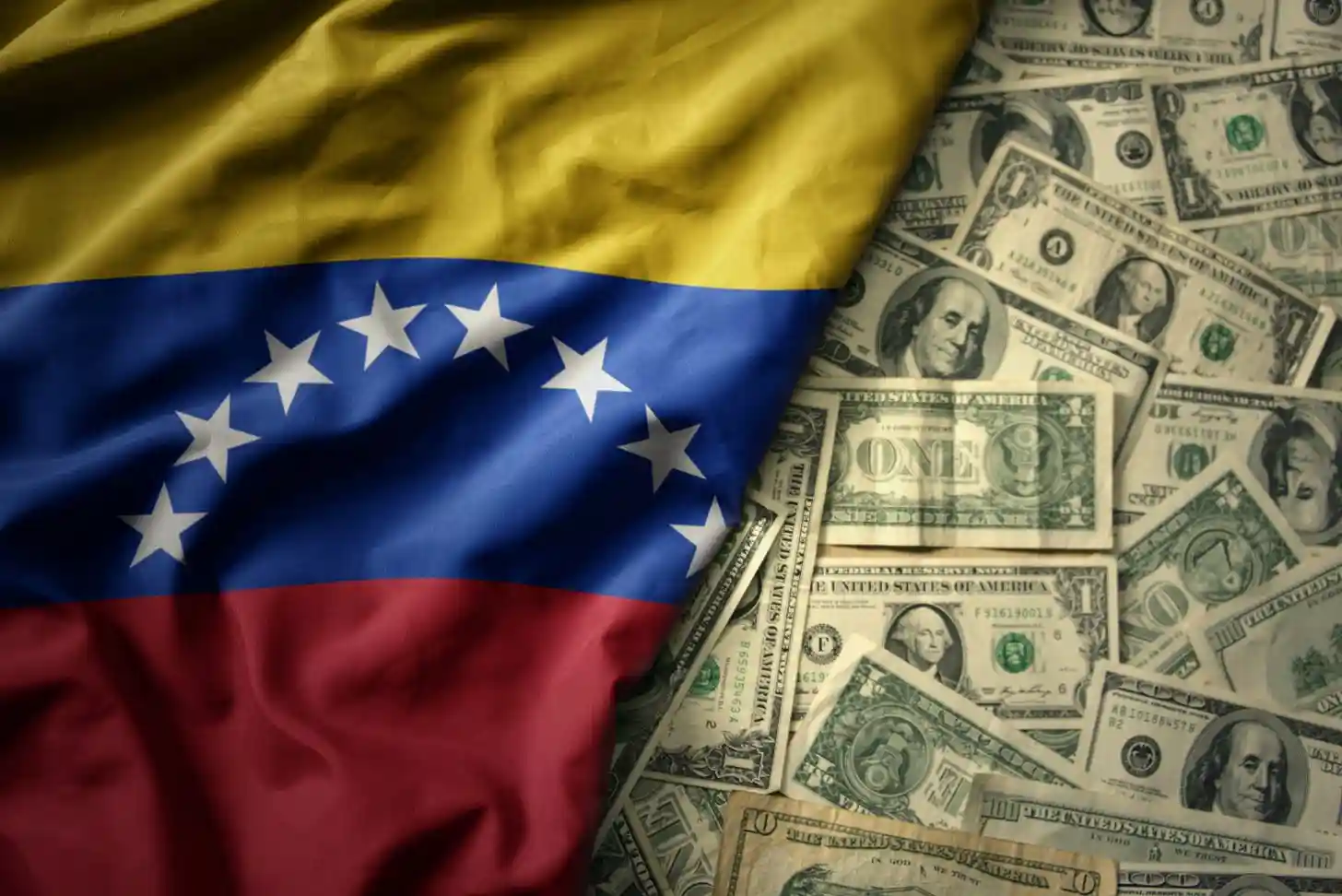
The biggest news this week was Tether's freezing of about $182 million USDT across five wallet addresses on the Tron chain in a single day, marking one of its largest single-day actions to date.

There is speculation that these assets may belong to the Venezuelan government, and Tether—long seen as a "safe haven for illicit fund flows"—is now seizing (or freezing) sovereign assets at the behest of the U.S. government.

What we can confirm so far is that this operation was indeed carried out under compliance and law enforcement procedures. Although officials have not confirmed that these addresses hold "Venezuelan oil revenues," analysts and on-chain observers widely interpret the situation as such.

Online discussions also suggest that some of the frozen funds may overlap with wallet addresses used for Venezuela-related activities. Given the country's heavy reliance on USDT, such speculation is not unfounded.

According to The Wall Street Journal, Venezuela's oil trade is deeply intertwined with Tether stablecoins. The report cited a podcast by Venezuelan economist Asdrúbal Oliveros, who mentioned that stablecoins have established a "direct channel" between Venezuela's economy and the crypto world, primarily driven by the oil industry.

In the podcast, Oliveros pointed out that nearly 80% of the country's oil revenues are being received in the form of cryptocurrencies or stablecoins. He added that this large-scale inflow of digital assets has made USDT a recurring keyword in Venezuela's commercial exchanges and corporate operations.

However, Oliveros also emphasized that the government faces difficulties converting these crypto assets into liquidity usable in the real economy, as the process requires a series of compliance reviews. This has left substantial funds "locked" on-chain. As a result, Venezuela's oil revenues are not flowing back into the domestic economy, impacting the official exchange rate and causing it to soar.

Oliveros further suggested that the Venezuelan government has not been professional in managing its cryptocurrency and stablecoin wealth. He mentioned that due to overreliance on individual wallets and a lack of internal compliance processes or regular reconciliation mechanisms, some wallets' seed phrases/private keys may have been mishandled or even lost amid managerial chaos.

An Existential Question?

If the frozen funds are indeed confirmed to belong to Venezuela, the pressing question for everyone is: How will this impact Tether's reputation as an "alternative monetary system" in developing countries, especially in regions with financial instability or under international sanctions?

On Tuesday, at the launch of Bytetree's new Bitcoin + gold combined exposure ETN product, BOLD, on the London Stock Exchange, prominent figures in London's crypto and gold investment circles speculated that this event could deliver a strong blow to stablecoins, with repercussions extending even further.

Bitcoin investor, advocate, and comedian Dominic Frisby (also a vocal supporter of digital privacy) told The Peg that he was not surprised this event would—much like the discussions around the "formal seizure of Russian assets held by Euroclear"—make international sovereign investors uneasy about euro/dollar-denominated assets, potentially triggering panic among crypto capital.

Although Tether is often portrayed as "lacking regulation, high-risk, and non-compliant," over the past year, the stablecoin giant has not concealed its increasingly close cooperation with global law enforcement agencies, even as it maintains its base in the relatively regulation-light, crypto-friendly El Salvador.

Tether CEO Paolo Ardoino told The Peg in October that Tether is the only stablecoin and crypto company that regularly collaborates with the U.S. Department of Justice (DoJ) and has also integrated the FBI and the U.S. Secret Service into its cooperation framework.

"We froze Garantex's (a Russian exchange) assets with them," he said, confirming the action while also noting that Tether is expanding its presence in commodity-related supply chain financial markets.

According to The Wall Street Journal, blockchain monitoring company TRM Labs has a partnership with Tether to help track illegal activities involving USDT on the Tron chain. TRM Labs' global policy head Ari Redbord told the media that the role of stablecoins in Venezuelan society is complex: "They (stablecoins) can be a lifeline for civilians, but they can also become tools for evasion under sanctions pressure."

This statement underscores a core reality: USDT, as a financial lifeline, is deeply embedded in Venezuela's economy, helping ordinary people combat hyperinflation. At the same time, its technology can be exploited by bad actors to move funds, raising concerns about sanctions compliance.

However, Tether has now demonstrated that when addresses are flagged for sanctions or illegal associations, it is willing to freeze USDT on networks like TRON. In other words, even if stablecoins serve as critical financial infrastructure locally, they are not exempt from human enforcement.

More importantly, this action comes after a recent policy "slam on the brakes" in Brussels (EU): After years of posturing, planning, and legal preparations, the EU ultimately hesitated at the final step of "explicitly seizing frozen Russian assets," fearing it would weaken the appeal of euro-denominated assets to international investors.

Thus, the signal to markets and nations may be that storing funds in stablecoins like Tether might be riskier than holding official assets.

Whether this reality will pose an "existential threat" to Tether's offshore business model in the coming weeks or months remains to be seen. But within crypto circles, a strong view is spreading: international investors may never look at stablecoins the same way again.

At the very least, this incident shows that the influence of the so-called "Donroe Doctrine" is no longer confined to geopolitics and national gamesmanship but is entering the core of global financial markets. And from any perspective, Tether is at the very center of this sphere of influence.

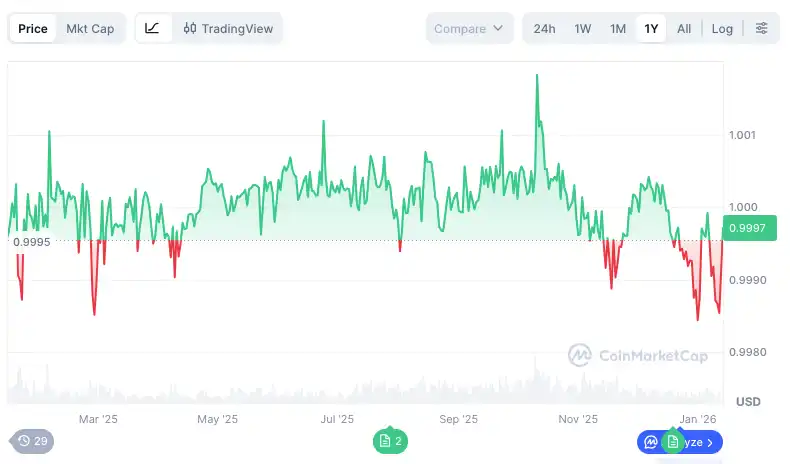
So far, aside from minor fluctuations over the past month, Tether's peg has remained stable. The real pressure signal would be a significant slowdown in inflows—or, more dangerously, a shift from net inflows to net outflows.

Tether's next reserve attestation is expected to be released in late January or early February.
Trend Kriptolar

İlgili Sorular

QWhat was the significance of Tether freezing $182 million USDT on the Tron network, and why is it being compared to the 'Euroclear moment'?

ATether's freezing of $182 million USDT is significant because it represents one of its largest single-day actions and is seen by analysts as its 'Euroclear moment.' This term refers to a financial infrastructure, originally perceived as a neutral channel, beginning to cooperate with law enforcement to freeze assets. This action shifts Tether's role from merely a stablecoin to becoming part of the power boundary, impacting its narrative as a neutral monetary tool.

QHow is USDT deeply embedded in Venezuela's economy, particularly in the oil trade?

AUSDT is deeply embedded in Venezuela's economy, with nearly 80% of the country's oil revenues being received in cryptocurrencies or stablecoins. This digital asset inflow has made USDT a key term in commercial exchanges and business operations. However, converting these crypto assets into usable liquidity for the real economy requires compliance reviews, often leaving funds locked on-chain and not reintegrated into the domestic economy, affecting official exchange rates.

QWhat are the potential risks to Tether's reputation as an 'alternative monetary system' in developing countries following this freezing event?

AThe freezing event poses a potential risk to Tether's reputation as an 'alternative monetary system' in developing countries, especially those with financial instability or under international sanctions. If the frozen funds are confirmed to belong to Venezuela, it could undermine trust in USDT as a reliable financial lifeline, as it demonstrates that stablecoins are not exempt from human enforcement actions and may be subject to geopolitical pressures.

QHow does Tether's cooperation with global law enforcement agencies, such as the DOJ and FBI, influence its operational dynamics?

ATether's cooperation with global law enforcement agencies, including the DOJ and FBI, shows its commitment to compliance and tracking illegal activities. For instance, Tether has worked with these agencies to freeze assets linked to entities like Garantex, a Russian exchange. This collaboration enhances its legitimacy but also highlights that USDT transactions are monitorable and actionable, affecting its perception as a decentralized or neutral asset.

QWhat broader implications does this event have for the stability and future of stablecoins like USDT in the global financial system?

AThis event has broader implications for stablecoins like USDT, suggesting that they may carry higher risks than official assets due to their susceptibility to enforcement actions. It could lead to reduced inflows or even net outflows, challenging Tether's offshore business model. The situation indicates that geopolitical doctrines, such as the 'Donroe Doctrine,' are influencing global financial markets, with Tether at the center, potentially altering how international investors view stablecoins.

İlgili Okumalar

Beyond the Stadium: The Profitable Games Surrounding the World Cup

"Beyond the Pitch: The Profit Game Around the World Cup" The FIFA World Cup transcends being a sporting spectacle, evolving into a massive global arena for speculation and profit-seeking. The 2026 tournament has amplified this dynamic, creating a multi-layered ecosystem of financial opportunism alongside the football. **Prediction markets** have surged into the mainstream. Platforms like Polymarket and Kalshi saw trading volumes for World Cup contracts soar, attracting new users with their financial trading model and high-profile, chain-based wealth stories that overshadow traditional sports betting in terms of growth and narrative. However, **traditional sportsbooks** remain the dominant force, leveraging established user habits, legal markets, and comprehensive product offerings to handle the vast majority of speculative wagers, with projections suggesting record-breaking betting volumes. Capital markets also react. **"Concept stocks"** in countries like South Korea and Japan experience volatile price swings based on team performance and anticipated fan spending on items like chicken, beer, and viewing parties, effectively becoming a stock market reflecting fan sentiment. The **ticket resale market** has become a sophisticated arena for arbitrage. Prices fluctuate wildly based on team draws and star power, with sellers sometimes listing tickets they don't yet own in a practice akin to short-selling, while FIFA's own "Right to Buy" tokens add another layer of speculative trading. **Collectibles and merchandise** offer another avenue. Panini sticker albums, with their inherent scarcity and nostalgic value, can become high-value collectibles. Limited-edition or locally themed jerseys command significant premiums on secondary markets, and even counterfeit vendors profit from fans' desire for affordable match-day identity. The **cryptocurrency** space has seen a frenzy of speculative, unauthorized World Cup-themed meme coins on chains like Solana. These tokens, often exploiting team names and player imagery, experience extreme pump-and-dump cycles, creating stories of massive gains for a few early entrants and steep losses for many others. Finally, an entire industry thrives on **providing information and tools** to other speculators. Developers create platforms like SeatSidekick to track ticket inventory and prices, while paid Telegram groups and subscriptions sell betting tips and predictions, monetizing the widespread desire for an informational edge. In essence, the World Cup has become a compressed, global laboratory for speculation. While the games determine champions on the field, a parallel, complex network of financial transactions—spanning prediction contracts, bets, stocks, tickets, collectibles, crypto, and information services—settles its own scores in the global market.

marsbit35 dk önce

Beyond the Stadium: The Profitable Games Surrounding the World Cup

marsbit35 dk önce

How Does Codex Use a Computer? Three Entry Points and Permission Boundaries

This article explains the three primary methods for Codex to interact with a computer, each with distinct use cases, permission boundaries, and trust levels. **1. Computer Use:** This offers the broadest access, allowing Codex to visually control and interact with the graphical user interface of authorized macOS/Windows apps, system settings, and even iOS simulators. It's ideal for tasks lacking APIs or structured tools, such as operating legacy software or multi-app workflows. However, it's the slowest method and has the widest permission scope, requiring careful supervision for sensitive actions. **2. Chrome Extension:** This grants Codex access to the user's logged-in Chrome browser state, including cookies, profiles, and open tabs. It's best for tasks requiring user identity across websites like Gmail, LinkedIn, Salesforce, or internal dashboards. Its key advantage is multi-tab control for complex workflows. While more powerful for browser-based tasks than Computer Use, it carries higher sensitivity as actions are performed under the user's identity. **3. In-App Browser:** This is a browser isolated within the Codex thread, separate from the user's personal browsing data. It excels in web development and debugging scenarios—previewing local servers, testing responsive layouts, or annotating designs directly on the page. Its isolation is a strength for development but a limitation for tasks requiring login sessions. The core principle is to choose the narrowest, safest, and most structured interface for the task. Use plugins or MCPs first, resort to visual control (Computer Use) only for GUI-dependent tasks, employ the Chrome extension for identity-reliant browser work, and prefer the In-App Browser for isolated development. **Appshots** are clarified as a fourth, complementary tool for *inputting* context—capturing a screenshot of a window to point Codex to something—rather than a method for Codex to *act*. Together, this layered approach highlights a key to AI agent productization: not granting unlimited permissions, but constraining them within clear boundaries for specific tasks while preserving user oversight.

marsbit2 saat önce

How Does Codex Use a Computer? Three Entry Points and Permission Boundaries

marsbit2 saat önce

The "Iron Rule" of Chip Equipment Is Being Broken

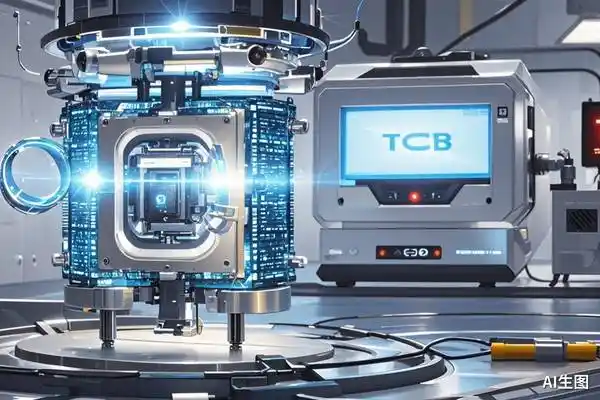
For years, the semiconductor equipment industry followed an unwritten "iron rule": suppliers offered steep discounts for new tool introductions (Design-in) and faced consistent price pressure during repeat orders, especially during market downturns. This long-standing buyer's market dynamic is now being upended. Recently, SK Hynix's primary equipment suppliers have reportedly requested a 3-4% price *increase*, a nearly unprecedented move. This shift is driven by a severe supply-demand imbalance fueled by the AI compute boom. Securing equipment has become an urgent arms race as chipmakers' expansion speed dictates their ability to fulfill massive AI chip orders. Key areas feeling the strain include: **TCB (Thermal Compression Bonding) Equipment:** Demand is exploding, driven by the simultaneous needs of HBM4 memory stacking, AI chip Chip-on-Substrate (C2S), and logic Chiplet Chip-on-Wafer (C2W) packaging. Players like Hanmi Semiconductor, Hanwha Semitech, and ASMPT are receiving major orders. While hybrid bonding is seen as the future, TCB remains the pragmatic choice for HBM4 mass production, with its lifecycle extended by relaxed specifications and ongoing technological upgrades. **Test Equipment Bottlenecks:** Ironically, AI-driven shortages are now crippling test equipment manufacturing. Critical components like FPGAs, Driver ICs, and CPUs face severe shortages and extended lead times (up to 52 weeks for FPGAs), as AI data center and server vendors prioritize supply. This creates a paradoxical cycle: AI chip shortages drive fab expansion, which requires more test equipment, whose production is delayed because its key parts are diverted to make AI chips. The industry is entering a broad, AI-powered upcycle. SEMI forecasts global semiconductor equipment sales to hit a record $156 billion by 2027, fueled by investment in advanced logic/foundry, HBM-driven DRAM, and advanced packaging (like CoWoS). Major players like TSMC, SK Hynix, and Micron are aggressively ramping capital expenditure. In conclusion, leading equipment vendors are no longer just selling tools; they are selling the critical capability to deliver AI-era capacity. Pricing power is shifting decisively to those with indispensable technology in key process nodes like advanced logic, HBM, and advanced packaging, rewriting the industry's traditional power structure.

marsbit2 saat önce

The "Iron Rule" of Chip Equipment Is Being Broken

marsbit2 saat önce

İşlemler

Spot
Futures

Popüler Makaleler

ONE Nasıl Satın Alınır

HTX.com’a hoş geldiniz! Harmony (ONE) satın alma işlemlerini basit ve kullanışlı bir hâle getirdik. Adım adım açıkladığımız rehberimizi takip ederek kripto yolculuğunuza başlayın. 1. Adım: HTX Hesabınızı OluşturunHTX'te ücretsiz bir hesap açmak için e-posta adresinizi veya telefon numaranızı kullanın. Sorunsuzca kaydolun ve tüm özelliklerin kilidini açın. Hesabımı Aç2. Adım: Kripto Satın Al Bölümüne Gidin ve Ödeme Yönteminizi SeçinKredi/Banka Kartı: Visa veya Mastercard'ınızı kullanarak anında Harmony (ONE) satın alın.Bakiye: Sorunsuz bir şekilde işlem yapmak için HTX hesap bakiyenizdeki fonları kullanın.Üçüncü Taraflar: Kullanımı kolaylaştırmak için Google Pay ve Apple Pay gibi popüler ödeme yöntemlerini ekledik.P2P: HTX'teki diğer kullanıcılarla doğrudan işlem yapın.Borsa Dışı (OTC): Yatırımcılar için kişiye özel hizmetler ve rekabetçi döviz kurları sunuyoruz.3. Adım: Harmony (ONE) Varlıklarınızı SaklayınHarmony (ONE) satın aldıktan sonra HTX hesabınızda saklayın. Alternatif olarak, blok zinciri transferi yoluyla başka bir yere gönderebilir veya diğer kripto para birimlerini takas etmek için kullanabilirsiniz.4. Adım: Harmony (ONE) Varlıklarınızla İşlem YapınHTX'in spot piyasasında Harmony (ONE) ile kolayca işlemler yapın.Hesabınıza erişin, işlem çiftinizi seçin, işlemlerinizi gerçekleştirin ve gerçek zamanlı olarak izleyin. Hem yeni başlayanlar hem de deneyimli yatırımcılar için kullanıcı dostu bir deneyim sunuyoruz.

392 Toplam GörüntülenmeYayınlanma 2024.12.12Güncellenme 2026.06.02

ONE Nasıl Satın Alınır

Tartışmalar

HTX Topluluğuna hoş geldiniz. Burada, en son platform gelişmeleri hakkında bilgi sahibi olabilir ve profesyonel piyasa görüşlerine erişebilirsiniz. Kullanıcıların ONE (ONE) fiyatı hakkındaki görüşleri aşağıda sunulmaktadır.

活动图片