Weekly Token Unlock: XPL to Release Millions in Token Value

marsbit2026-06-21 tarihinde yayınlandı2026-06-21 tarihinde güncellendi

Özet

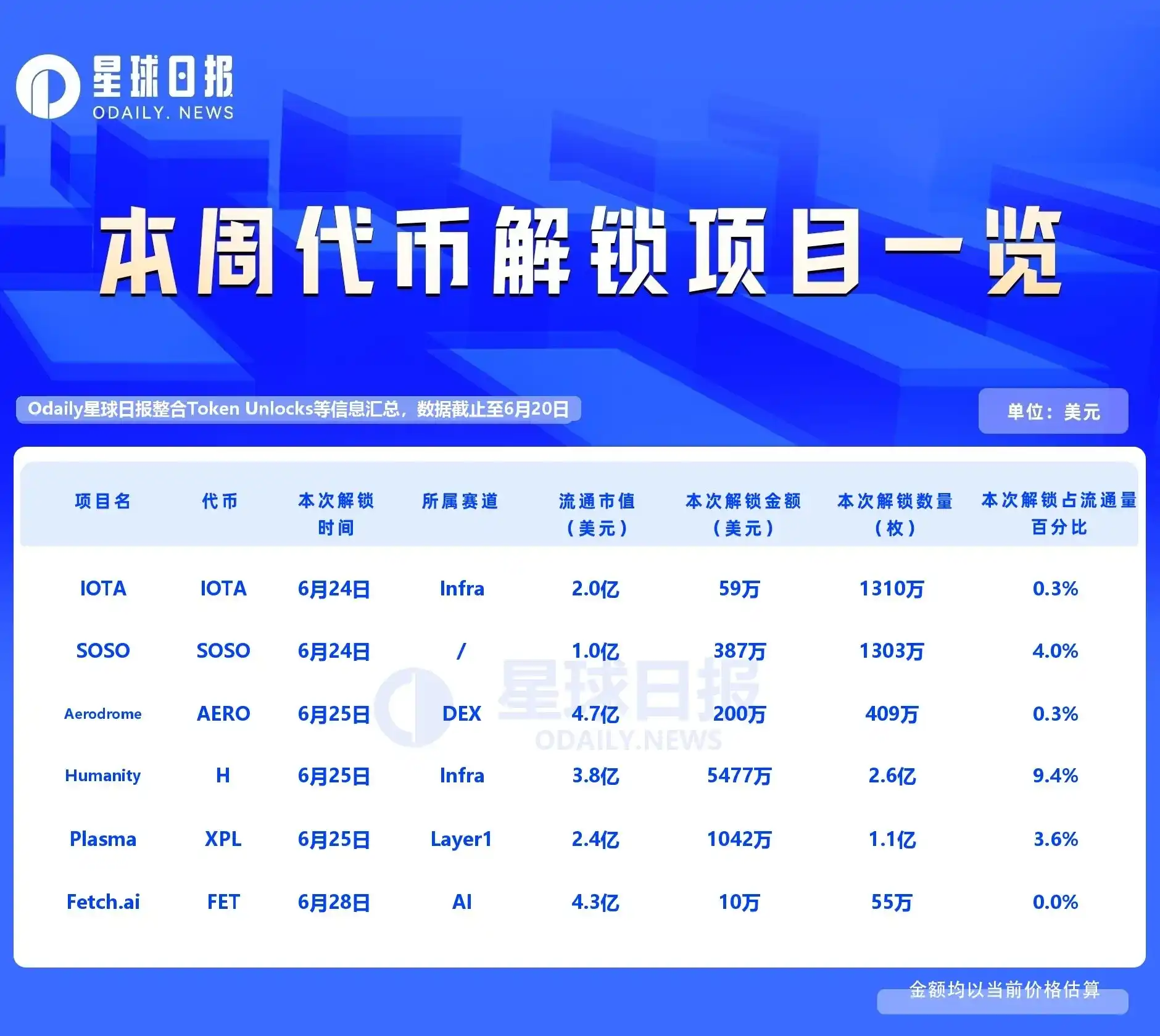
Weekly Token Unlocks: XPL and SoSoValue Tokens Worth Over $10 Million Set for Release This week sees significant token unlocks for two projects. SoSoValue, an AI-powered crypto investment research platform, will unlock 13.03 million tokens, valued at approximately $3.87 million. The project aims to merge CeFi efficiency with DeFi transparency. Separately, Plasma, a Layer 1 blockchain designed for global stablecoin payments, will unlock 110 million tokens worth about $10.42 million. The network focuses on high throughput, stablecoin-native features, and full EVM compatibility. Both projects have provided their detailed token release schedules.

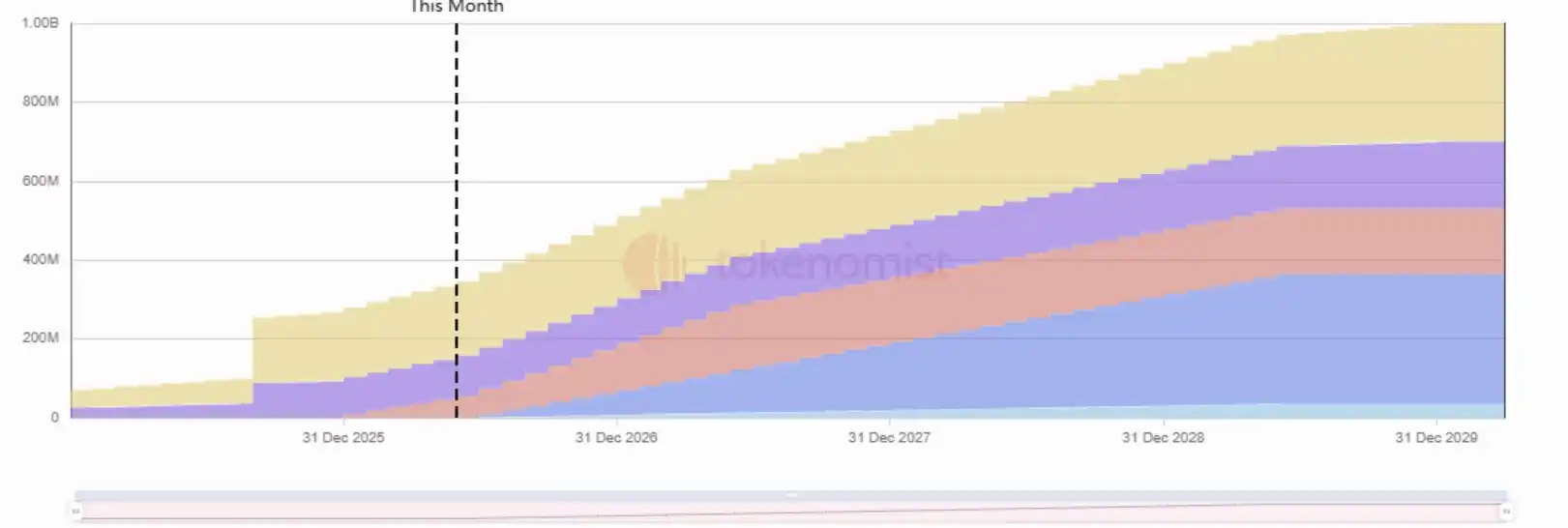
SoSoValue

Project Twitter: https://x.com/SoSoValueCrypto

Project Website: https://sosovalue.com/

This Unlock Amount: 13.03 million tokens

This Unlock Value: ~$3.87 million

SoSoValue is an AI-powered investment research platform that combines the efficiency of CeFi with the transparency of DeFi, dedicated to addressing challenges such as information overload and cross-chain asset management in the cryptocurrency market.

The specific release schedule is as follows:

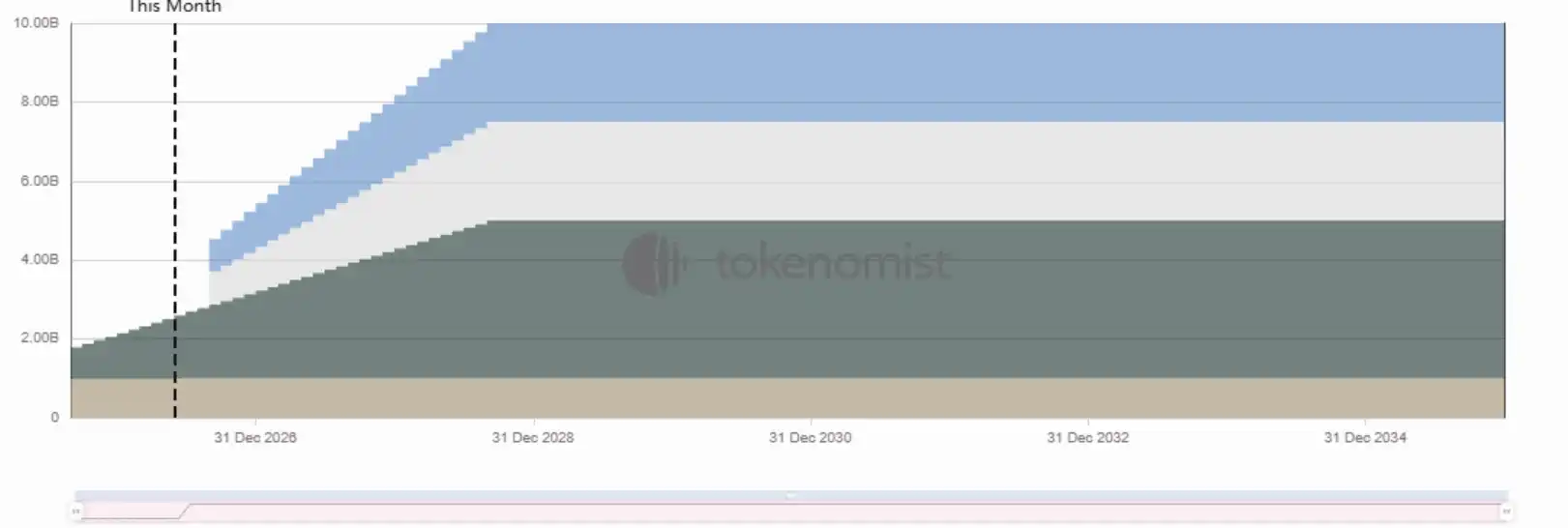
Plasma

Project Twitter: https://x.com/Plasma

Project Website: https://www.plasma.to/

This Unlock Amount: 110 million tokens

This Unlock Value: ~$10.42 million

Plasma is a Layer 1 blockchain specifically built for global stablecoin payments. It integrates high throughput, stablecoin-native functionality, and full EVM compatibility, providing developers with the foundational infrastructure to build next-generation payment and financial applications. It also supports customizable gas tokens, zero-fee USDT transfers, and private payments.

The specific release schedule is as follows:

Trend Kriptolar

İlgili Sorular

QWhat are the two projects mentioned in the article that are undergoing token unlocks this week?

AThe two projects are SoSoValue and Plasma (XPL).

QAccording to the article, how much is the Plasma (XPL) token unlock worth in USD?

AThe Plasma (XPL) token unlock is worth approximately $10.42 million.

QWhat is the primary focus or purpose of the Plasma blockchain as described in the article?

APlasma is a Layer 1 blockchain specifically built for global stablecoin payments, offering high throughput, stablecoin-native features, and full EVM compatibility for next-generation payment and financial applications.

QWhat is the stated goal of the SoSoValue platform?

ASoSoValue is an AI-driven investment research platform that aims to combine the efficiency of CeFi with the transparency of DeFi to address challenges like information overload and cross-chain asset management in the cryptocurrency market.

QHow many SoSoValue tokens are being unlocked this week according to the data provided?

A13.03 million SoSoValue tokens are being unlocked this week.

İlgili Okumalar

Beyond the Stadium: The Profitable Games Surrounding the World Cup

"Beyond the Pitch: The Profit Game Around the World Cup" The FIFA World Cup transcends being a sporting spectacle, evolving into a massive global arena for speculation and profit-seeking. The 2026 tournament has amplified this dynamic, creating a multi-layered ecosystem of financial opportunism alongside the football. **Prediction markets** have surged into the mainstream. Platforms like Polymarket and Kalshi saw trading volumes for World Cup contracts soar, attracting new users with their financial trading model and high-profile, chain-based wealth stories that overshadow traditional sports betting in terms of growth and narrative. However, **traditional sportsbooks** remain the dominant force, leveraging established user habits, legal markets, and comprehensive product offerings to handle the vast majority of speculative wagers, with projections suggesting record-breaking betting volumes. Capital markets also react. **"Concept stocks"** in countries like South Korea and Japan experience volatile price swings based on team performance and anticipated fan spending on items like chicken, beer, and viewing parties, effectively becoming a stock market reflecting fan sentiment. The **ticket resale market** has become a sophisticated arena for arbitrage. Prices fluctuate wildly based on team draws and star power, with sellers sometimes listing tickets they don't yet own in a practice akin to short-selling, while FIFA's own "Right to Buy" tokens add another layer of speculative trading. **Collectibles and merchandise** offer another avenue. Panini sticker albums, with their inherent scarcity and nostalgic value, can become high-value collectibles. Limited-edition or locally themed jerseys command significant premiums on secondary markets, and even counterfeit vendors profit from fans' desire for affordable match-day identity. The **cryptocurrency** space has seen a frenzy of speculative, unauthorized World Cup-themed meme coins on chains like Solana. These tokens, often exploiting team names and player imagery, experience extreme pump-and-dump cycles, creating stories of massive gains for a few early entrants and steep losses for many others. Finally, an entire industry thrives on **providing information and tools** to other speculators. Developers create platforms like SeatSidekick to track ticket inventory and prices, while paid Telegram groups and subscriptions sell betting tips and predictions, monetizing the widespread desire for an informational edge. In essence, the World Cup has become a compressed, global laboratory for speculation. While the games determine champions on the field, a parallel, complex network of financial transactions—spanning prediction contracts, bets, stocks, tickets, collectibles, crypto, and information services—settles its own scores in the global market.

marsbit12 dk önce

Beyond the Stadium: The Profitable Games Surrounding the World Cup

marsbit12 dk önce

How Does Codex Use a Computer? Three Entry Points and Permission Boundaries

This article explains the three primary methods for Codex to interact with a computer, each with distinct use cases, permission boundaries, and trust levels. **1. Computer Use:** This offers the broadest access, allowing Codex to visually control and interact with the graphical user interface of authorized macOS/Windows apps, system settings, and even iOS simulators. It's ideal for tasks lacking APIs or structured tools, such as operating legacy software or multi-app workflows. However, it's the slowest method and has the widest permission scope, requiring careful supervision for sensitive actions. **2. Chrome Extension:** This grants Codex access to the user's logged-in Chrome browser state, including cookies, profiles, and open tabs. It's best for tasks requiring user identity across websites like Gmail, LinkedIn, Salesforce, or internal dashboards. Its key advantage is multi-tab control for complex workflows. While more powerful for browser-based tasks than Computer Use, it carries higher sensitivity as actions are performed under the user's identity. **3. In-App Browser:** This is a browser isolated within the Codex thread, separate from the user's personal browsing data. It excels in web development and debugging scenarios—previewing local servers, testing responsive layouts, or annotating designs directly on the page. Its isolation is a strength for development but a limitation for tasks requiring login sessions. The core principle is to choose the narrowest, safest, and most structured interface for the task. Use plugins or MCPs first, resort to visual control (Computer Use) only for GUI-dependent tasks, employ the Chrome extension for identity-reliant browser work, and prefer the In-App Browser for isolated development. **Appshots** are clarified as a fourth, complementary tool for *inputting* context—capturing a screenshot of a window to point Codex to something—rather than a method for Codex to *act*. Together, this layered approach highlights a key to AI agent productization: not granting unlimited permissions, but constraining them within clear boundaries for specific tasks while preserving user oversight.

marsbit1 saat önce

How Does Codex Use a Computer? Three Entry Points and Permission Boundaries

marsbit1 saat önce

The "Iron Rule" of Chip Equipment Is Being Broken

For years, the semiconductor equipment industry followed an unwritten "iron rule": suppliers offered steep discounts for new tool introductions (Design-in) and faced consistent price pressure during repeat orders, especially during market downturns. This long-standing buyer's market dynamic is now being upended. Recently, SK Hynix's primary equipment suppliers have reportedly requested a 3-4% price *increase*, a nearly unprecedented move. This shift is driven by a severe supply-demand imbalance fueled by the AI compute boom. Securing equipment has become an urgent arms race as chipmakers' expansion speed dictates their ability to fulfill massive AI chip orders. Key areas feeling the strain include: **TCB (Thermal Compression Bonding) Equipment:** Demand is exploding, driven by the simultaneous needs of HBM4 memory stacking, AI chip Chip-on-Substrate (C2S), and logic Chiplet Chip-on-Wafer (C2W) packaging. Players like Hanmi Semiconductor, Hanwha Semitech, and ASMPT are receiving major orders. While hybrid bonding is seen as the future, TCB remains the pragmatic choice for HBM4 mass production, with its lifecycle extended by relaxed specifications and ongoing technological upgrades. **Test Equipment Bottlenecks:** Ironically, AI-driven shortages are now crippling test equipment manufacturing. Critical components like FPGAs, Driver ICs, and CPUs face severe shortages and extended lead times (up to 52 weeks for FPGAs), as AI data center and server vendors prioritize supply. This creates a paradoxical cycle: AI chip shortages drive fab expansion, which requires more test equipment, whose production is delayed because its key parts are diverted to make AI chips. The industry is entering a broad, AI-powered upcycle. SEMI forecasts global semiconductor equipment sales to hit a record $156 billion by 2027, fueled by investment in advanced logic/foundry, HBM-driven DRAM, and advanced packaging (like CoWoS). Major players like TSMC, SK Hynix, and Micron are aggressively ramping capital expenditure. In conclusion, leading equipment vendors are no longer just selling tools; they are selling the critical capability to deliver AI-era capacity. Pricing power is shifting decisively to those with indispensable technology in key process nodes like advanced logic, HBM, and advanced packaging, rewriting the industry's traditional power structure.

marsbit1 saat önce

The "Iron Rule" of Chip Equipment Is Being Broken

marsbit1 saat önce

İşlemler

Spot
Futures

Popüler Makaleler

PLASMA Nedir

Plasma: Blok Zinciri Ölçeklenebilirliği için Keskin Çözüm Plasma'ya Giriş Kripto para manzarası geliştikçe, blok zinciri ağları içinde artırılmış verimlilik ihtiyacı da artmaktadır. Plasma, bir Katman 2 ölçeklenebilirlik çözümü olarak bu alanda öncü bir oyuncu olarak ortaya çıkıyor, özellikle Web3 geliştirme alanında. Ana zincirden daha küçük zincirler dizisine önemli bir kısmı stratejik olarak kaydırarak, Plasma, Ethereum'un ölçeklenebilirliğini ve performansını önemli ölçüde artırmayı vaat ediyor—dağıtık uygulamaların öncüsü olan yaygın bir blok zinciri platformu. Plasma Nedir? Plasma, Ethereum blok zinciri için özellikle tasarlanmış yenilikçi bir off-chain ölçeklenebilirlik çözümüdür. Ağustos 2017'de Ethereum'un kurucu ortağı Vitalik Buterin ve Lightning Network gibi ölçeklenebilirlik çözümlerinin önde gelen savunucusu Joseph Poon tarafından tanıtılmıştır. Plasma, ana Ethereum zincirinin üzerinde bir çocuk zincirler hiyerarşisi oluşturarak ölçeklenebilir uygulamaların yaratımını sağlayan bir çerçeve olarak işlev görmektedir. Plasma'nın özünde, Ethereum ağına güvenlik ve mutabakat için bağımlı kalarak bağımsız olarak çalışabilen potansiyel olarak sonsuz yan zincirlerin geliştirilmesine olanak tanır. Bu mimari, işlemleri ve veri depolamayı verimli bir şekilde yöneten akıllı sözleşmeler ve Merkle Ağaçları ile desteklenmektedir. Plasma'nın Temel Hedefleri Plasma'nın birincil amacı, Ethereum ağının işlem hacmini artırmaktır. Yoğun ana zincirden önemli bir işlem hacmini saptırarak, Plasma'nın mimarisi daha yüksek işlem hızları, daha verimli veri işleme ve daha düşük işlem maliyetleri sunar. Bu, özellikle finans, oyun ve tedarik zinciri yönetiminde dağıtık uygulamalara olan talebin eşi benzeri görülmemiş seviyelere ulaştığı bir çağda hayati öneme sahiptir. Plasma'nın Yaratıcıları Plasma, blok zinciri topluluğunda tanınmış iki figürün eseridir: Vitalik Buterin ve Joseph Poon. Buterin, esas olarak Ethereum'un kurucu ortağı olması ve blok zinciri teknolojisinin ulaşabileceği sınırları zorlamasıyla tanınır. Poon ise, blok zinciri ağlarında daha hızlı ve maliyet etkin işlemlere olanak tanıyan ölçeklenebilir çözümleri savunmasıyla bilinir. Plasma çerçevesindeki işbirlikleri, ileri düzey teknik içgörülerle pratik uygulamaları bir araya getirerek, yenilikçi doğasına büyük katkı sağlamıştır. Plasma'nın Yatırımcıları Plasma'yı destekleyen özel yatırım vakıfları veya organizasyonları duyurulmamış olsa da, proje blok zinciri ve kripto para alanındaki çeşitli tanınmış figürlerden ve oyunculardan ilgi görmüştür. Ethereum içindeki ölçeklenebilirliği artırma potansiyeli ile, blok zinciri teknolojisinin sınırlarını zorlamaya çalışan çeşitli kuruluşların dikkatini çekmiştir. Plasma Nasıl Çalışır? Plasma'nın benzersiz işlevselliği, çocuk zincirlere ve bunların ana Ethereum ağı ile etkileşimine dayanan mimarisine atfedilmektedir. Plasma'nın yenilikçi yaklaşımına katkıda bulunan bazı ana faktörler şunlardır: Çocuk Zincirler: Plasma, ana Ethereum zincirinden bağımsız olarak işlemleri gerçekleştirebilen çok sayıda çocuk zincir kurar. Her bir çocuk zincir, belirli gereksinimler temelinde geliştiricilere özelleştirilmiş çözümler yaratabilme imkanı sunan ayrı bir akıllı sözleşme olarak çalışır. Akıllı Sözleşmeler ve Merkle Ağaçları: Çerçeve, önceden tanımlanmış koşullarla kendiliğinden yürütülen anlaşmalar olan akıllı sözleşmeleri kullanır ve verilerin verimli bir şekilde doğrulanmasını sağlamak için Merkle Ağaçları ile birleştirir. Bu teknoloji, Plasma'nın hem yüksek ölçeklenebilirlik hem de güvenlik elde etmesini sağlar. İşlem Sıkıştırma: Plasma, çocuk zincirlerdeki işlemleri bir araya getirerek, Ethereum ağı üzerindeki veri yükünü azaltır. Bu, ana zincirde daha az işlemin kaydedilmesi gerektiği anlamına gelir—bu da alanın açılmasını ve yoğunluğun azaltılmasını sağlar. Artırılmış Güvenlik: Off-chain olmasına rağmen, Plasma ana Ethereum ağının güvenlik önlemlerinden yararlanır ve çocuk zincirler üzerindeki tüm işlemlerin yüksek bir bütünlük ve güvenlik seviyesini korumasını sağlar. Plasma'nın Zaman Çizelgesi Plasma'nın gelişimini anlamak, önemli kilometre taşlarını izlemeyi içerir: Ağustos 2017: Plasma, Vitalik Buterin ve Joseph Poon tarafından Ethereum'un performans sorunlarını ele almak için ölçeklenebilir bir çözüm olarak ilk kez tanıtıldı. 2018: Plasma çerçevesi resmi olarak geliştirildi ve GitHub'da erişilebilir hale getirildi; bu, pratik uygulamalardaki uygulanabilirliğine doğru kritik bir adım oldu. 2019: Plasma hakkında farkındalık arttıkça, Ethereum uygulamalarını ölçeklendirmeye ilgi duyan geliştiricileri çekmeye başladı ve böylece benimsenmesi arttı. 2020: Plasma, mimarisi ve işlevselliğinde önemli iyileştirmeler yaparak evrimini sürdürdü—bu durum, geliştiriciler için daha da cazip hale getirdi. Plasma'nın Temel Özellikleri Plasma, blok zinciri alanında dönüştürücü bir çözüm olmasını sağlayan birkaç özelliğe sahiptir: Ölçeklenebilirlik: Birden fazla çocuk zincir oluşturarak, Plasma ana Ethereum zincirini daha fazla zorlamadan daha yüksek bir işlem hacmini işleyebilir. Hız: Her bir çocuk zincir, işlemleri daha hızlı işleyebilir ve kullanıcılara daha iyi bir deneyim ve hizmet sunar. Daha Düşük İşlem Maliyetleri: Plasma'nın yapısı, ana zincir üzerindeki yükü azaltarak işlemlerle bağlantılı maliyetleri etkili bir şekilde düşürür. İnteroperabilite: Mimari, Plasma'nın birden fazla blok zinciri ile sorunsuz bir şekilde etkileşim kurmasına olanak tanır, böylece ağlar arası işlevselliği artırır. Güvenlik: Ethereum'un ana zincirinin güvenliğinden yararlanarak, Plasma çocuk zincirlerini kullanırken operasyonlarının bütünlüğünü sağlar. Plasma'nın Kullanım Alanları Plasma'nın yenilikçi mimarisi, farklı sektörlerde çeşitli pratik uygulamalar için kapıyı aralar: Merkeziyetsiz Finans (DeFi): Plasma, DeFi uygulamalarının ölçeklenebilirliğini ve verimliliğini artırma kapasitesine sahiptir ve daha akıcı ve etkili ticaret süreçleri oluşturur. Oyun: Çerçeve, hızlı ve maliyet-etkin oyun deneyimlerinin geliştirilmesini kolaylaştırır ve bu durum oyun endüstrisindeki geliştiricilere cazip gelmektedir. Tedarik Zinciri Yönetimi: Etkili işlem işleme yeteneği ile Plasma, merkeziyetsiz tedarik zinciri yönetimi çözümlerinin geliştirilmesini teşvik edebilir. Sonuç Plasma, blok zinciri teknolojisinde öncü bir konumda bulunuyor ve Ethereum ağı ve ötesinde verimliliği artırmayı hedefleyen kritik bir Katman 2 ölçeklenebilirlik çözümü olarak konumlanıyor. Çocuk zincirler, akıllı sözleşmeler ve Merkle Ağaçları ile benzersiz yapısı sayesinde, Plasma uzun zamandır blok zinciri ağlarını rahatsız eden ölçeklenebilirlik krizine etkili bir çözüm sunuyor. Blok zinciri teknolojisi ilerlemeye devam ederken, Plasma gibi çözümler geliştiricilerin ölçeklenebilirlik zorluklarına yaklaşımını yeniden şekillendirme vaadi taşıyor ve merkeziyetsiz uygulamaların işleyişini potansiyel olarak devrim niteliğinde değiştirebilir. Yaratıcılarının sürekli çabaları ve çeşitli paydaşların ilgisi, Plasma'nın dijital alandaki blok zinciri yeteneklerini yeni zirvelere taşımayı hedeflediği parlak bir geleceği işaret ediyor.

162 Toplam GörüntülenmeYayınlanma 2024.12.03Güncellenme 2024.12.03
PLASMA Nedir

XPL Nasıl Satın Alınır

HTX.com’a hoş geldiniz! Plasma (XPL) satın alma işlemlerini basit ve kullanışlı bir hâle getirdik. Adım adım açıkladığımız rehberimizi takip ederek kripto yolculuğunuza başlayın. 1. Adım: HTX Hesabınızı OluşturunHTX'te ücretsiz bir hesap açmak için e-posta adresinizi veya telefon numaranızı kullanın. Sorunsuzca kaydolun ve tüm özelliklerin kilidini açın. Hesabımı Aç2. Adım: Kripto Satın Al Bölümüne Gidin ve Ödeme Yönteminizi SeçinKredi/Banka Kartı: Visa veya Mastercard'ınızı kullanarak anında Plasma (XPL) satın alın.Bakiye: Sorunsuz bir şekilde işlem yapmak için HTX hesap bakiyenizdeki fonları kullanın.Üçüncü Taraflar: Kullanımı kolaylaştırmak için Google Pay ve Apple Pay gibi popüler ödeme yöntemlerini ekledik.P2P: HTX'teki diğer kullanıcılarla doğrudan işlem yapın.Borsa Dışı (OTC): Yatırımcılar için kişiye özel hizmetler ve rekabetçi döviz kurları sunuyoruz.3. Adım: Plasma (XPL) Varlıklarınızı SaklayınPlasma (XPL) satın aldıktan sonra HTX hesabınızda saklayın. Alternatif olarak, blok zinciri transferi yoluyla başka bir yere gönderebilir veya diğer kripto para birimlerini takas etmek için kullanabilirsiniz.4. Adım: Plasma (XPL) Varlıklarınızla İşlem YapınHTX'in spot piyasasında Plasma (XPL) ile kolayca işlemler yapın.Hesabınıza erişin, işlem çiftinizi seçin, işlemlerinizi gerçekleştirin ve gerçek zamanlı olarak izleyin. Hem yeni başlayanlar hem de deneyimli yatırımcılar için kullanıcı dostu bir deneyim sunuyoruz.

311 Toplam GörüntülenmeYayınlanma 2025.09.26Güncellenme 2026.06.02

XPL Nasıl Satın Alınır

Tartışmalar

HTX Topluluğuna hoş geldiniz. Burada, en son platform gelişmeleri hakkında bilgi sahibi olabilir ve profesyonel piyasa görüşlerine erişebilirsiniz. Kullanıcıların XPL (XPL) fiyatı hakkındaki görüşleri aşağıda sunulmaktadır.

活动图片