# Youth İlgili Makaleler

HTX Haber Merkezi, kripto endüstrisindeki piyasa trendleri, proje güncellemeleri, teknoloji gelişmeleri ve düzenleyici politikaları kapsayan "Youth" hakkında en son makaleleri ve derinlemesine analizleri sunmaktadır.

Korean Youth, Making a 'Last Stand' in an Epic Bull Market

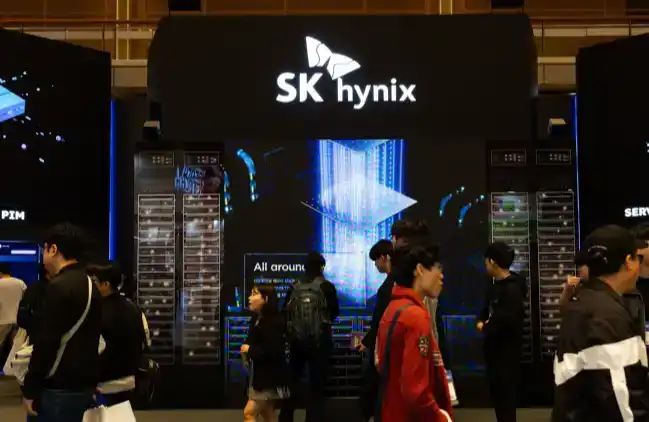
South Korea is experiencing an unprecedented stock market boom in the first half of 2026, with the KOSPI index doubling in six months, driven primarily by tech giants Samsung Electronics and SK Hynix. This "epic bull run," tied to the semiconductor cycle, has sparked a nationwide frenzy for stock trading. The country, with a population of just over 50 million, now has over 105 million securities accounts. The article, from the perspective of a Chinese national living in Seoul, explores how this speculative fever reflects deeper societal anxieties among Korean youth. Facing stagnant wages, high costs of living, housing pressures, and rigid social stratification, many young people see the volatile market as a "last chance" to alter their predetermined life trajectories and escape financial precarity. Stories include a young office worker investing her meager savings, a couple delaying marriage due to financial pressures, and a seasoned trader navigating exclusive social circles where market information is currency. However, the boom also exposes and exacerbates existing inequalities. While some achieve windfalls, others face devastating losses, with borrowing to invest reaching record highs. The narrative contrasts the illusion of equal opportunity with the harsh reality that the ability to absorb risk is unevenly distributed. Ultimately, the market frenzy is portrayed not as a solution, but as a symptom of a generation's struggle against a system offering limited upward mobility, where daily life is a precarious balance of bills, debts, and societal expectations.

marsbit06/11 06:39

Korean Youth, Making a 'Last Stand' in an Epic Bull Market

marsbit06/11 06:39

Young South Koreans, Making a 'Last-Ditch Effort' in an Epic Bull Market

This article explores how an unprecedented stock market boom in South Korea during the first half of 2026, driven by the semiconductor industry, is transforming the lives of ordinary people, particularly the youth. The KOSPI index doubled in six months, fueled by giants Samsung and SK Hynix, leading to a frenzy of retail investing. With over 105 million stock accounts in a population of just over 50 million, a sense of "FOMO" (fear of missing out) is pervasive. Through the perspective of Li Yuning, a Chinese woman living in Seoul, the piece follows several young Koreans who see the market as a last chance to escape stifling economic pressures, high housing costs, and narrow social mobility. Individuals like Minji, a low-paid office worker, and Junho, saving for marriage, invest their limited savings, while experienced traders like Suhu navigate exclusive social circles. The narrative reveals that this speculative fever stems less from greed and more from deep-seated anxiety about being left behind in a society with growing wealth inequality and rigid class structures. However, the boom also exposes stark social divides. It exacerbates wealth gaps, as those with family support or existing capital fare better. The pressure to succeed is immense, with stories of devastating losses leading to personal tragedy. Ultimately, the article suggests the牛市 acts as a pressure valve and a temporary illusion of opportunity in a system where traditional paths to advancement seem increasingly closed, leaving young people to gamble on the market as a final, desperate bid for a better future.

链捕手06/11 06:33

Young South Koreans, Making a 'Last-Ditch Effort' in an Epic Bull Market

链捕手06/11 06:33

South Korean Youth Trading Stocks Overnight, Diving Headfirst into Samsung and SK Hynix

The article details a significant shift in South Korea's investment landscape, where young retail investors are moving from volatile cryptocurrencies to the booming semiconductor stocks, particularly Samsung Electronics and SK Hynix. This transition is driven by the explosive demand for AI-related chips, specifically High Bandwidth Memory (HBM), where these two Korean giants hold a near-oligopoly alongside Micron. Due to unprecedented demand from cloud providers, AI firms, and electronics manufacturers, HBM supply is critically low, with SK Hynix's inventory at a historic low of just four weeks. This scarcity has led to massive price increases for HBM and DRAM chips, fueling a dramatic surge in the companies' stock prices—SK Hynix's stock is up sixfold and Samsung's has quadrupled since early 2025. This rally has propelled the Korean KOSPI index past 6000 points, making it a top-performing global market. The piece explains that the AI era has inverted the traditional tech profit structure. HBM, now a critical and irreplaceable component for advanced GPUs, has given upstream memory suppliers unprecedented pricing power over downstream customers like NVIDIA. This has led to a fundamental "re-rating" of these semiconductor stocks. Consequently, online forums once dominated by crypto talk are now focused on "AI semiconductor concept stocks." Trading volume on crypto exchanges has plummeted, while stock market activity has soared. This shift is further encouraged by government policies aimed at strengthening the stock market and retaining domestic capital. The trend is so powerful that crypto exchanges have begun offering leveraged perpetual contracts on Korean stocks, symbolizing that in the AI age, semiconductors have become a more compelling investment than cryptocurrencies.

marsbit02/27 13:21

South Korean Youth Trading Stocks Overnight, Diving Headfirst into Samsung and SK Hynix

marsbit02/27 13:21

Myanmar Under Fire: The Dignity of the Dollar, Trapped Youth, and the Underground Financial Market

In 2026, a two-week field investigation in Myanmar revealed a nation fractured by war, economic collapse, and extreme social inequality. The country exists in multiple layers of reality: the official state versus the black market, internet stereotypes versus on-the-ground simplicity, and a brutal economic disparity where a server in Hong Kong earns 18,000 RMB monthly, compared to just 300 RMB in Bagan. The economy is defined by a shattered financial system. The official exchange rate is a fiction; the black market rate of 1:550 (USD to MMK) is the real one. This instability manifests in an absurd reverence for physical US dollars, which must be pristine to be accepted, while the local currency is treated with contempt. Hyperinflation has crippled daily life. Prices have surged 5x in a decade, while wages have only doubled. A day's wage for an adult in Bagan is less than 10 RMB, meaning five bottles of water cost a full day's pay. This pressure forces children into labor. It's common to see 9-year-olds working in restaurants or children begging in streets. For the youth, escape is nearly impossible. The government restricts passport issuance for those aged 18-60, making legal departure a privilege. The only options are dangerous illegal routes or being "bought" as a bride by foreigners. The report concludes with a guide's stark summary of his existence: "A lifetime. No happiness." Men live in fear of being forcibly conscripted, and the relentless struggle for survival leaves no room to ponder happiness.

marsbit02/26 09:39

Myanmar Under Fire: The Dignity of the Dollar, Trapped Youth, and the Underground Financial Market

marsbit02/26 09:39

Average Age 'Post-95s', Over a Billion USD in the Books: MiniMax Knocks on Hong Kong Stock Exchange's Door

MiniMax, a leading Chinese AI startup founded in December 2021 by former SenseTime executives, has filed for an IPO in Hong Kong, potentially becoming one of the fastest AI companies to go public. Specializing in full-spectrum AGI technologies—spanning text, voice, video, and music—MiniMax operates on a dual-strategy of "large model + AI-native applications." As of September 2025, it serves over 212 million individual users across more than 200 countries and regions, along with 100,000+ enterprise clients. Notably, over 70% of its revenue comes from overseas markets. Its AI-native products, including Haiduo AI, Xingye/Talkie, and MiniMax Voice, saw average monthly active users grow sharply to 27.6 million in the first nine months of 2025. Financially, MiniMax reported revenue of $53.4 million for the first three quarters of 2025, a 174.7% year-on-year increase. Despite an adjusted net loss of $186 million during the same period, the company demonstrated improved operational efficiency, with R&D expenses growing only 30% while sales and marketing costs fell 26%. Technologically, MiniMax has released several cutting-edge models: the voice model Speech 02, video generator Video 01 (and its upgrade Hailuo 02), and the open-source MiniMax-M2 text model—ranked among the top five globally. Its M2 model incorporates "Interleaved Thinking" for enhanced reasoning and agentic capabilities. The company is highly R&D-focused, with nearly 80% of its 385 employees in technical roles. The executive team is notably young, with an average age of 32. MiniMax plans to allocate 70% of IPO proceeds to R&D over the next five years to further advance its models and AI-native products.

深潮12/22 02:45

Average Age 'Post-95s', Over a Billion USD in the Books: MiniMax Knocks on Hong Kong Stock Exchange's Door

深潮12/22 02:45

活动图片