# Web4 İlgili Makaleler

HTX Haber Merkezi, kripto endüstrisindeki piyasa trendleri, proje güncellemeleri, teknoloji gelişmeleri ve düzenleyici politikaları kapsayan "Web4" hakkında en son makaleleri ve derinlemesine analizleri sunmaktadır.

From OpenClaw to the History of the Web: When AI Gains Sovereignty, What Remains for Humanity?

From Web1 to Web4: A History of Power and Ownership in the Digital Age This article examines the evolution of the web not as a series of technical upgrades, but as a fundamental shift in power—specifically, who owns data, controls wealth, and wields productive force. **Web1 (Read-Only):** Characterized by one-way communication. Platforms like Yahoo owned all content and users were merely passive consumers, or "traffic," with no digital assets. **Web2 (Read-Write):** Users became content creators, but platforms like Facebook and TikTok established a "panoptic dictatorship." They harvested user data to create immense value, but users retained only usage rights, not ownership, of their digital assets and social presence. **Web3 (Read-Write-Own):** A movement to reclaim digital rights through cryptography and decentralization. It enables true digital ownership (e.g., via private keys) and trustless systems (e.g., DAOs, smart contracts). However, it remains a wild frontier with significant legal and security challenges, lacking a capable "workforce" to realize its full potential. **Web4 (Agent Economy):** The convergence of AI Agents and Crypto. AI Agents (autonomous, task-completing AIs) use Crypto as their native currency for machine-to-machine transactions. This shifts power from humans to algorithms, creating independent AI economic actors. This raises critical legal questions, such as liability for AI errors. The future could lead to two extremes: a utopia of liberated human creativity or a dystopia of extreme inequality if AI power is monopolized by a few. **Survival Guide for Web4:** * **Work:** Become a director and risk-manager for AI, not an executor. * **Invest:** Focus on projects with genuine utility, not hype-driven "air tokens." * **Risk Management:** Prioritize robust legal and compliance frameworks for AI operations. The conclusion emphasizes that understanding the transfer of power and assets is key to navigating the future, urging innovation within the boundaries of regulation.

marsbit03/23 13:32

From OpenClaw to the History of the Web: When AI Gains Sovereignty, What Remains for Humanity?

marsbit03/23 13:32

Web4 Is Here: When the Internet Is No Longer Built Only for Humans

Amid a crypto bear market, a significant debate has emerged around redefining the internet's future, sparked by the concept of "Web4" introduced by crypto researcher Sigil Wen. He argues that advanced AI lacks not intelligence, but "write access to the world"—the ability to act autonomously via wallets, payments, and smart contracts. This idea, termed the "Web4 Manifesto," resonated widely, gaining millions of views and triggering industry reflection. Dragonfly's Haseeb Qureshi added that crypto's complexity—long addresses, irreversible transactions, phishing risks—may stem from it being designed more for AI than humans. These features, cumbersome for people, are structured and verifiable for AI agents. Web4 proposes shifting internet agency from humans to AI, granting it "action rights": reading, writing, transacting, and collaborating autonomously. Projects like OpenClaw demonstrate this shift, enabling AI to manage emails, calendars, and tasks independently. Underlying protocols (e.g., Coinbase’s x402, Anthropic’s MCP, Google’s A2A) are standardizing machine-to-machine interactions, making the internet more agent-friendly. Cryptocurrencies, especially stablecoins, are positioned as ideal "machine money"—programmable, low-friction, and embeddable in automated workflows. Real-World Assets (RWA) could serve as reserves for AI economies. This vision suggests crypto’s future lies not in human adoption but in enabling agent-driven economies, with billions of AI agents potentially using wallets. However, Vitalik Buterin cautions against reduced human oversight, emphasizing the need for accountability and control. The Web4 debate highlights a fundamental shift: the internet is evolving from a human-operated interface to a system where humans delegate actions to AI agents, redefining who the primary users are.

marsbit03/13 02:44

Web4 Is Here: When the Internet Is No Longer Built Only for Humans

marsbit03/13 02:44

After OpenClaw's China Tour, We Interviewed a Group of 'Lobster Chasers'

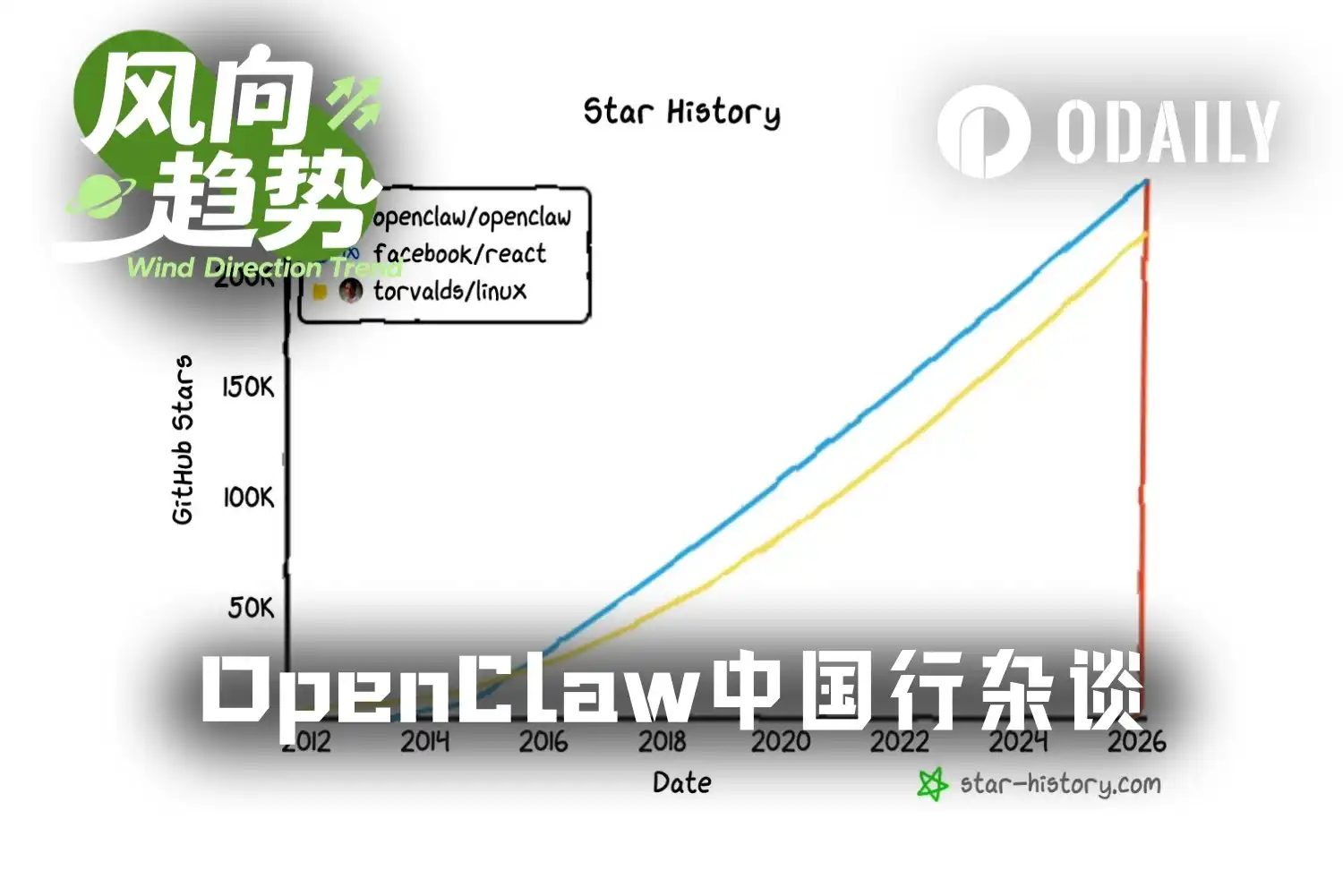
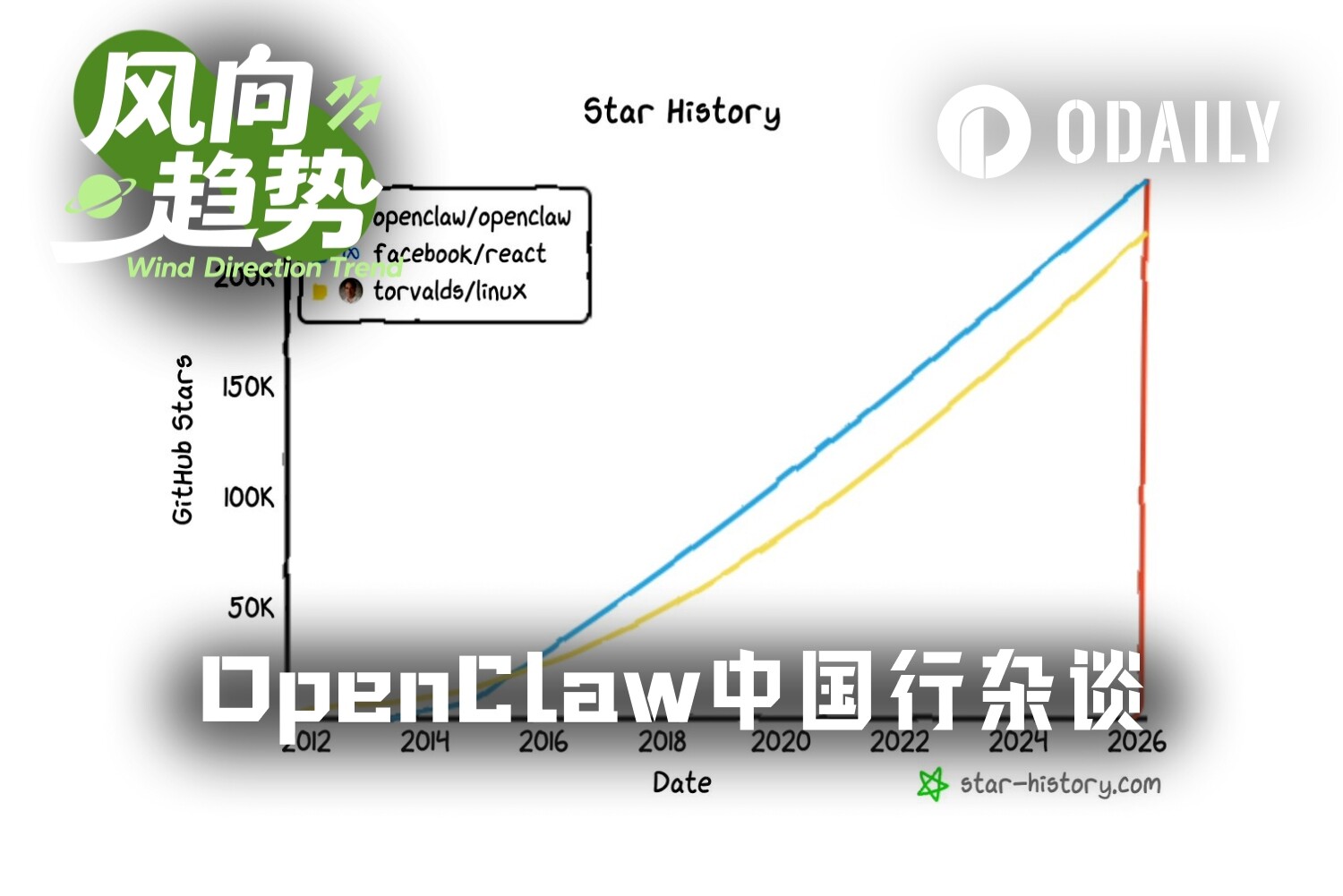
"OpenClaw China Tour: Chasing the Lobster in the AI-Driven Era" Following OpenClaw's surpassing of React as GitHub's most-starred project, a wave of "AI anxiety" has swept through China's tech community. This led to the "Web4.0 China Tour," a series of nationwide offline events co-initiated by crypto figures, aiming to demystify the AI agent tool often nicknamed "Lobster." Event observations revealed a diverse, intergenerational audience—from 05ers to 70-year-olds—flocking to these gatherings. Participants were polarized: some were already monetizing OpenClaw, while others struggled with basic setup. A key insight was that AI's primary impact is not necessarily job replacement but a massive restructuring of work, automating standardized tasks and creating new roles, particularly for those who can effectively manage AI agents. Interestingly, fields like programming and creative work are now seen as more vulnerable to AI disruption than manual labor. Despite OpenClaw's founder cautioning against crypto, a strong convergence between AI agents and cryptocurrency was debated on-site. Many believe crypto assets, especially Bitcoin, could become the native currency for AI economies, facilitating machine-to-machine transactions and value exchange. The trend also spawned a paid installation service industry. However, a significant hurdle remains: many users successfully install OpenClaw but lack the knowledge to use it effectively, sometimes leading to unexpected costs and security concerns. The conclusion emphasizes that simply having the tool is less important than practically applying it to solve real problems, cautioning against FOMO and highlighting that in the age of AI, early adoption doesn't guarantee success.

marsbit03/07 03:14

After OpenClaw's China Tour, We Interviewed a Group of 'Lobster Chasers'

marsbit03/07 03:14

After OpenClaw's China Tour, We Interviewed a Group of 'Lobster Chasers'

In March 2026, OpenClaw surpassed React to become the most-starred project on GitHub, rapidly gaining global recognition as a leading AI tool. Dubbed the "lobster" by enthusiasts, this automation-focused AI agent has sparked widespread discussion and a sense of urgency among tech communities, particularly in China. Following the "Web4.0 China Tour" initiated by figures from the crypto space, offline events saw significant turnout, attracting everyone from seasoned developers to curious newcomers, including teenagers and seniors. Participants expressed a mix of excitement and "AI anxiety," driven by fears of being left behind. Discussions revealed divergent perspectives: while some see AI as a threat to jobs, others, citing reports like Anthropic’s, argue it will reshape rather than replace roles—impacting structured, cognitive tasks more than manual labor. The intersection of AI and crypto also emerged as a key theme, with some believing cryptocurrency could become the native economic system for AI agents. Despite the hype, many users struggle to operationalize OpenClaw, with some paying for installation services only to face unexpected costs or operational challenges. The consensus among informed participants is that success lies not in merely adopting the tool, but in effectively leveraging it to solve real problems. In the age of AI, early adoption does not guarantee advantage—meaningful outcomes depend on practical application.

Odaily星球日报03/07 03:07

After OpenClaw's China Tour, We Interviewed a Group of 'Lobster Chasers'

Odaily星球日报03/07 03:07

Wall Street Is Calculating the 'AI Apocalypse', While Justin Sun Bets on Web4.0

Wall Street is calculating an "AI apocalypse," while Justin Sun bets on Web4.0. A recent thought experiment report by Citrini Research, titled "2028 Global Intelligence Crisis," predicts that AI agents will eliminate "friction" in human interactions, destroying traditional business models built on information asymmetry and intermediation. Coinciding with this, Sun, a prominent Web3 figure, declared 2026 as a "year of miracles," urging people to embrace AI-driven interactions. While Wall Street fears the collapse of the old order, Sun sees it as an opportunity to accelerate the arrival of Web4.0. The convergence of AI and Crypto is inevitable. Both rely on computational power and electricity, with tokens representing digitalized energy. AI agents, lacking physical form, will require programmable, low-cost, and instant settlement systems—making blockchain-based cryptocurrencies their native financial infrastructure. Stablecoins like USDT on TRON, which Sun oversees, are ideal for machine-to-machine transactions. Sun’s strategy leverages TRON’s dominance in stablecoin circulation, seeks to break through Web3’s stagnation by aligning with AI, and aims to build a decentralized Web4.0 stack—combining storage, settlement, and compute—without relying on centralized cloud providers. As AI reshapes commerce, those controlling core infrastructure will lead the new era.

marsbit03/04 10:18

Wall Street Is Calculating the 'AI Apocalypse', While Justin Sun Bets on Web4.0

marsbit03/04 10:18

Wall Street Is Calculating the 'AI Apocalypse', While Justin Sun Is Betting on Web4.0

Wall Street research firm Citrini Research released a thought experiment report, "2028 Global Intelligence Crisis," predicting that AI agents will eliminate friction in human interactions, destroying traditional business models built on information asymmetry and intermediation. Meanwhile, Justin Sun, a prominent Web3 figure, declared 2026 as a "year of miracles" and urged people to embrace AI-driven futures, framing it as the dawn of Web4.0. The report argues that AI agents will enable near-zero-cost, instant service delivery and transaction execution, dismantling industries reliant on human cognitive limitations—such as finance, advertising, law, and consulting. This aligns with blockchain’s core mission of decentralization but takes it further by reducing the need for trust intermediaries altogether. Both AI and crypto are fundamentally rooted in physical resources: compute power and electricity. AI inference consumes computational energy, while blockchain transactions rely on energy-intensive mining or validation. Tokens, whether AI-generated or crypto-based, are digital representations of energy consumption. A critical challenge for AI agents is financial interoperability. Traditional payment systems are designed for humans, not machines. At Level 5 automation, AI agents will transact autonomously, requiring programmable, near-instant, low-cost settlement—conditions that blockchain networks like Solana or Ethereum L2s, with stablecoins, are uniquely suited to provide. Crypto wallets will become the native banks for AI agents. Sun’s strategic bet on Web4.0 is backed by Tron’s dominance in stablecoin transfers (especially USDT), which offers the high-speed, low-fee infrastructure needed for machine-to-machine payments. He aims to leverage AI’s growth to reinvigorate crypto markets, combining Tron, BitTorrent (decentralized storage), and Huobi’s user base to build a full-stack, decentralized Web4.0 infrastructure independent of centralized cloud providers. While Wall Street fears disruption, Sun sees opportunity—positioning crypto at the core of the next digital era.

marsbit03/04 10:11

Wall Street Is Calculating the 'AI Apocalypse', While Justin Sun Is Betting on Web4.0

marsbit03/04 10:11

Welcoming the God of Wealth on the Fifth Day of Lunar New Year, Trump Overturns the Altar: Imposes 10% Global Tariffs in Defiance of Supreme Court

On the fifth day of the Chinese New Year, a day traditionally associated with welcoming the god of wealth, former U.S. President Donald Trump made headlines by defying a Supreme Court ruling that invalidated his global tariff policies enacted under national emergency laws. In response, Trump immediately invoked alternative trade authority to impose an additional 10% global tariff, declaring existing national security tariffs effective immediately without seeking further congressional approval. He publicly criticized the justices who ruled against him. Meanwhile, a viral story about Punch, a baby monkey in a Japanese zoo abandoned at birth and raised by handlers, sparked widespread sympathy online. Footage of the monkey being dragged by an adult during social integration efforts led to a surge in the related meme cryptocurrency PUNCH, which saw an 80-fold increase in value. In cryptocurrency circles, predictions circulated that Bitcoin could reach $1 million by 2026, though opinions were divided on the feasibility. Some commentators expressed concerns about the crypto market’s health, suggesting it had “halved” in vitality, while others remained optimistic about future growth. Additionally, Ethereum co-founder Vitalik Buterin criticized the concept of “Web4.0,” arguing that it promotes the creation of valueless digital clutter rather than meaningful innovation. The response from the community was mixed, with some supporting his skepticism and others defending technological progress.

比推02/21 00:33

Welcoming the God of Wealth on the Fifth Day of Lunar New Year, Trump Overturns the Altar: Imposes 10% Global Tariffs in Defiance of Supreme Court

比推02/21 00:33

Awkward! AI Titans Refuse Handshake... What Have Crypto KOLs Been Discussing in the Past 24 Hours?

An article titled "Awkward! AI Titans Refuse Handshake... What Were Crypto KOLs Discussing in the Past 24 Hours?" covers several trending topics in the crypto and AI space. During an AI summit in India, OpenAI CEO Sam Altman and Anthropic CEO Dario Amodei, former colleagues turned rivals, refused to hold hands during a group photo with Prime Minister Modi, sparking online amusement and commentary about their strained relationship. OpenAI's employee educational background data shows Stanford University leads with 230 employees, followed by Berkeley, MIT, and Carnegie Mellon. Chinese institutions Tsinghua and Peking University also appear but with significantly lower numbers. OpenAI is reportedly finalizing a new funding round aiming to raise $100 billion, which would value the company at $830 billion. SoftBank may lead with $30 billion, while Amazon, NVIDIA, and Microsoft are also potential investors. The concept of "Web4.0" is emerging, with some startups claiming to build self-sustaining AI agents that can earn and improve autonomously. However, critics warn this could devolve into a new form of Ponzi scheme, as these agents currently rely heavily on token speculation rather than genuine utility. Lastly, the article mentions popular meme coins, comparing their investment potential to buying lottery tickets, and includes a nostalgic look at past celebrity meme coins. The piece concludes with links to the source's Twitter and Telegram channels.

比推02/20 01:26

Awkward! AI Titans Refuse Handshake... What Have Crypto KOLs Been Discussing in the Past 24 Hours?

比推02/20 01:26

活动图片