# Vera Rubin İlgili Makaleler

HTX Haber Merkezi, kripto endüstrisindeki piyasa trendleri, proje güncellemeleri, teknoloji gelişmeleri ve düzenleyici politikaları kapsayan "Vera Rubin" hakkında en son makaleleri ve derinlemesine analizleri sunmaktadır.

Jensen Huang 'Saves' South Korean Stock Market: Locks In SK Hynix Memory, Chip Shortage to Continue

On June 5th, South Korea's stock market experienced a sharp decline, with major chipmakers like Samsung and SK Hynix dropping nearly 10%. Amidst the turmoil, NVIDIA CEO Jensen Huang's visit to Seoul played a dramatic role in boosting market sentiment. Following a dinner meeting with SK Group Chairman Chey Tae-won and SK Hynix CEO Kwak Noh-Jung, Huang confirmed that NVIDIA's new Vera CPU will utilize SK Hynix DRAM. The companies announced a multi-year technical partnership to co-develop next-generation memory for NVIDIA's AI infrastructure, covering products from data centers to personal AI and robotics. This collaboration extends beyond memory supply. SK Hynix is integrating NVIDIA's AI and Omniverse platform into its own semiconductor design and manufacturing processes, including computational lithography and creating digital twins of its fabrication plants for autonomous operation. While strengthening ties with SK Hynix, NVIDIA is diversifying its supply chain for the upcoming HBM4 memory, with Samsung, SK Hynix, and Micron all certified as suppliers for its Vera Rubin platform. Despite this, Huang warned that the global chip shortage, driven by relentless demand from AI factory construction, is expected to persist for several years across the entire supply chain. His visit underscores NVIDIA's systematic effort to deepen integration with South Korea's broader tech industry.

marsbit06/08 10:45

Jensen Huang 'Saves' South Korean Stock Market: Locks In SK Hynix Memory, Chip Shortage to Continue

marsbit06/08 10:45

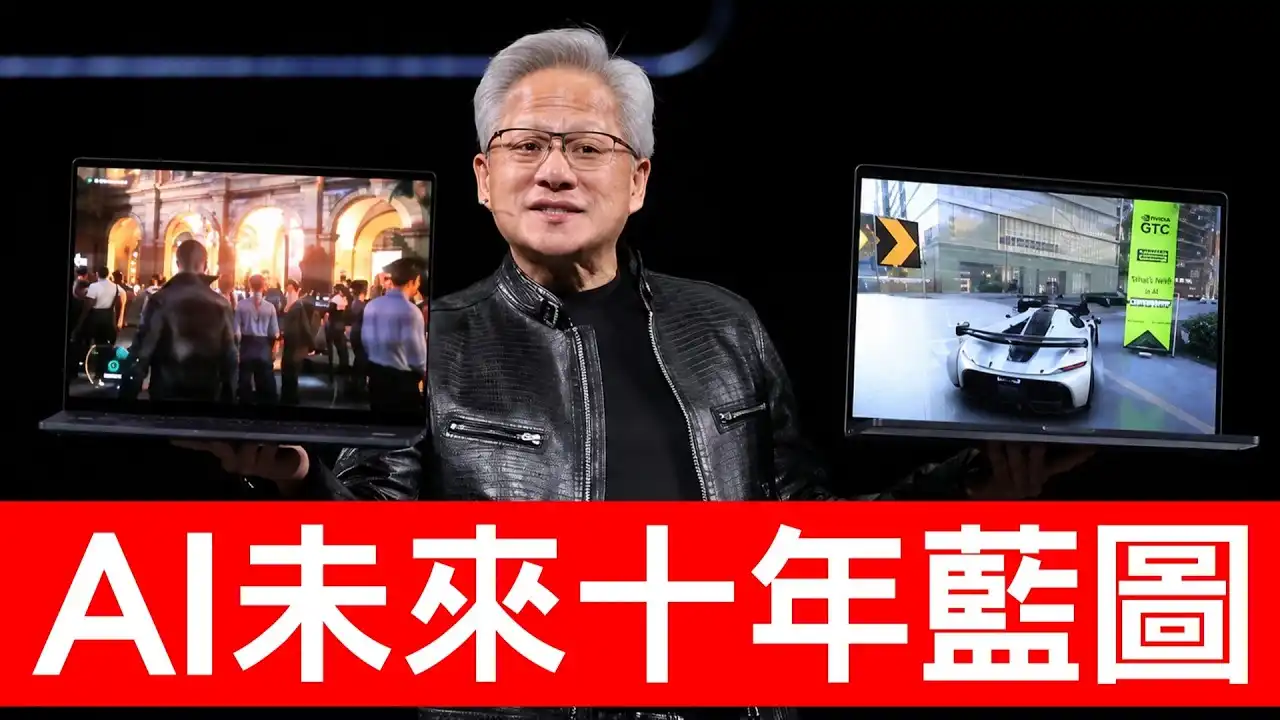
Jensen Huang's 2026 GTC Taipei Speech: The Era of AI Agents is Here, Computing is Revenue

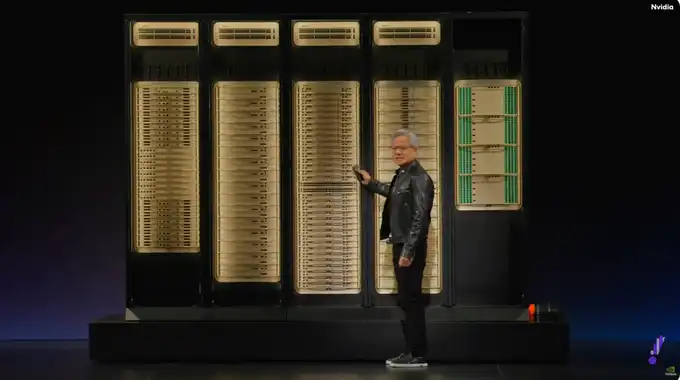
NVIDIA CEO Jensen Huang's 2026 GTC Taipei speech announces the arrival of the "Agent AI" era, where AI transitions from content generation to performing useful work. Huang positions tokens as units of profit and GDP, driving massive demand for computing power and "AI factories." NVIDIA's strategy revolves around a new computing paradigm centered on AI agents, which combine large language models (LLMs) with agent frameworks for planning, memory, and tool use. Key announcements include: * **Vera Rubin:** A complete, end-to-end system (not just a GPU) designed from the ground up to run AI agents at scale, representing NVIDIA's evolution into an infrastructure company. * **Vera CPU:** A revolutionary CPU architecture built specifically for impatient AI agents, prioritizing low latency, single-thread performance, and massive bandwidth over traditional multi-core throughput. * **Enterprise AI Agent Toolkit:** A suite including open models (like Nemotron 3 Ultra), frameworks, tools, and a secure runtime (Open Shell) to enable every company to build and deploy its own AI agents. * **Next-Gen PCs with Microsoft:** A new line of Windows desktops, laptops, and workstations co-developed with Microsoft, featuring the N1X chip and designed to run local AI agents, redefining the personal computer. * **Physical AI Foundation Models:** Introduction of Cosmos 3 for robotics and physical AI, Alpamayo 2 for autonomous driving, and the Isaac GR00T platform—a fully integrated humanoid robot reference system. Huang emphasizes that the same core agent computing pattern (model + framework + tools + runtime) will extend from the cloud and PCs to robots, factories, and edge devices. He concludes that the industry is fundamentally changed as useful, agentic AI creates a vast new market where "compute is revenue."

marsbit06/03 03:35

Jensen Huang's 2026 GTC Taipei Speech: The Era of AI Agents is Here, Computing is Revenue

marsbit06/03 03:35

Jensen Huang: Vera Rubin Full Mass Production, AI Agent a Key Focus, Challenging Intel to Target the Next-Generation AI PC Gateway

NVIDIA CEO Jensen Huang delivered the keynote speech at GTC Taipei 2026, announcing several major product launches and strategic directions. The company's Vera Rubin architecture is now in full-scale production, with OpenAI, Anthropic, and SpaceX among the first customers. NVIDIA highlighted AI Agent as a key future focus, introducing the Vera CPU designed for AI agents and the Vera BlueField-4 STX for secure, chip-level AI storage processing. A significant move involves challenging Intel in the PC market. NVIDIA, in collaboration with MediaTek, is developing the RTX SPARK PC chip (manufactured by TSMC) for Windows systems, set to launch this fall for laptops and desktops. This signals NVIDIA's push into the next-generation AI PC arena, aiming to provide a vertically integrated core computing platform for the entire Windows ecosystem, similar to Apple's approach. Other announcements include the new Nemotron 3 Ultra AI model and the NVIDIA DSX platform, described as a complete "playbook" for building AI factories, allowing performance simulation and validation before physical deployment. In automotive, the DRIVE Hyperion platform was positioned as a global robotaxi platform, with major Chinese automakers like BYD, Geely, Zeekr, Xiaomi, and Pony.ai already adopting or developing autonomous driving solutions based on it. The Alpamayo 2 super open inference model for robotaxis was also introduced. For robotics, NVIDIA unveiled the Isaac GR00T humanoid robot reference platform for academic research and a large open-source agent tools and skills suite for Physical AI. The company plans to collaborate with global humanoid robot manufacturers, including China's Unitree, whose H2 Plus robot served as the reference hardware for the GR00T platform demonstration.

marsbit06/01 06:14

Jensen Huang: Vera Rubin Full Mass Production, AI Agent a Key Focus, Challenging Intel to Target the Next-Generation AI PC Gateway

marsbit06/01 06:14

NVIDIA Earnings Countdown: Beating Expectations Is a Near Certainty, but Wall Street Is Most Concerned About These Five Questions

NVIDIA Earnings Countdown: Beating Expectations is a Given, but Wall Street Cares Most About These Five Issues The upcoming NVIDIA Q1 earnings report is expected to easily surpass the consensus revenue estimate of ~$78.7B. However, Wall Street's focus has shifted from the numbers themselves to five key strategic questions. **1. Shareholder Returns: Will "Frugality" Change?** Despite being the S&P 500's largest company, NVIDIA's shareholder returns (dividends + buybacks) averaged only 47% of its free cash flow from 2022-2025, far below the 80% peer average and its own historical norm. Its 0.02% dividend yield also lags the peer average of 0.89%. This low cash return, partly due to investments in AI ecosystem partners, is cited as a core reason for NVIDIA's valuation discount compared to other "Magnificent 7" stocks. Increasing returns could attract long-term income funds and be a catalyst. **2. Vera Rubin: The Next-Gen Chip Timeline** Analysts expect the next-generation Vera Rubin (R200) platform to ramp in the second half of 2026, following the current Blackwell series. It will use TSMC's 3nm process and share Blackwell Ultra's "Oberon" rack architecture, suggesting a smooth transition with limited gross margin impact. The market also awaits any update on NVIDIA's $1 trillion cumulative revenue forecast for 2025-2027. **3. Gross Margin: Can the 75% Level Hold?** Gross margin, a key valuation support, is expected to stabilize in the near term due to the shared architecture between Blackwell and Vera Rubin. The consensus sees it fluctuating between 74-75%. The main long-term pressure is the rising cost contribution of HBM memory. **4. AI Accelerator Market Forecast Update** The report anticipates the total AI accelerator market will reach ~$1.17 trillion by 2030, with NVIDIA maintaining a 68-70% share. The focus is on whether NVIDIA will update its forecast to include new growth drivers: LPU racks, its Vera CPU, and the Vera Rubin Ultra platform. **5. Competition: Are Threats from Google TPU/CPU Overstated?** The analysis disputes narratives that the rise of "Agentic AI" elevates CPU importance over GPU, threatening NVIDIA. It notes NVIDIA's own "Vera CPU" is competitive, and current Blackwell/TPU clusters already use a 1:2 CPU-to-GPU ratio, contrary to the "more CPUs needed" story. NVIDIA's dominance in AI accelerators is seen as secure. **Valuation Discount:** NVIDIA trades at a significant discount to Mag-7 peers: ~50% based on CY26/27 P/E (26x/19x vs. 49x/42x avg.) and over 66% based on EV/FCF. Bank of America maintains a "Buy" rating with a $320 price target.

marsbit05/20 03:03

NVIDIA Earnings Countdown: Beating Expectations Is a Near Certainty, but Wall Street Is Most Concerned About These Five Questions

marsbit05/20 03:03

活动图片