# USA İlgili Makaleler

HTX Haber Merkezi, kripto endüstrisindeki piyasa trendleri, proje güncellemeleri, teknoloji gelişmeleri ve düzenleyici politikaları kapsayan "USA" hakkında en son makaleleri ve derinlemesine analizleri sunmaktadır.

South Korea Reaps Riches, America Turns Hostile

The US has filed a collective antitrust lawsuit in California against Samsung, SK Hynix, and US-based Micron, alleging they colluded to create a "RAMpocalypse" by slashing traditional DRAM production and raising prices 700% over four years amid the AI boom. This lawsuit targets the heart of the AI supply chain: High Bandwidth Memory (HBM), critical for Nvidia's GPUs. Currently, SK Hynix (57%), Samsung (22%), and Micron (21%) dominate global HBM production. The case highlights a deeper US concern: in the AI era, South Korea, through its HBM dominance, is capturing an estimated 35% of global AI profits, second only to the US (49%). SK Hynix's operating profit margin recently hit a record 72%. In response to the lawsuit, South Korea announced a massive $800 trillion won investment to build four new chip plants, doubling down on its strategic position. Analysts see the lawsuit not merely as a consumer price issue but as strategic pressure. It aims to support Micron's US manufacturing expansion (subsidized by the CHIPS Act) and secure America's share of AI profits by bringing more HBM production onshore. However, South Korea's rapid execution and massive cash flow from current HBM sales give it a significant speed advantage over US build-out timelines. The conflict underscores a fundamental shift: AI infrastructure like GPUs and HBM is becoming a new form of strategic national resource, akin to oil. While Nvidia and Korean memory giants are interdependent, the struggle over profit distribution and industrial sovereignty in this new landscape is just beginning. This lawsuit may be the first major skirmish in the AI resource wars.

marsbit06/30 04:26

South Korea Reaps Riches, America Turns Hostile

marsbit06/30 04:26

Who Will Define the Rules of the AI Era? Anthropic Discusses the 2028 US-China AI Landscape

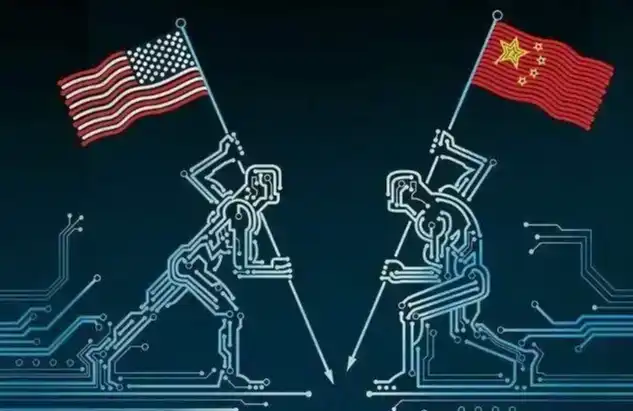
This article, based on Anthropic's analysis, outlines the intensifying systemic competition between the U.S./allies and China for AI leadership by 2028. It argues that access to advanced computing power ("compute") is the critical bottleneck, where the U.S. currently holds a significant advantage through chip export controls and allied innovation. However, China's AI labs remain competitive by exploiting policy loopholes—via chip smuggling, overseas data center access, and "model distillation" attacks to copy U.S. model capabilities—keeping them close to the frontier. The piece presents two contrasting scenarios for 2028. In the first, decisive U.S. action to tighten compute controls and curb distillation locks in a 12-24 month AI capability lead, cementing democratic influence over global AI norms, security, and economic infrastructure. In the second, policy inaction allows China to achieve near-parity through continued access to U.S. technology, enabling Beijing to promote its AI stack globally and integrate advanced AI into its military and governance systems, altering the strategic balance. Anthropic contends that maintaining a decisive U.S. lead is essential for shaping safe AI development and governance. The core recommendation is for U.S. policymakers to urgently close compute and model access loopholes while promoting global adoption of the U.S. AI technology stack to secure a lasting strategic advantage.

marsbit05/16 05:08

Who Will Define the Rules of the AI Era? Anthropic Discusses the 2028 US-China AI Landscape

marsbit05/16 05:08

活动图片