# Super Bowl İlgili Makaleler

HTX Haber Merkezi, kripto endüstrisindeki piyasa trendleri, proje güncellemeleri, teknoloji gelişmeleri ve düzenleyici politikaları kapsayan "Super Bowl" hakkında en son makaleleri ve derinlemesine analizleri sunmaktadır.

The History of Crypto Advertising Sponsorships: A Cyclical Experiment in Buying Attention and Legitimacy

The article "A History of Crypto Advertising Sponsorships: A Cyclical Experiment in Buying Attention and Legitimacy" examines the volatile relationship between cryptocurrency companies and major sports and cultural sponsorships. It begins with the 2021-2022 "gold rush," where crypto firms like FTX, Crypto.com, and Coinbase engaged in massive, high-profile deals for stadium naming rights (e.g., FTX Arena), sports league partnerships (NBA, UFC, F1), and World Cup sponsorships. This period was marked by an attempt to rapidly purchase mainstream legitimacy and public trust. The strategy initially showed success, with Super Bowl ads generating massive short-term spikes in app downloads. However, the collapse of FTX in late 2022 became a major inflection point, turning these expensive sponsorships into liabilities and reputational disasters for the teams and venues involved. The industry subsequently entered a contraction phase, shifting from grand, headline-grabbing deals to more measured, ROI-focused partnerships like sleeve sponsorships and training kit deals (e.g., OKX and Manchester City). The article highlights the inherent tension: these sponsorships were a "pressure test" on whether high-risk financial products could leverage the trust of public institutions for credibility. This often led to controversy, with regulators like the UK's Advertising Standards Authority (ASA) ruling that such ads frequently trivialized investment risks and exploited consumer inexperience. The piece concludes by noting that global regulators (in the UK, US, and EU) have since moved to tighten rules around crypto advertising, enforcing clearer risk disclosures and influencer transparency. Despite this increased scrutiny, crypto sponsorships persist, evolving to focus on stablecoins and compliant products as the industry continues its cyclical experiment in seeking mainstream acceptance.

marsbit02/28 09:00

The History of Crypto Advertising Sponsorships: A Cyclical Experiment in Buying Attention and Legitimacy

marsbit02/28 09:00

Ads During the American Super Bowl Look Like Scams

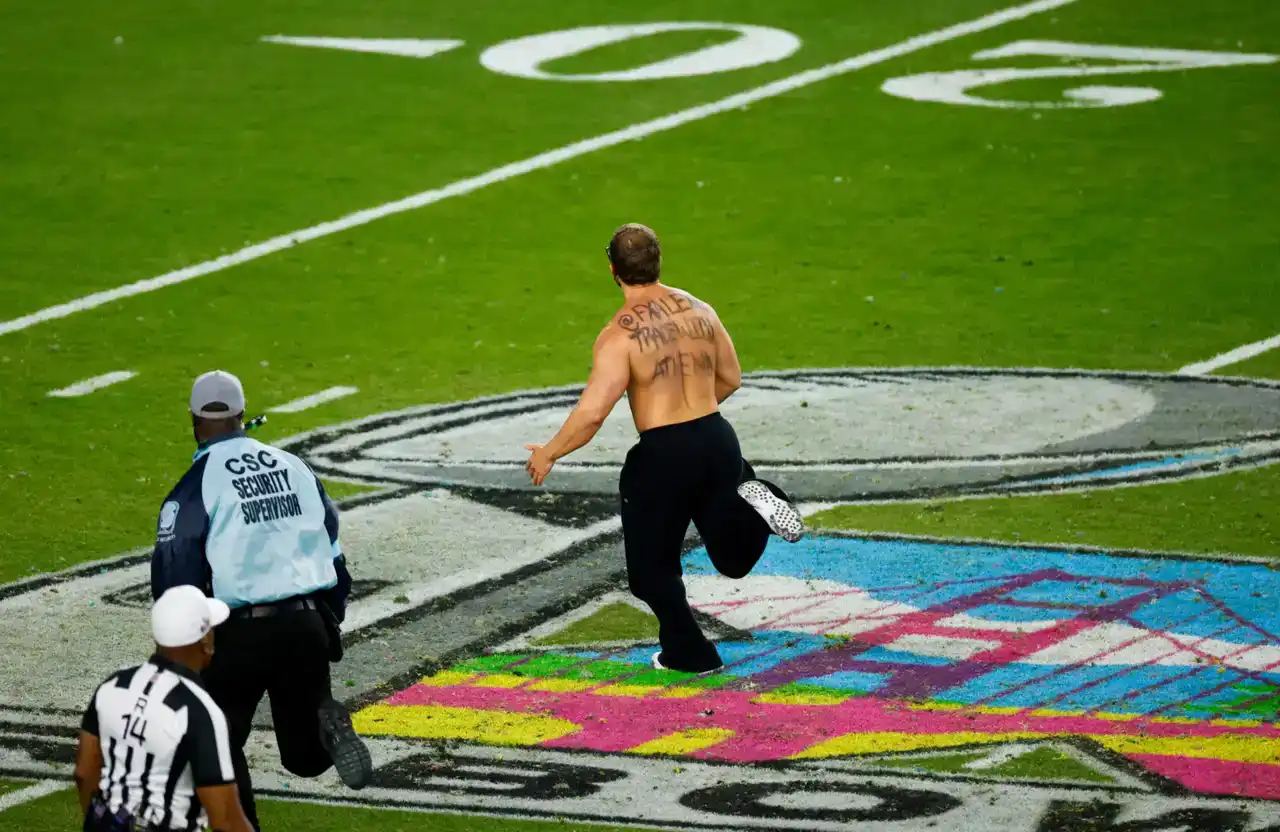
The 2026 Super Bowl, often called the "American Super Bowl," was a spectacle of sports, entertainment, and high-stakes marketing. This year’s event featured three notable incidents that highlight the intersection of prediction markets, insider information, and viral marketing. First, a newly created account on the prediction market Polymarket placed nearly $80,000 in bets—with 17 out of 19 wagers correctly predicting details of the halftime show, including appearances by Lady Gaga and the absence of Travis Scott. The account’s near-perfect accuracy led to suspicions of insider trading, possibly linked to the event’s production team. Second, a trader named Alex Gonzalez ran onto the field during the game with promotional messages painted on his body. Reports indicate he had previously bet on such a field invasion occurring, after accounting for legal fees and bail, netted around $70,000. His actions blurred the line between predicting and creating events for profit. Finally, a viral “leaked” video showed influencer Logan Paul apparently betting $1 million on Polymarket during the game. It was later revealed to be a marketing stunt orchestrated by Polymarket itself, in which Paul has investment ties. Together, these events illustrate how prediction markets can be manipulated through insider knowledge, performative acts, and staged publicity—raising questions about authenticity in high-profile events.

marsbit02/12 05:55

Ads During the American Super Bowl Look Like Scams

marsbit02/12 05:55

Was the Prediction Market the Biggest Winner of This Year's Super Bowl?

This year's Super Bowl marked a potential turning point, with prediction markets emerging as a serious competitor to traditional sports betting. Platforms Kalshi and Polymarket offered markets on the game, halftime show, and ads. While the American Gaming Association projected a record $1.76 billion in traditional sports bets, an analyst estimated prediction markets could capture 80% of the year-over-year growth, with a forecast of $630 million in volume for the event. However, available data suggests prediction markets fell short of this forecast. Kalshi's top Super Bowl-specific markets saw a combined volume of approximately $233 million. Its season-long "Who will win the Super Bowl" contract accumulated over $500 million in volume, but this was spread over the entire NFL season. Kalshi's significant growth is aided by its CFTC regulatory status, allowing a US mobile app, leading to 1.9 million downloads in January alone. Polymarket, lacking direct US app access for most users, saw about $76 million in volume across its top three Super Bowl markets. Its strength was demonstrated in information discovery, as its market accurately predicted Lady Gaga's surprise halftime show appearance days in advance. The activity occurs amidst an unresolved regulatory conflict, with Kalshi operating under federal CFTC oversight while state gaming regulators challenge it in court. Although prediction markets did not meet the $630 million hype for the Super Bowl weekend, their rapid user growth and informational advantages present a clear and growing threat to established sportsbooks.

比推02/10 01:02

Was the Prediction Market the Biggest Winner of This Year's Super Bowl?

比推02/10 01:02

a16z: The 'Super Bowl Moment' of Prediction Markets

On February 8th, millions of NFL fans watched the Super Bowl while simultaneously tracking prediction markets, which offered bets on everything from the winner and final score to individual player performances. Over the past year, prediction markets in the U.S. have seen at least $27.9 billion in trading volume, covering not only sports but also economic policies, product launches, and more. These markets function by creating assets tied to specific outcomes; if the event occurs, asset holders profit. The core value lies in aggregating dispersed information through trading, making them more reliable than individual pundits or traditional sportsbooks, which aim to balance bets rather than reflect true probabilities. Prediction markets simplify the extraction of clear signals from complex information. For instance, instead of inferring tariff likelihood from soybean futures—which are influenced by multiple factors—one can directly trade on the event. The concept dates back to 16th-century Europe, but modern prediction markets are built on economics, statistics, and computer science, with academic foundations laid in the 1980s. A market might issue a contract paying $1 if a specific event occurs (e.g., a quarterback passing in a certain zone). The contract price reflects the market’s collective probability estimate. If a trader believes the probability is higher, they buy, pushing the price up and signaling confidence. This mechanism updates in real-time with new information, unlike static polls. It also incentivizes informed participation, as traders risk their own capital based on their knowledge. However, challenges remain. Market infrastructure must ensure event resolution, transparency, and auditability. Participation is crucial: if no one has information, the market fails; if insiders trade, fairness is compromised. Markets can also be manipulated, though they often self-correct. To realize their potential, prediction platforms must improve transparency and clearly disclose rules around participation, contract design, and operations. If these issues are addressed, prediction markets could play a significant role in future forecasting.

marsbit02/09 08:40

a16z: The 'Super Bowl Moment' of Prediction Markets

marsbit02/09 08:40

活动图片