# STARK İlgili Makaleler

HTX Haber Merkezi, kripto endüstrisindeki piyasa trendleri, proje güncellemeleri, teknoloji gelişmeleri ve düzenleyici politikaları kapsayan "STARK" hakkında en son makaleleri ve derinlemesine analizleri sunmaktadır.

Ethereum's Next Decade in the Eyes of Vitalik

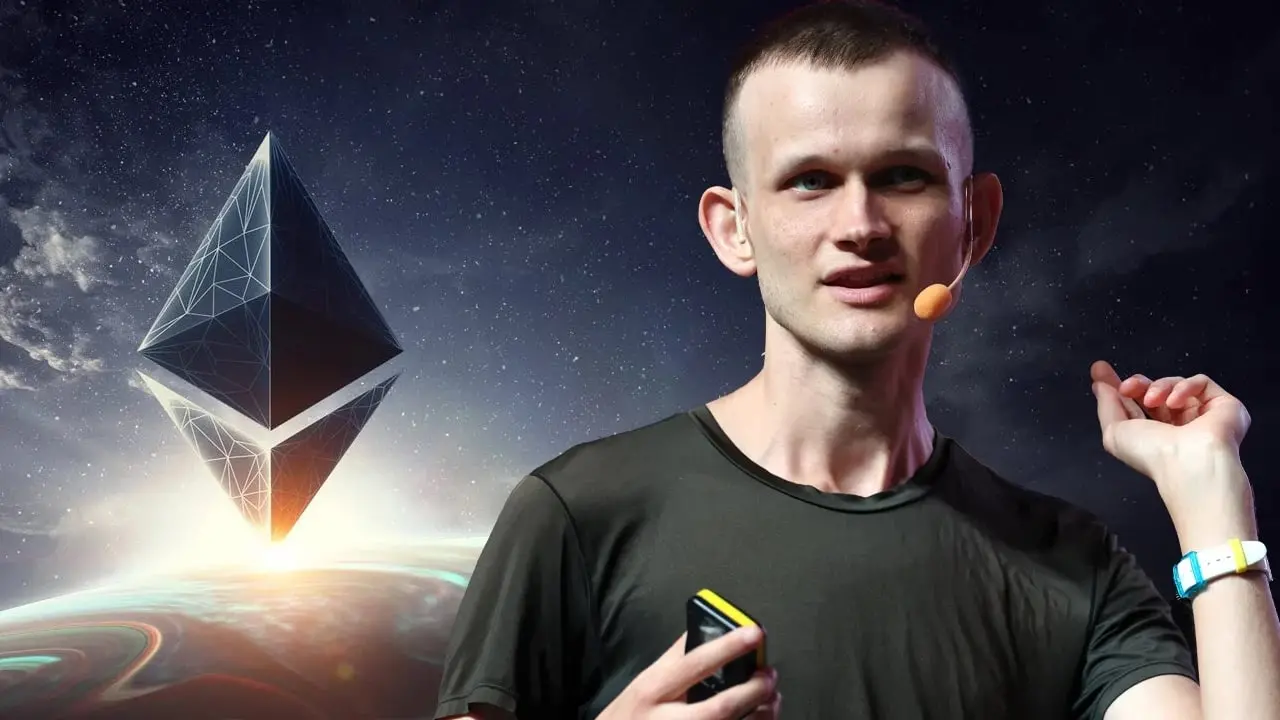
"Lean Ethereum" Long-Term Roadmap Unveiled by Vitalik Buterin On July 5, 2026, Vitalik Buterin published the "Lean Ethereum" roadmap, positioning it as Ethereum's third major evolution following the Merge. This multi-year, multi-phase upgrade aims to fundamentally transform Ethereum's core protocol through staged network upgrades extending to 2029. Key goals include achieving 1 gigagas per second L1 throughput (a massive increase from the current ~32 TPS), near-instant finality, and quantum-resistant cryptography. The plan involves transitioning Ethereum's security model from full transaction re-execution by all nodes to native verification via recursive STARK proofs. A major proposed change is replacing the EVM with a proof-friendly architecture like RISC-V or leanISA, though this remains a point of contention, especially with L2s like Arbitrum favoring alternatives like WASM. Other planned upgrades include a restructured state model with a large, cheap "warehouse" storage layer to drastically reduce fees for migrated applications, multi-dimensional gas pricing, and a new focus on making privacy a first-class, native protocol feature. While the roadmap significantly raises Ethereum's long-term technical ceiling, analysts note it does not directly address ETH's mid-term token economics or value capture. The plan's multi-year timeline means near-term price impact will likely depend on observable progress milestones, such as the successful deployment of the upcoming Glamsterdam gas limit increase, growth in L2 activity and blob usage, and trends in L1 fee revenue and ETH burn.

链捕手07/11 09:17
Ethereum's Next Decade in the Eyes of Vitalik

链捕手07/11 09:17

Ethereum Completes Another Key Technical Advancement, Can It Achieve a Leap Forward by 2026?

The Ethereum Foundation (EF) has announced a major technical breakthrough in zkEVM development, achieving a dramatic reduction in block proof generation time—from 16 minutes to just 16 seconds—with a 45-fold decrease in cost. Certain zkVMs can now prove 99% of mainnet blocks in under 10 seconds on target hardware. However, EF emphasizes that raw speed is meaningless without proven security. Several mathematical conjectures underlying popular STARK-based zkEVMs have recently been disproven, reducing their security guarantees. The core focus has now shifted from throughput to provable safety, with L1 zkEVMs required to meet a 128-bit security standard to prevent risks like token forgery or state corruption. EF released a three-phase roadmap aiming for full compliance by December 2026: 1. By end-February 2026, all zkEVM teams must integrate with EF’s soundcalc security tool. 2. By end-May, achieve intermediate goals like 100-bit provable security. 3. By end-December, reach 128-bit provable security with formal verification of recursive proof systems. Key technologies like WHIR and JaggedPCS are being deployed to improve efficiency. Challenges remain, including on-chain implementation, dynamic security parameter adjustments, and uneven progress among teams. Once achieved, secure zkEVMs could allow Ethereum to increase gas limits safely, enhance L1 capacity, and blur the lines between L1 and L2 execution. The race for reliability is now the central theme for Ethereum in 2026.

marsbit12/22 09:17

Ethereum Completes Another Key Technical Advancement, Can It Achieve a Leap Forward by 2026?

marsbit12/22 09:17

活动图片