# Public Opinion İlgili Makaleler

HTX Haber Merkezi, kripto endüstrisindeki piyasa trendleri, proje güncellemeleri, teknoloji gelişmeleri ve düzenleyici politikaları kapsayan "Public Opinion" hakkında en son makaleleri ve derinlemesine analizleri sunmaktadır.

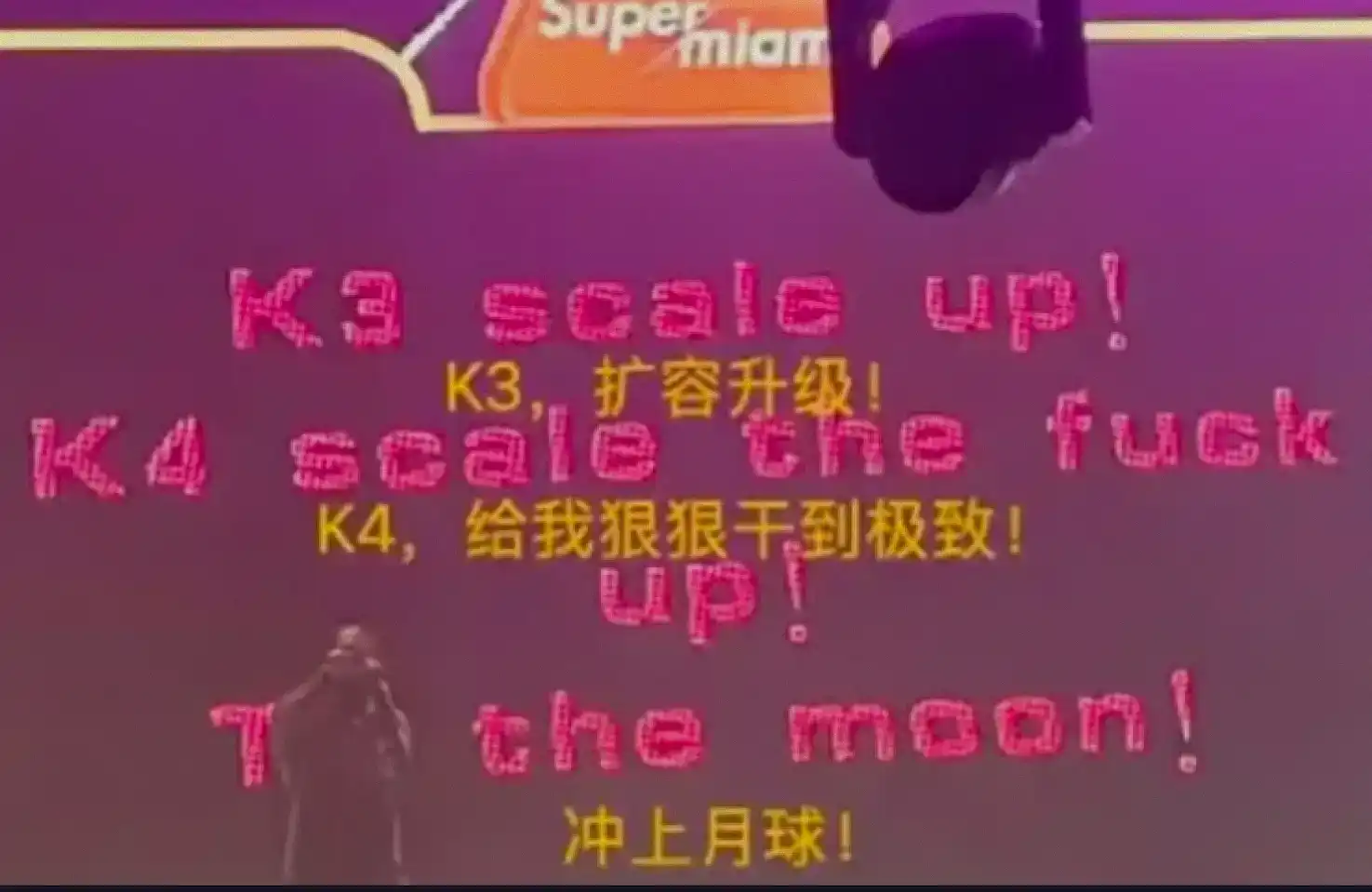
Why Can't Kimi Go to a Nightclub to Celebrate Success?

"Why Can't Kimi Go to a Nightclub to Celebrate Success?" The article discusses the controversy surrounding the Chinese AI company Kimi's decision to hold a celebration at a Beijing nightclub after the successful release of its K3 model. While the event drew criticism on social media for being "flashy" and a sign of losing focus, the author argues this reflects a double standard. The piece contrasts the reaction to Kimi with the perception of similar celebrations by Silicon Valley tech companies. In the U.S., such events are often seen as symbols of ambition and a vibrant culture. The author suggests a "Silicon Valley worship" exists, where Western tech elites are granted the freedom to define success and lifestyle, while Chinese companies face constant scrutiny and must prove their worthiness beyond just technical achievements. Furthermore, the article critiques a deep-rooted "moralism of hardship" in Chinese culture, where success is expected to be earned through visible struggle and austerity, especially for scientists and innovators. Figures like mathematician Wang Hong, who presents an elegant and stylish image, challenge the stereotypical expectation of the disheveled, ascetic academic. The core argument is that Kimi's nightclub celebration itself proves nothing about the company's long-term viability or technical prowess. The backlash, however, reveals unrealistic expectations for Chinese tech firms: to simultaneously embody the disruptive energy of Silicon Valley while maintaining the humble demeanor of a perpetual underdog. The author concludes that a mature tech culture should allow Chinese talent to experience and express the joy of their achievements without judgment.

marsbit17 saat önce

Why Can't Kimi Go to a Nightclub to Celebrate Success?

marsbit17 saat önce

The Economics of Human Nature from the Perspective of Black PR: What We See—Public Opinion, Foolish Opinion, or Fishing for Opinion?

This article analyzes the recent wave of negative public opinion targeting Binance through the lens of "black PR"—a form of organized, malicious public relations aimed at destroying a competitor's reputation. The author argues that such campaigns are not random but strategically designed using psychological principles, including the manipulation of crowd psychology (as in *The Crowd: A Study of the Popular Mind*), agenda-setting theory, and the spiral of silence. These tactics are deployed to create an illusion of widespread criticism, suppress opposing voices, and damage trust. The piece outlines a five-stage model of black PR operations: intelligence gathering, covert seeding of narratives, amplification by influencers, bot-driven amplification, and eventual withdrawal to avoid detection. It highlights telltale signs of orchestrated attacks, such as synchronized posting times, fake user accounts with uniform naming patterns, and identical fabricated content (e.g., AI-generated legal letters or withdrawal screenshots). The author presents circumstantial evidence suggesting Binance is currently a target, including analysis of bot accounts and unusual financial transactions—such as a $4,999 transfer from a Binance hot wallet to a social media manipulation platform—that coincide with peak negative coverage. Interestingly, a similar pattern was observed during earlier attacks on OKX. Ultimately, the article calls for an end to such destructive tactics, emphasizing that major exchanges like Binance and OKX—despite their flaws—are pillars of the crypto industry and should not be undermined by coordinated disinformation campaigns.

marsbit02/14 07:48
The Economics of Human Nature from the Perspective of Black PR: What We See—Public Opinion, Foolish Opinion, or Fishing for Opinion?

marsbit02/14 07:48

As Prediction Markets Enter the 'High Trading Volume Era': The Structural Divergence of Kalshi, Polymarket, and Opinion

The prediction market is undergoing a significant transformation, shifting from a niche information-based experiment to a mature trading ecosystem characterized by event contracts, high-frequency participation, and sustained liquidity. This analysis focuses on three leading platforms—Kalshi, Polymarket, and Opinion—each representing a distinct evolutionary path. Kalshi is driving a structural shift by integrating sports-based contracts, which offer high frequency, emotional engagement, and rapid settlement. This approach transforms prediction markets into a form of entertainment, boosting trading volume through increased capital turnover rather than just user growth. Polymarket thrives on high-volatility topics—politics, macroeconomics, and technology—that resonate with social media trends. It functions as a decentralized sentiment futures market, where trading is often driven by opinion shifts and emotional reactions rather than pure information advantage. Opinion, still in a growth phase, relies heavily on incentives and product design to attract users. Its challenge lies in transitioning from incentive-driven volume to organic user retention and sustained trading depth across multiple events. The prediction market is no longer a singular concept but is diverging into specialized infrastructures. The key questions moving forward are whether trading volume can translate into stable liquidity, whether prices remain meaningful, and whether user engagement stems from genuine demand rather than short-term incentives. The market’s future will be determined by which model best balances high-frequency participation with accurate pricing.

marsbit01/21 11:36

As Prediction Markets Enter the 'High Trading Volume Era': The Structural Divergence of Kalshi, Polymarket, and Opinion

marsbit01/21 11:36

活动图片