# OpenClaw İlgili Makaleler

HTX Haber Merkezi, kripto endüstrisindeki piyasa trendleri, proje güncellemeleri, teknoloji gelişmeleri ve düzenleyici politikaları kapsayan "OpenClaw" hakkında en son makaleleri ve derinlemesine analizleri sunmaktadır.

OpenClaw and Cursor Just Invaded Phones! Agents Are Now in Your Pocket

AI Agents have officially arrived on mobile. In a landmark move, both OpenClaw and Cursor launched native mobile apps on the same day, fundamentally shifting how AI assistants are accessed and controlled. OpenClaw has released full-featured native apps for iOS and Android. Its "local-first" architecture, developed by the OpenClaw Foundation, keeps user data private by running the agent on a user's private Gateway. The mobile app now allows seamless remote control and approval of the agent's actions directly from a smartphone, with access to device capabilities like the camera, GPS, and contacts. Simultaneously, Cursor, the AI-powered coding tool, launched a public beta of its native iOS app. It enables developers to start and manage cloud-based AI coding agents from their phones. These agents can work asynchronously for extended periods—debugging, writing code, and creating pull requests—while developers are away from their computers. The app sends notifications for key decisions, allowing users to review and merge PRs from anywhere. Together, these releases signal a major shift: AI agents are no longer confined to desktop browsers or terminals. They are becoming persistent, autonomous assistants that work independently in the cloud, with humans transitioning from constant operators to mobile supervisors who approve key steps. The era of pocket-sized, on-demand AI is now here.

marsbit06/30 02:30

OpenClaw and Cursor Just Invaded Phones! Agents Are Now in Your Pocket

marsbit06/30 02:30

Industry Experts Gather, Reflections and Breakthroughs in the AI Agent Era

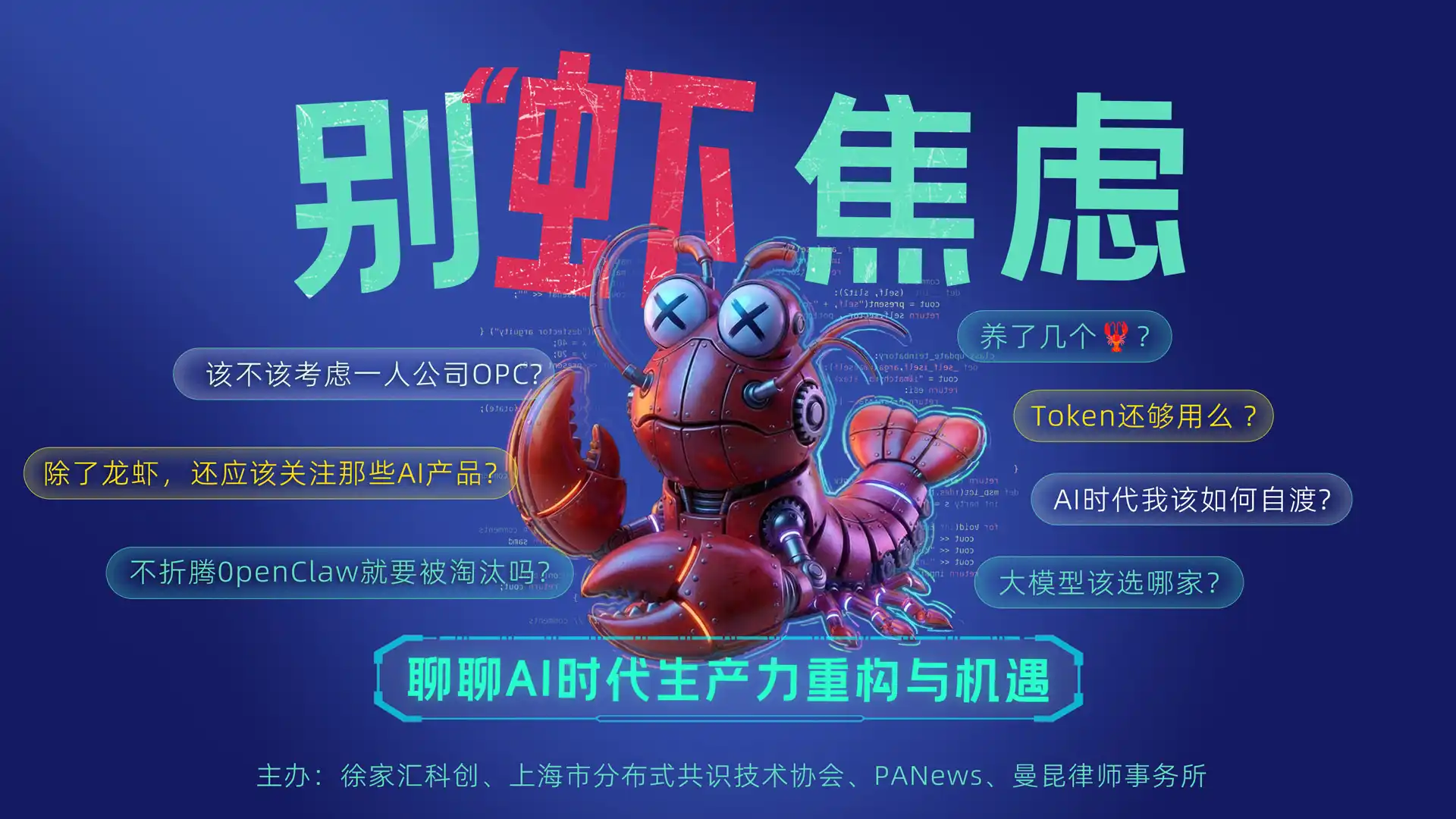
Industry experts gathered to discuss the challenges and opportunities in the AI Agent era. The event, co-hosted by several organizations, addressed key questions about model selection, token resource sustainability, and strategies for individuals and businesses to adapt. Conflux's Chief Architect highlighted the current trend of granting AI more autonomy, noting that its limitations in complex scenarios stem from difficulties in capturing and retaining key contextual constraints. Future advancements should focus on enhancing external memory, continuous learning, and domain-specific applications. Speakers from Tencent Cloud and Biteye shared practical insights. Tencent's WorkBuddy leverages multi-agent collaboration for tasks like resume screening and report generation, emphasizing enterprise-grade security. Biteye’s founder discussed mitigating AI hallucinations through rigorous code review processes, managing token consumption, and using platforms like Discord for agent coordination. Legal risks were also addressed, with a partner from Mankun Law advising on liability isolation, intellectual property protection, and mitigating platform dependency risks. Investors noted that AI is still in its early stages, with technology rapidly evolving. They emphasized investing in foundational layers like compute power and exploring AI-Web3 convergence. The discussion concluded that AI should be viewed as a productivity tool rather than a threat. Customizable agents can significantly enhance efficiency, but successful implementation requires careful engineering, security measures, and human oversight to integrate AI into complex workflows effectively.

marsbit04/08 05:51

Industry Experts Gather, Reflections and Breakthroughs in the AI Agent Era

marsbit04/08 05:51

Rhythm X Zhihu Hong Kong Event Skills Recruitment, Sign Up Now for a Chance to Showcase On-Site

Six months ago, "how to write good prompts" was the hottest topic in group chats. Now, that question is clearly outdated. It has been replaced by Skills. The shift was largely triggered by the emergence of OpenClaw, which brought the concept of AI agents into the mainstream. Unlike a smart search engine that answers questions in isolated interactions, an agent can plan, remember, and complete entire tasks autonomously, creating the novel feeling that it is genuinely working for you. This has led to the rise of Skills—specialized capabilities that equip agents to handle specific domains efficiently. Without Skills, an agent is like a smart but untrained newcomer; with them, it can execute complex, precision-sensitive workflows without constant guidance. Popular Skills currently spreading within communities focus on areas like workflow automation, domain-specific rule injection (e.g., for law, finance, or medicine), personalization, and even financial operations such as identifying arbitrage opportunities on Polymarket or executing quantitative trading strategies. This shifts the门槛 from requiring programming and financial expertise to simply installing a Skill. The underlying change is that people are starting to view agents as long-term collaborators, not just disposable tools. Now, with vibe coding, turning an idea into a functional Skill no longer requires a technical team, code, or infrastructure—it can be done over a weekend. The gap between a good idea and a working product has dramatically narrowed.

marsbit04/03 09:18

Rhythm X Zhihu Hong Kong Event Skills Recruitment, Sign Up Now for a Chance to Showcase On-Site

marsbit04/03 09:18

AI Agent Economic Infrastructure Research Report (Part 2)

This report analyzes the AI Agent economy, focusing on OpenClaw—a local AI agent that operates autonomously across 20+ platforms like WhatsApp and Slack. It examines OpenClaw's technical architecture, including its message channels, security gateway, ReAct-based reasoning loop, and memory system, highlighting issues like context loss, security risks, and non-deterministic behavior. The study identifies key structural problems in the Agent economy, such as context immobility (locked to local machines) and the "coordination paradox" where multi-agent collaboration lacks trust and verifiability. It argues that crypto infrastructure (e.g., ERC-8004 for identity, x402 for payments) becomes essential only when agents operate across untrusted, cross-platform environments without pre-established trust—enabling micro-payments, decentralized reputation, and auditable logs. While traditional payment giants (e.g., Stripe, Visa) may dominate early adoption, crypto solutions could prevail in the long term due to their superiority in handling high-frequency, cross-border microtransactions and programmable permissions. The report concludes that infrastructure providers (e.g., those offering computation, routing, security) may capture more value than individual agents, and that "Product-Agent Fit" will replace traditional business models, shifting focus to API reliability, data structuring, and chain-verifiable service quality.

marsbit03/24 08:08

AI Agent Economic Infrastructure Research Report (Part 2)

marsbit03/24 08:08

活动图片