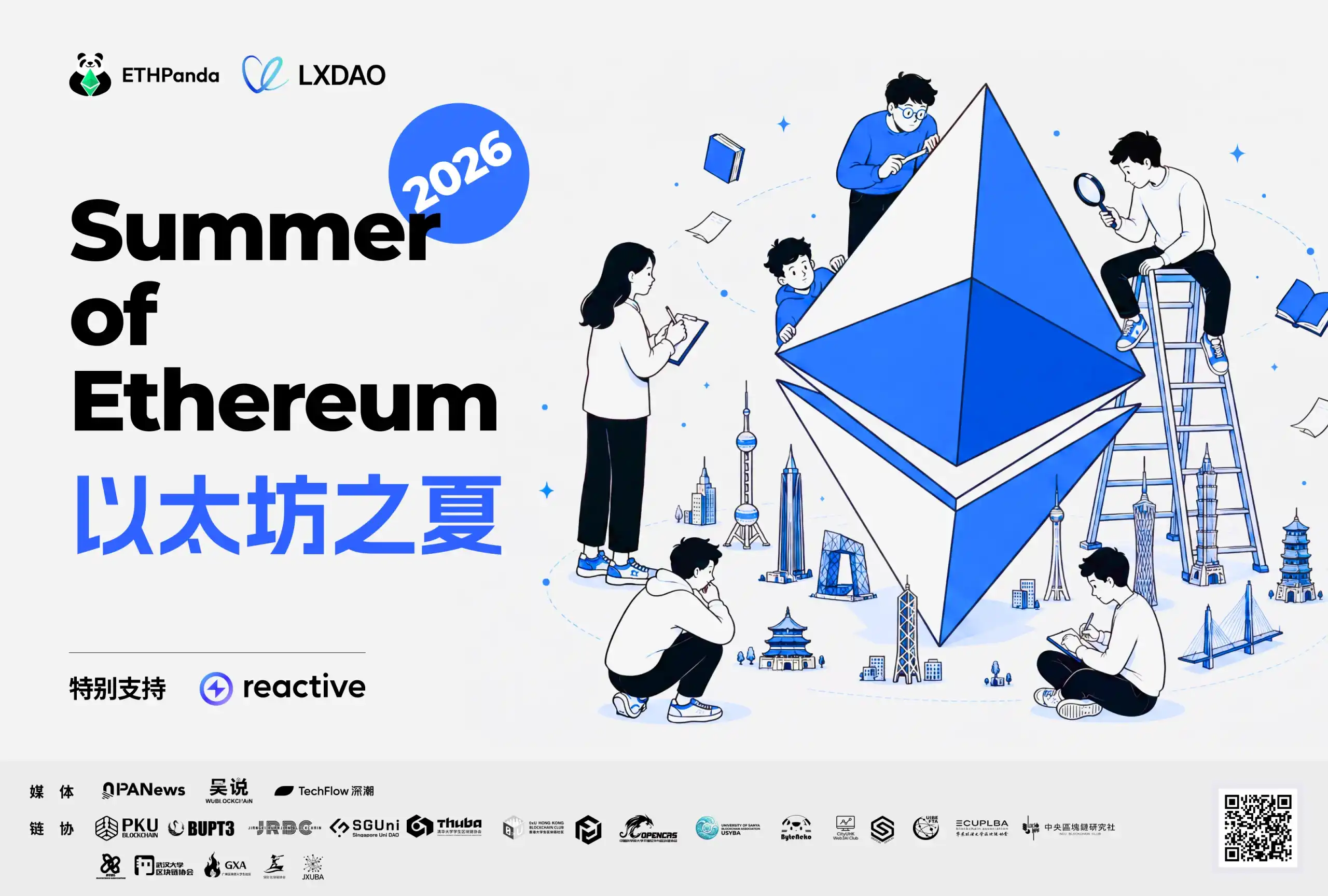
Some Issues Are Better Discussed in Person: Summer of Ethereum 2026 Is Here!
Summer of Ethereum 2026 is returning, focused on bringing crucial discussions about Ethereum's long-term development to in-person meetups across multiple cities. Organized by LXDAO and ETHPanda, the initiative aims to move beyond online discourse and event scheduling by addressing Ethereum's systemic challenges through real-world connections.
The core question this year is the value of offline gatherings for the Ethereum community. While online discussions on topics like the roadmap, L2, account abstraction, and governance are abundant, they often lack depth and alignment. The goal is to bring these fragmented, complex issues—such as UX, developer tools, public goods, and local community building—into shared physical spaces to foster deeper understanding, trust, and actionable collaboration.
The program will not follow a rigid format but will adapt to each city's context, potentially including talks, panels, workshops, and community gatherings. Key discussion areas include protocol evolution, Ethereum UX/account abstraction, real-world applications, developer tools, and sustainable community governance. The aim is for each event to leave behind clearer problems, stronger personal connections, and tangible follow-up actions.
The call is open to developers, researchers, students, community members, local organizers, projects, and media partners. Participation is encouraged whether one brings deep expertise or just genuine curiosity. For Ethereum's ecosystem—built on principles of open networks and long-term collaboration—this "non-negotiable" effort seeks to translate belief into concrete, local cooperation. The ultimate hope is that these meetings will seed lasting partnerships and turn abstract challenges into progress, one city at a time.
All event details and schedules will be updated on the Luma Calendar.
marsbit05/15 11:22