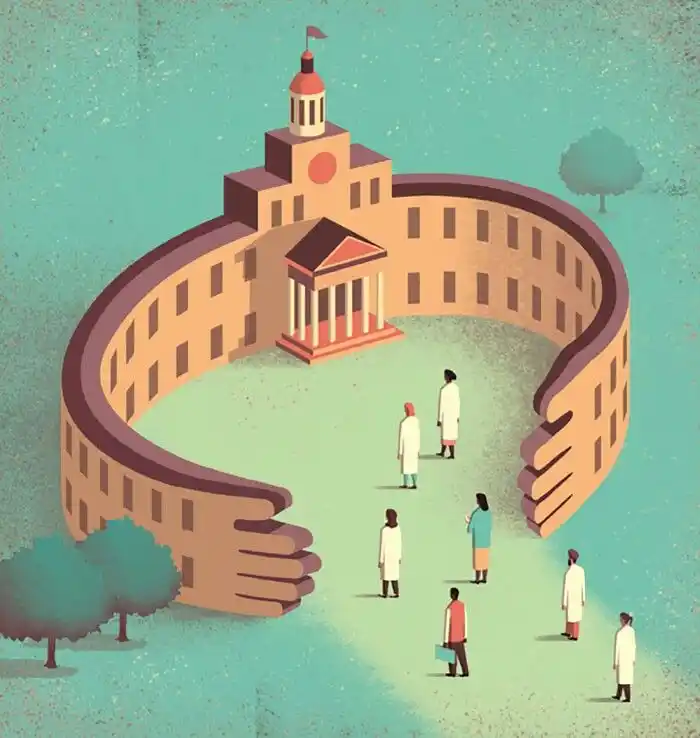
The Niche Consensus Among Elites: Has College Become an Expensive Waste?
**Summary:**
A growing "anti-college" movement is gaining traction among elite circles in Silicon Valley, challenging the traditional value of a four-year university degree. Proponents argue that college has become an expensive, slow, and increasingly irrelevant waste of time, especially in the fast-paced tech world where opportunities pass by quickly.
The movement is led by figures like billionaire Peter Thiel, who criticizes universities for high costs, ideological indoctrination, and stifling true innovation. His "Thiel Fellowship" pays young people to drop out and pursue ventures. Companies like Palantir Technologies (co-founded by Thiel) fuel this trend with programs like the "Meritocracy Fellowship," which offers high school graduates paid internships as an alternative to immediate college enrollment, promising a practical "Palantir Degree."
Key drivers include:
1. **Economics:** Skyrocketing student debt versus the allure of immediate, high-paying tech jobs or startup funding.
2. **Technology:** AI and online tools lowering barriers to self-education and product development, making formal instruction seem inefficient.
3. **Culture:** A backlash against perceived "woke" ideology and DEI policies in universities, coupled with a belief that these institutions suppress meritocracy and masculine drive. The movement is notably male-dominated.
Critics, like economist David Deming, warn against overgeneralizing from dropout success stories (survivorship bias). He emphasizes that genuine autodidacts are rare, corporate training is narrowly focused, and the "college wage premium" remains high for most people. University liberal arts education, he argues, builds adaptable problem-solving skills and broad perspectives.
The debate highlights a deeper crisis in education. The core model of the modern university appears increasingly mismatched with the speed of the information age. The movement signals a shift in the locus of learning from institutional "education" to personal, active "learning" powered by the internet and AI.
Ultimately, this may not mean the end of university, but rather a painful evolution. The future likely holds more hybrid, personalized, and lifelong learning pathways. The central question becomes: in a world changing faster than any curriculum, how do we best learn?
marsbit06/11 23:54