# Fiscal Policy İlgili Makaleler

HTX Haber Merkezi, kripto endüstrisindeki piyasa trendleri, proje güncellemeleri, teknoloji gelişmeleri ve düzenleyici politikaları kapsayan "Fiscal Policy" hakkında en son makaleleri ve derinlemesine analizleri sunmaktadır.

Can Japan Buy Growth with AI? Will the Bond Market Believe It?

Japan's cabinet has introduced the 2026 Basic Policy on Economic and Fiscal Management and Reform, shifting its primary fiscal target. The new framework moves away from the traditional annual primary balance goal and instead prioritizes a stable reduction of the debt-to-GDP ratio. This change is tied to a strategy of increased "responsible proactive fiscal" spending, aiming to boost long-term growth through investments in strategic sectors like AI, semiconductors, energy, and robotics. The government estimates total public and private investment in 62 key technologies could exceed 370 trillion yen by 2040. The market reaction has been mixed and cautious. While equity markets may respond to policy signals, bond markets are focused on fiscal credibility. Concerns center on whether the weakening of the clear primary balance anchor could lead to looser fiscal discipline. If investors doubt that these strategic investments will generate sufficient productivity gains, tax revenue, and nominal growth to outpace rising interest costs, they may demand higher yields on Japanese Government Bonds (JGBs). Recent volatility in the yen and JGB yields, with the 10-year yield briefly reaching 2.9%, reflects this skepticism. The success of this new framework hinges on two factors: whether Japan can achieve a nominal growth rate consistently higher than its long-term interest rates, and whether future budgets demonstrate disciplined control over bond issuance. The government's narrative is that strategic investment is essential to break Japan's cycle of low growth, aging, and labor shortages. However, the bond market will continuously assess the credibility of this plan, pricing the risk that it may represent fiscal expansion rather than a viable growth strategy.

marsbit07/22 02:57

Can Japan Buy Growth with AI? Will the Bond Market Believe It?

marsbit07/22 02:57

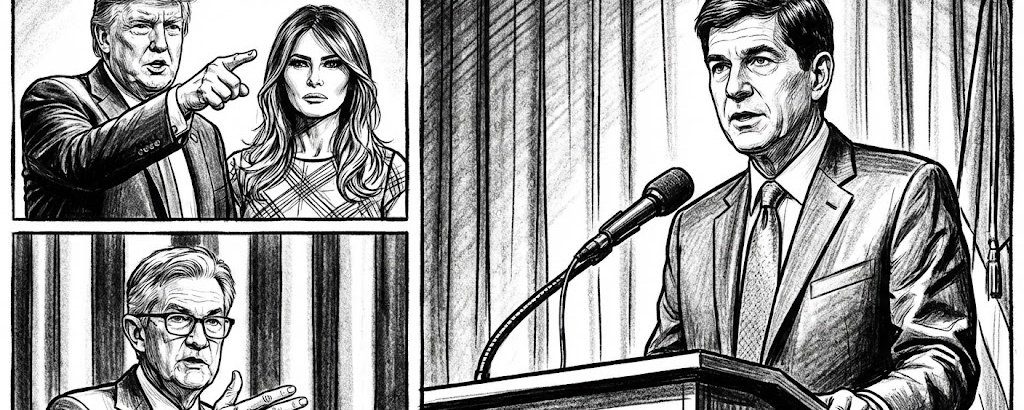
The Era Without Good Answers: Understanding Warsh, Trump, and the Next Four Years of a New Era

The article "An Era Without Good Answers: Understanding Warsh, Trump, and the Next Four Years" analyzes the potential implications of Kevin Warsh becoming the next Federal Reserve Chair under a Trump administration. It argues that Warsh represents not just a shift from dovish to hawkish policy, but a fundamental redefinition of the Fed's role. His appointment signals a move away from the Fed acting as a perpetual backstop for markets and government debt—a role perfected by Chair Powell during crises like the pandemic. Instead, Warsh advocates for monetary and fiscal discipline, opposing unconditional quantitative easing and emphasizing market rules over intervention. However, the US economy's reality—characterized by massive debt, deficit spending, and market dependence on low rates—severely limits any radical change. Warsh's proposed policies of raising rates and reducing the Fed's balance sheet risk triggering market volatility, higher borrowing costs, and political backlash, likely forcing a retreat to familiar stimulus measures. From Trump’s perspective, Warsh is a "controllable reformer" who can publicly push for fiscal restraint, forcing Congress to address unsustainable spending—while also serving as a convenient scapegoat if reforms fail. Ultimately, the core constraint remains America’s debt-dominated economy, which eliminates any possibility of a definitive solution. The coming years will involve managing, not solving, these problems through a painful and iterative process of half-measures and trade-offs—a era defined not by prosperity, but by the explicit return of economic constraints.

marsbit02/02 10:05

The Era Without Good Answers: Understanding Warsh, Trump, and the Next Four Years of a New Era

marsbit02/02 10:05

The 2026 U.S. Treasury "Maturity Wall" Approaches: Who Is the Market Paying For?

The US faces a significant "maturity wall" in 2026, with approximately $10 trillion in Treasury debt coming due—nearly 70% of which is short-term T-Bills. This massive refinancing need, equivalent to the total maturities from 2008-2010, poses a structural challenge. A key concern is the refinancing of low-coupon bonds (∼1%) issued during the low-rate era of 2021-2023 at potentially much higher market rates (∼4%+). The Congressional Budget Office (CBO) projects net interest costs could reach $1.12 trillion in 2026, surpassing defense spending. The government faces a "impossible trilemma," struggling to simultaneously avoid a fiscal crisis, raise taxes significantly, and allow market-determined interest rates. Market pricing currently assumes no major tax hikes and no crisis, pushing pressure onto higher long-term yields. This could elevate the 10-year yield toward 5.5%, compressing equity valuations—particularly for rate-sensitive tech stocks. For investors, this period may bring heightened volatility rather than outright crisis. Strategies include anticipating the Federal Reserve's potential intervention if rates spike too high, selling volatility (e.g., writing out-of-the-money puts), and redefining assets: gold as a hedge against dollar credibility concerns, and long-term Treasuries as volatile instruments for policy reversal bets. The event underscores the need for portfolios resilient to higher rates and volatility, turning uncertainty into opportunity.

marsbit01/20 07:33

The 2026 U.S. Treasury "Maturity Wall" Approaches: Who Is the Market Paying For?

marsbit01/20 07:33

活动图片