# Edge İlgili Makaleler

HTX Haber Merkezi, kripto endüstrisindeki piyasa trendleri, proje güncellemeleri, teknoloji gelişmeleri ve düzenleyici politikaları kapsayan "Edge" hakkında en son makaleleri ve derinlemesine analizleri sunmaktadır.

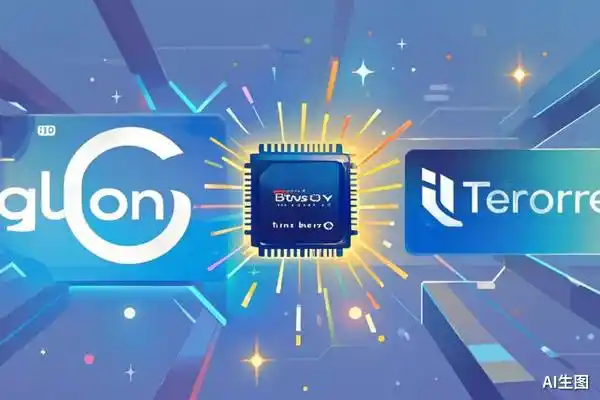
$10 Billion, Qualcomm to Acquire Chip Legend Jim Keller's Company

Global mobile chip giant Qualcomm is in advanced talks to acquire AI chip startup Tenstorrent in a deal valued between $8-10 billion, according to media reports. This potential acquisition would be one of the largest in the AI chip sector in recent years. Tenstorrent, led by legendary chip architect Jim Keller, has gained prominence for its RISC-V architecture and AI accelerator designs. The move highlights Qualcomm's strategic push to diversify beyond its core smartphone chip business. As the smartphone market matures, Qualcomm is aggressively targeting growth in automotive, data center, and cloud AI. Acquiring Tenstorrent would allow Qualcomm to rapidly enter the high-end AI computing market, bypassing lengthy in-house development cycles. Tenstorrent's cost-effective system architecture, which avoids expensive HBM memory and relies on standard Ethernet for clustering, offers a potential alternative to Nvidia's costly solutions. Furthermore, Tenstorrent's high-performance RISC-V CPU technology and its focus on the automotive and edge computing segments align with Qualcomm's strategic goals, including its "Snapdragon Digital Chassis" platform. Despite the strategic rationale, the high valuation has sparked some investor caution. The successful integration of Tenstorrent's open-source culture and independent team into Qualcomm's organization, along with the commercialization of its technology, remains a key challenge.

marsbit06/18 11:16

$10 Billion, Qualcomm to Acquire Chip Legend Jim Keller's Company

marsbit06/18 11:16

Optical Modules Soar, Why Is NOK the Second Leader After MRVL?

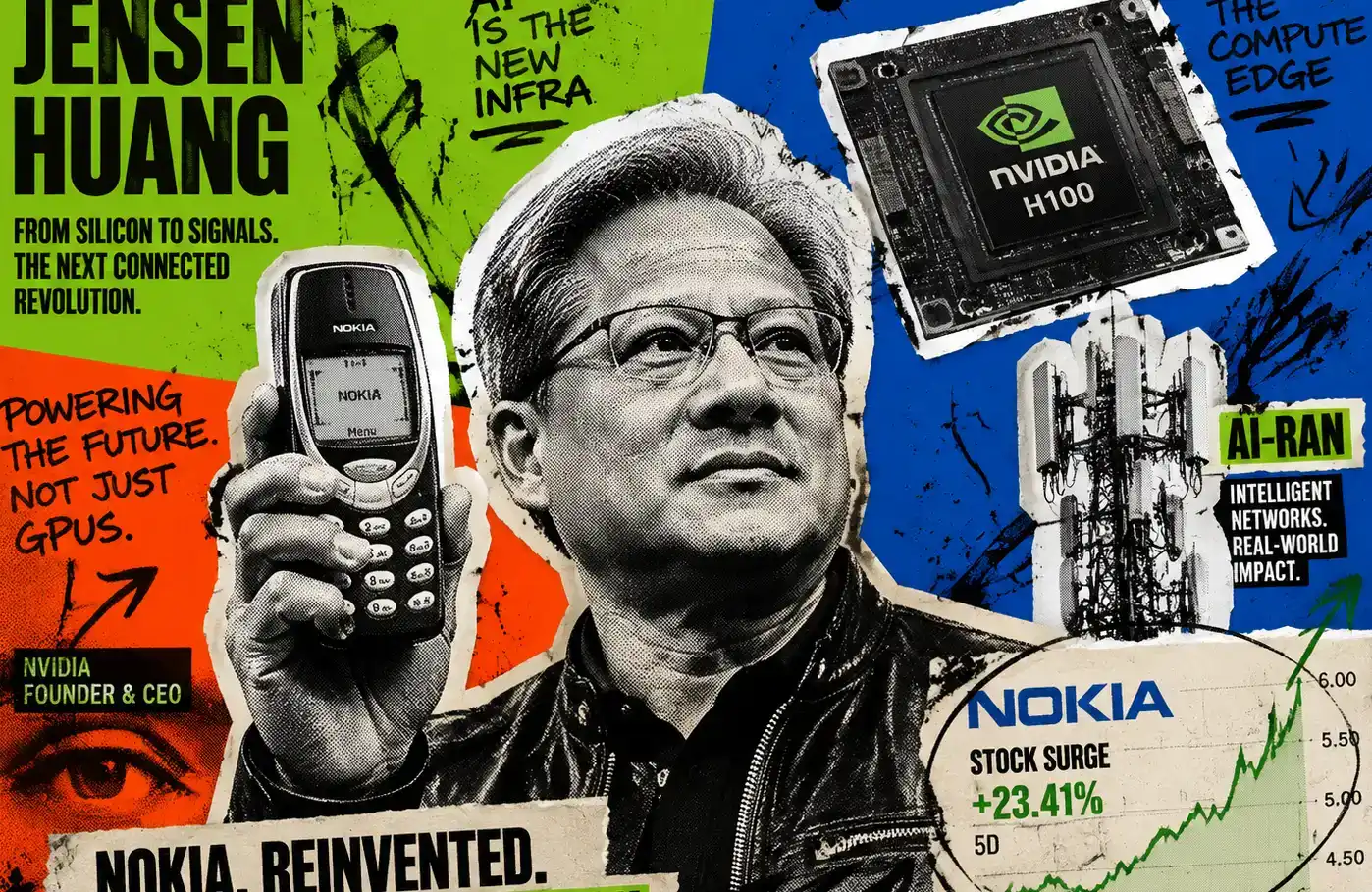
Nokia's stock has surged nearly 170% to around $16.8 since Nvidia's $1 billion investment and AI-RAN partnership in October 2025, reflecting a market re-rating from a cyclical telecom equipment provider to an AI infrastructure player. This rise, adding roughly $60 billion in market cap, is driven by AI capex expansion into telecom edge, RAN, and optical networks. The company's Q1 2026 results showed strong momentum, with AI & Cloud net sales up 49% and 10 billion euros in new orders, prompting Nokia to raise its AI & Cloud market growth forecast to a 27% CAGR (2025-2028). Optical network growth of 20% further strengthens its position in connecting AI data centers. Recent tests with operators like T-Mobile and the opening of an AI Networking Innovation Lab demonstrate progress from concept to early commercial deployment. Nokia's strategy integrates Nvidia GPUs into its network hardware, enabling concurrent AI processing and RAN tasks for real-time optimization and new edge services. However, with a trailing P/E nearing 100x and consensus price targets lagging the current stock price, significant future growth is already priced in. The key constraint now is the pace and scale of large-scale operator deployments. While execution signals remain positive and the company's position in AI edge infrastructure is established, high valuation leaves limited room for error, making tangible commercial contracts the critical factor for further stock performance.

marsbit06/03 04:39

Optical Modules Soar, Why Is NOK the Second Leader After MRVL?

marsbit06/03 04:39

Samsung Bets on Mobile HBM: AI Moves from Cloud to Palm, a New Frontier in Semiconductor Investment?

Samsung is betting on bringing high-bandwidth memory (HBM) technology from servers to mobile devices, aiming to enable powerful on-device AI features in smartphones and tablets. This move is driven by the booming AI market, where HBM demand from data centers has fueled Samsung's record profits, with HBM4 already in mass production. By integrating mobile HBM, Samsung seeks to transform user AI experiences—making tasks like image generation and real-time translation faster, seamless, and more private by processing data locally. Strategically, this allows Samsung to leverage its vertical integration in memory, advanced packaging, and Exynos processors to differentiate its Galaxy devices against competitors like Apple and Qualcomm. It also opens a new consumer growth avenue, reducing reliance on volatile server HBM demand alone. The initiative is expected to benefit the broader supply chain, boosting demand for advanced packaging materials, thermal solutions, and other components. While promising, risks include potential delays in mobile HBM mass production beyond 2027, high initial costs, and the cyclical nature of the memory market. Nonetheless, Samsung's push signals a broader industry shift toward hybrid cloud-edge AI computing, positioning it as a key player in defining the future of AI-powered devices and presenting a potential long-term investment theme in semiconductors.

marsbit05/19 14:49
Samsung Bets on Mobile HBM: AI Moves from Cloud to Palm, a New Frontier in Semiconductor Investment?

marsbit05/19 14:49

The Truth of Trading: A Numbers Game of Patterns and Probabilities

The Truth of Trading: A Numbers Game of Patterns and Probability Most traders fail not due to a lack of methods or information, but because they misunderstand the nature of trading. Mark Douglas, in "Trading in the Zone," redefines the market as a probabilistic environment where an edge only materializes over a sufficiently long period. Trading is not about prediction or seeking certainty; it is a numbers game of pattern recognition. A valid trading pattern does not guarantee that any single trade will be profitable. It merely indicates a historical probability of success. Each individual trade outcome is random, but the overall probability distribution over many trades is not. Traders must evaluate performance like a casino: focus on long-term expectation and repeated execution, not single wins or losses. Accepting that "anything can happen" is liberating. It removes the emotional sting from losses, enables disciplined stop-loss execution, and eliminates hesitation. The ideal "flow state" is not excitement but emotional neutrality—executing the plan without attachment to outcomes or need to be right. Ultimately, traders cannot control results, but they can control their execution. Success comes from emotional detachment and consistent repetition. When traders stop trying to prove themselves right and let the probabilities work over time, they align with the true nature of the market: a numbers game based on pattern recognition and disciplined repetition.

深潮12/26 02:45

The Truth of Trading: A Numbers Game of Patterns and Probabilities

深潮12/26 02:45

The Truth of Trading: A Numbers Game of Patterns and Probabilities

The Truth of Trading: A Numbers Game of Patterns and Probabilities Most traders fail not due to a lack of methods or information, but because they misunderstand the nature of trading. Mark Douglas, in "Trading in the Zone," redefines trading: it is not about prediction or certainty, but a probabilistic environment where edges manifest only over time. Thus, experienced traders summarize it as a pattern-recognition numbers game. Trading isn’t forecasting; it’s executing a plan amid uncertainty. No single trade can be guaranteed. Patterns don’t predict outcomes—they only define probabilistic edges. A valid pattern means historically higher chance of profit, not a promised win. Losses don’t invalidate the method; they are part of randomness. Individual trade outcomes are random, but the overall probability distribution isn’t. Profit comes from expectancy multiplied by repetition, not single trade accuracy. Accepting "anything can happen" liberates traders: losses feel less offensive, stop-losses are executed cleanly, and emotional interference fades. The "flow state" is emotional neutrality—no need to prove correctness or fear mistakes. It’s loyalty to the process. Trading is a numbers game: identify edges, repeat executions, and let large samples reveal results. Many traders intellectually agree but emotionally reject this: they judge themselves per trade, expect every pattern to work, take losses personally, and abandon strategies after few failures. The key isn’t a better method, but correct execution. You can’t control outcomes, but you can control execution. Patterns offer probability, not promises. Consistency requires emotional detachment and repetitive discipline. When traders stop proving themselves right and let probabilities work, trading succeeds.

marsbit12/26 01:59

The Truth of Trading: A Numbers Game of Patterns and Probabilities

marsbit12/26 01:59

活动图片