# Critical Thinking İlgili Makaleler

HTX Haber Merkezi, kripto endüstrisindeki piyasa trendleri, proje güncellemeleri, teknoloji gelişmeleri ve düzenleyici politikaları kapsayan "Critical Thinking" hakkında en son makaleleri ve derinlemesine analizleri sunmaktadır.

Altman Returns to Stanford and Admits Mistake: Outsourcing Thinking to AI, a Generation's Brains Are Atrophying

Sam Altman returned to Stanford University and admitted he was wrong about AI's impact on education. He predicted that after an initial phase of student cheating with ChatGPT, the education system would rapidly reform itself to teach more critical thinking. However, three and a half years later, while AI has advanced dramatically, teaching and assessment methods remain largely unchanged—still focused on memorization, standardized answers, and closed-book exams. Altman expressed deep concern that this disconnect is causing a "cognitive atrophy," where outsourcing thinking to AI erodes students' critical reasoning skills. Research supports this: grades have dropped in high-stakes exams after ChatGPT's introduction, and while assignment scores in writing and coding have inflated due to AI use, exam performance hasn't improved, indicating "outsourcing" rather than learning. He argues the problem lies in institutional inertia. The education system, built on the premise that tasks are time-consuming, hasn't adapted to a world where AI makes shortcuts effortless. Students are being evaluated by outdated standards, risking a generational gap in essential cognitive skills. Altman proposes a shift: education should move from testing memorization to fostering judgment, creativity, and the ability to ask better questions. Core practices like writing and programming remain vital not for their outputs, which AI can generate, but for the thinking process they train. The urgent need is to teach students not just to use AI, but to critically verify its outputs. Without reform, we risk a generation losing its capacity for independent thought.

marsbit07/16 08:19

Altman Returns to Stanford and Admits Mistake: Outsourcing Thinking to AI, a Generation's Brains Are Atrophying

marsbit07/16 08:19

I Dropped Out of High School, Learned with AI, and Made a Comeback as an OpenAI Researcher

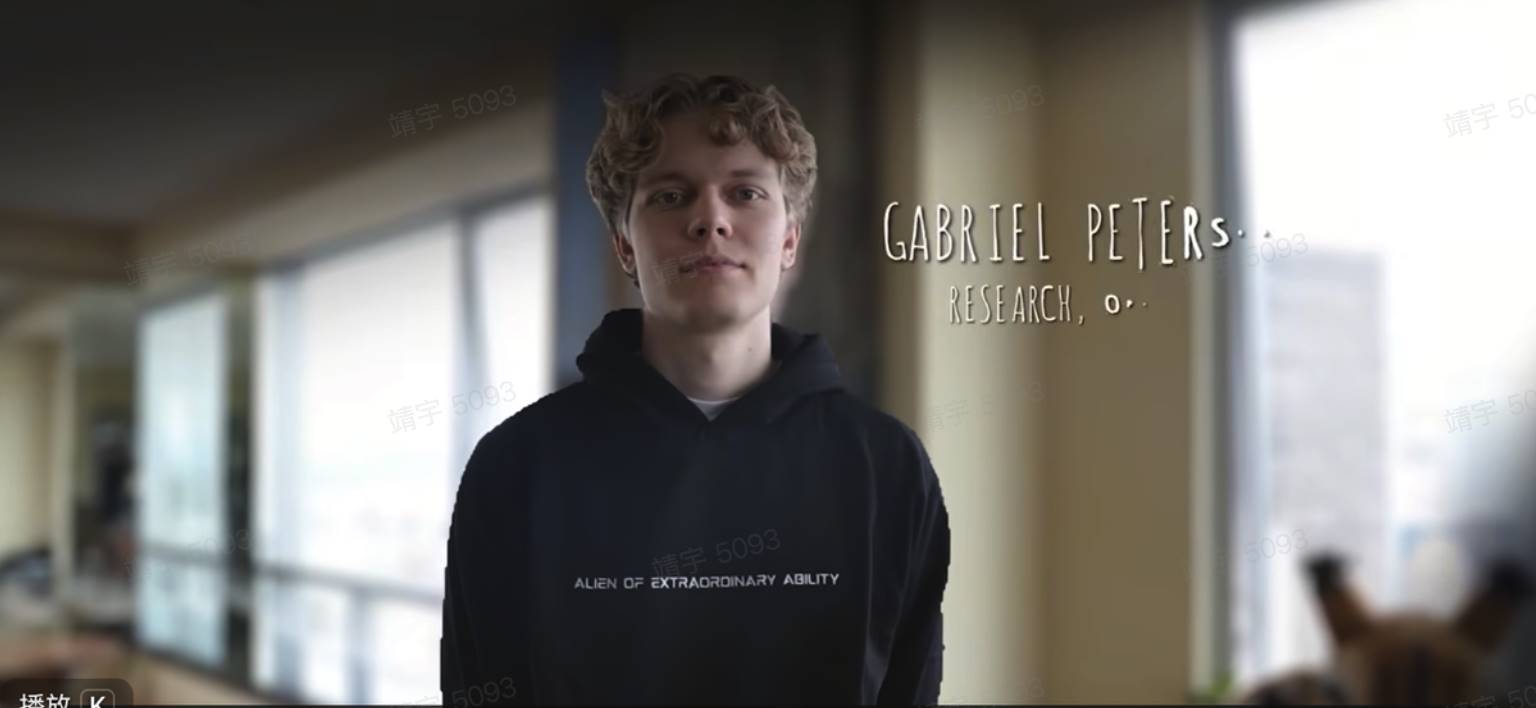
The article tells the story of Gabriel Petersson, who dropped out of high school in Sweden and eventually became a research scientist at OpenAI working on the Sora video project. He achieved this through a self-directed, AI-powered learning method he calls "recursive knowledge filling." Instead of following a traditional "bottom-up" educational path, he starts with a concrete project and uses AI to deeply understand each component through relentless questioning. He treats AI not as a tool to generate answers, but as an infinitely patient tutor. For example, to learn about diffusion models, he began by asking an AI for the core concepts, then had it generate code. He then interrogated every part of that code, asking "why" and "how" until he built an intuitive understanding from the top down. This method allows him to rapidly acquire the essence of a subject in days rather than years. The author contrasts this with how most people use AI, which often leads to a decline in their own critical thinking and skills, as evidenced by research. The key difference is mindset: using AI as a "co-pilot for thinking" rather than an "answer generator." The article concludes with a five-step framework for applying this method to learn any subject and suggests that this approach could lead to a future of more "one-person companies" where individuals use AI to master multiple disciplines. The core advice is to never stop at the first answer—to keep asking questions.

深潮12/17 02:20

I Dropped Out of High School, Learned with AI, and Made a Comeback as an OpenAI Researcher

深潮12/17 02:20

活动图片