# China Tech İlgili Makaleler

HTX Haber Merkezi, kripto endüstrisindeki piyasa trendleri, proje güncellemeleri, teknoloji gelişmeleri ve düzenleyici politikaları kapsayan "China Tech" hakkında en son makaleleri ve derinlemesine analizleri sunmaktadır.

Early Investor of Unitree Bets on a Brain-Computer Interface Company

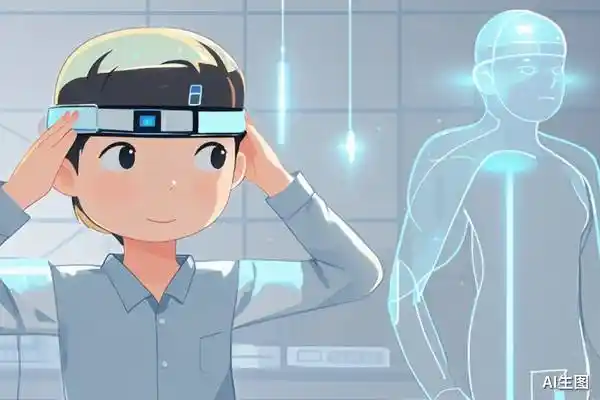
"Wabo Technologies, a brain-computer interface (BCI) startup, has secured new funding from Vertex Ventures (under Temasek), Hongtai Fund, Chengdu Future Industry Fund, and Huifengda Capital. Vertex Ventures is known for its early bet on Unitree Robotics. Inspired by the sci-fi film "Avatar," founder Zhang Xingzhi has pursued human-machine interaction for over a decade. He established Wabo in late 2025, coinciding with China's push for BCI as a future industry. Unlike companies focused solely on medical hardware, Wabo positions itself as a model company. Its core mission is to develop a "Human Neural Intent Model" that decodes EEG, EMG, and behavioral signals to understand a user's goals, confirmations, corrections, and stop intentions before physical action, translating them into standardized control signals for machines, robots, or smart devices. The young, full-stack team, backed by academic collaborators from Tianjin University and Fudan University, quickly attracted investors. The company had previously raised a seed round from Ceyuan Capital. Investors were impressed by Wabo's systematic capabilities in data collection, signal processing, and engineering, seeing potential beyond a single hardware product toward a reusable layer of human intent interpretation. Applications span medical rehabilitation, smart homes, embodied AI, and even space exploration, with Wabo partnering with Tianjin University on pioneering "space BCI" research. Wabo plans a dual-headquarters strategy, with Shanghai focusing on high-end R&D and model development, and Chengdu handling hardware, product development, and supply chain. The BCI sector in China is heating up, with over 30 financing deals in early 2026. Zhang believes future competition will center on who can build a sustainable data-model-scenario loop. He predicts industry consolidation within three years, with only companies that master this闭环 surviving. The vision from "Avatar" is inching closer to reality."

marsbit07/29 03:11
Early Investor of Unitree Bets on a Brain-Computer Interface Company

marsbit07/29 03:11

Super Storage Week, How to Value It?

"Super Memory Week: How to Value It?" The week of July 27th marked a pivotal moment for the global memory chip market. On Monday, ChangXin Memory Technology (CXMT, 688825.SH) debuted on the Shanghai STAR Market, with its share price experiencing high volatility and settling around 49 yuan, resulting in a massive market capitalization of over 3.2 trillion yuan. This valuation far exceeds traditional models, as the market priced in CXMT's future potential as China's first large-scale DRAM producer rather than just current fundamentals. This event signaled that China's memory industry is transitioning from a cycle follower to a significant variable in global market valuations. The week also saw major earnings reports from South Korean giants SK Hynix and Samsung Electronics, which highlighted strong profits driven by AI memory demand but also raised questions about future capacity expansion and the cycle's sustainability. The core debate centers on CXMT's true worth: is it based on immediate profits, the current DRAM boom, or China's strategic potential in semiconductors over the next decade? While CXMT has rapidly grown to become the world's fourth major DRAM player, gaps remain with incumbents in profitability, advanced products (like HBM), and technology ecosystems. The divergent market reactions underscored the valuation challenge. Chinese markets priced CXMT for its scarcity and national strategic importance, while overseas markets began to reprice global chip stocks, factoring in potential future competition from Chinese capacity expansion. Ultimately, CXMT's valuation hinges on its ability to convert its massive financing and market-assigned "option value" into tangible technological progress, yield improvements, capacity, and sustained profits in the coming quarters and years.

marsbit07/28 13:16

Super Storage Week, How to Value It?

marsbit07/28 13:16

From Sand to Chips: Hefei's Semiconductor Alchemy

From Sand to Chips: Hefei's Semiconductor "Alchemy" On July 27, 2026, a memory chip maker from Hefei made history by surpassing the market capitalization of Industrial and Commercial Bank of China on its Shanghai Stock Exchange debut. This marks the culmination of Hefei's two-decade industrial transformation, often summarized in three strategic leaps: "Screen, Chip, Vehicle." The journey began in 2008 with a bold investment in BOE, establishing China's first 6th-generation LCD panel line. The second leap was the "Project 506" in 2016, which gave birth to ChangXin Memory Technologies (CXMT). With initial backing of 14.4 billion RMB from Hefei's state-owned investment platform, CXMT aimed to break into the global DRAM market, then over 95% controlled by three overseas giants. CXMT achieved a breakthrough in 2019 by producing China's first 8GB DDR4 DRAM chip, employing "generational leapfrog" R&D to catch up. After years of significant losses, the company turned profitable in 2025. A dramatic surge followed in 2026, driven by AI-driven demand and full capacity utilization, propelling CXMT to become the world's fourth-largest DRAM manufacturer. CXMT's success is not isolated. It anchors a dense, localized semiconductor ecosystem in Hefei. Within its vicinity are numerous supporting companies for equipment, materials, and packaging & testing. This cluster has fueled the regional economy, with Hefei's integrated circuit industry output growing over sevenfold between 2016 and 2025. The ripple effects extend beyond high-tech, revitalizing local communities with new businesses and services catering to the influx of workers. For individuals, Hefei offers competitive tech salaries at a significantly lower cost of living compared to major coastal cities, along with improved amenities and shorter commutes. Hefei's story demonstrates two decades of focused, long-term industrial policy, transforming the city from a provincial capital into a trillion-RMB GDP "Double Ten-Thousand" city (10 million people, 1 trillion RMB GDP). It shows how persistence in strategic sectors—turning sand into chips—can redefine a city's economic destiny.

marsbit07/28 08:26

From Sand to Chips: Hefei's Semiconductor Alchemy

marsbit07/28 08:26

Huang Xiaoming, Li Bin, Lei Jun, Liang Wenfeng... Who Are the Biggest Winners in the CXMT IPO Feast?

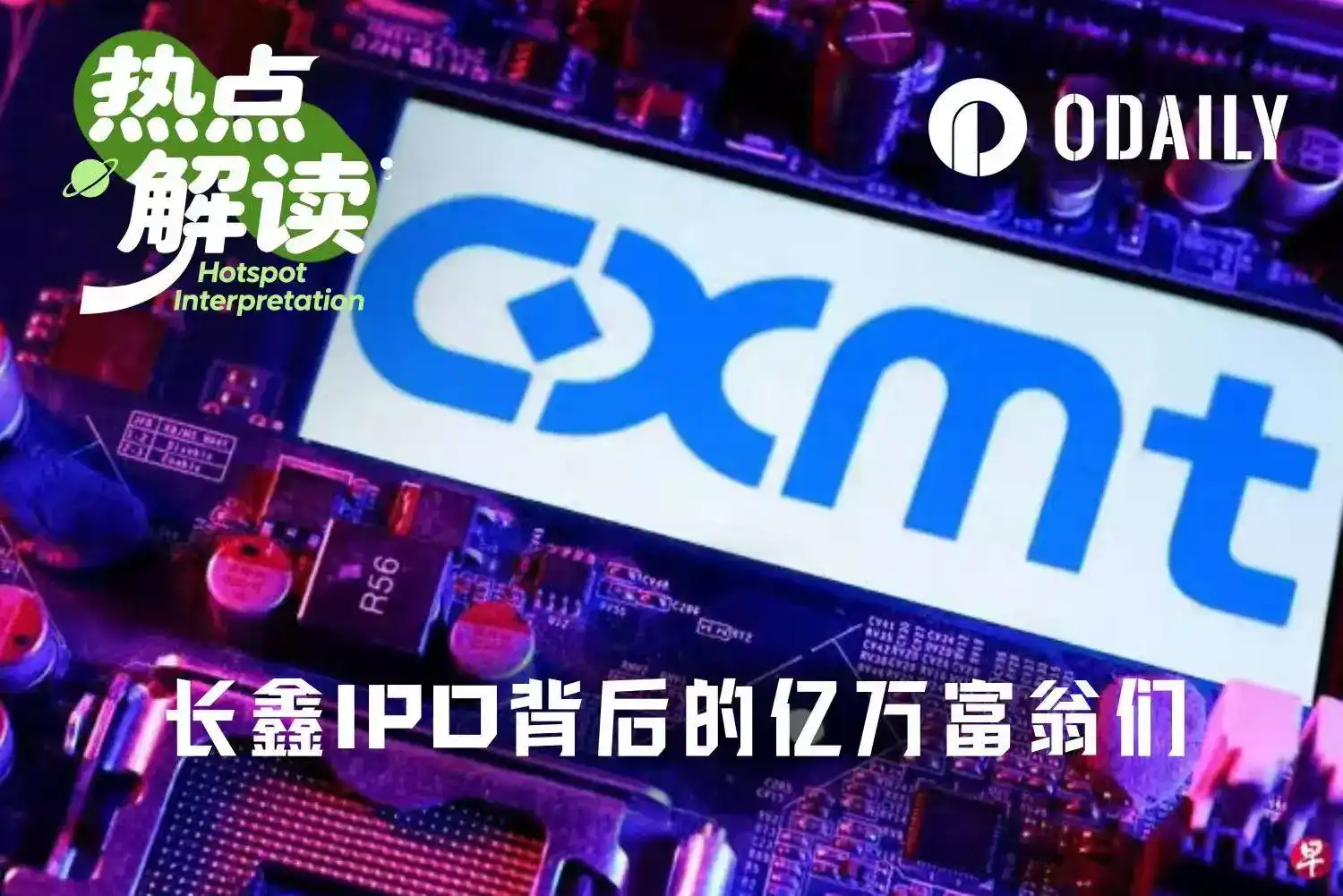
Changxin Technology, a leading Chinese memory chip manufacturer, successfully listed on the Shanghai Stock Exchange's STAR Market (科创板) on July 8, 2026. Its share price surged from the IPO price of 8.66 yuan to close at 49 yuan on the first day, catapulting its market capitalization to 3.28 trillion yuan, making it the most valuable A-share company and triggering a massive wealth creation event. The biggest winners were the company's founder, Zhu Yiming, and its employees. Zhu Yiming's family wealth skyrocketed nearly 300% to approximately $13.9 billion, with his direct stake in Changxin valued at around 80 billion yuan. Additionally, over 6700 employees benefited from stock ownership plans, creating at least 237 new millionaires (in CNY). Zhu also pledged to donate 768 million shares, worth over 37.6 billion yuan, for future employee incentives over a ten-year period. Several prominent investors and corporate clients also reaped significant paper gains from the IPO. Notable figures include: * **Liang Wenfeng**, founder of DeepSeek, whose funds netted a paper profit of approximately 827 million yuan. * **Kong Jianping**, founder of Nano Labs, saw his indirect holdings valued at roughly 940 million yuan. * **Li Bin**, founder of Nio, whose company's strategic investment of 158 million yuan is now worth about 740 million yuan. * **Lei Jun**, founder of Xiaomi, whose subsidiary holds shares currently showing a paper gain of over 736 million yuan. Xiaomi clarified this is a corporate investment, not direct personal wealth. The article notes that while this IPO created immense wealth for insiders and large investors, retail investors who were lucky enough to win an allotment in the lottery typically profited by around 20,000 yuan. The listing solidifies Changxin's position as China's premier domestic memory chipmaker.

marsbit07/28 06:06

Huang Xiaoming, Li Bin, Lei Jun, Liang Wenfeng... Who Are the Biggest Winners in the CXMT IPO Feast?

marsbit07/28 06:06

NVIDIA CPU Advances, China's RISC-V Responds: Semiconductor Deep Dive - Part Four

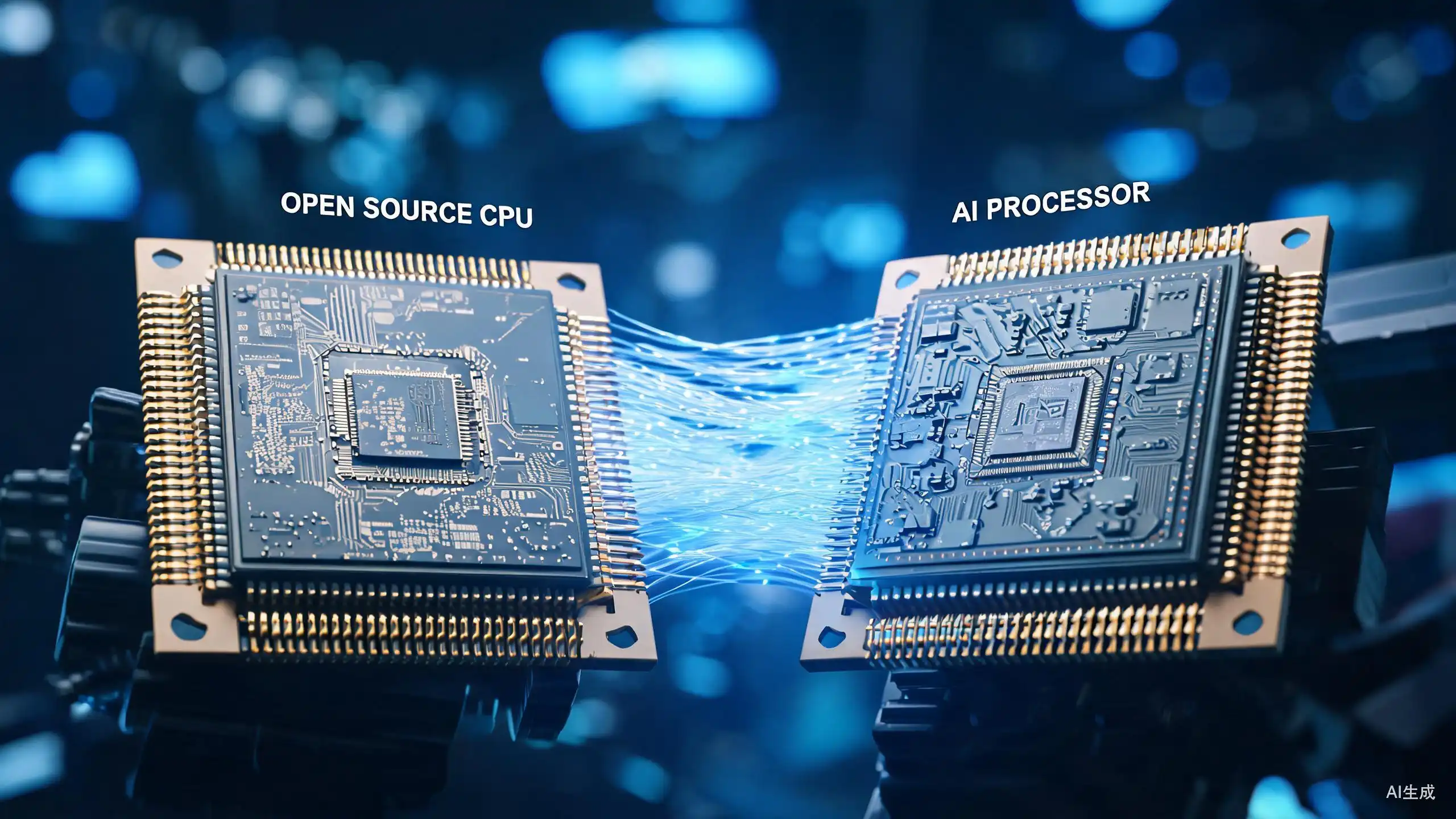
NVIDIA is set to launch its new Vera AI data center CPU in China as early as August, with high pricing. While this move offers a new option, it highlights China's continued dependence on foreign-controlled Arm architecture. In response, the Chinese semiconductor industry is increasingly turning to RISC-V as a strategic alternative for achieving high-performance computing autonomy. The article explores the concept of the "impossible triangle" in CPU development—balancing prosperity, control, and autonomy—and posits that RISC-V's open-source, modular nature offers a unique path to achieving all three. While RISC-V is already dominant in embedded systems, the focus is now shifting to data centers and AI workloads. China has become a global hotspot for RISC-V development, driven by AI-driven compute demand, supply chain concerns from export controls, cost benefits of open-source, and strong policy support. Multiple Chinese companies have reportedly crossed the key performance threshold of 15 SPECint per GHz, a benchmark for entering the high-performance CPU club. Progress extends beyond single-core benchmarks. Companies are developing complete computing subsystems, including commercial-grade coherent network-on-chip (NoC) technology and server processors with up to 40 cores that strictly adhere to the RVA23 standard to ensure software compatibility. Real-world applications are emerging in areas like video transcoding and edge AI. However, significant challenges remain. The RISC-V ecosystem faces fragmentation, immature toolchains and verification processes, and gaps in single-core performance and energy efficiency compared to mature x86 and Arm architectures. The formidable software moat, epitomized by NVIDIA's CUDA, is a long-term hurdle. In conclusion, while RISC-V cannot immediately replace offerings like NVIDIA's Vera, it represents a viable long-term path for China to develop a self-sufficient, high-performance CPU ecosystem. The journey is acknowledged to be long and arduous, requiring sustained effort to overcome technical and ecosystem challenges.

marsbit06/18 17:38

NVIDIA CPU Advances, China's RISC-V Responds: Semiconductor Deep Dive - Part Four

marsbit06/18 17:38

Three Months, 35 Billion Yuan: Investors Rush to Grab the OpenAI of the Physical World

Investors flock to a physical AI startup as the race for the "OpenAI of the physical world" heats up. Ji Jia Shi Jie (GigaWorld), a company dedicated to developing Artificial General Intelligence (AGI) for the physical world, has raised 3.5 billion RMB (approximately $490 million) in just three months, according to a report from investment media outlet Touzijie. The latest B2 funding round of 1 billion RMB attracted a wide range of top-tier investors, including sovereign wealth funds, industrial capital, and financial institutions. This brings the total funding for the young company, now valued over 10 billion RMB, to 3.5 billion RMB across three recent rounds. The company is led by Huang Guan, a post-90s Tsinghua University PhD with extensive experience in AI, autonomous driving, and entrepreneurship. Its core innovation is a "dual-pyramid" system comprising a five-layer data pyramid (from internet videos to real-world robot data) and a three-layer algorithm pyramid focused on world simulation, action alignment, and reinforcement learning. This system underpins its key models: the "World Action Model" (e.g., GigaBrain series for robot control) and the "World Generation Model" (e.g., GigaWorld series for simulating and understanding the physical world). Its models have reportedly achieved top rankings in global robotics benchmarks. Ji Jia Shi Jie argues that while current digital AGI excels in information processing, the next frontier is physical AGI—systems that can understand and interact with the real world. The company believes the field is approaching its "GPT-3 moment," a key inflection point in capability scaling. To achieve this, the company is pursuing a dual-market strategy. For the consumer (C) market, it launched the "SeeLight" brand and its S1 general-purpose humanoid robot, which has secured initial orders for deployment in real homes. For the business (B) market, it focuses on industrial automation with its Maker series robots, having signed agreements for large-scale deployment in factories, and its DriveDreamer world model for autonomous driving, which is already in use with over 30 automakers and tech companies. The report concludes that by bridging the gap between digital intelligence and physical action, Ji Jia Shi Jie aims to unlock a new wave of productivity, ultimately bringing physical AGI into everyday life.

marsbit06/15 01:30

Three Months, 35 Billion Yuan: Investors Rush to Grab the OpenAI of the Physical World

marsbit06/15 01:30

Computing Power Constrained, Why Did DeepSeek-V4 Open Source?

DeepSeek-V4 has been released as a preview open-source model, featuring 1 million tokens of context length as a baseline capability—previously a premium feature locked behind enterprise paywalls by major overseas AI firms. The official announcement, however, openly acknowledges computational constraints, particularly limited service throughput for the high-end DeepSeek-V4-Pro version due to restricted high-end computing power. Rather than competing on pure scale, DeepSeek adopts a pragmatic approach that balances algorithmic innovation with hardware realities in China’s AI ecosystem. The V4-Pro model uses a highly sparse architecture with 1.6T total parameters but only activates 49B during inference. It performs strongly in agentic coding, knowledge-intensive tasks, and STEM reasoning, competing closely with top-tier closed models like Gemini Pro 3.1 and Claude Opus 4.6 in certain scenarios. A key strategic product is the Flash edition, with 284B total parameters but only 13B activated—making it cost-effective and accessible for mid- and low-tier hardware, including domestic AI chips from Huawei (Ascend), Cambricon, and Hygon. This design supports broader adoption across developers and SMEs while stimulating China's domestic semiconductor ecosystem. Despite facing talent outflow and intense competition in user traffic—with rivals like Doubao and Qianwen leading in monthly active users—DeepSeek has maintained technical momentum. The release also comes amid reports of a new funding round targeting a valuation exceeding $10 billion, potentially setting a new record in China’s LLM sector. Ultimately, DeepSeek-V4 represents a shift toward open yet realistic infrastructure development in the constrained compute landscape of Chinese AI, emphasizing engineering efficiency and domestic hardware compatibility over pure model scale.

marsbit04/26 00:27

Computing Power Constrained, Why Did DeepSeek-V4 Open Source?

marsbit04/26 00:27

After the Lobster Comes Ashore, the Next Game in AI Hardware Lego

The article "Lobster Comes Ashore: The Next Game in AI Hardware Lego" discusses the growing influence of OpenClaw, an open-source AI framework, as it extends from software into the physical hardware world, reshaping the development and functionality of smart devices. OpenClaw enables hardware products to be combined like Lego blocks, creating diverse intelligent devices. Examples include Rokid AI glasses, which can now connect to any backend system like OpenClaw via an SSE interface, and Apple Watch, which acts as an AI control terminal for tasks like managing notifications and sending commands. WHOOP wearable devices use OpenClaw to provide personalized health advice, while companies like Songling Robotics integrate it into robotic arms for natural language control. Individual developers are also experimenting, such as combining OpenClaw with Meta’s Ray-Ban smart glasses for visual AI agents, or enhancing robot dogs like Vbot for autonomous tasks. These innovations are expanding possibilities but also raise concerns around security and token costs. The trend is particularly strong in China, where OpenClaw has sparked enthusiasm among companies, developers, and policymakers. In Shenzhen, public installations and events around OpenClaw have drawn large crowds, and electronics market Huaqiangbei has started selling modified "Lobster boxes." This movement is also driving the growth of Chinese large language models (LLMs) internationally. Data from OpenRouter shows Chinese models now account for half of global token consumption, with MiniMax M2.5 leading in usage. MiniMax’s market value has surged, exceeding Baidu’s, and its revenue is now over 70% from international markets. Similarly, Kimi2.5 has seen a spike in paid users and overseas revenue since being adopted as OpenClaw’s primary free model. The integration of OpenClaw is blurring traditional boundaries between hardware makers, developers, and AI companies, creating a new ecosystem for AI-powered hardware innovation.

比推03/11 06:49

After the Lobster Comes Ashore, the Next Game in AI Hardware Lego

比推03/11 06:49

活动图片