# Agent Economy İlgili Makaleler

HTX Haber Merkezi, kripto endüstrisindeki piyasa trendleri, proje güncellemeleri, teknoloji gelişmeleri ve düzenleyici politikaları kapsayan "Agent Economy" hakkında en son makaleleri ve derinlemesine analizleri sunmaktadır.

Comprehensive Analysis of the AI Inference Market: How Can Crypto Projects Break Through?

"AI Inference Market: A Strategic Overview and Crypto's Path to Disruption" The AI inference market, where trained models generate responses to user prompts, is now the primary economic driver, surpassing model training in value. This market is fragmented: hyperscalers (AWS, Google, Microsoft) dominate enterprise reliability; specialized providers (Together, Fireworks) optimize performance; and routing platforms like OpenRouter act as critical bottlenecks, dynamically allocating requests based on cost, latency, and privacy. Crypto AI networks are not competing directly on reliability but are carving out distinct niches: permissionless access, lower-cost supply, privacy, verifiable computation, and agent-native payments. Key projects include Chutes (decentralized inference platform), Akash & io.net (GPU marketplaces), Targon (confidential computing), Darkbloom & Venice (private, consumer-focused inference), and NuNet (orchestration for distributed workloads). The core differentiator is that traditional providers sell trust and enterprise workflows, while crypto networks offer new incentive loops, censorship resistance, and programmable access to resources like compute. For crypto projects to succeed, key metrics are paid token volume (not just usage), sustainable GPU provider revenue, integration into routers like OpenRouter, robust verification against fraud, and genuine privacy guarantees. Ultimately, market control will belong to entities that route, verify, and settle demand—not just those supplying raw compute. The inference market is evolving to resemble a financial system, with tokens as units of account, and crypto's unique value propositions position it to capture emerging segments in this expanding landscape.

Foresight News06/25 07:08

Comprehensive Analysis of the AI Inference Market: How Can Crypto Projects Break Through?

Foresight News06/25 07:08

Why Does 'AGI Godfather' Ben Goertzel Believe the Future of AI Relies on Blockchain?

Ben Goertzel, known as the "AGI Godfather," argues that the future of Artificial General Intelligence (AGI) must be built on blockchain to prevent its control by a few corporations or venture capital firms. He believes the core AGI code should be free and open-source, but that this alone is insufficient without a decentralized infrastructure to run it affordably. His blockchain project, SingularityNET, and the broader Artificial Superintelligence Alliance aim to create a user-owned, decentralized network for hosting and deploying AGI, contrasting with the closed models of companies like OpenAI and Anthropic. Goertzel criticizes the shift of other labs from open to closed development. He argues that while a closed path is simpler, an open, decentralized model—akin to Linux and the internet—is both possible and ultimately better for humanity. He envisions an "Agent economy" where individuals orchestrate teams of AI agents to perform tasks, including transactions, on an open network rather than corporate clouds. While his current model relies on cryptocurrency, plans include offering paid AI services to businesses with the decentralized blockchain as the backend. Goertzel predicts human-level AGI could arrive by 2029 and warns that a gap in understanding and access to AGI could drastically worsen inequality. The first test of his decentralized approach will be the upcoming release of the Agent Omega Claw.

Foresight News06/22 12:10

Why Does 'AGI Godfather' Ben Goertzel Believe the Future of AI Relies on Blockchain?

Foresight News06/22 12:10

Gary Yang: Agent Economy and AI Submicroeconomics

**Title:** Agent Economy and AI Sub-Microeconomics - Gary Yang **Summary:** Following the AI singularity, the pace of evolution has accelerated rapidly, creating new generational disparities in technological advancement globally. While many regions are still grappling with single-agent bottlenecks, Silicon Valley has moved ahead into the next dimension: the Agent Economy and A2A ecosystems. The article outlines six key areas of this emerging paradigm: 1. **AI Payment Competition & H2A Bottlenecks:** A fierce battle for AI Agent payment protocol standards is underway (e.g., MPP, x402). However, most current efforts remain Human-to-Agent (H2A), essentially grafting AI onto traditional human-centric commerce, which creates a non-AI-native bottleneck. The true potential lies in Agent-to-Agent (A2A) autonomous economies. 2. **Agent Economy & the Inevitable A2A Trend:** The Agent Economy is defined by autonomous AI Agents creating, exchanging, and capitalizing value as independent economic actors. The A2A ecosystem describes their interactions. This represents the next major investment frontier, akin to the early days of e-commerce or DeFi, but with faster iteration and an AI-native, efficiency-first perspective that often diverges from human needs. 3. **AI Protocol vs. Crypto Protocol:** AI Protocols are the foundational rules for Agent interaction in an open network (communication, discovery, collaboration), akin to the governance and economic laws of the AI world. Currently, they focus on communication and weak boundaries, unlike Crypto Protocols which emphasize asset rights and clear ownership. While they appear different due to political-economic factors and legacy system constraints, their eventual convergence into a unified Digital Protocol system is seen as inevitable, driven by first principles. 4. **AI Agent Sub-Microeconomics & Biological Analogy:** AI Agent economics differ fundamentally from human economics: higher frequency/lower value transactions, energy/value direct correlation, efficiency-driven (not emotional) decisions, task-oriented (not consumption-oriented) behavior, and near-zero organizational/communication costs. A powerful analogy frames the Agent economy as a biological system: the LLM is the nucleus, the Agent harness is the cytoplasm, the Agent itself is a cell, its communication protocol is the cell membrane, and external tools (Skills, Prompts) are the extracellular environment. 5. **The Inevitability of AIFi & FinChip:** AIFi (AI Finance) represents the financial system where AI-native value within the Agent economy is tokenized and exchanged. Unlike TradFi/DeFi where value resides *in* finance, in AIFi, value originates *in* AI, and finance becomes its form. This shift is enabled by Agents taking over value discovery. FinChip (Financial Chip) is introduced as a key infrastructure—a fusion of AI autonomy and crypto smart contracts—forming intelligent financial assets to power the future A2A economy. 6. **AI-Native as a Paradigm Shift:** Adopting AI is not akin to "Internet+". It requires AI-Native thinking—designing systems based on first principles, the shortest energy-value path, and maximum efficiency. This abstract, counter-intuitive logic poses a significant, ongoing challenge for all practitioners, as effective, generalized upgrade methodologies will be slow to emerge in this rapidly evolving landscape.

链捕手06/08 12:13

Gary Yang: Agent Economy and AI Submicroeconomics

链捕手06/08 12:13

Yang Ge Gary: Agent Economy and AI Sub-Microeconomics

"Agent Economy and AI Submicroeconomics" by Gary Yang discusses the evolution of AI Agent economies, written from Singapore in June 2026. The author observes a significant "civilizational generational gap" in AI development, particularly highlighted by events in Silicon Valley. The article identifies a current bottleneck in the transition from Human-to-Agent (H2A) economies to true Agent-to-Agent (A2A) ecosystems. While AI Payment protocols are rapidly emerging, many implementations remain non-AI-native, focusing on traditional human decision-making models rather than leveraging autonomous Agent decision-making. A core thesis is the inevitable formation of an **Agent Economy**, defined as a system where autonomous AI Agents create, exchange, and capitalize value independently. This requires new infrastructure: **AI Protocols**, which are the foundational rules and standards for Agent interaction. The piece explores the relationship and current gap between AI Protocols and Crypto Protocols, suggesting political and regulatory factors from traditional finance are temporarily constraining development. However, a future fusion into a mature Digital Protocol system is deemed inevitable based on first principles. The author introduces **AI Agent Submicroeconomics**, contrasting it with human economics. Key differences include higher transaction frequency, lower value per transaction, efficiency-driven (not emotion-driven) decisions, task-oriented (not consumption-oriented) behavior, and near-zero organizational and communication costs. A biological analogy is drawn, comparing an Agent to a cell, its LLM to a nucleus, and its protocol stack to a cell membrane. The rise of **AIFi** (AI Finance) is presented as a natural consequence, where value originates from AI-native activities and is subsequently tokenized and financialized. This contrasts with DeFi/TradFi, where finance is the source of value. The concept of a **Financial Chip (FinChip)**—an autonomous AI Agent integrated with a crypto smart contract—is highlighted as key infrastructure for this new economy. The conclusion emphasizes that **AI-Native** thinking represents a paradigm shift distinct from "Internet+" upgrades. It requires reasoning from first principles, focusing on energy-value shortest paths and maximum efficiency, which presents a steep learning curve and significant challenge for all participants in this rapidly evolving field.

marsbit06/08 02:06

Yang Ge Gary: Agent Economy and AI Sub-Microeconomics

marsbit06/08 02:06

It Took Me a Year to See the Hard Truth About Agent Payments

**Title: It Took Me a Year to See the Hard Truth About Agent Payments** Over the past year, I've worked on infrastructure for the Agent economy, engaging with major players like Stripe, Visa, Coinbase, and numerous startups. The findings reveal a stark reality: genuine, widespread demand for Agent-based payments does not yet exist. **Key Observations:** * **Agent-to-Merchant (Shopping):** The user experience for AI shopping often falls short, especially for visual product discovery. While AI excels at understanding needs, conversational interfaces can't yet replace browsing and comparing multiple products visually. Current merchant interest is largely defensive ("Agent Engine Optimization") for a future that hasn't arrived. High-frequency, low-friction purchases (like food delivery) are potential fits, but lack open APIs and face high AI inference costs. Simpler, more affordable, or cross-language interactions for complex UIs are a niche opportunity but require massive consumer distribution to scale. * **Agent-to-API (Developer Tools):** Developer payment needs for APIs (computing, data, models) are already met through subscriptions and prepaid credits. The core challenge is not payment friction but supplier economics: most large SaaS providers prefer enterprise contracts over micropayments for API calls. Protocols like MPP and x402 suit the long-tail of smaller services but cater to a developer market historically reluctant to pay for these tools. Major infrastructure needs at the top of the stack are already being addressed. * **Agent-to-Agent (Machine Commerce):** This is a long-term vision with almost no current transaction volume. While a future with high-speed, high-frequency, multi-party machine-to-machine transactions would require novel infrastructure, it remains theoretical. The market is not here yet. * **Agent-to-Finance:** This is the only category with clear, present demand. Financial professionals and DeFi users already pay for tools, and AI augmentation is a natural evolution. Autonomous AI agents can enable entirely new financial strategies. However, competition is fierce from established, regulated incumbents who can more easily layer AI onto their existing products. **The Core Insight:** Companies, especially giants with long time horizons, are building defensively for a potential future of mass machine commerce. For them, early investment is a low-cost hedge. For startups, the current market reality is different. The primary challenge isn't just moving money between agents (payments). The larger, unsolved problem is **orchestration** – coordinating work between agents and humans, verifying outcomes, and then settling. Payment is just a part of settlement, which is just a part of orchestration. Companies that solve the orchestration problem will subsume payments, not the other way around. After a year of building, we see the real, growing, and underserved market opportunity lies in this broader domain of orchestration.

链捕手06/06 09:55

It Took Me a Year to See the Hard Truth About Agent Payments

链捕手06/06 09:55

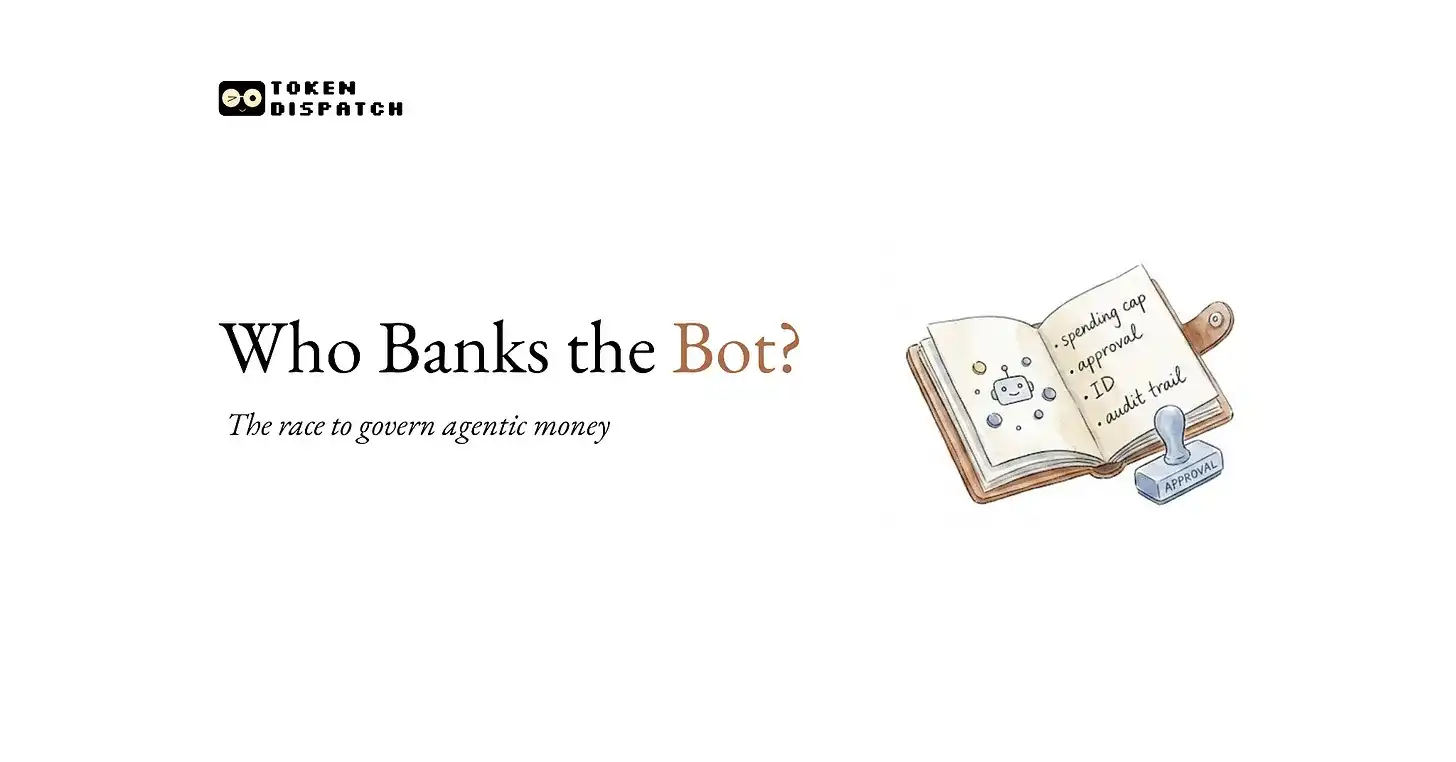
Who Funds the Agents?

**Summary: Who Funds AI Agents?** OpenAI recently shut down a feature allowing AI agents to shop for users, highlighting the challenge of creating a secure and regulated environment for agent-driven transactions. While payment infrastructure exists, a crucial governance layer—defining spending limits, fraud detection, tax handling, and return policies—is largely missing. The potential is enormous: AI agents already processed $73M across 176M transactions last year, with McKinsey forecasting this could grow to $3-5T in global consumer commerce by 2030. The core competition isn't just about processing payments, which can be very cheap (especially with crypto-based settlement), but about controlling the rules that govern agent spending. Key players like Stripe and Coinbase are racing to dominate this governance layer. Stripe's acquisition of wallet provider Privy allows it to set spending policies, identity checks, and human-in-the-loop approvals directly at the wallet level. Similarly, Coinbase's stack, including its x402 protocol and AgentKit, embeds governance rules. This vertical integration across settlement, wallet, and governance layers is becoming the dominant strategy. Control over the governance layer is where significant future value lies. If agents handle trillions in transactions, even a small fee for managing compliance, fraud prevention, and policy enforcement could generate billions in annual revenue. The companies that successfully integrate across the payment stack will capture value from idle agent balances, transaction fees, and governance services, positioning themselves as the foundational banks of the AI agent economy.

marsbit06/04 01:47

Who Funds the Agents?

marsbit06/04 01:47

Can the Solana Foundation and Google's Collaboration on Pay.sh Bridge the Payment Link Between Web2 and Web3 in the Agent Economy?

Solana Foundation, in collaboration with Google Cloud, has launched Pay.sh, a payment gateway designed to bridge the gap between AI agents and enterprise-grade service infrastructure. The initiative aims to solve a key bottleneck in the "agent economy": existing payment systems are ill-suited for autonomous AI agents. Traditional methods like credit cards require human verification, while newer on-chain protocols like x402 and MPP create a separate, Web3-native system that raises barriers for service providers. Pay.sh functions as a universal payment layer. It allows users to fund a Solana wallet via credit card or stablecoin, which then acts as an identity and payment proxy for AI agents. When an agent needs to access a paid API service (e.g., Google Cloud, Alibaba Cloud), Pay.sh handles the transaction seamlessly. It leverages the HTTP 402 status code ("Payment Required") to initiate payments, intelligently choosing between one-time transfers (x402-style) or session-based authorizations (MPC-style) based on the service's billing model. This spares agents from manual account registration and API key management. A key feature for service providers is low integration effort. They can adopt Pay.sh by providing a declarative configuration file, enabling features like tiered pricing, free tiers, and automatic revenue splitting to multiple addresses (e.g., for royalties, cloud costs). Providers can also list their APIs in a central Pay Skill Registry for agent discovery. The collaboration with Google Cloud provides crucial infrastructure for API proxying, traffic routing, and compliance logging, aiming to keep agent activities within regulated boundaries. By connecting Web2 services with Web3 payment rails, Pay.sh positions the Solana wallet as a foundational identity and payment tool for AI agents, potentially driving more transaction volume to the Solana ecosystem. However, the report notes challenges. The service registry currently lacks robust vetting, risking exposure to unauthorized or malicious third-party APIs. Pay.sh also inherits security and compatibility risks from its underlying payment protocols (x402, MPC). Furthermore, adoption may be hindered by varying regional data privacy and payment compliance regulations among API providers. Despite these hurdles, Pay.sh represents a significant step towards integrating Web2 and Web3 for autonomous agent commerce.

marsbit05/12 10:16

Can the Solana Foundation and Google's Collaboration on Pay.sh Bridge the Payment Link Between Web2 and Web3 in the Agent Economy?

marsbit05/12 10:16

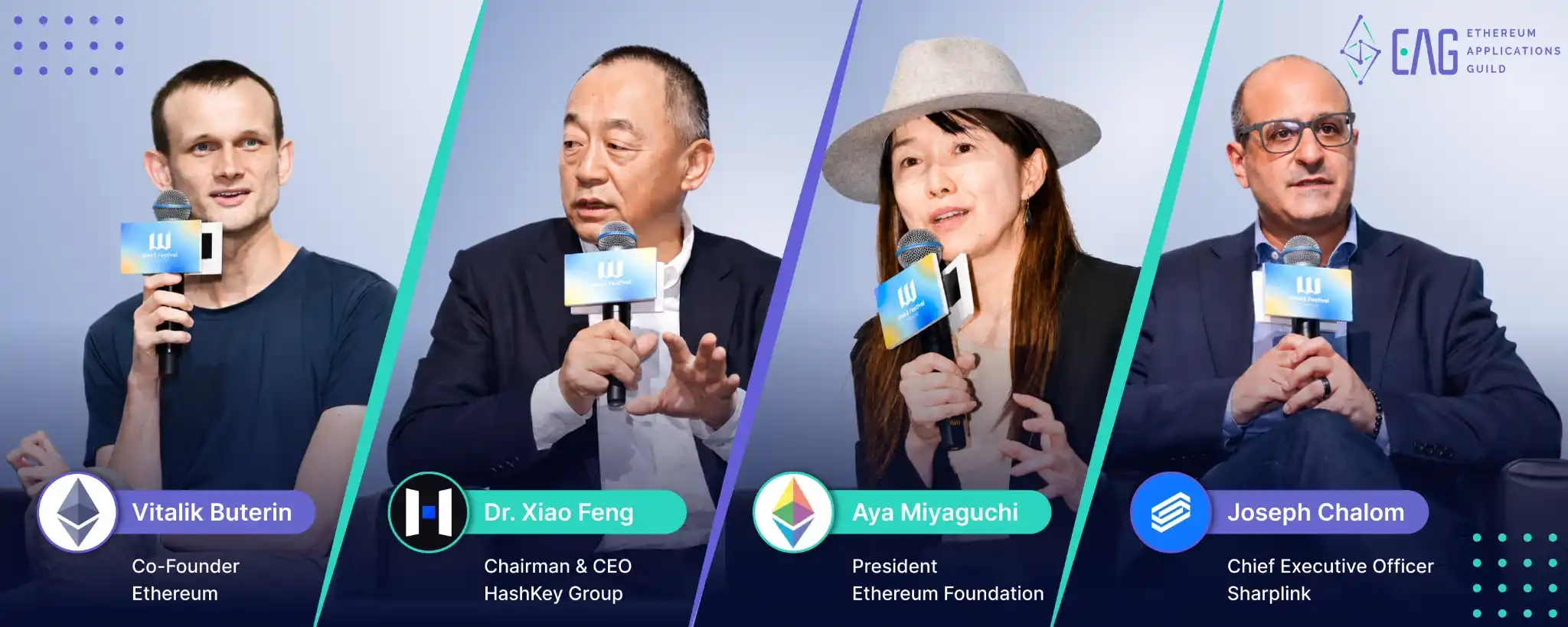
Dialogue with Vitalik, Xiao Feng, Aya Miyaguchi, and Joseph Chalom: From the 'Subtraction Principle' to the Agent Economy

Conversation with Vitalik Buterin, Xiao Feng, Aya Miyaguchi, and Joseph Chalom: Highlights from the Ethereum Application Summit on key future directions. Vitalik Buterin discussed the concept of "Full Stack Open Source Security," extending security from the protocol to hardware layers like wallets and chips. He predicted AI will simplify blockchain interaction, enabling natural language commands for complex operations. He emphasized that Ethereum's future focus should be on security, decentralization, and trustless infrastructure—the areas where it holds its core competitive edge. The fusion of AI, Fully Homomorphic Encryption (FHE), and blockchain is seen as crucial for real-world applications requiring privacy, such as healthcare. Xiao Feng underscored the importance of simplifying technology for mass adoption. He drew parallels to the evolution from command lines to GUIs and apps, suggesting that AI-driven natural language interfaces will be key to bringing more users into Web3. He stressed that while performance is important, Ethereum must continue to uphold its foundational principles of decentralization and user sovereignty. Aya Miyaguchi, Chair of the Ethereum Foundation, explained the evolving role of the Foundation through the "Principle of Subtraction." As the ecosystem matures, the EF is stepping back from areas where the community can take the lead, acting as one of many "gardeners" rather than a central driver. She highlighted that real applications are built on Ethereum's core values: censorship resistance, open source, security, and privacy. The concept of "Local-first" initiatives, like the Ethereum Applications Guild (EAG), was also emphasized for leveraging regional strengths to create global impact. Joseph Chalom, CEO of SharpLink, positioned Ethereum as the future infrastructure for global capital markets, differentiating it from Bitcoin through its "productivity" via staking yields. He envisioned the rise of an "Agent Economy" by 2027, where AI agents, powered by Web3 wallets, will autonomously manage financial tasks like yield optimization and RWA investments. The summit concluded that with core infrastructure maturing, the application layer is now the key driver for Ethereum's next phase of growth and real-world adoption.

marsbit05/12 09:43

Dialogue with Vitalik, Xiao Feng, Aya Miyaguchi, and Joseph Chalom: From the 'Subtraction Principle' to the Agent Economy

marsbit05/12 09:43

The Next Generation of Payments Lies Not in the Payment Layer

The Next-Generation of Payment is Not in the Payment Layer This is the second piece in a series analyzing Stripe's AI strategy. The series stems from Stripe's vision of becoming the economic infrastructure for the AI Agent era, announced at Stripe Sessions 2026. A key debate centers on whether Know Your Agent (KYA) is merely an upgrade to existing payment systems. The author argues the opposite: payment will become a subsystem of KYA, not the other way around. Historically, major payment innovations (online banking, mobile wallets, QR codes) emerged from new transaction scenarios that broke the underlying assumptions of old systems, not from optimization within the payment layer itself. Agent economy is that new scenario, and KYA is the foundational infrastructure growing to support it. KYA's proposed five layers—Agent Identity, Authorization Scope, Intent Signing, Liability Chain Auditing, and Credit Rating—extend far beyond payments. Only authorization and auditing directly touch the payment链路. Identity, intent, and credit layers serve broader needs like cross-platform calls, AI alignment, and permission management. Stripe's strategic moves validate this view. Its focus on "economic infrastructure for AI," investments in protocols like Agentic Commerce Protocol (an identity/session protocol), Shared Payment Tokens, stablecoin infrastructure, embedded wallets, and its own Tempo blockchain for settlement, all point to building the KYA layer, not just optimizing payments. Data shows the core challenge in AI commerce has shifted upstream: determining "who this is, what they intend to do, and if they deserve resources" happens long before checkout. This is why Stripe is moving its Radar fraud prevention from the transaction moment to the entire user lifecycle—a KYA-layer concern. Legally, ultimate responsibility will still fall on a human, as laws like AB 316 dictate. However, in a distributed,网状 liability chain involving users, Agent platforms, model providers, and payment protocols, KYA's role is to use cryptography to make every entity's actions and roles verifiable and traceable. This enables accountability where it was previously impossible to pinpoint evidence, fundamentally changing责任追溯, not just payment efficiency. The next-generation payment形态 will not be designed within the payment layer. It will emerge from the Agent economy scenario after the KYA infrastructure is established.

marsbit05/10 03:16

The Next Generation of Payments Lies Not in the Payment Layer

marsbit05/10 03:16

The Next Generation of Payments Is Not in the Payment Layer

The next generation of payments won't be designed within the payment layer itself. This article argues that historical payment innovations (e.g., online banking, mobile wallets) emerged from new transactional scenarios, not from optimizing existing payment systems. The new scenario is the Agent economy. Know Your Agent (KYA) is not merely a payment-layer upgrade for efficiency. It is the foundational infrastructure layer for the Agent economy. KYA’s five layers—Agent identity, authorization scope, intent signature, accountability chain audit, and credit rating—primarily serve broader needs like cross-platform identification, AI alignment, and permission management. Payment is just one application built on top of this KYA foundation. Stripe’s strategy exemplifies this shift. Its focus on "economic infrastructure for AI," investments in protocols like the Agentic Commerce Protocol (identity/session layer), stablecoin infrastructure, embedded wallets, and moving risk management (Radar) to the user lifecycle all indicate it is building the KYA layer, not just optimizing payments. While ultimate legal liability remains with a human (as laws like AB 316 stipulate), KYA enables traceability in a distributed,网状 responsibility chain involving multiple entities (user, Agent platform, model provider, etc.). It makes accountability verifiable where previously it was opaque. The conclusion: A new class of economic actors (Agents) forces a new infrastructure layer (KYA) to emerge. This layer redefines identity, authorization, and accountability. On top of it, the next generation of payment will reorganize and emerge from the demands of the scenario, not from within the traditional payment system.

链捕手05/10 03:10

The Next Generation of Payments Is Not in the Payment Layer

链捕手05/10 03:10

活动图片