Ripple Survey Finds Mass Adoption Momentum — ‘The Digital Asset Revolution Is Happening Now’

bitcoinist2026-03-20 tarihinde yayınlandı2026-03-20 tarihinde güncellendi

Özet

Ripple's 2026 global survey of over 1,000 finance leaders reveals strong momentum for crypto adoption, declaring the "digital asset revolution is happening now." Key findings show 72% believe digital asset solutions are essential to remain competitive. Stablecoins are a leading use case, with 74% citing benefits for cash-flow efficiency and faster settlement. Fintechs are the primary drivers, with many already using digital assets for payments and customer wallets. Interest in asset tokenization is rising, with custody solutions being a top priority (89%). When choosing partners, regulatory clarity (40%) and security (37%) are critical. Most institutions prefer partners that handle integrated custody and compliance to avoid holding stablecoin balances directly.

Ripple on Thursday released findings from a global survey of more than 1,000 finance leaders, and concluded that the “digital asset revolution is happening now.”

The study, conducted at the start of 2026 and spanning banks, asset managers, fintechs, and corporate treasuries, finds strong momentum behind crypto adoption with stablecoins and tokenization emerging as leading use cases.

Ripple Finds Fintechs Driving Crypto Use

According to Ripple, 72% of respondents believe finance leaders must offer a digital asset solution to remain competitive. Among specific applications, stablecoins drew the most enthusiasm.

74% of participants said stablecoins can improve cash‐flow efficiency and unlock trapped working capital in addition to enabling faster settlement—benefits firms see as competitive differentiators.

Fintech firms in the sample stand out as the early adopters and innovators. Ripple’s survey shows fintechs are more likely than banks or corporates to already use digital assets in treasury and payments, and to roll out customer‐facing crypto wallets.

Notably, 31% of fintech respondents said they use stablecoins to collect payments for customers, and 29% accept payments directly in stablecoins. A comparable share relies on third‐party custodians or infrastructure providers to secure assets.

Fintechs are also more inclined to build proprietary solutions—47% prefer in‐house development—while most corporates (74%) expect to partner with external providers for implementation.

Shift Toward Tokenized Assets And Stablecoins

The survey further shows that interest in tokenizing financial assets is rising among banks and asset managers, and that most institutions evaluating tokenization strategies prioritize custody solutions. Of those assessing tokenization partners, 89% ranked digital asset storage and custody as a top priority.

Token servicing and lifecycle management are also highly valued by banks (82%), while asset managers place strong emphasis on primary distribution (80%). Advisory services matter as well: 85% of banks cited pre‐issuance structuring consultancy as important, compared with 76% of asset managers.

When choosing partners, respondents prioritized regulatory clarity (40%), security and safekeeping (37%), compliance capabilities (30%), and price volatility management (29%).

Security certifications and operational support emerged as near‐universal requirements. Ripple reports that 97% of participants regard certifications such as ISO and SOC II as important or very important.

Responsive post‐integration technical support also ranks very high at 88%, reflecting institutions’ operational expectations. Deep industry experience (80%) and financial strength (79%) are additional decisive factors for buyers vetting infrastructure partners.

The survey also highlights a practical preference among institutions exploring stablecoin collections or payments: 57% said they want a partner that offers integrated custody, orchestration, and compliance so the institution itself can avoid holding stablecoin balances.

Ripple framed the results as an early glimpse into broader market alignment around digital assets. “This early preview of Ripple’s 2026 survey reveals a market moving with greater alignment and intention,” the company said.

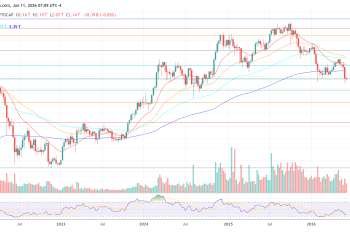
The daily chart shows XRP price testing the $1.4 support as of Thursday. Source: XRPUSDT on TradingView.com

While Bitcoin (BTC) and Ethereum (ETH) both saw 3% drops over the same period, XRP, the cryptocurrency linked to Ripple, was trading at $1.43 at the time of writing, showing a minor 0.7% retracement over the 24-hour period.

Featured image from OpenArt, chart from TradingView.com

İlgili Sorular

QWhat percentage of respondents in Ripple's survey believe that finance leaders must offer a digital asset solution to remain competitive?

A72% of respondents believe finance leaders must offer a digital asset solution to remain competitive.

QAccording to the survey, which type of firm stands out as the early adopters and innovators in using digital assets for treasury and payments?

AFintech firms stand out as the early adopters and innovators, being more likely than banks or corporates to use digital assets in treasury and payments and to roll out customer-facing crypto wallets.

QWhat is the top priority for 89% of institutions when evaluating tokenization partners?

A89% of institutions evaluating tokenization partners ranked digital asset storage and custody as a top priority.

QWhat are the two most important factors for institutions when choosing a digital asset infrastructure partner, as revealed by the survey?

AThe two most important factors are regulatory clarity (40%) and security and safekeeping (37%).

QWhat practical preference did 57% of institutions express regarding stablecoin collections or payments?

A57% of institutions said they want a partner that offers integrated custody, orchestration, and compliance so they can avoid holding stablecoin balances.

İlgili Okumalar

Will the Fed Definitely Raise Interest Rates in September? How Will Crypto and U.S. Stocks Withstand the Pressure?

The market's expectation for a September Fed rate hike surged dramatically in early August, jumping from under 50% to over 80% within a week. This shift followed a contentious July FOMC meeting, where a 9-3 vote to hold rates revealed growing dissent from hawkish members advocating for an immediate hike to combat persistent inflation. The primary catalyst for this repricing is rising oil prices, driven by renewed geopolitical tensions around the Strait of Hormuz, which threaten global supply. Energy costs directly influence inflation metrics, making the upcoming July CPI report (due August 12th) a critical data point. If it shows inflation reaccelerating, the probability of a September hike will solidify. For Bitcoin and crypto assets, this is typically bearish news. Bitcoin continues to behave as a high-beta, liquidity-sensitive risk asset. A rate hike raises the opportunity cost of holding non-yielding assets and could drive capital toward money markets, pressuring crypto prices in the short term. However, historical patterns suggest that if a hike is perceived as the end of a tightening cycle rather than the start, any negative price impact may be brief. U.S. stocks, particularly crypto-linked equities like Coinbase and growth-oriented tech stocks, are also vulnerable. Higher rates increase discount rates in valuation models, putting pressure on high-multiple companies. This coincides with a pivotal tech earnings season where investor focus has shifted from massive AI capital expenditure to tangible revenue and cash flow generation. Companies with negative cash flow and weak growth narratives could face heightened volatility if borrowing costs rise in September. In summary, a September Fed hike has evolved into a mainstream market scenario. Key factors to watch are oil prices, the July CPI report, and Fed communications, which will determine the final decision and its impact on volatile crypto and equity markets.

marsbit6 dk önce

Will the Fed Definitely Raise Interest Rates in September? How Will Crypto and U.S. Stocks Withstand the Pressure?

marsbit6 dk önce

A 'Overlooked' Market Event: Joint US-Japan-South Korea Intervention, Rare US Treasury Involvement, and Bessent's Quiet 'Market Rescue'?

Summary: The United States, Japan, and South Korea executed their largest coordinated foreign exchange intervention in nearly 30 years. The action targeted depreciation pressure on the Japanese yen and South Korean won. This move is seen as a significant effort by the US to stabilize the financial markets of its key allies and prevent the spillover of risks. Key details: * Japan reportedly intervened on July 30 using approximately 8.45 trillion yen (about $52.8 billion). South Korean authorities also intervened that day, selling dollars to support the won. * Notably, the US Treasury Department intervened directly in yen markets for the first time in roughly 30 years. The New York Fed, reportedly acting on behalf of the Treasury, sold euros to buy yen via Goldman Sachs and Morgan Stanley on July 31. Analysts view the use of the euro-yen pair as a way to alleviate yen pressure without adding selling pressure to the US dollar. * Prior to the action, the New York Fed conducted "rate checks" on both USD/JPY and EUR/JPY, a newer signaling tool that falls between verbal and physical intervention. The intervention is interpreted as going beyond traditional currency stabilization. Analysts, such as Michael Hartnett of Bank of America, suggest it resembles a "Price Keeping Operation" for the AI era. The core US objectives are perceived to be: 1. Preventing rapid yen depreciation from triggering a sharp rise in Japanese government bond yields. 2. Containing financial stress from spreading across Asian markets like South Korea and Japan. 3. Reducing the risk of disorderly capital flows impacting the US bond market. This coordinated action underscores the importance of Japan and South Korea as critical partners in the US semiconductor and AI supply chain. Stabilizing their financial markets is seen as vital to mitigating risks to the broader tech industry and the US market itself. The intervention coincides with market pressures, including the KOSDAQ index hitting a low since October 2022. While seen as a move to control volatility, some analysts caution it may not fundamentally reverse existing market trends.

marsbit10 dk önce

A 'Overlooked' Market Event: Joint US-Japan-South Korea Intervention, Rare US Treasury Involvement, and Bessent's Quiet 'Market Rescue'?

marsbit10 dk önce

Will the Federal Reserve Definitely Raise Interest Rates in September? How Will Cryptocurrencies and US Stocks Bear the Pressure?

In early August 2024, market expectations for a September Federal Reserve rate hike surged dramatically, from below 50% to over 80%, driven by renewed inflation concerns. This shift followed a contentious July FOMC meeting where a 9-3 vote to hold rates revealed a growing hawkish faction advocating for an immediate hike, citing prolonged above-target inflation. The key catalyst is escalating conflict near the Strait of Hormuz, which has pushed oil prices up approximately 20% in July, threatening to reignite inflation. The next critical data point is the July CPI report on August 12th; a hot reading could solidify hike expectations. For crypto assets, particularly Bitcoin, this represents near-term pressure. Bitcoin continues to exhibit high-beta, risk-on characteristics, making it sensitive to tightening liquidity and higher opportunity costs. However, historical precedent suggests that if a hike is perceived as the cycle's end rather than its start, the negative impact may be brief, with markets quickly pivoting to anticipate future rate cuts. U.S. stocks, especially crypto-linked equities like Coinbase and high-valuation tech stocks, face amplified volatility. Higher rates increase discount rates in valuation models, pressuring growth stocks. This coincides with a pivotal tech earnings season where investor focus has shifted from massive AI capital expenditures to demonstrable revenue and cash flow generation. Companies with negative cash flows and weak growth narratives could see severe pressure if a September hike materializes, as financing costs would rise. Key indicators to watch include oil prices, upcoming inflation data, and Fed commentary at events like the Jackson Hole symposium.

Odaily星球日报10 dk önce

Will the Federal Reserve Definitely Raise Interest Rates in September? How Will Cryptocurrencies and US Stocks Bear the Pressure?

Odaily星球日报10 dk önce

İşlemler

Spot
活动图片