Four out of five candidates supported by advertising funded by the pro-cryptocurrency political action committee (PAC) Fairshake won their primaries or otherwise advanced on Tuesday. This could indicate the industry's influence on the 2026 midterm elections.
On Tuesday, Democratic and Republican candidates supported by advertising funded by the Fairshake-affiliated PACs Protect Progress and Defend American Jobs won victories in three U.S. states. In total, these PACs spent approximately $3.6 million on House and Senate races in Alaska, Florida, and Wyoming.
Democrat Lois Frankel was re-elected in Florida's 23rd congressional district after Protect Progress spent over $150,000 on advertising in her support. Defend American Jobs also spent a total of $1.5 million on advertising supporting Republican Nick Begich in Alaska's at-large congressional district, Republican candidate Sydney Gruters in Florida's 16th congressional district, and Representative Harriet Hageman in the U.S. Senate race for Wyoming. Gruters and Hageman won their primaries, and Begich is expected to advance to the next round in Alaska.
All four candidates are likely to continue competing with rivals in the November 2026 midterm elections. A Democrat in Florida's 24th district also won, despite over $2 million worth of negative advertising funded by Protect Progress. Oliver Gilbert defeated opponents Shevrin Jones and Kendrick Meek, receiving 34.4% of the vote, in a race that raised questions about the potential influence of the crypto industry.
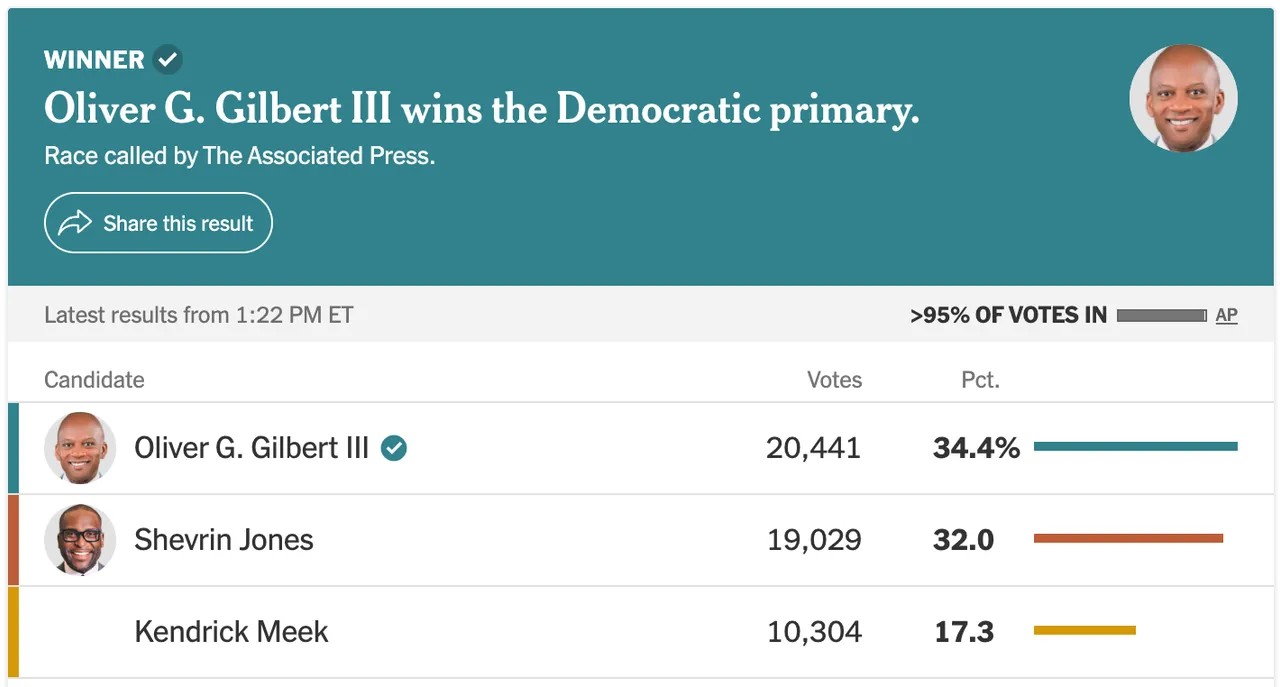
Results of the Democratic primary in Florida's 24th congressional district. Source: The New York Times
According to an August 12 report by the Miami Herald, Gilbert stated that '[Donald] Trump's buddies — the tech billionaires' were behind 'crypto crooks trying to buy the Democratic primary' through Protect Progress advertising. The publication reported that the ads used fake Miami Herald headlines that misrepresented Gilbert's policy positions, although a PAC spokesperson stated that 'the facts underlying our advertising are accurate.'
The Fairshake PAC, which reported having a war chest of $193 million in January, funded over $130 million in advertising in support of candidates it considered pro-cryptocurrency during the 2024 election cycle. The committee also ran ads against many candidates who spoke negatively about the industry or voted against its interests. By June, the committee had spent over $82 million on upcoming elections ahead of the 2026 midterms.
Related content: UK authorities continue investigation into Nigel Farage's cryptocurrency 'gifts' after by-election win
Gilbert did not mention the crypto industry or the advertising in his victory speech on Tuesday night. Fairshake spokesperson Jeff Vetter stated that after the primaries in three states and the victories of other candidates in 2026, the PAC is 'just getting started building the biggest pro-crypto Congress in history.'
Will the Composition of the Next Congress Affect the Crypto Market Structure Bill?
Both chambers of the U.S. Congress — the Senate and the House of Representatives — are on recess until September. The Senate is then expected to consider a cloture motion on the Digital Asset Regulatory Clarity Act (CLARITY Act), which is meant to establish comprehensive rules for digital assets. Although the House passed the bill with bipartisan support in July by a vote of 294–134, many Senate Democrats are pushing for stricter ethical rules related to the Trump family's cryptocurrency investments.
Following the 2026 elections, the U.S. Congress could shift from a Republican majority to a Democratic one depending on the outcome of key races that may be influenced by PACs like Fairshake. Lawmakers elected in November could accelerate or block legislative initiatives affecting the crypto industry, including the CLARITY Act, if the current session does not address the bill before 2027.
Magazine: 200,000 fake AI 'victims' used to scam internet scammers
end-content