In today's capital markets, the most popular chemical elements, besides silicon and copper, are probably indium, or more precisely, a compound named indium phosphide.
Indium phosphide sits at the far upstream of the optical module supply chain. High-speed optical modules and CPO (Co-Packaged Optics) require optical chips, and over half of these optical chips are made from indium phosphide.
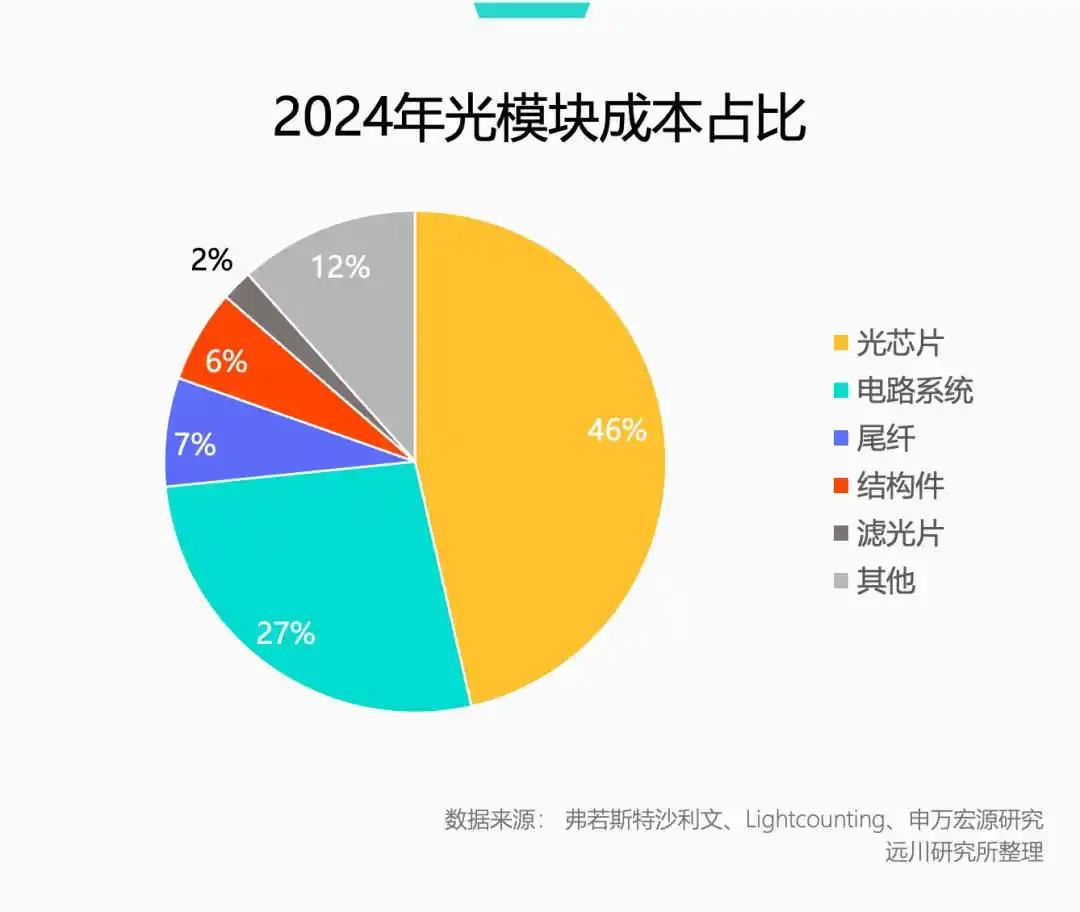
The AI data center construction boom has driven both volume and price increases for high-speed optical modules. The domino effect has reached the very upstream, propelling indium, a chemical element obscure enough to escape the nine-year compulsory education curriculum, into the spotlight. The secondary market has been rallying around it from last year to this, with the theme still being "supply falling short of demand."
The CEO of optical chip giant Lumentum stated at an industry summit earlier this month that the shortage of indium phosphide is more severe than that of memory chips. "I don't believe we and Coherent's capacity can meet the demand from Nvidia and other customers[1]." The two companies hold over an 80% share in high-end indium phosphide optical chips.
On the other hand, Nokia, a major client of Lumentum, has been forced to step in to secure capacity itself. Last year, it acquired Infinera and took over its indium phosphide wafer fab in California. Recently, it added another acquisition: NXP's factory in Arizona, also aiming to convert it into an indium phosphide optical chip production line.
Complaints from downstream players are rising, shifting the pressure onto indium phosphide wafer manufacturers, with monopolistic suppliers Sumitomo (Japan) and AXT (USA) becoming the prime targets.
But AXT refuses to shoulder the blame. During recent earnings calls, it has repeatedly emphasized that the real culprit behind the indium phosphide shortage is actually someone else.
Natural Endowment and Export Controls
During Trump's visit to China in May, Coherent's CEO booked a seat on the accompanying Airbus even earlier than Jensen Huang.

Coherent CEO Jim Anderson on the list accompanying Trump's visit to China
Coherent is one of the world's largest suppliers of indium phosphide optical chips. Nvidia's CPO uses Coherent's indium phosphide lasers. To ensure supply, Nvidia not only made a strategic investment of $2 billion in Coherent, but Jensen Huang also personally attended the topping-out ceremony for Coherent's new factory in June, encouraging his 'bro' to push harder on expansion.
This visit by Coherent to China was ostensibly to "promote Sino-US cooperation in optical chips," but the real purpose is an open secret within and outside the industry: to secure supply.
The production of indium phosphide wafers can be broadly divided into three steps: smelting of primary indium, purification of indium, and manufacturing of indium phosphide wafers. Coincidentally, all three steps are constrained by China to varying degrees.
First, the smelting of primary indium.
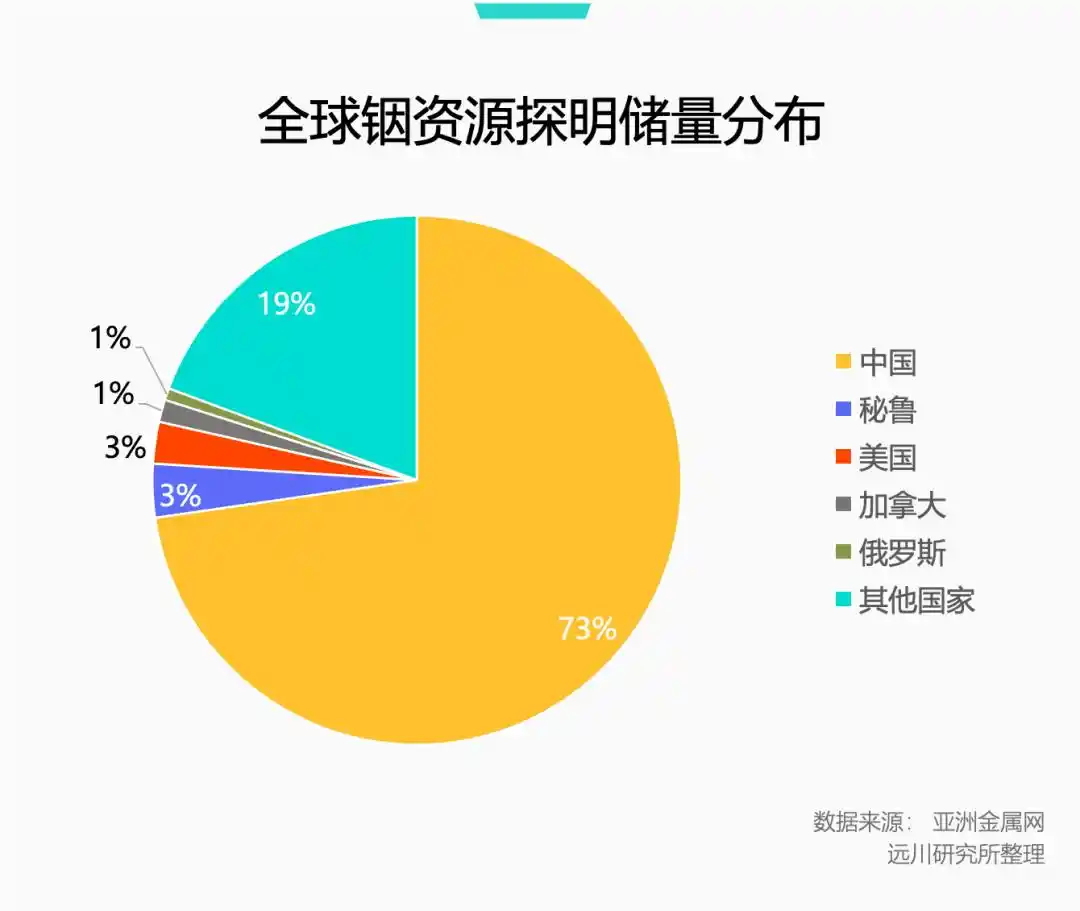
China's greatest advantage lies in its vast territory and abundant resources. Global indium reserves are a mere 50,000 tons, with only half being extractable. Among the world's proven indium reserves, China accounts for over 70%[2].
Another advantage is having the world's largest scale of metal smelting.
Because indium is dispersed in the earth's crust (no rich ore deposits have ever been discovered) and cannot be mined independently, the vast majority is produced as a by-product during the smelting of zinc or tin. Therefore, its production capacity depends more on the supply and demand of zinc/tin rather than following the price fluctuations of indium itself.
It's like the soybean pulp left over from making tofu—no one would build a tofu factory just to get the pulp.
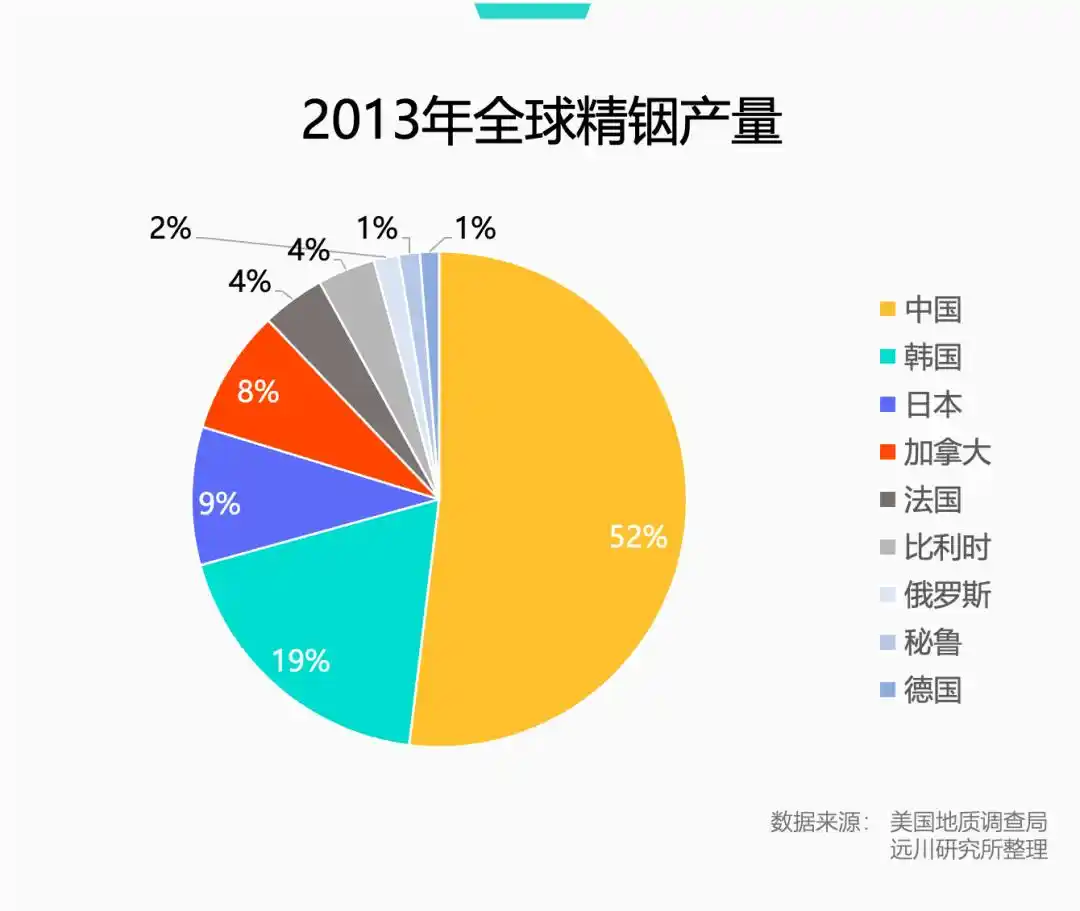
But China produces the most "tofu," so it also has more leftover "pulp" than others. China accounts for over 50% of global primary indium production. At its peak, 80% of the world's annual production of 400 tons of indium was exported from Yunnan, China[3].
Next is the purification of indium.
Primary indium (95%-99% purity) is purified to refined indium (4N-5N grade, 99.99%-99.999% purity), then further purified to high-purity indium (6N grade, 99.9999% purity) before it can be used to manufacture indium phosphide optical chips.
China dominates the global production of refined indium, accounting for 70%-80%. For 6N and above high-purity indium, Japanese manufacturers still lead, with Dowa and JX Metals holding the majority of the market, but the primary indium they use for purification almost entirely comes from China.
Finally, for indium phosphide wafers, the situation is more unique.
This was originally China's weakest link, but there happened to be a willing "naturalized" player: Beijing Tongmei.
Beijing Tongmei is the operating entity in China of the American company AXT, currently the world's second-largest producer of indium phosphide wafers (first is Japan's Sumitomo). To be closer to the source of primary indium and save on shipping costs, it relocated all its indium phosphide wafer production lines to China years ago.
Beijing Tongmei gradually took over all of AXT's physical business operations, including indium phosphide wafer production, while its North American parent company handles only capital operations. This means that, theoretically, all indium phosphide wafers produced by AXT are made in China. Even shipping them back to the US homeland requires following Chinese export procedures.
Across these three steps, whether due to natural endowment or subsequent developments, China has grasped the initiative in the indium industry chain. But the more potent factor is the export control measures.
In February of last year, China included indium phosphide and related products in its export control list. The first to be impacted was Beijing Tongmei (AXT). Although officially it obtained an export license in June, the "quantity was less than imagined," leading to lower-than-expected revenue in Q4 of that year[5].
The long-term uncertainty brought by export controls further shackles the already fragile supply chain. AXT stated in its Q2 earnings call that even with strong demand and sufficient capacity, its ability to ship to customers outside China depends on the licensing decisions of the Chinese government[5].
And that's not the end.
Earlier this year, China extended controls further upstream to indium itself, capping exportable quantities at 30% of total production and tightening approval processes for 6N and above high-purity indium exports[4], effectively putting a knife to the main artery of indium phosphide production.
Japan's Sumitomo and JX Metals became prime targets. Over 90% of their high-purity indium raw materials are purchased from China. Reports suggest that due to supply constraints, their annual capacity has dropped from 180k wafers to less than 100k, with lead times extending from under half a year to 18 months.
Given this situation, it's understandable why Coherent's CEO was so eager to come to China to establish a temporary friendship and plead for "mercy on the supply."
But what determines whether Coherent and others can ship products isn't just the Chinese government, but also the Chinese companies along the supply chain.
Up to the Task?
Undoubtedly, the dual pressures of supply shortage and tightening controls have made the Chinese indium phosphide industry chain the biggest beneficiary.
Objectively speaking, in the chain of "primary indium -> high-purity indium -> indium phosphide wafer," where China truly holds the high ground is still the most upstream primary indium.
For high-purity indium, Chinese manufacturers mainly have a production advantage in mid-to-low-end products below 6N grade. For high-end 6N/7N grade products used in optical chips, Japanese companies like DOWA and JX Metal have long held dominance. Although several Chinese companies have made breakthroughs in recent years (e.g., Zhuzhou Keneng New Materials), the path to customer validation is long.
The situation for the Chinese indium phosphide wafer team (excluding Beijing Tongmei) is similar: strong in mid-to-low end, weak in high-end.
Domestic production is highest for low-end 2-inch wafers. For mid-range 3/4-inch wafers, they can already compete with overseas rivals and have captured most of the domestic market. However, for the most advanced 6-inch wafers, the domestic production rate is less than 5%. Across all sizes, the global market share is still under 10%[4].
The immediate benefit brought by the current export controls is the transfer and growth of orders.
With overseas giants facing difficulties sourcing raw materials from China and supply uncertainty soaring, downstream customers in urgent need of supply naturally lean more towards more stable Chinese manufacturers, especially domestic Chinese clients who are "closer to the water."
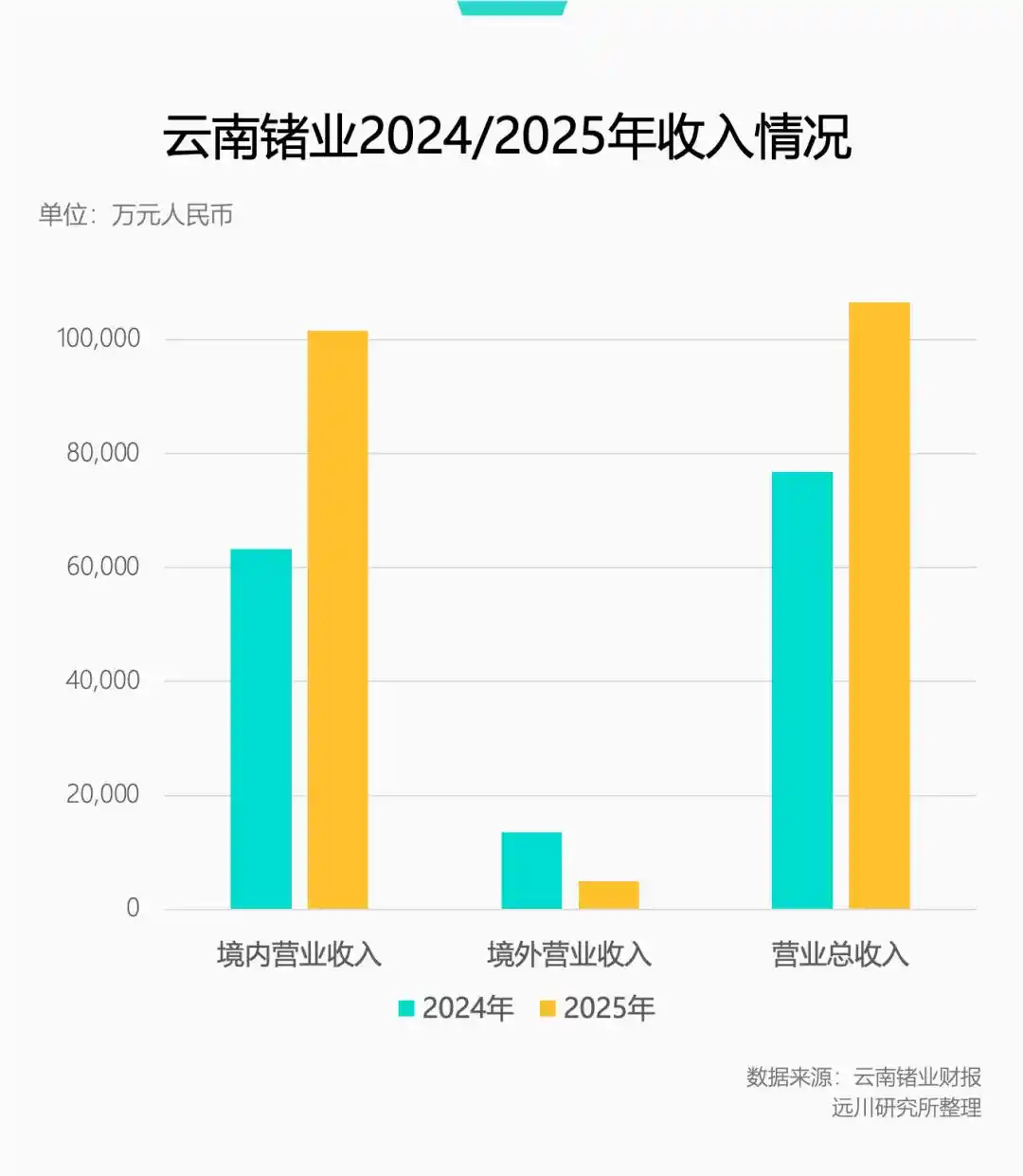
Yunnan Lincang Xinyuan Germanium Industry (Yunnan Germanium) is a leading domestic indium phosphide wafer producer and currently the only domestic manufacturer capable of mass-producing 6-inch indium phosphide wafers. In 2025, its domestic operating income surged by 60.77% year-on-year (reaching approximately 1.016 billion RMB). According to its performance forecast for the first half of this year, its non-GAAP net profit skyrocketed over 500%.
Its subsidiary, Yunnan Xinyao, signed an indium phosphide wafer supply agreement with a client last month, with a total contract value as high as 570 million to 855 million RMB (tax inclusive), exceeding Yunnan Germanium's entire revenue for 2025.
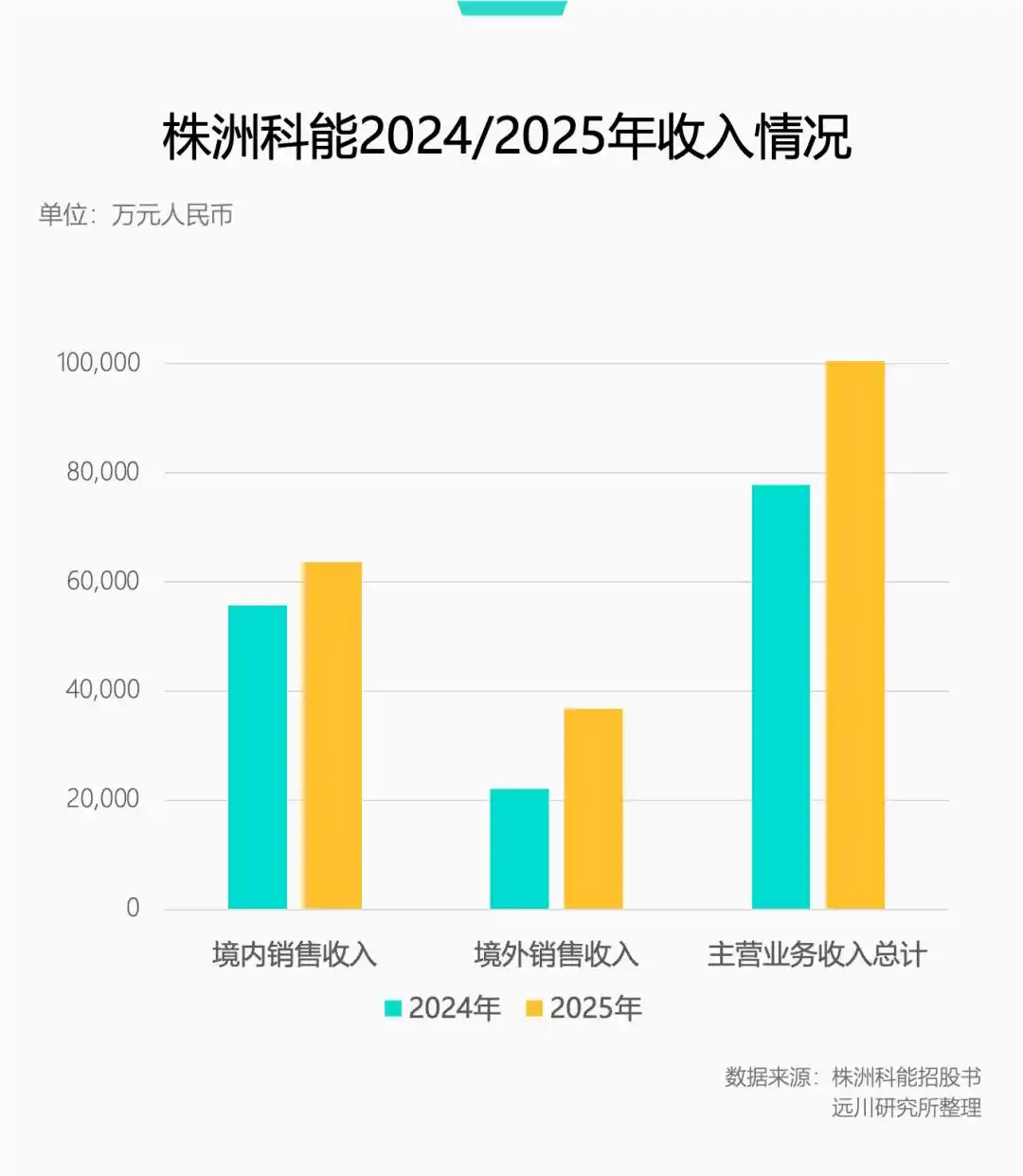
Players further upstream in high-purity indium are not far behind. Zhuzhou Keneng New Materials saw its domestic order revenue grow over 60% in 2025, with domestic revenue exceeding 1 billion RMB for the first time. Meanwhile, its overseas revenue soared from less than 30 million RMB in 2023 to nearly 200 million RMB in 2025.
Access to the high-end product market is another benefit for domestic manufacturers.
In Yunnan Germanium's indium phosphide wafer capacity expansion and production plan for this year, 6-inch products are explicitly included, indicating that its large-size products have progressed from the R&D stage to the validation sprint and delivery phase.
Zhuzhou Keneng not only stably supplies 6N/7N grade and above high-purity indium to foreign indium phosphide giants like WaferTech (example name), but also ultra-high-purity 8N grade, representing the industry's top level, has broken the monopoly of the US, Japan, and Europe and has achieved actual sales.
Thus, only two problems remain for the domestic indium phosphide supply chain: validation and capacity.
The further upstream one goes in the chip industry, the stricter customer validation becomes. The validation cycle for indium phosphide wafers typically takes several months to a year; for high-purity indium, it's even longer, usually 1-5 years. Before establishing cooperation, downstream customers conduct multiple, small-batch product validations.
Currently, the companies making breakthroughs in the high-end segment are not limited to Zhuzhou Keneng and Yunnan Germanium, but a significant portion are stuck in the validation phase.
For example, Yuguang Gold and Lead has achieved stable mass production of 7N high-purity indium and is rumored to have sent samples to leading companies like Huawei and Accelink for validation. According to its latest response on the investor interaction platform, it is "in the sample delivery and certification stage with downstream customers, awaiting feedback."
According to institutional estimates, global demand for indium phosphide wafers will reach 2.6 to 3 million pieces in 2026, but global effective capacity is only 600k to 700k pieces, representing a gap rate as high as 70%[7]. For high-purity indium, industry media data suggests a gap of about 50 tons in the optical communications sector for 2026[8].
With the accelerated mass production of Nvidia's CPO and the rapid expansion of high-speed optical modules, this gap is likely to widen further, becoming a decisive battlefield between Chinese manufacturers and overseas giants.
As of the end of 2025, Yunnan Germanium's indium phosphide wafer capacity was 150k pieces/year, with plans to increase to 180k pieces in 2026. In contrast, Japan's Sumitomo has a monthly capacity of 39k pieces, estimated at over 400k pieces annually, indicating the gap remains significant.
Yunnan Germanium's "High-Quality Indium Phosphide Single Crystal Wafer Construction Project" reportedly will add 300k pieces/year of capacity. Japanese competitors are also massively increasing capacity. It's a race to see whose plans materialize faster.
As of the end of 2025, Zhuzhou Keneng's annual capacity for "5N and above" (including 6N/7N grade) high-purity indium was 150 tons/year. Its new IPO-funded project, "Annual Production of 500 Tons of Semiconductor High-Purity Materials and Recycling Project," will add 60 tons/year of high-purity indium capacity. Dowa and other Japanese giants have not announced their expansion plans.
A report from US investment firm Rosenblatt Securities in May this year revealed that Nvidia has urged suppliers to increase indium phosphide laser capacity twentyfold by 2030 but only received guarantees for a twelvefold increase[9].
How to bridge the remaining eightfold gap? No more words needed, just buckle down and work hard.
Epilogue
In 2011, domestic financial media published a story where the trading price of metallic indium "surged" from 4.6 RMB per gram to 6.2 RMB within a month.
This was unprecedented in the domestic metallic indium market. For the past decade, Yunnan had exported 80% of the world's metallic indium, but domestic trading prices remained as stable as an EKG, with the Japanese being the puppeteers behind the scenes.
Japan entered the indium industry in the 1980s but was hampered by its resource-poor land. While China held most of the indium reserves, its production capacity was fragmented, with small-scale manufacturers having weak bargaining power. Japanese companies seized this opportunity.
They purchased indium at low prices across China, processed it into components in Japan, and sold it back to Chinese companies at prices dozens of times higher[3].
This is an early scar on the indium industry chain and another wake-up call for Chinese industrial manufacturing:
Downstream players always possess greater pricing power and enjoy more substantial profit margins. Controlling upstream resources doesn't mean one can rest easy; instead, it should serve as an advantage to fully develop processing and manufacturing capabilities.
In 2011, the Pan-Asia Nonferrous Metals Exchange in Yunnan was established. By consolidating supply, centralizing pricing, and allowing institutional and individual investors to participate in trading, it brought bargaining power back into the hands of Chinese manufacturers.
This marked the starting point for China's indium industry to reclaim its voice. Today's optical module whirlwind is another beginning.
References
[1] Lumentum CEO warns of impending bottleneck on critical material used for silicon photonics — fab and material shortfall already lags 30% below customer needs as co-packaged optics demand skyrockets, tom's HARDWARE
[2] Distribution and Production Situation of Indium Resources, Asian Metal
[3] Who Sets the Indium Price? 21st Century Business Herald
[4] Significant Supply-Demand Mismatch for Indium Phosphide, Emphasizing Domestic Substitution Opportunities, Guosheng Securities
[5] AXT's Premium Multiple Prices an InP Recovery Under China's Export Control Cloud, kavout
[6] Yunnan Germanium, Zhuzhou Keneng financial reports
[7] Gap Exceeds 70%! Indium Phosphide Concept Stocks Surge Again, Multiple Listed Companies Issue Urgent Reminders, 21st Century Business Herald
[8] China's CPO Industry: Shortage Levels and Chokepoint Grades of 9 Key Materials, China Powder Network
[9] Stocks In AI Bottleneck Soar 1,000%. Now Nvidia Is Demanding 20X More Supply, 247wallst
This article is from the WeChat public account "Farstream Technology Review" (ID: kechuangych), author: He Lüheng