One year of the GENIUS Act: Progress, gaps, and what comes next

ambcrypto2026-07-19 tarihinde yayınlandı2026-07-19 tarihinde güncellendi

Özet

One year after the GENIUS Act became law, key implementation rules for stablecoins remain unfinished. Regulators missed a July 18 deadline to finalize core standards covering issuer reserves, capital, liquidity, custody, and risk management. Agencies like the OCC, Federal Reserve, and FDIC are still drafting these rules and gathering public feedback on proposals. This regulatory uncertainty complicates planning for issuers like Circle and Paxos, even as the stablecoin market has grown to over $310 billion. Despite the delays, regulators aim to enforce the Act by January 18, 2027. Institutional adoption is gaining momentum, with firms like BlackRock and JPMorgan launching stablecoin-related products. Lawmakers, including Senator Cynthia Lummis, stress the urgency of completing the framework and passing further legislation like the CLARITY Act to solidify U.S. leadership in digital assets. Finalizing the remaining rules will be crucial for determining the pace of broad institutional adoption of regulated stablecoins in the United States.

A year after President Donald Trump signed the GENIUS Act into law, regulators still have not completed its implementation. However, regulators have yet to implement it. Agencies were required to finalize implementing rulemakings no later than the 18th of July.

As a result, the OCC, Federal Reserve, FDIC, Treasury Department, and other agencies continue drafting key regulations. Those rules cover issuer reserves, capital requirements, liquidity, custody, risk management, and state-level regulatory designations.


Source: CHAPMAN

Meanwhile, agencies continue gathering public feedback. Customer identification proposals remain open until the 21st of August. The FDIC will close its anti-money laundering consultation on the 4th of August.

Those consultations show regulators are still refining compliance standards. Still, agencies still plan to enforce the GENIUS Act by the 18th of January, 2027.

Until they complete the remaining rules, stablecoin issuers and financial institutions must prepare for a framework that still lacks several implementation details.

Key rules remain unfinished

That regulatory uncertainty continues because agencies have yet to finalize several core operating standards. Although federal agencies proposed rules throughout 2026, they failed to complete them by the 18th of July.

As a result, reserve eligibility, liquidity requirements, custody standards, and risk management frameworks remain under review. Meanwhile, issuers continue operating under statutory baselines and interim regulatory frameworks.

That approach has supported market activity, helping the stablecoin sector expand to roughly over $310 billion. Even so, unresolved liquidity and custody protocols still complicate capital planning, redemption processes, and operational resilience.
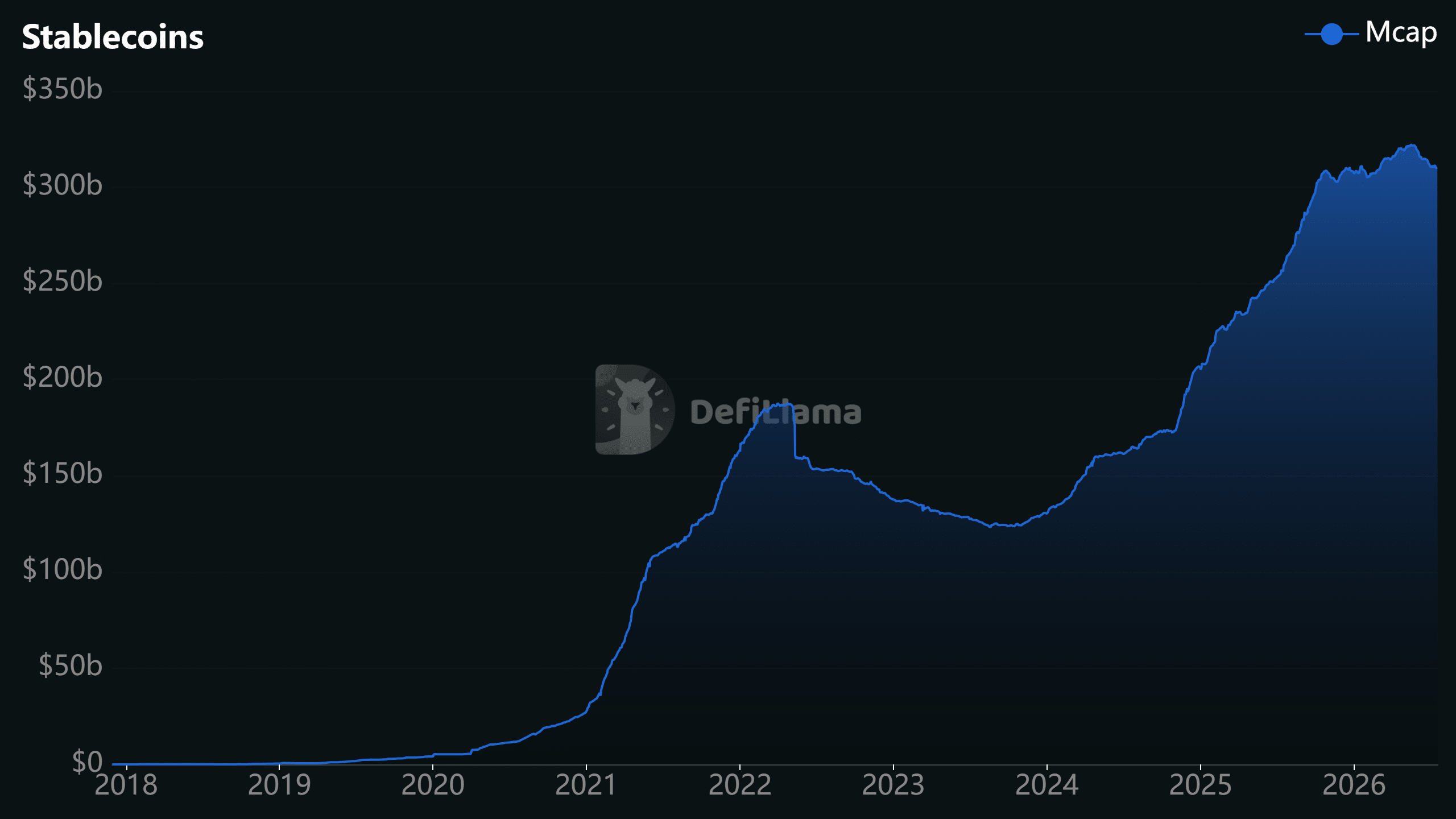
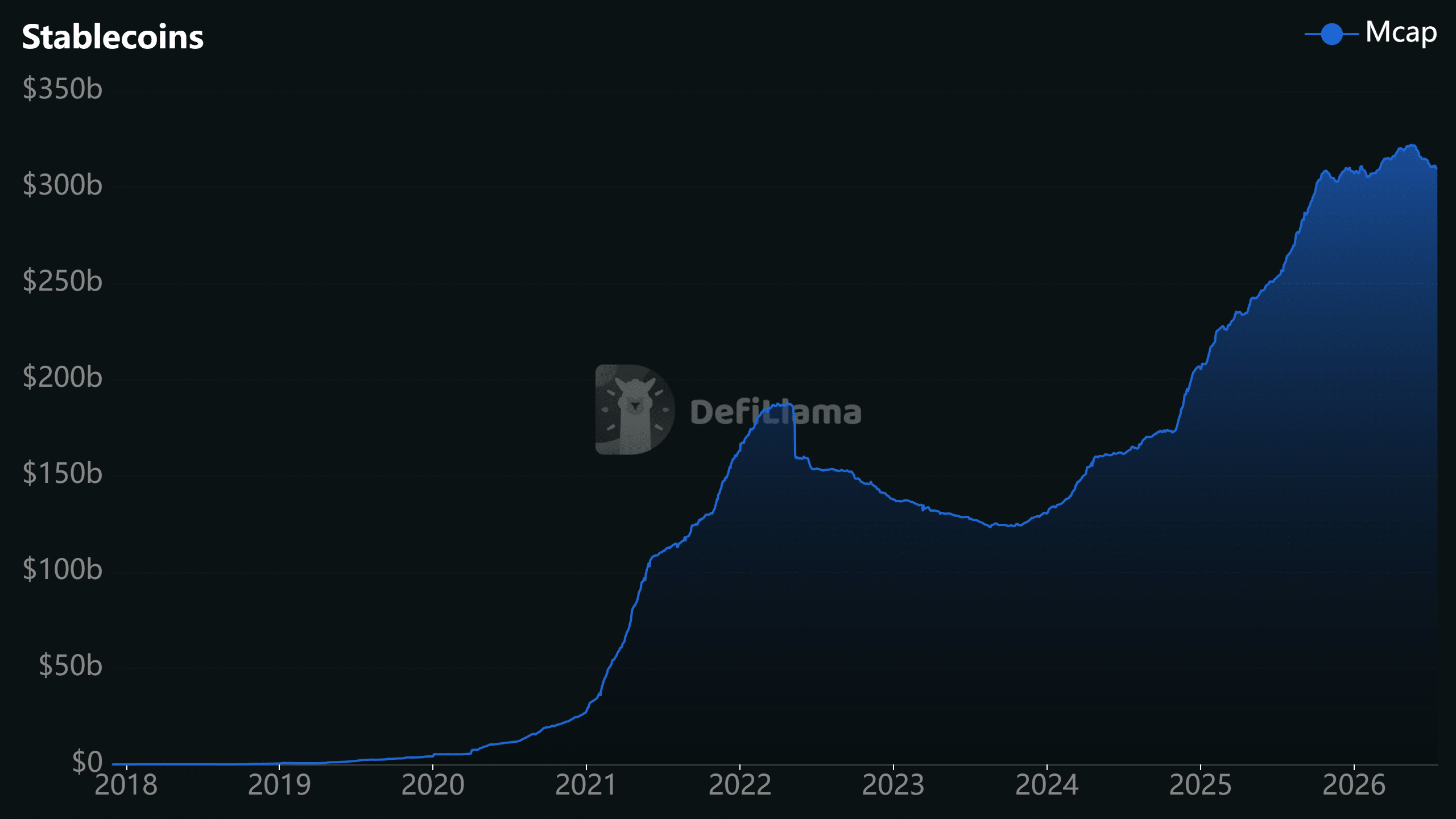
Source: DeFiLlama

Therefore, until these regulatory standards are finalized, issuers like Circle and Paxos will be forced to navigate innovation against evolving compliance regulations. This is as the market waits for a fully defined federal regulatory framework.

Institutional adoption gains momentum

Banks are still assessing their options for stablecoin strategies as they wait for the regulatory body to issue its final rulemaking. Meanwhile, Congress is running out of time with less than six months until the GENIUS Act goes into effect on January 18th, 2027.

Senator Cynthia Lummis echoed that urgency, calling the GENIUS Act “an important first step.” She also urged her fellow lawmakers to support the CLARITY Act, which would further solidify U.S. leadership in the development of digital assets.
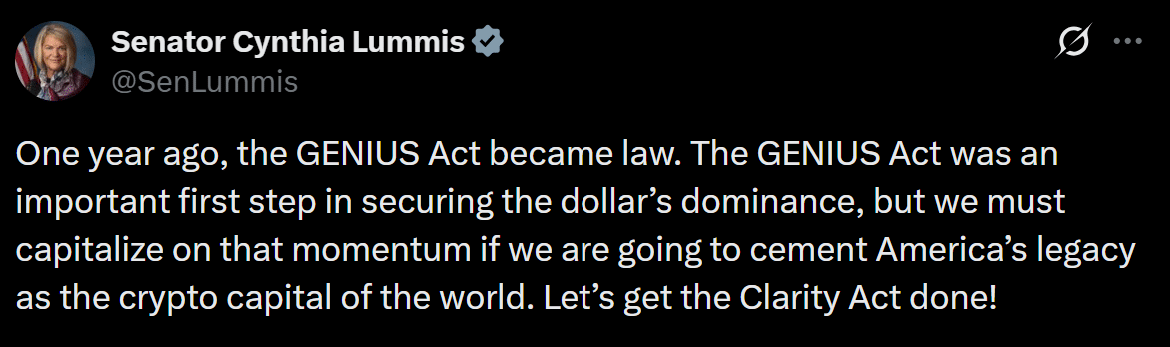
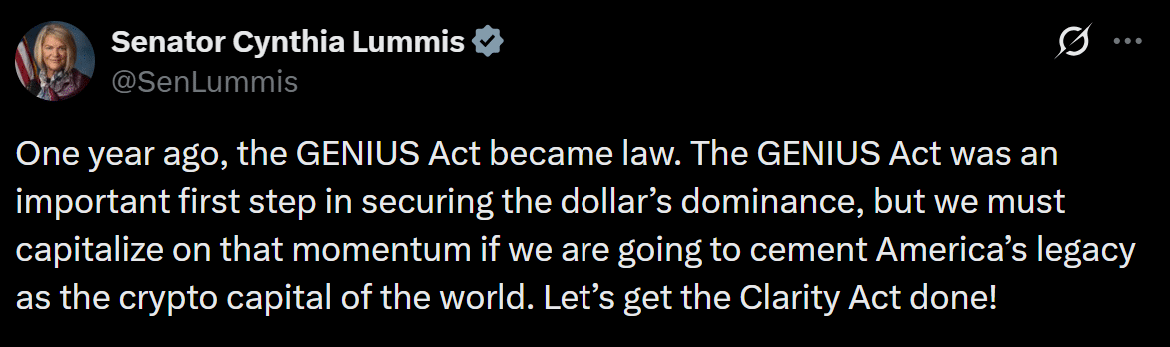
Source: X

Even before regulators finalize the remaining rules, the GENIUS Act has already encouraged institutional participation. Since lawmakers enacted the framework, institutions such as BlackRock and JPMorgan have launched or filed stablecoin reserve funds.

Meanwhile, Visa introduced a platform serving 15,000 institutions, while the first bank-issued on-chain dollar entered the market. Completing the remaining rules will determine how quickly regulated stablecoins achieve broad institutional adoption in the United States.


Final Summary

  • Stablecoins remain in regulatory limbo until agencies finalize the GENIUS Act’s remaining implementation rules.
  • Stablecoins could gain broader institutional adoption as the GENIUS Act and CLARITY Act advance regulatory certainty.

Trend Kriptolar

İlgili Sorular

QWhat is the current status of the GENIUS Act implementation one year after it was signed into law?

AOne year after being signed into law, the GENIUS Act's implementation is incomplete. Regulators have missed the July 18th deadline to finalize key implementing rules, leaving several core operating standards under review.

QWhich major US financial agencies are mentioned as still drafting regulations for the GENIUS Act?

AThe article mentions that the OCC, Federal Reserve, FDIC, Treasury Department, and other agencies are continuing to draft key regulations covering areas like issuer reserves, capital requirements, liquidity, custody, and risk management.

QWhat are some specific regulatory areas that remain unfinished under the GENIUS Act framework?

AKey unfinished regulatory areas include final rules for reserve eligibility, liquidity requirements, custody standards, and risk management frameworks.

QDespite the regulatory uncertainty, what positive market development is noted regarding stablecoins?

ADespite the regulatory uncertainty, the stablecoin sector has expanded to roughly over $310 billion, and the GENIUS Act has encouraged institutional participation from firms like BlackRock and JPMorgan.

QWhat upcoming deadline and related legislative act does Senator Cynthia Lummis highlight?

ASenator Cynthia Lummis highlights the urgency with less than six months until the GENIUS Act goes into effect on January 18, 2027, and urges support for the CLARITY Act to further solidify U.S. leadership in digital assets.

İlgili Okumalar

İşlemler

Spot

Popüler Makaleler

GENIUS Nasıl Satın Alınır

HTX.com’a hoş geldiniz! Genius (GENIUS) satın alma işlemlerini basit ve kullanışlı bir hâle getirdik. Adım adım açıkladığımız rehberimizi takip ederek kripto yolculuğunuza başlayın. 1. Adım: HTX Hesabınızı OluşturunHTX'te ücretsiz bir hesap açmak için e-posta adresinizi veya telefon numaranızı kullanın. Sorunsuzca kaydolun ve tüm özelliklerin kilidini açın. Hesabımı Aç2. Adım: Kripto Satın Al Bölümüne Gidin ve Ödeme Yönteminizi SeçinKredi/Banka Kartı: Visa veya Mastercard'ınızı kullanarak anında Genius (GENIUS) satın alın.Bakiye: Sorunsuz bir şekilde işlem yapmak için HTX hesap bakiyenizdeki fonları kullanın.Üçüncü Taraflar: Kullanımı kolaylaştırmak için Google Pay ve Apple Pay gibi popüler ödeme yöntemlerini ekledik.P2P: HTX'teki diğer kullanıcılarla doğrudan işlem yapın.Borsa Dışı (OTC): Yatırımcılar için kişiye özel hizmetler ve rekabetçi döviz kurları sunuyoruz.3. Adım: Genius (GENIUS) Varlıklarınızı SaklayınGenius (GENIUS) satın aldıktan sonra HTX hesabınızda saklayın. Alternatif olarak, blok zinciri transferi yoluyla başka bir yere gönderebilir veya diğer kripto para birimlerini takas etmek için kullanabilirsiniz.4. Adım: Genius (GENIUS) Varlıklarınızla İşlem YapınHTX'in spot piyasasında Genius (GENIUS) ile kolayca işlemler yapın.Hesabınıza erişin, işlem çiftinizi seçin, işlemlerinizi gerçekleştirin ve gerçek zamanlı olarak izleyin. Hem yeni başlayanlar hem de deneyimli yatırımcılar için kullanıcı dostu bir deneyim sunuyoruz.

413 Toplam GörüntülenmeYayınlanma 2026.04.29Güncellenme 2026.06.02

GENIUS Nasıl Satın Alınır

Tartışmalar

HTX Topluluğuna hoş geldiniz. Burada, en son platform gelişmeleri hakkında bilgi sahibi olabilir ve profesyonel piyasa görüşlerine erişebilirsiniz. Kullanıcıların GENIUS (GENIUS) fiyatı hakkındaki görüşleri aşağıda sunulmaktadır.

活动图片