New York Stock Exchange Completely Overhauls Traditional Closing Model

marsbit2026-01-29 tarihinde yayınlandı2026-01-29 tarihinde güncellendi

Özet

NYSE plans to build a blockchain-based, 24/7 trading platform for tokenized securities, moving beyond superficial tokenization to fundamentally reshape market structure. Unlike previous attempts that created parallel synthetic products, this initiative aims to transform core trading and settlement processes from within the regulated exchange. The key innovation is combining continuous trading with on-chain settlement, reducing the time gaps where risk exists but trading halts. This approach minimizes the capital inefficiencies and delays inherent in traditional batch-processing systems that rely on fixed hours and delayed settlements. The shift pressures market makers, brokers, and clearing members to manage risk and liquidity in real-time, as faster settlement reduces netting opportunities and compresses securities lending timelines. Second-order effects include changes to capital reuse, volatility dispersion, and the role of derivatives and ETFs for after-hours price discovery. By eliminating time as a risk buffer, the model exposes systemic weaknesses earlier, forcing failures to surface during trading rather than being deferred. This structural change, while not immediately visible to retail users, could make markets more efficient but also more fragile under stress, challenging decades-old risk management practices.

Written by: Vaidik Mandloi

Compiled by: Block Unicorn

Preface

Last week, the New York Stock Exchange (NYSE) announced plans to build a blockchain-based, tokenized securities trading platform that operates around the clock (24/7). At first glance, this might seem like just another "traditional finance adopts blockchain" headline. For those who have been following the cryptocurrency space over the past few years, tokenized stocks, on-chain settlement, and stablecoin financing are already familiar concepts.

However, this announcement is not about testing new technology; it is aimed at challenging market areas that have seen little change.

Stock markets still operate with fixed trading hours and delayed settlement mechanisms, primarily because this system has effectively managed risk for decades. Trading occurs within a short time window, with clearing and settlement happening afterward. Significant amounts of capital lie idle between trading and settlement to absorb counterparty risk. While this system is stable, it is also slow, costly, and increasingly disconnected from the way global capital flows.

The NYSE's proposed solution directly challenges this structure by reimagining how markets handle time. A trading venue that never closes, settlement times closer to execution, and fewer periods where prices stop updating but risk exposure remains—all point in the same direction.

Unlike cryptocurrency markets built under different constraints, traditional stock markets can halt trading or delay settlement. In contrast, cryptocurrency markets operate continuously—pricing, execution, and settlement happen in real-time, reflecting risk instantly rather than delaying it for later processing. While this design has its own shortcomings, it eliminates the inefficiencies inherent in the time-based systems that traditional markets still rely on.

The NYSE is now attempting to integrate elements of continuous trading into a regulated environment while preserving the safeguards that maintain stock market stability. This article will delve into how the NYSE actually operates and why this is more than just a catchy headline.

Why This Isn't "Just Another Tokenization Announcement"

The focus of the NYSE announcement is not tokenization itself. Tokenized stocks have existed in various forms for years, but most have failed. What makes this announcement different is who is initiating the tokenization and which layer they are targeting.

Past attempts at tokenized stocks aimed to replicate stocks outside the core market, such as FTX's tokenized stocks, Securitize's tokenized equity products, and synthetic equity products built on protocols like Mirror and Synthetix. These products traded in different market venues, at different times, and relied on price data from markets that often closed. As a result, they struggled to gain sustained liquidity and were mostly used as niche access products rather than core market instruments.
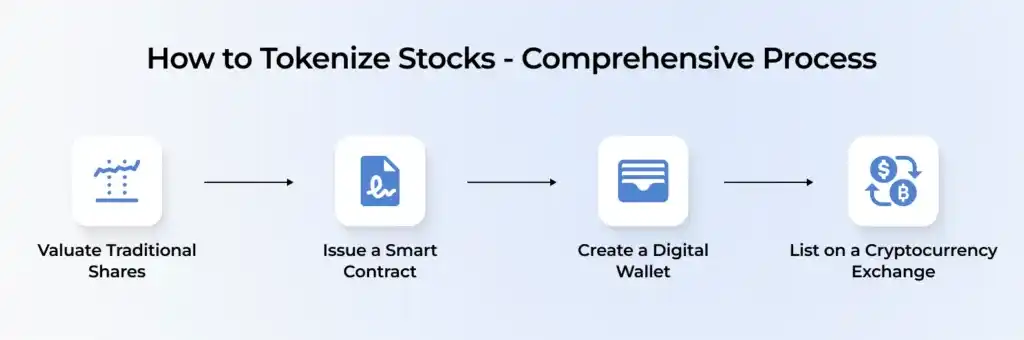
These early attempts all occurred outside the primary stock market. They did not change how stocks were issued, how trades were settled, or how risk was managed within the actual pricing system.

However, the NYSE is addressing this issue from within. Instead of launching parallel products, it is adjusting how trading and settlement occur within the regulated exchange. The securities themselves remain unchanged, but how they are traded and settled will evolve over time.

The most critical part of this announcement is the decision to combine continuous trading with on-chain settlement. Either of these changes could have been implemented separately. The NYSE could have extended trading hours without introducing blockchain, or it could have experimented with token issuance without affecting trading hours. However, the NYSE chose to bundle the two together. This indicates that the focus is not on trading convenience or user experience but on how risk exposure and capital operate when markets run continuously.

A significant portion of today's market infrastructure is built to address what is known as the "time gap." When markets close, trading stops, but positions remain open. Even though prices are no longer moving, risk and exposure persist. To manage these gaps, brokers and settlement institutions require collateral and safety buffers, which remain locked until settlement is completed. While this process is stable, its efficiency diminishes as markets trade faster, global participation increases, and more trading activity occurs outside local trading hours.

Running markets continuously and speeding up settlement can shorten this gap. Risk is addressed as it arises, rather than being deferred overnight or across days. This does not eliminate risk, but it reduces the length of time capital sits idle merely to cover temporal uncertainty. This is the problem the NYSE is trying to solve.

This is also why stablecoin-based financing fits into this model.

Today, cash and securities move through different systems, often following different timelines, leading to delays and additional coordination efforts. Using on-chain cash allows both sides of a trade to synchronize without waiting for external payment systems. Combined with continuous trading, this is crucial for global markets where information and investors are active around the clock. Prices can adjust in real-time as news breaks, rather than hours later at the next market open. However, whether this improves market performance under stress remains unclear, and this is where the true significance of these changes lies.

Changes Happening Within the Market

One simple yet important consequence of the NYSE's proposed solution lies in how trades are cleared and settled behind the scenes. Today's stock markets heavily rely on netting. Millions of trades offset each other before settlement, reducing the cash and collateral required for transactions. This works well in a system built on fixed trading hours and delayed settlement, but it also depends on time gaps to operate efficiently.
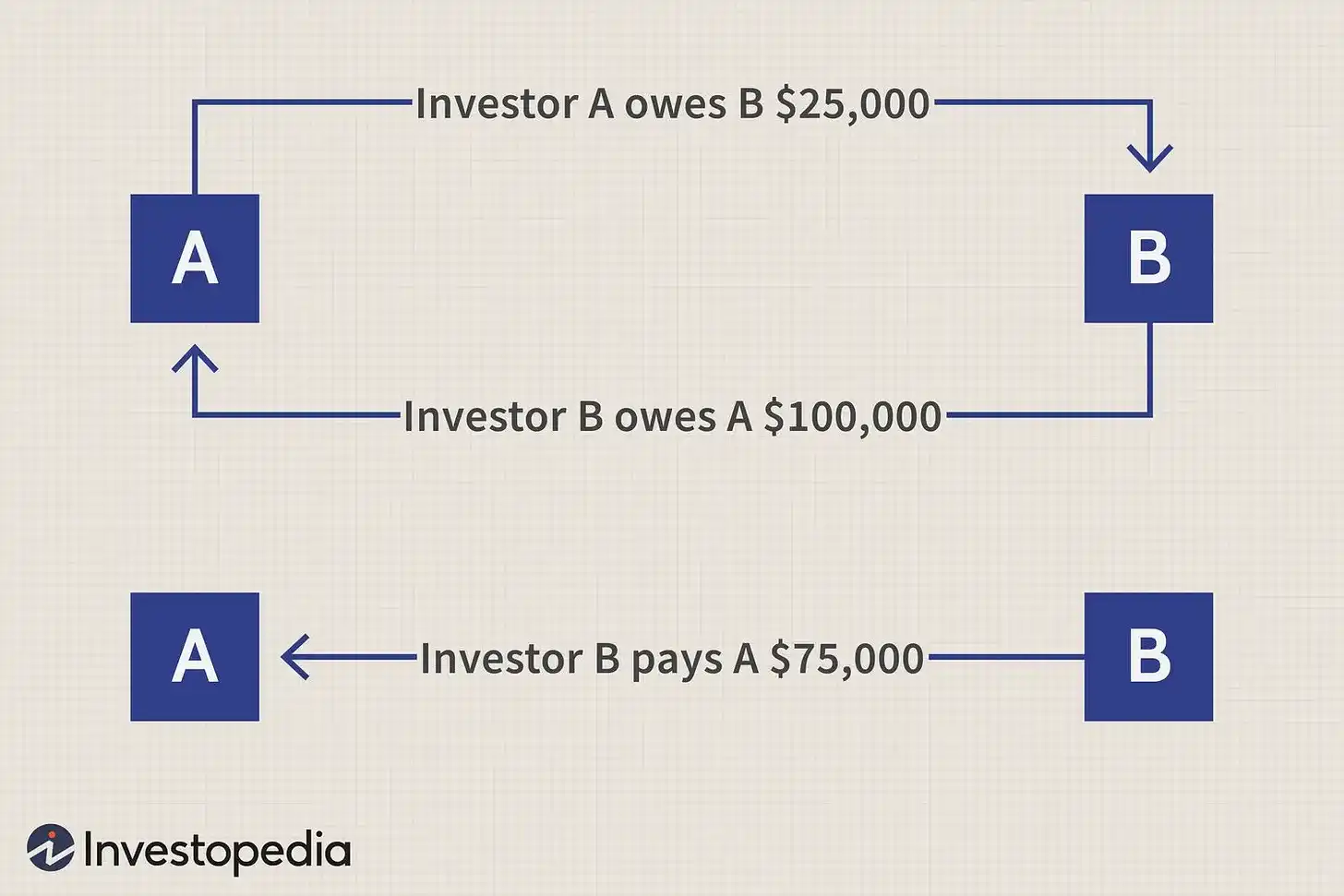
Continuous trading and faster settlement change how trades are cleared. When settlement is faster, there are fewer opportunities to offset large volumes of trading activity through end-of-day netting. This means some of the efficiencies gained from batch processing are reduced. As a result, brokers, clearing members, and liquidity providers need to manage funds and risk exposure throughout the trading day, rather than relying on overnight settlement processes to absorb and distribute risk.

Market makers and large intermediaries will be the first to adapt to this change. Under the current model, they can hold inventory and adjust positions based on predictable settlement cycles. As settlement speeds up and trading continues, positions turn over faster, and funds need to be in place more quickly. Firms that already use automation, real-time risk checks, and flexible liquidity will navigate this more easily. Others will face tighter constraints, with less time to rebalance positions or rely on overnight settlement.

Short selling and securities lending face similar pressures. Currently, borrowing stocks, locating inventory, and resolving settlement issues often involve multiple steps and time windows. When settlement deadlines are shortened, these steps compress, making it harder to extend delivery failures and causing borrowing costs and availability to adapt more quickly to market changes.

The key takeaway here is that most of the impact occurs behind the scenes. Retail users may not notice significant changes at the interface level, but institutions providing liquidity and funding positions face stricter time constraints. Some friction points are eliminated, while others become more pronounced. Time no longer covers up mistakes as it once did, and the system must remain synchronized throughout the trading day rather than adjusting after the fact.

The Second-Order Effects That Follow

Once markets no longer rely on time as a buffer, a different set of constraints comes into play. This first manifests in how capital is reused within large institutions. Today, the same balance sheet can support positions across multiple settlement cycles because, over time, obligations eventually offset each other. But as settlement cycles tighten, this reuse becomes more difficult. Capital must be in place earlier and more precisely, quietly altering internal capital allocation decisions, limiting leverage, and changing how liquidity is priced during market volatility.

Another consequence is how volatility propagates. In batch-based markets, risk often accumulates during off-hours and is released at predictable moments, such as the open or close. When trading and settlement are continuous, this clustering effect no longer applies. Price movements disperse across the entire timeframe rather than concentrating in specific windows. This does not make markets calmer, but it makes volatility harder to predict and manage, and harder to address with old strategies that rely on pauses, resets, or downtime.

This also affects coordination between different markets. Today, a significant portion of price discovery occurs not through primary stock trading venues but through futures, ETFs, and other proxy instruments, largely because the underlying markets are closed. When primary trading venues remain open and settlement speeds up, the importance of these workarounds diminishes. Arbitrage opportunities flow back to the primary markets, altering liquidity patterns for derivatives and reducing the need to hedge risk through indirect instruments.

Finally, this changes the role of the exchange itself. Exchanges are no longer just order matchers but become more involved in risk coordination. This increases the exchange's responsibility during stress events and shortens the distance between trading infrastructure and risk management.

Taken together, these effects explain why this move is critical even if it doesn't immediately change the face or feel of the market. The impact unfolds gradually, in how capital is reused, how volatility disperses over time, how arbitrage activity shifts to primary trading venues, and how balance sheets are managed under tighter constraints. These are not short-term improvements or surface-level upgrades but structural changes that reshape the system's internal incentives. Once markets begin operating this way, reversing these changes will be more difficult than adopting them in the first place.

In today's market structure, delays and multiple layers of intermediaries act as buffers when things go wrong, allowing problems to emerge later, losses to be absorbed gradually, and responsibilities to be distributed across time and institutions. But as timelines shorten, this buffering effect weakens. Funding and risk decisions move closer to execution. There is less room to hide mistakes or defer consequences, so failures appear earlier and are easier to trace.

The NYSE is testing whether a large, regulated market can operate under these conditions without relying on delayed trading to manage risk. Shorter time between trading and settlement means less room to adjust positions, disperse funds, or handle issues after the fact. This change forces problems to surface during normal trading rather than being deferred to subsequent processes, clearly exposing the market's weak points.


İlgili Sorular

QWhat is the key difference between the NYSE's new blockchain-based trading platform and previous tokenized stock attempts?

AThe key difference is that the NYSE is implementing changes from within the core regulated exchange to adjust how trading and settlement occur over time, rather than creating parallel tokenized products outside the primary market like previous attempts (e.g., FTX, Securitize). It focuses on combining continuous trading with on-chain settlement to change how risk and capital operate.

QHow does the NYSE's proposed model challenge the traditional market structure regarding time?

AIt challenges the fixed trading hours and delayed settlement model by creating a trading venue that never closes, with settlement times closer to execution. This reduces the 'time gaps' where risk exists but trading is halted, thereby decreasing the time capital is idle to cover temporal uncertainty.

QWhat is one significant consequence for clearing and settlement behind the scenes in the new NYSE model?

AA significant consequence is the reduced opportunity for netting large volumes of trades through end-of-day batch processing. This means some efficiency from batching is lost, requiring brokers and liquidity providers to manage funds and risk exposure throughout the trading day in real-time.

QWhat are some second-order effects mentioned that could result from a market no longer relying on time as a buffer?

ASecond-order effects include: changed capital reuse and internal capital allocation decisions, more dispersed volatility throughout the day (less predictable), reduced importance of derivative markets for price discovery, and an increased role for the exchange in risk coordination.

QWhy is the use of stablecoin-based financing integrated into the NYSE's new model?

AStablecoin-based financing is integrated to allow cash and securities to move synchronously between counterparties without waiting for external payment systems. This enables real-time adjustments and is crucial for global markets with round-the-clock information flow and investor activity.

İlgili Okumalar

Three Scenarios for BTC's Future Direction and a Duel Between Two Strong Forces | Special Invited Analysis

**Title: Three Scenarios for BTC's Future Trajectory and a Key Duel | Invited Analysis** The market remains at a critical juncture. Over the past week, Bitcoin (BTC) consolidated broadly between $79,500 and $80,600, validating previous technical analysis. The current focus is on whether this marks the start of a new uptrend or a pause within a larger correction. **BTC Multi-Cycle Analysis & Three Possible Scenarios** BTC's daily chart structure, following its peak at $126,200 in October 2025, presents three primary technical scenarios based on Elliott Wave theory: 1. **Bullish Scenario (End of Correction):** The corrective A-B-C wave from $126,200 ended at the $60,000 low in February 2026. The current price action is the start of a major Wave I uptrend. A subsequent Wave II pullback would not break below $60,000. 2. **Bearish Scenario 1 (Complex Correction):** The correction is unfolding as an A-B-C-D-E pattern. The current move from $60,000 is a D-wave rally. After its completion, a final E-wave decline could potentially breach the $60,000 level. 3. **Bearish Scenario 2 (Larger Correction):** The entire move down from $126,200 to $60,000 was a large A-wave. The current rally is a B-wave correction within a larger A-B-C structure, to be followed by a C-wave decline below $60,000. *Analysis suggests Scenario 2 is less probable due to time disproportions between waves. The battle is effectively between the Bullish Scenario (1) and Bearish Scenario (3).* **Key BTC Levels & Weekly Strategy** On the 4-hour chart, BTC trades above a crucial consolidation zone ("Central Pivot C"). * **Key Resistance:** $83,500-$84,500; $89,000-$90,500. * **Key Support:** $78,500-$79,500 (pivot upper bound); $73,500-$75,000; $69,500-$70,500. **Weekly Outlook:** The market direction hinges on BTC's ability to hold above or break below the $78,500-$79,500 support zone. * **Mid-term Strategy:** Neutral/Wait-and-see stance due to unclear direction. * **Short-term Tactics:** Two contingency plans using 30% max capital: * **Plan A (Bullish):** Look for long entries if price holds above $78,500-$79,500 with confirming signals. Initial stop-loss below $78,500. * **Plan B (Bearish):** Consider short positions if price breaks below $73,500-$75,000 with confirming signals. Initial stop-loss above $76,500. **HYPE Analysis & Strategy** HYPE's daily chart shows a seven-segment structure from its January low of $20.46, forming a "rising pivot" zone. * **Key Level to Watch:** $45.76 (previous high). A break above would confirm the bullish structure remains intact. * **Short-term Strategy:** Focus on pivot zone boundaries ($38.41 upper, $34.44 lower). * **Long:** Consider on support near $38.41 with bullish confirmation signals. * **Short:** Consider on a break below $34.44 with bearish confirmation signals. * Position size must be below 30% with strict stop-loss discipline. **Risk Management Reminder:** Always set an initial stop-loss upon entry. Move stop-loss to breakeven at +1% profit, then trail it upwards to lock in profits dynamically. All views are based on technical analysis for informational purposes only and do not constitute investment advice. The market is inherently risky.

Odaily星球日报4 dk önce

Three Scenarios for BTC's Future Direction and a Duel Between Two Strong Forces | Special Invited Analysis

Odaily星球日报4 dk önce

Sequoia Interview with Hassabis: Information is the Essence of the Universe, AI Will Open Up Entirely New Scientific Branches

Demis Hassabis, co-founder and CEO of Google DeepMind and Nobel laureate, discusses the path to AGI and its profound implications in a Sequoia Capital interview. He outlines his lifelong dedication to AI, tracing his journey from game development (e.g., *Theme Park*)—a perfect AI testing ground—to neuroscience and finally founding DeepMind in 2009. He emphasizes the critical lesson of being "5 years, not 50 years, ahead of time" for successful entrepreneurship. Hassabis reiterates DeepMind's two-step mission: first, solve intelligence by building AGI; second, use AGI to tackle other complex problems. He highlights the transformative potential of "AI for Science," particularly in biology where tools like AlphaFold have revolutionized protein folding. He envisions AI-powered simulations drastically shortening drug discovery from years to weeks and enabling personalized medicine. Furthermore, he predicts AI will spawn new scientific disciplines, such as an engineering science for understanding complex AI systems (mechanistic interpretability) and novel fields enabled by high-fidelity simulators for complex systems like economics. He posits a fundamental worldview where information, not just matter or energy, is the essence of the universe, making AI's information-processing core uniquely suited to understanding reality. He defends classical Turing machines as potentially sufficient for modeling complex phenomena, including quantum systems, as demonstrated by AlphaFold. On consciousness, Hassabis suggests first building AGI as a powerful tool, then using it to explore deep philosophical questions. He believes components like self-awareness and temporal continuity are necessary for consciousness but that defining it fully remains an open challenge. He predicts AGI could arrive around 2030 and, once achieved, would be used to probe the deepest questions of science and reality, much as envisioned in David Deutsch's *The Fabric of Reality*.

链捕手22 dk önce

Sequoia Interview with Hassabis: Information is the Essence of the Universe, AI Will Open Up Entirely New Scientific Branches

链捕手22 dk önce

Morgan Stanley 2026 Semiconductor Report: Buy Packaging, Buy Testing, Buy China Chips, Avoid Traditional Tracks

Morgan Stanley 2026 Semiconductor Report: Buy Packaging, Buy Testing, Buy Chinese Chips; Avoid Traditional Segments. The core theme is the shift in AI compute supply from NVIDIA dominance to a three-track system of GPU + ASIC + China-local chips. The key opportunity is capturing share in this expansion, while non-AI semiconductors face marginalization due to resource reallocation to AI. Key investment conclusions, in order of priority: 1. **Advanced Packaging (CoWoS/SoIC) - Highest Conviction**: TSMC is the primary beneficiary of explosive demand, driven by massive cloud capex. Its pricing power and AI revenue share are rising significantly. 2. **Test Equipment - Undervalued & High-Growth Certainty**: Chip complexity is causing test times to double generationally, structurally driving handler/socket/probe card demand. Companies like Hon Hai Precision (Foxconn), WinWay, and MPI offer compelling value. 3. **China AI Chips (GPU/ASIC) - Long-Term Irreversible Trend**: Export controls are accelerating domestic substitution. Companies like Cambricon, with firm customer orders and SMIC's 7nm capacity support, are positioned to benefit from lower TCO (30-60% vs NVIDIA) and growing local cloud demand. 4. **Avoid Non-AI Semiconductors (Consumer/Auto/Industrial)**: These segments face a weak, structurally hindered recovery due to AI's resource "crowding-out" effect on capacity and supply chains. 5. **Memory - Severe Internal Divergence**: Strongly favor HBM (Hynix primary beneficiary) and NOR Flash (Macronix). Be cautious on interpreting price rises in DDR4/NAND as true demand recovery. The report emphasizes a 2026-2027 time window, stating the AI capital expenditure cycle is far from over. Key macro variables include persistent export controls and AI's systemic "crowding-out" effect on traditional semiconductor supply chains.

marsbit1 saat önce

Morgan Stanley 2026 Semiconductor Report: Buy Packaging, Buy Testing, Buy China Chips, Avoid Traditional Tracks

marsbit1 saat önce

Circle:Sluggish Market? The Top Stablecoin Stock Continues to Expand

Circle, the issuer of the stablecoin USDC, reported its Q1 2026 earnings on May 11th, Eastern Time. Against a backdrop of weak crypto market sentiment, USDC's average circulation in Q1 was $752 billion, with a modest 2% sequential increase to $770 billion by quarter-end. New minting volumes declined due to the poor crypto market, but remained high, indicating demand expansion beyond crypto trading. USDC's market share remained stable at 28% of the total stablecoin market, while competition from Tether's USDT persists. A key highlight was "Other Revenue," which reached $42 million, more than doubling year-over-year, though sequential growth slowed to 13%. This revenue stream, including fees from services like Web3 software, the Cipher payment network (CPN), and the Arc blockchain, is critical for diversifying away from interest income. Circle's internally held USDC share increased to 18%, helping to improve gross margin by 130 basis points to 41.4% by reducing external sharing costs. However, profitability was pressured as total revenue growth slowed, primarily due to the significant weight of interest income, which is tied to USDC规模 and Treasury rates. Adjusted EBITDA was $133 million with a 19.2% margin. Management maintained its full-year 2026 guidance for adjusted operating expenses ($570-$585 million) and other revenue ($150-$170 million). The long-term target for USDC's CAGR remains 40%, though near-term volatility is expected. The article concludes that while Circle's current valuation of $28 billion appears reasonable after a recent recovery, further upside depends on the pace of stable币 adoption and potential positive sentiment from the advancement of regulatory clarity acts like CLARITY.

链捕手1 saat önce

Circle:Sluggish Market? The Top Stablecoin Stock Continues to Expand

链捕手1 saat önce

Tech Stocks' Narrative Is Increasingly Relying on Anthropic

The narrative of tech stocks is increasingly relying on Anthropic. Anthropic, the AI company behind Claude, has become central to the financial stories of major tech giants. Elon Musk dissolved xAI, merging it into SpaceX as SpaceXAI, and secured an exclusive deal to rent the massive "Colossus 1" supercomputing cluster to Anthropic. In return, Anthropic expressed interest in future space-based compute collaborations. Google and Amazon are also deeply invested. Google plans to invest up to $40 billion and provide significant compute power, while Amazon holds a 15-16% stake. Both companies reported massive quarterly profit surges largely due to valuation gains from their Anthropic holdings. Crucially, Anthropic has committed to multi-billion dollar cloud compute contracts with both Google Cloud and AWS. This creates a clear divide: the "A Camp" (Anthropic-Google-Musk) versus the "O Camp" (OpenAI-Microsoft). The A Camp's strategy intertwines equity, compute orders, and profits, making Anthropic a "systemic financial node." Its performance directly impacts its partners' financials and stock prices. In contrast, OpenAI, while leading in user traffic, faces commercialization challenges, lower per-user revenue, and a recently restructured relationship with Microsoft. The AI industry is shifting from a race for raw compute (symbolized by Nvidia) to a focus on monetizable applications, where Anthropic currently excels. However, this concentration of market hope on one company amplifies systemic risk. The rise of powerful open-source models like DeepSeek-V4 poses a significant threat, as they could undermine the value proposition of closed-source models like Claude. The article suggests ongoing geopolitical efforts to suppress such competitors will be a long-term strategic focus for Anthropic's allies.

marsbit1 saat önce

Tech Stocks' Narrative Is Increasingly Relying on Anthropic

marsbit1 saat önce

İşlemler

Spot
Futures
活动图片