Multi-Chain Decentralized Over-Collateralized Stablecoin USDD Debuts at 2026 Istanbul Blockchain Week

marsbit2026-06-02 tarihinde yayınlandı2026-06-02 tarihinde güncellendi

Özet

On June 2, 2026, the Istanbul Blockchain Week (IBW) commenced at the Istanbul Bomonti Hilton Hotel & Conference Center. During this major two-day Web3 industry event, the multi-chain over-collateralized decentralized stablecoin USDD made its appearance. USDD, in partnership with TRON, established a joint exhibition booth to showcase the latest developments in stablecoin and Web3 ecosystems to attendees. The event, now in its fifth year and organized by EAK Digital, focused on key topics including Real World Asset tokenization (RWA), Artificial Intelligence (AI), stablecoins, regulatory compliance, privacy protection, and Decentralized Finance (DeFi). It attracted numerous leading global Web3 institutions, industry leaders, and innovative projects. USDD aims to leverage this platform to deepen connections with global Web3 resources and further empower its global ecosystem expansion and application adoption.

On June 2, the 2026 Istanbul Blockchain Week (IBW) officially opened at the Hilton Istanbul Bomonti Hotel & Conference Center. The conference, spanning two days, will continue until June 3. The multi-chain decentralized over-collateralized stablecoin USDD made its appearance at this event, joining forces with TRON to set up a joint exhibition booth on-site, showcasing the latest developments in the stablecoin and Web3 ecosystem to attendees. Leveraging this premier industry gathering, USDD aims to further strengthen its deep connections with global Web3 resources, continuously empowering the global expansion and practical application of its ecosystem.
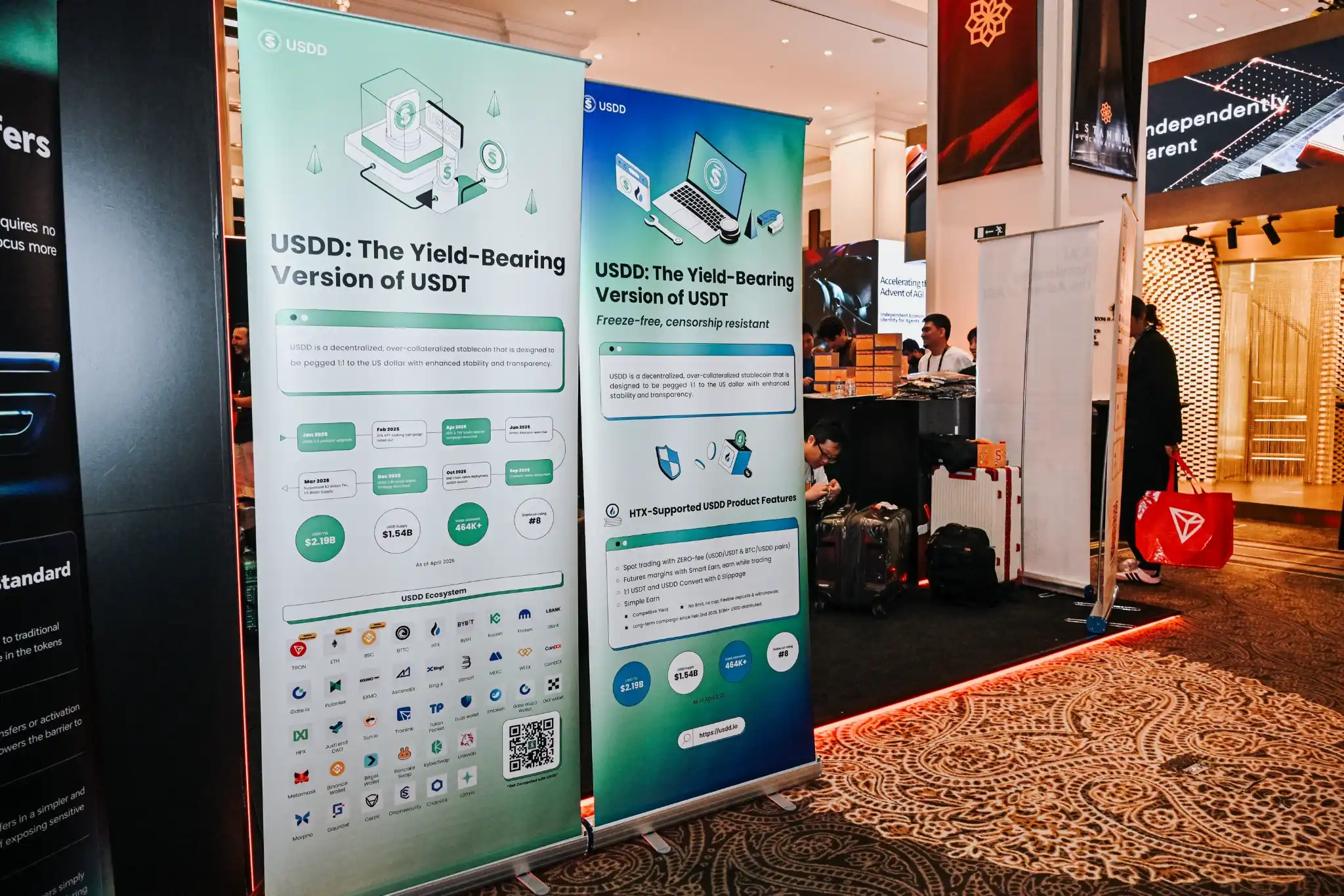
It is reported that IBW, organized by EAK Digital, has now successfully reached its fifth edition and is a globally renowned Web3 industry event. This year's conference focused on key topics such as real-world asset tokenization (RWA), artificial intelligence (AI), stablecoins, regulatory compliance, privacy protection, and decentralized finance (DeFi), attracting participation from numerous leading global Web3 institutions, industry leaders, and innovative projects.


İlgili Sorular

QWhat was the main purpose of USDD and TRON establishing a joint booth at the 2026 Istanbul Blockchain Week?

AThe main purpose was to showcase the latest development achievements in the stablecoin and Web3 ecosystem fields to attendees.

QWhich company organizes the Istanbul Blockchain Week (IBW) event mentioned in the article?

AThe Istanbul Blockchain Week is organized by EAK Digital.

QWhere and when did the 2026 Istanbul Blockchain Week take place?

AIt took place at the Istanbul Bomonti Hilton Hotel & Conference Center and ran from June 2nd to June 3rd, 2026.

QWhat type of stablecoin is USDD described as in the article?

AUSDD is described as a multi-chain decentralized over-collateralized stablecoin.

QAccording to the article, what were some of the key topics focused on at the 2026 Istanbul Blockchain Week?

AKey topics included real-world asset tokenization (RWA), artificial intelligence (AI), stablecoins, regulatory compliance, privacy protection, and decentralized finance (DeFi).

İlgili Okumalar

Why Not Short Even When Bearish? Munger Did the Math on a 'Losing Trade'

Why Not Short Even When Bearish? Charlie Munger's Calculated "Loss-Making Account" Many traders, drawn to speculative tools like futures contracts, often face repeated failures. As the article notes, unless one is a genius, such instruments should be avoided for long-term profit-seeking. Similarly, the practice of short selling is viewed with caution. The author firmly states a policy of not shorting, even when bearish, preferring to simply wait. The core reason? Successful short selling requires exceptionally difficult conditions to profit. Legendary investors Warren Buffett and Charlie Munger have themselves reflected on painful short-selling experiences. Munger highlights two critical flaws in the mathematical logic of shorting: 1. Asymmetrical Risk/Reward: A long position has a maximum loss of 100% but unlimited upside. A short position caps profit at 100% (if a stock falls to zero) but carries theoretically unlimited loss potential. 2. The "Promoter" Problem: Fraudulent or struggling companies can prolong their decline. As Munger said, "You can run out of money before the promoter runs out of ideas," meaning short sellers may be forced to cover positions at a loss before the company's true fate unfolds. The article cites Stanley Druckenmiller, a famed hedge fund manager. He once shorted 12 companies that all eventually went bankrupt. However, intense market rallies forced him to cover his positions within three weeks, resulting in massive losses—$200 million of his capital plus an additional $600 million. He concluded he likely never made money shorting in his career. His experience perfectly illustrates Munger's points: facing unlimited losses and being wiped out before being proven right. The conclusion is clear: for most investors, complex instruments like short selling and derivatives are not viable paths to stable, long-term gains. Self-reflection is advised before repeatedly wasting time and capital on such speculative strategies.

marsbit50 dk önce

Why Not Short Even When Bearish? Munger Did the Math on a 'Losing Trade'

marsbit50 dk önce

İşlemler

Spot
Futures
活动图片