Meme Coin with $60 Million Market Cap Plunges 65% in One Minute, FOMO Faces Renewed Scrutiny

marsbit2026-08-05 tarihinde yayınlandı2026-08-05 tarihinde güncellendi

Özet

A Solana-based meme token, $CATE, which had surged from a $20M+ to over $80M market cap in about a week, experienced a dramatic 65% crash within one minute. This flash crash has intensified scrutiny on the trading app 'fomo' and highlighted the speculative nature of the current meme coin market. The crash coincided with two events: the token's X account being suspended and the fomo app experiencing downtime, preventing users from trading. While the X suspension was straightforward, the fomo outage raised significant questions. $CATE's primary narrative driver was the open endorsement by Poorgoat, a top-ranked trader on fomo with over 200,000 followers, who had turned a ~$45,000 investment into over $2M at the peak. The token itself had no novel fundamentals, being a "cat sister" to Doge, a concept already existing on Ethereum without success. The crash, triggered by less than $1.5M in selling volume despite over 60,000 holder addresses, exposed a harsh reality: purely "organic" community-driven meme tokens (excluding past successes like $SPX) may now have a market cap ceiling around $17M, as exemplified by the long-term chart of $neet. This incident has fueled existing controversies surrounding fomo. Critics have grown skeptical of the app, alleging that rankings dominated by KOLs who receive lucrative token airdrops could be manipulated to create "pump-and-dump" schemes, luring in retail users before a rug pull. The timing of the crash during fomo's outage—preventing many...

$CATE, one of the most talked-about meme coins on Solana lately, skyrocketed from a market cap of just over $2,000 to over $80 million in a little over a week, only to crash 65% in one minute early yesterday morning:
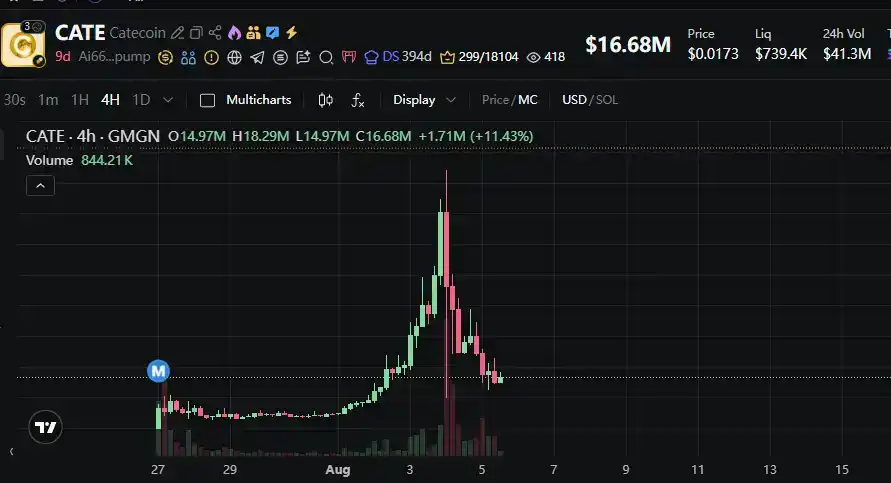
For seasoned on-chain veterans, such a price movement in a meme coin isn't surprising. However, witnessing it happen to a high-profile token like this is quite dramatic and serves as another stark reminder of some harsh realities in the current market.

Harsh Realities

Let's start by examining why this coin crashed. The community has identified several potential reasons:

- $CATE's X (Twitter) account was suddenly suspended.

- FOMO experienced downtime, preventing users from trading during the outage.

The account suspension is self-explanatory, but why would FOMO's downtime cause such a crash?

Because, much like $ANSEM rode on Ansem's clout and explicit support, $CATE's rise was largely fueled by the influence and open backing of "mini-Ansem" Poorgoat.

Poorgoat, a member of the FOMO Hall of Fame (recognized by FOMO for achieving significant profits on the platform) and currently topping FOMO's 7-day profit leaderboard while ranking 2nd on the 30-day board, entered $CATE at an average market cap of around $1.4 million, with a total investment of approximately $44,700. At the coin's peak, this single trade alone netted him over $2 million in profit.
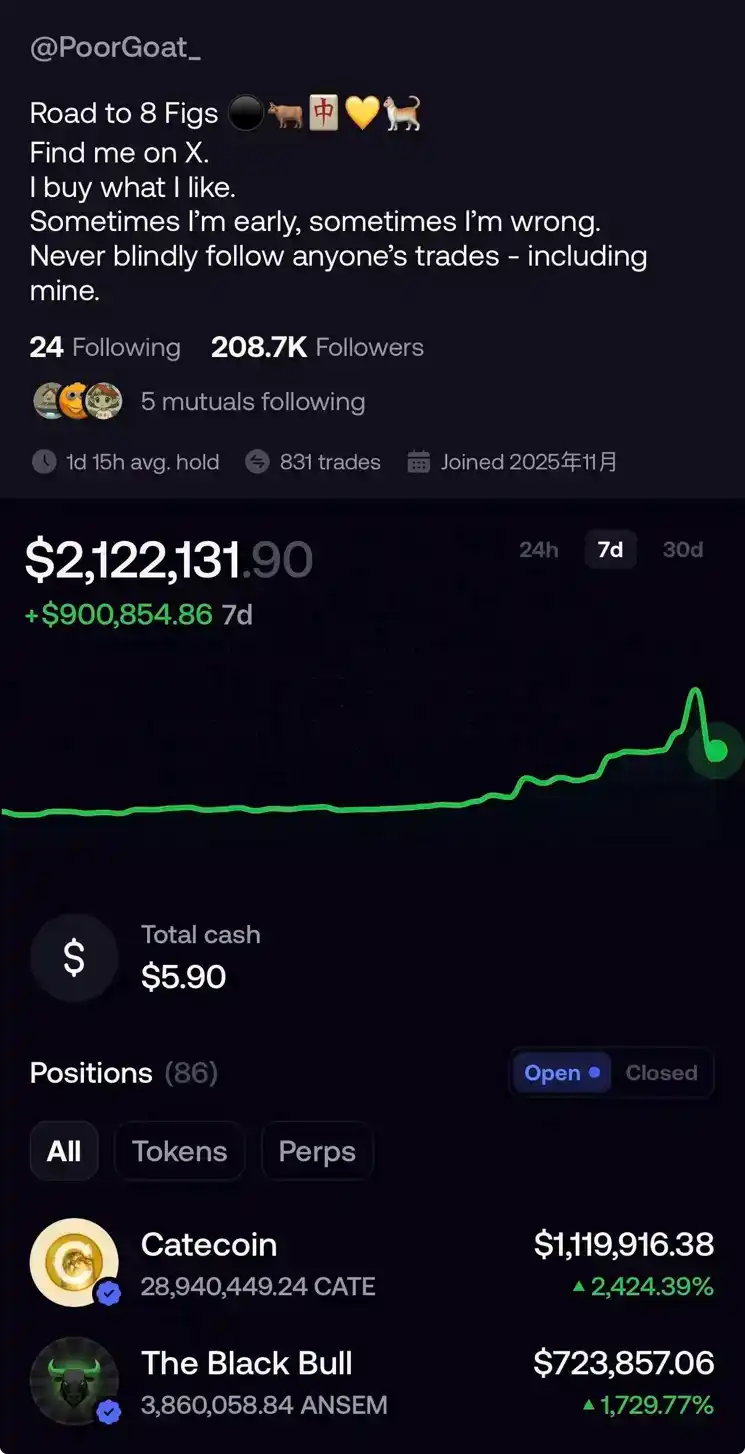
He gained fame by holding onto a $30,000 $ANSEM airdrop, which ballooned to nearly $1.75 million at its peak. Now, he has amassed over 208,000 followers on FOMO.

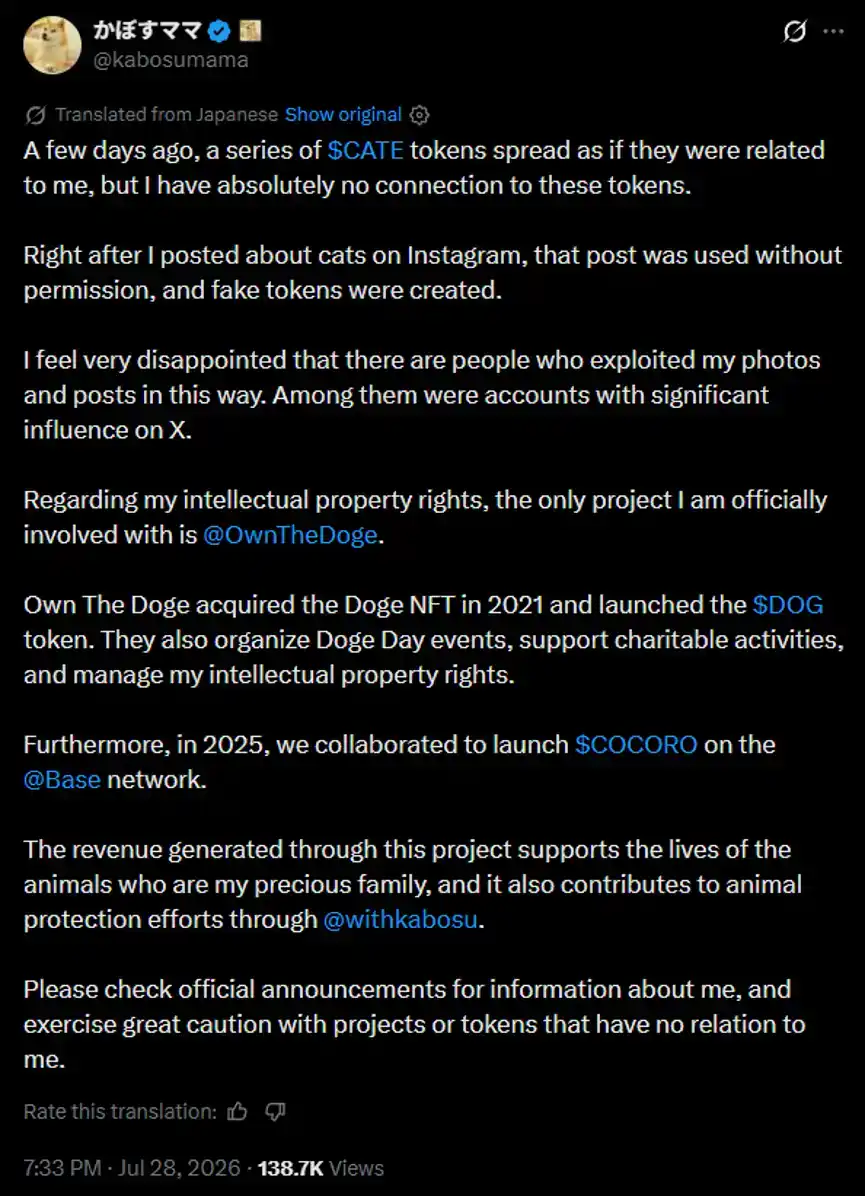
Given this context, it becomes clear why FOMO's downtime is seen as a major catalyst for the crash—fundamentally, the coin's narrative was nothing new, positioning itself as the "cat sister" to Doge. In fact, Doge's creator even publicly denied any association with the token:
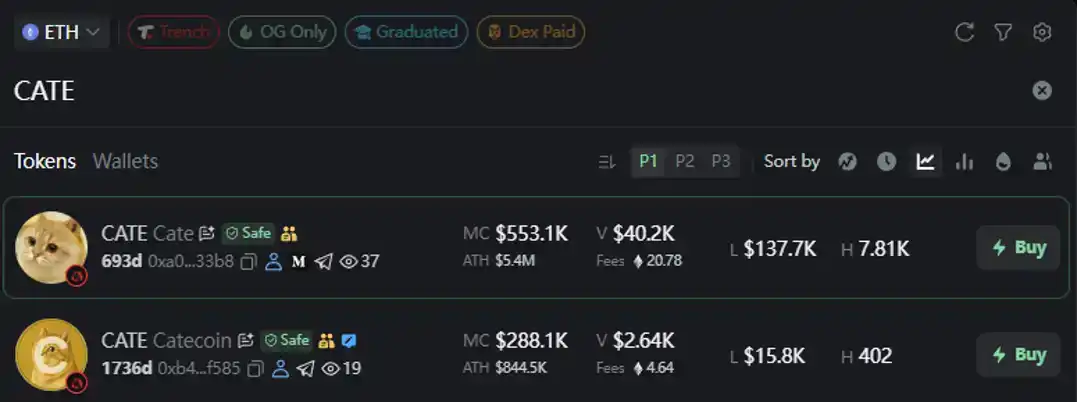
Moreover, a token with the same narrative has existed on the Ethereum mainnet for quite some time, showing no signs of revival:
Adding to the controversy surrounding this crash is the fact that Poorgoat, FOMO's current top influencer, effectively became the Chief Token Officer (CTO) for this coin, publishing a lengthy post on X arguing that the token's growth was "organic":
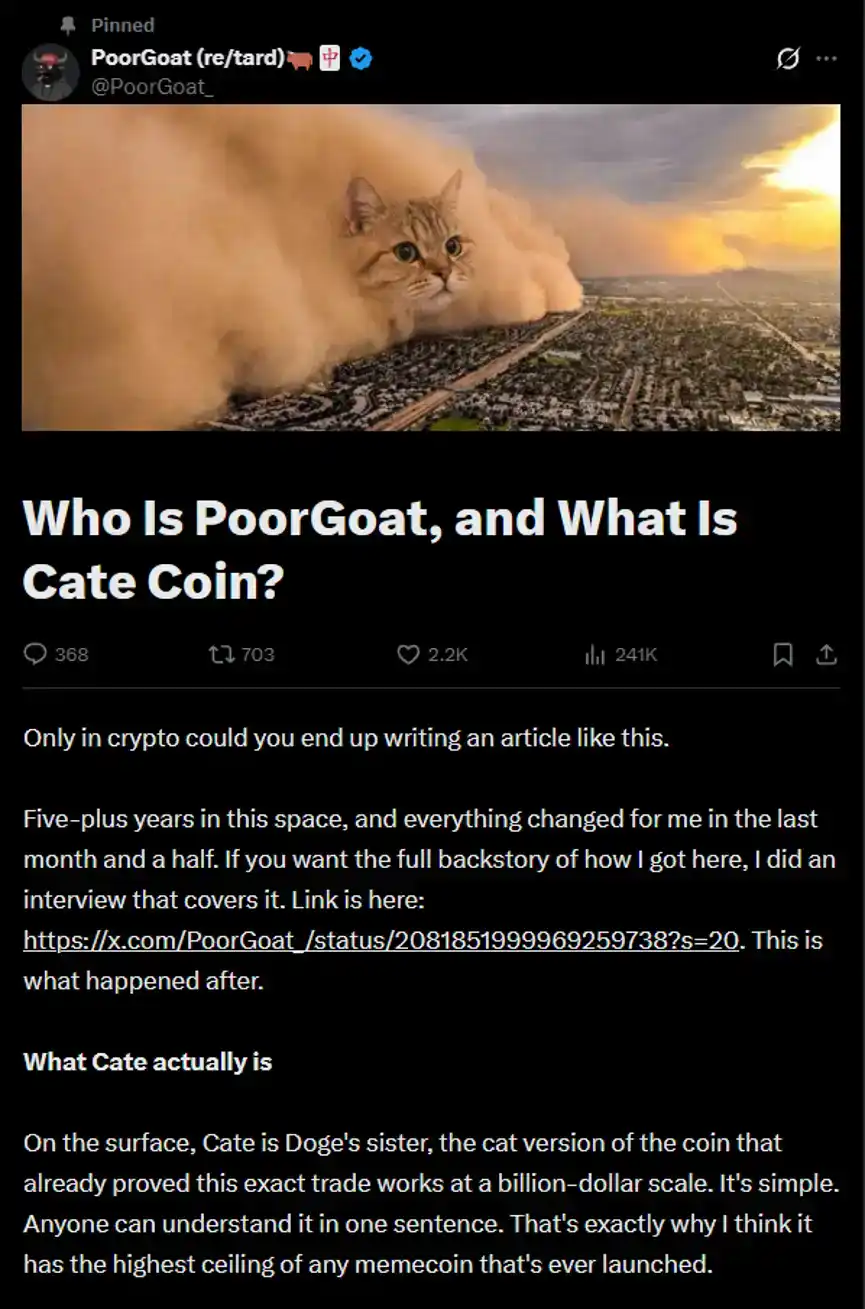
Yet, this supposedly "organic" coin, still boasting over 60,000 holder addresses, plunged more than 60% in one minute due to selling pressure of less than $1.5 million:

This brings us to the harsh reality we mentioned. In the current market, the ceiling for any token that follows the traditional "organic" community-building path (excluding past successes like $SPX, $MOG that left a strong impression) might be limited to around $17 million, similar to $neet's current market cap. We won't delve too deep into why $neet is considered organic; its price action over the past 460+ days speaks for itself:

Next, let's discuss why FOMO is facing such significant backlash this time.

Fame Brings Scrutiny

Earlier this year, when the 6000x-in-a-week "Nietzsche Penguin" $PENGUIN propelled trader logjam (now with ~138k followers on FOMO) to fame, the community largely admired and celebrated his success. At that time, logjam profited around $564,000 from $PENGUIN, and no one doubted his achievement; it was met with recognition and well-wishes.

However, controversies began to swirl around FOMO following the rise of $UNC, the pioneer of the "airdrop wealth creation" playbook later used by $ANSEM, where airdrops were distributed within a small circle to pump the price. Many recipients of these airdrops were active KOLs on FOMO. Their resulting profits, prominently displayed on FOMO's leaderboards (dominating weekly and monthly charts), essentially turned them into walking billboards for these airdropped tokens. Consequently, some users started suspecting that FOMO's data might be manipulated, suggesting collusion among KOLs to create "pump-and-dump" schemes aimed at attracting more users to the app, only to let the KOLs exit and leave others holding the bag.

Regardless of whether such insider dealings actually exist, the mere possibility fuels user resentment, a sentiment also vividly reflected in the BSC ecosystem. Moreover, the most fitting explanation found for $CATE's crash is "FOMO was down." It's not just that users felt a FOMO-related token being untradable was a major negative. The timing was simply too coincidental, leading many to believe it was a pretext to trap and liquidate users who primarily trade via FOMO.

Currently, $CATE still has over 60,000 holder addresses. FOMO's data shows over 38,400 of these holder addresses, meaning more than 60% of holders are from FOMO. If a significant portion of these addresses were mass-created by FOMO itself, it becomes hard to dismiss allegations of manipulation. If not, then the hardest hit are still the retail investors on FOMO.

Another highly contentious point is that trader MarcellxMarcell (with nearly 40k followers on FOMO) "exited at the top" when $CATE's market cap was around $45 million. Although it was still possible to trade on-chain by exporting the wallet address during FOMO's downtime, the community questions: if you publicly bought in around a $30 million market cap, showing considerable confidence, why would you consider FOMO's downtime such a massive negative catalyst?

Recently, FOMO's updated terms of service explicitly state they do not guarantee the security of user assets. However, the process of exporting an address from FOMO—requiring logging into the FOMO page to obtain the private key—has also raised security concerns. Critics question whether FOMO transmits the private key to the webpage with sufficient encryption.
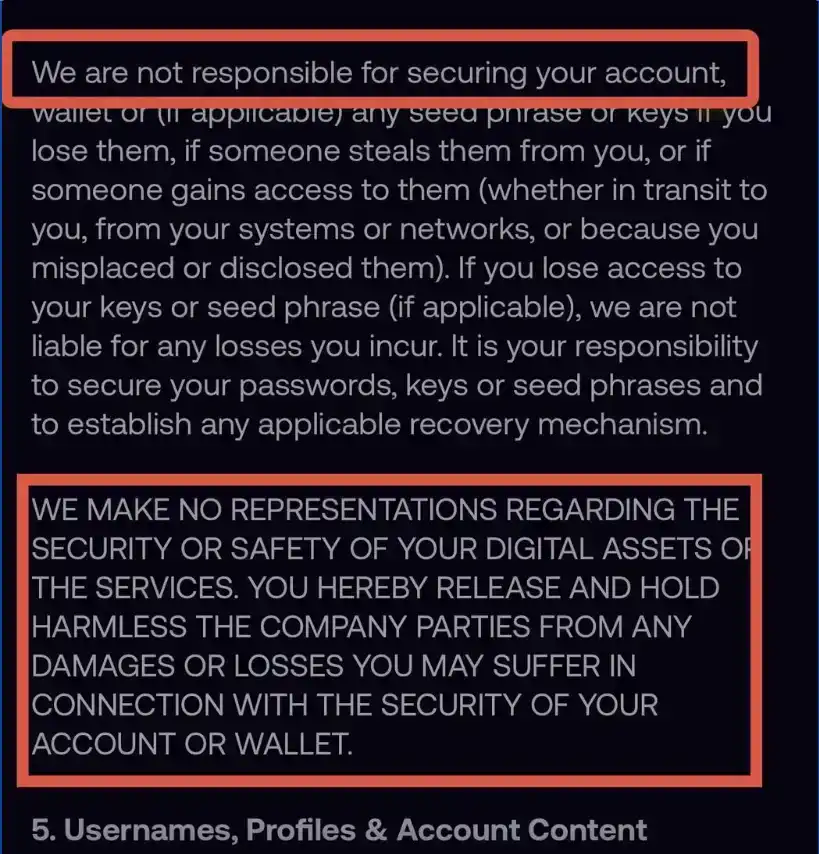
FOMO's official explanation points to overload due to a sudden surge in user volume, a reason many players find hard to accept. After all, the trading volume during that one-minute crash wasn't exceptionally high. "Come on, you raised $75 million in funding, and you get paralyzed by less than $5 million in volume over 5 minutes?"

Had users consistently used on-chain trading terminals like gmgn, they might have avoided this sudden, trapped liquidation.

Fame brings scrutiny, and the criticisms leveled at FOMO during its rapid growth are not entirely without merit.


Trend Kriptolar

İlgili Sorular

QWhat is the primary reason suggested in the article for the flash crash of the $CATE meme coin?

AThe article suggests the primary reasons for the $CATE flash crash were the temporary suspension of its X account and, more critically, the fomo trading platform experiencing downtime, which prevented users from trading.

QWho is Poorgoat and what role did he play in the $CATE token?

APoorgoat is a prominent trader on the fomo platform, known as the 'little Ansem' and a member of its 'Hall of Fame.' He publicly supported and endorsed the $CATE token, acting as a key figure in its promotion and perceived legitimacy.

QAccording to the article, what is a major point of controversy surrounding the fomo platform after this incident?

AA major point of controversy is the suspicion that fomo's downtime during the crash was not coincidental. Some users believe it was a pretext to trap retail investors on the platform, allowing insiders or KOLs to sell their holdings, which fuels allegations of market manipulation.

QWhat does the article imply about the 'organic' growth narrative of certain meme coins in the current market?

AThe article implies that the current market severely limits the potential of meme coins claiming 'organic' community-driven growth. It suggests their market cap ceiling is relatively low, using $neet's ~$17 million cap as an example, compared to tokens heavily promoted by influencers on platforms like fomo.

QWhat alternative trading method does the article mention to avoid issues like those experienced with fomo's downtime?

AThe article mentions that using on-chain trading terminals like gmgn would allow users to avoid being trapped by platform-specific outages, as they enable direct blockchain transactions independent of any single app's functionality.

İlgili Okumalar

On L1 Value Capture from Two Solana Proposals

The article, "Discussing L1 Value Capture Through Two Solana Proposals," by Max Resnick, explores how Layer 1 (L1) blockchain tokens derive their fundamental value, drawing parallels to traditional asset pricing theory. Resnick argues that L1 token value, like stock value, stems from claims on future income streams for holders, not merely from network activity or technological promise. This value is captured when fees are either burned (economically akin to a buyback) or distributed to stakers (akin to dividends). Inflationary staking rewards, by contrast, redistribute value among holders rather than creating it. The core challenge is the quality and defensibility of fee-based revenue. High-quality fees come from sustainable, recurring demand for the network's economic utility (e.g., long-term financial activity), not from transient speculation (e.g., meme coins, airdrops). The strength of a blockchain's network effects—liquidity, applications, users—can make its revenue more defensible and grant it greater pricing power than often assumed. The article proposes a foundational valuation framework for L1s, separating revenue (fees captured for token holders), costs, and total token supply. A key accounting principle is that inflationary rewards should not be counted as a cost unless the newly minted tokens are symmetrically counted as a value input; otherwise, it misrepresents profitability. Finally, Resnick discusses the economics of increasing protocol fees to boost revenue. Since revenue equals price times quantity, the net effect depends on demand elasticity. Research on Ethereum suggests transaction demand is somewhat elastic; a fee increase reduces volume. A uniform fee is a blunt instrument, as different transactions (e.g., small transfers vs. large settlements) have vastly different abilities to pay. The article suggests that transaction-value-based fees, potentially implemented via token programs, could be a more efficient way to capture value from high-willingness-to-pay activities. The discussion is framed around ongoing Solana proposals (SIMD-550, SIMD-553) but focuses on the universal principles of L1 value accrual.

marsbit1 saat önce

On L1 Value Capture from Two Solana Proposals

marsbit1 saat önce

İşlemler

Spot

Popüler Makaleler

MEME 2.0 Nedir

Memecoin 2.0: Kripto Para Dünyasında $MEME 2.0'ın Yükselişi Giriş Kripto para dünyasının sürekli gelişen yapısında, yeni bir rakip olarak Memecoin 2.0 ortaya çıktı. $MEME 2.0 sembolüyle öne çıkan bu proje, meme coinlerinin kavramını heyecan verici bir yeni seviyeye taşıyor. Orijinal Memecoin'in bir yan ürünü olarak, bu proje, odağını geleneksel finansal teşviklerden, katılımcı ve eğlenceli bir deneyime kaydırarak kripto topluluğunun dikkatini çekmeyi başardı. Ethereum blockchain'inde faaliyet gösteren Memecoin 2.0, kripto alanında topluluk katılımını cesurca yeniden tanımlıyor. Memecoin 2.0, $MEME 2.0 Nedir? Memecoin 2.0, temelinde topluluk ruhunu ve meme kültürüyle ilişkilendirilen eğlenceyi öncelikli olarak benimseyen bir kripto para projesidir. Pratik kullanım alanlarına ve somut faydalara odaklanan geleneksel kripto paralardan farklı olarak, Memecoin 2.0 dijital para biriminin daha hafif yönünü benimseyerek kendini gösteriyor. Proje, herhangi bir fayda, yapılandırılmış bir yol haritası veya finansal getiri vaadi olmadan varlığını sürdürüyor ve bunun yerine memelere ve ortak keyfe odaklanmış canlı bir topluluk oluşturmayı hedefliyor. Bu sayede, çevrimiçi alanda meme kültürünün artan trendine hitap ederek dijital varlıklar dünyasında benzersiz bir oyuncu haline geliyor. Memecoin 2.0'ın Yaratıcısı, $MEME 2.0 Memecoin 2.0'ın kökenleri üzerine yapılan kapsamlı araştırmalara rağmen, yaratıcısının kimliği belirsizliğini koruyor. Bu anonimlik, birçok projenin sahne arkasında kalmayı tercih eden bireyler veya gruplar tarafından yönetildiği kripto topluluğunda alışılmadık bir durum değil. Yaratıcının kamuya açık bilgilere sahip olmaması, topluluk katılımına odaklanarak bireysel ünlülük yerine topluluğun önemini vurgulayan stratejik bir hamle olarak görülebilir. Memecoin 2.0 Yatırımcıları, $MEME 2.0 Memecoin 2.0 için yatırımcılar veya mali destek ile ilgili bilgiler sınırlıdır. Bu bilgi eksikliği projenin ya kendi kendini finanse ettiğini ya da geleneksel yatırım yapılarına kıyasla topluluğa odaklanmasının farklı bir destekçi türünü çektiğini öne sürebilir. Meme coinlerinin dünyası tipik olarak daha fazla taban katılımı içerdiği için bu yaklaşım, topluluk odaklı projelerin etikleriyle uyumlu bir yapı sergiliyor. Memecoin 2.0, $MEME 2.0 Nasıl Çalışır? Memecoin 2.0 tamamen Ethereum blockchain'inde faaliyet gösteriyor ve bu sayede güvenlik özelliklerinden ve ölçeklenebilirliğinden yararlanıyor. Ethereum'un güçlü yönlerinden faydalanarak, Memecoin 2.0 kullanıcı etkileşimleri için güvenli bir ortam sunarken, işlemlerin hem verimli hem de maliyet etkili olmasını sağlıyor. Memecoin 2.0'ın benzersiz özelliklerinden biri topluluk odaklı yapısıdır. $MEME 2.0 tokeninin değeri ve popülaritesi, kullanıcıların aktif katılımlarından geliyor, içsel faydadan ziyade. Bu tasarım, projenin kripto para biriminin eğlence yönüne odaklanmasını pekiştirerek, gülmenin ve topluluk etkileşiminin başarısını sağlayan gerçek para birimleri olduğunu ima eder. Ayrıca, proje, meme coinlerinin daha geniş ekosisteminin bir parçası olarak yer alıyor; burada her meme coininin değeri, kültür, trendler ve topluluk katılımına göre dalgalanıyor, geleneksel ekonomik prensiplerden ziyade. Memecoin 2.0'ın Zaman Çizelgesi, $MEME 2.0 Memecoin 2.0'ın evrimini ve kilometre taşlarını daha iyi anlamak için, tarihindeki önemli olayları vurgulayan bir zaman çizelgesi: 2024: Memecoin 2.0'ın ortaya çıkışı, orijinal Memecoin'in bir yan ürünü olarak kabul edilir ve Ethereum blockchain'inde faaliyet gösterirken meme coinlerinin gelişen bağlamında kendini konumlandırır. 13 Temmuz 2024: Memecoin 2.0, Ethereum ağında topluluk odaklı bir meme coin olarak resmi bir konum alır ve kullanıcıların katılımını ve büyümeye katkı sağlamasını teşvik eden eğlence odaklı yaklaşımını vurgular. Memecoin 2.0'a Dair Anahtar Noktalar, $MEME 2.0 Memecoin 2.0'ı tanımlayan birkaç kritik özellik: Topluluk Merkezli Yaklaşım: Memecoin 2.0'ın temel misyonu, memetik kültürden elde edilen ortak keyfi kullanarak eğlenceli ve katılımcı bir topluluk deneyimi yaratmaktır. Ethereum Üzerinde İnşa Edilmiş: Ethereum blockchain'inde faaliyet göstermek, projeye güvenlik ve ölçeklenebilirlik sağlayan temel bir altyapı sunar. Fayda veya Yol Haritası Yokluğu: Geleneksel kripto paralardan çarpıcı bir şekilde farklı olarak, Memecoin 2.0 herhangi bir faydalı özellik veya finansal getiri vaadinde bulunmamakta, topluluk katılımı ve sosyal etkileşime olan bağlılığını pekiştirmektedir. Memetik Kültüre Odağı: Mem fenomeninin mizahi ve kültürel yönlerini benimseyerek, Memecoin 2.0 kullanıcıların kripto ile çevrimdışı ve çevrimiçi etkileşimde bulunması için bir platform sağlar. Ek Bağlam: Meme Coinlerinin Önemi Meme coinler, kabaca mizah ve ticarete yönelik hafif bir yaklaşım tarafından yönlendirilen belirgin bir kripto para sınıfı olarak ortaya çıkmıştır. Bu paralar genellikle önemli bir fayda veya gelişim yol haritasından yoksundur ve kullanıcıları eğlence, topluluk etkileşimi ve kültürel relevans vaadiyle çeker. Daha geniş kripto ekosisteminde, meme coinler topluluk katılımının önemini yeniden canlandırırken, yalnızca kar odaklı yaklaşımlara karşı bir duruş sergiliyor. Memecoin 2.0 gibi projeler, eğlencenin finansal hedeflerle uyum sağlamasını sağlayarak, blockchain'i yaratıcılık ve sosyal etkileşim için bir oyun alanı haline getiriyor. Sonuç Memecoin 2.0, veya $MEME 2.0, topluluk katılımını katı finansal yapıların üzerinde önceliklendirerek yeni bir kripto para dalgasını temsil ediyor. Mizah ve sosyal etkileşime odaklanarak, meme kültürü etrafındaki ilgiden faydalanıyor. Ethereum blockchain'inde faaliyet göstererek, Memecoin 2.0, teknolojinin yeteneklerinden yararlanırken dijital para biriminin eğlence değerine olan bağlılığında kararlılığını koruyor. Kripto para alanı gelişmeye devam ederken, Memecoin 2.0, dijital varlıkların geleceğinin ortak deneyimlere, gülmelere ve sağlam topluluk bağlantılarına bağlı olabileceğinin bir kanıtı olarak hizmet ediyor. Kripto dünyası belirsiz olsa da, belki de neşe, geleneksel finansal kazanç kadar değerli olabilir.

210 Toplam GörüntülenmeYayınlanma 2024.04.04Güncellenme 2024.12.03

MEME 2.0 Nedir

MEME Nasıl Satın Alınır

HTX.com’a hoş geldiniz! Memeland (MEME) satın alma işlemlerini basit ve kullanışlı bir hâle getirdik. Adım adım açıkladığımız rehberimizi takip ederek kripto yolculuğunuza başlayın. 1. Adım: HTX Hesabınızı OluşturunHTX'te ücretsiz bir hesap açmak için e-posta adresinizi veya telefon numaranızı kullanın. Sorunsuzca kaydolun ve tüm özelliklerin kilidini açın. Hesabımı Aç2. Adım: Kripto Satın Al Bölümüne Gidin ve Ödeme Yönteminizi SeçinKredi/Banka Kartı: Visa veya Mastercard'ınızı kullanarak anında Memeland (MEME) satın alın.Bakiye: Sorunsuz bir şekilde işlem yapmak için HTX hesap bakiyenizdeki fonları kullanın.Üçüncü Taraflar: Kullanımı kolaylaştırmak için Google Pay ve Apple Pay gibi popüler ödeme yöntemlerini ekledik.P2P: HTX'teki diğer kullanıcılarla doğrudan işlem yapın.Borsa Dışı (OTC): Yatırımcılar için kişiye özel hizmetler ve rekabetçi döviz kurları sunuyoruz.3. Adım: Memeland (MEME) Varlıklarınızı SaklayınMemeland (MEME) satın aldıktan sonra HTX hesabınızda saklayın. Alternatif olarak, blok zinciri transferi yoluyla başka bir yere gönderebilir veya diğer kripto para birimlerini takas etmek için kullanabilirsiniz.4. Adım: Memeland (MEME) Varlıklarınızla İşlem YapınHTX'in spot piyasasında Memeland (MEME) ile kolayca işlemler yapın.Hesabınıza erişin, işlem çiftinizi seçin, işlemlerinizi gerçekleştirin ve gerçek zamanlı olarak izleyin. Hem yeni başlayanlar hem de deneyimli yatırımcılar için kullanıcı dostu bir deneyim sunuyoruz.

713 Toplam GörüntülenmeYayınlanma 2024.12.12Güncellenme 2026.06.02

MEME Nasıl Satın Alınır

Tartışmalar

HTX Topluluğuna hoş geldiniz. Burada, en son platform gelişmeleri hakkında bilgi sahibi olabilir ve profesyonel piyasa görüşlerine erişebilirsiniz. Kullanıcıların MEME (MEME) fiyatı hakkındaki görüşleri aşağıda sunulmaktadır.

活动图片