Kalshi and Polymarket Jointly Invest in New Fund, a Major Step Towards the 'Ecologization' of Prediction Markets

Odaily星球日报2026-03-24 tarihinde yayınlandı2026-03-24 tarihinde güncellendi

Özet

A new venture capital firm, 5c(c) Capital, founded by two former Kalshi employees, is raising $35 million to invest in prediction market startups. The fund has garnered support from key industry leaders, including Kalshi CEO Tarek Mansour and Polymarket CEO Shayne Coplan, as well as investors from a16z, Ribbit Capital, and Multicoin Capital. This marks the first VC fund dedicated solely to the prediction market industry and represents a significant step towards its maturation as an independent ecosystem beyond the crypto market. Prediction markets are experiencing explosive growth, with Kalshi's monthly trading volume surpassing $12.7 billion in March 2026 alone—over half of its total 2025 volume. The industry is rapidly building out its infrastructure, including the formation of a trade coalition (CPM), acquisitions of API and data firms, and the planned inaugural Prediction Market Conference. The founders of 5c(c) Capital believe the industry could eventually see $10 trillion in trading volume, extending far beyond its current focus on sports. Despite potential regulatory challenges, prediction markets are solidifying their position as a major new financial sector.

Original|Odaily Planet Daily (@OdailyChina)

Author|Wenser(@wenser 2010)
Behind the rising trading volume of prediction markets, their ecosystem is also expanding rapidly.

Yesterday, venture capital firm 5c(c) Capital, initiated by two former Kalshi employees, announced its latest fundraising plan, aiming to raise $35 million for investments in startups related to prediction markets. Notably, the institution has not only received support from Kalshi CEO Tarek Mansour and Polymarket CEO Shayne Coplan, among others, but its other investors also include individuals from a16z, Ribbit Capital, and Multicoin Capital.

At the same time, this institution is both the first venture capital firm focused on investing in the prediction market industry and the same entity simultaneously funded by the two giants of the prediction market, Kalshi and Polymarket, which can be considered "unprecedented in the industry." Combined with previous news such as Kalshi initiating a prediction market alliance, planning a prediction market conference, Polymarket opening LP market-making incentives, and the emergence of various prediction market data platforms, prediction markets are gradually decoupling from the native crypto market and becoming an emerging industry ecosystem independently.

When an industry's trading volume increases dozens of times within a year, when a single platform's monthly trading volume rivals the entire industry's volume just a few months ago, prediction markets are aggressively encroaching on the territory of traditional betting platforms.

Polymarket CEO Invests in Former Kalshi Employees: A Common Choice for the Two Titans of Prediction Markets

It is understood that the name of 5c(c) Capital comes from the clause regarding prediction markets in the U.S. Commodity Exchange Act.

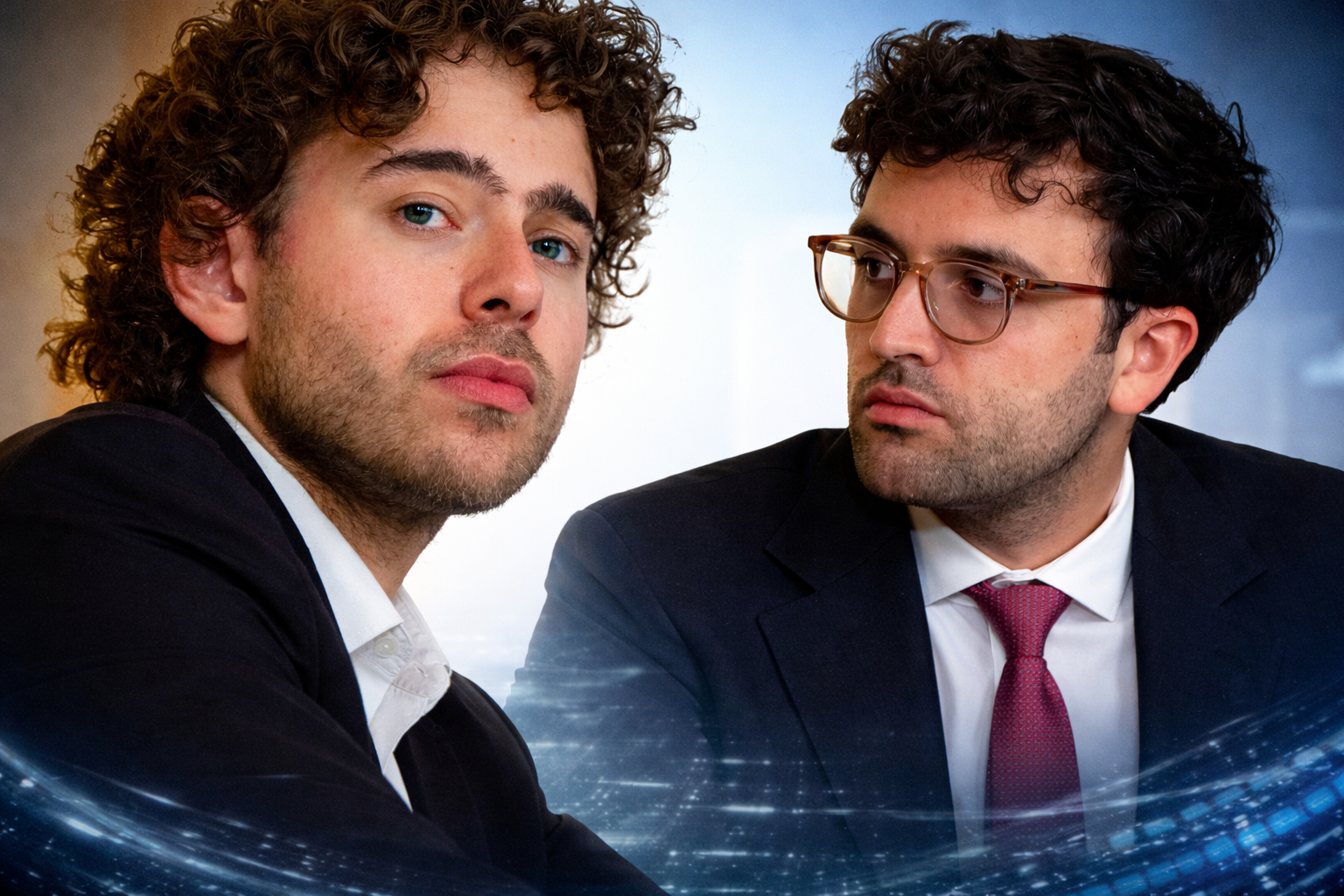
And the two founders are veteran figures at Kalshi—Adhi Rajaprabhakaran was formerly the No.2 trader at Kalshi Trading, Kalshi's affiliated market-making division, and also the creator of the well-known prediction market podcast "50 Cent Dollars"; Noah Zingler-Sternig served as Kalshi's Head of Operations (similar to COO) and led the integration of Kalshi with Robinhood Markets Inc.

Additionally, the fund plans to invest in about 20 companies over the next two years, focusing on prediction market infrastructure directions such as market makers and index design; its first round of fundraising will be completed within the next month.

A Luxurious Investor Lineup: Spanning Traditional VC, Crypto VC, Prediction Markets, and Traditional Sports Betting Platforms

Besides the support from confirmed investors like Kalshi CEO Tarek Mansour and the unofficially confirmed Polymarket CEO Shayne Coplan, other investors in 5c(c) Capital can be described as a "luxurious lineup"—including "veteran venture capitalists" like Marc Andreessen from A16z (who invested through the Moneta Luna fund), as well as industry veterans like Ribbit Capital founder Micky Malka and former Multicoin Capital managing partner Kyle Samani. The list even includes an investment manager from the hedge fund Millennium, which has over $70 billion in assets under management, and the founder of the prediction market platform PredictIt, among other insiders and outsiders.

If the above list of investors is more about the interests of venture capital institutions, then the actions of the following 2 investors can be considered "industry demand behaviors" similar to those of Polymarket and Kalshi. It is understood that the names of Underdog CEO Jeremy Levine and Novig CEO Jacob Fortinsky are also prominently listed.

It is evident that as the industry develops rapidly, prediction market platforms and even traditional sports betting platforms are trying every means to solidify their development foundations.

The Ambition of the New Prediction Market Fund: Future Industry Trading Volume Could Reach $10 Trillion

It is worth mentioning that the two founders of 5c(c) Capital mentioned 2 key pieces of information in this investment document:

First, they explicitly stated, "We hope to use the (product platforms) we build to create more secondary, tertiary, and even quaternary effects." From their words, it is not difficult to see that their aim is not just primary investments in building prediction market platforms, but also capital investments, risk management, equity trading, and more layers of attraction and flow of liquidity generated based on prediction market platforms in various细分赛道.

Second, regarding the future development of the industry, the document points out, "Although prediction markets currently seem limited to the sports sector, this is only part of the industry. The future trading volume of this industry could reach $10 trillion."

For one thing, Kalshi's recent platform operating data might serve as evidence: as of March 22, Kalshi's monthly nominal trading volume had exceeded $9 billion. At this rate, Kalshi's March trading volume will exceed $12.7 billion, a month-on-month increase of 21.5%. For comparison, Kalshi's annual nominal trading volume in 2025 was approximately $23.8 billion, meaning that in just one month (March alone), Kalshi's trading volume will reach about 53.4% of last year's total. Furthermore, the overall trading volume of the prediction market industry was about $10 billion last October, and now, the trading volume of Kalshi alone has surpassed this number.

Previously, Odaily Planet Daily predicted in multiple articles that prediction markets would become another trillion-dollar industry赛道 independent of the cryptocurrency market. Now, it seems this prediction is step by step becoming a reality.

Prediction Markets Decouple from Crypto Market to Form Independent Ecosystem: Funds, Industry Alliances, Data Services, APIs Form a Closed Loop

In the current era where AI is becoming a major driving force in the global economic system, prediction markets have become another rare fast-growing赛道, and their closed-loop ecosystem is also rapidly improving.

Apart from the industry fund raising $35 million mentioned above, the prediction market industry is gradually building its own underlying infrastructure, industry organizations, and application platforms.

Last December, Coinbase announced the acquisition of The Clearing Company, a prediction market platform founded by former employees of Kalshi, Polymarket, etc. Although the specific amount of the acquisition was not disclosed, the company had previously completed a $15 million seed round of financing and was one of the challengers with strong momentum in the industry.

During the same period, five well-known institutions—Kalshi, Crypto.com, Robinhood, Coinbase, and Underdog—jointly announced the establishment of the Coalition for Prediction Markets (CPM). Recommended reading"Kalshi Allies with Coinbase, Robinhood, etc., Aiming to End the 'Casino Theory'".

At the end of last year, Kalshi co-founder and CEO Tarek Mansour called for the inaugural Prediction Market Conference to be held in March 2026. Researchers, economists, policymakers, and traders will gather to discuss core issues surrounding prediction markets and knowledge aggregation.

In February of this year, Polymarket officially announced its second official acquisition, declaring the acquisition of the prediction market API startup Dome. The latter was a Y Combinator Fall 2025 incubation project, providing a unified prediction market API to help developers build applications, trading bots, and data dashboards that can simultaneously connect to multiple platforms like Polymarket and Kalshi. It had previously received a $500,000 investment from YC and completed a $4.7 million seed round of financing. Its first official acquisition was the earlier acquisition of the US-licensed derivatives exchange QCEX,借此 enabling its smooth return to the US market.

And with the increasing trading volume of the industry, data analysis platforms targeting prediction market platforms have sprung up like mushrooms after rain, including: Parity, Predictefy, KalshiData.

Furthermore, on-chain trading tools and AI Agent trading tools for Polymarket are too numerous to mention individually, such as Insiders.bot, Hubble ai, and the AgentCard launched by Alchemy.

It is no exaggeration to say that the upper, middle, and lower streams of prediction markets are currently full of investment and entrepreneurial opportunities. Subsequently, we will also gradually discuss this in the series of articles "Crypto Bear Market Entrepreneurship Guide".

The Trend is Set, Awaiting the Bloom

Previously, Kalshi ranked first in the market value of prediction market platforms with a valuation of $22 billion, significantly higher than many traditional sports betting platforms like FanDuel (also known as Flutter, $19 billion), DraftKings ($12.75 billion), and bet365 ($12 billion).

Coupled with the previous statements by US CFTC Chairman Mike Selig that prediction markets could become "truth machines" and that regulatory rules are being formulated and relevant talents are being recruited for them, it is clear that prediction markets are no longer a niche赛道 within the crypto market as before, but have become a major landmark emerging industry in the golden age of the US financial market.

Although there are reports that US lawmakers will propose a bipartisan bill to prohibit prediction markets like Polymarket and Kalshi from predicting sports events, this is yet another example of prediction markets moving from the边缘 to the mainstream.

After all, the survey fact that over 36% of US voters are users of prediction market platforms cannot be ignored, and the monthly rising trading volume data of platforms like Kalshi and Polymarket do not lie.

Recommended Reading

Why Prediction Markets Are Truly Not Gambling Platforms

The Future Battle of Prediction Markets: To the Left is the Casino, to the Right is News

Still Not Enough? Prediction Market Dual Giants Set Their Sights on Payments and AI Big Cakes

2025 Prediction Market Review: Total Transaction Volume Exceeds $50 Billion, Dual Giants Market Share Exceeds 97.5%

İlgili Sorular

QWhat is the name of the new venture capital fund focused on the prediction market industry, and how much does it plan to raise?

AThe new venture capital fund is called 5c(c) Capital, and it plans to raise $35 million.

QWhich two major prediction market platforms have invested in 5c(c) Capital, and who are the founders of this fund?

AKalshi and Polymarket have invested in 5c(c) Capital. The founders are Adhi Rajaprabhakaran, a former trader at Kalshi Trading, and Noah Zingler-Sternig, the former operations lead at Kalshi.

QWhat significant industry milestone did Kalshi achieve in March, as mentioned in the article?

AIn March, Kalshi's monthly nominal trading volume exceeded $12.7 billion, which is about 53.4% of its total trading volume for the entire previous year (2025).

QWhat are some key infrastructure areas that 5c(c) Capital plans to focus its investments on?

A5c(c) Capital plans to focus its investments on prediction market infrastructure, including market makers and index design.

QWhat major industry coalition was formed in December, and which companies were involved?

AThe Prediction Market Coalition (CPM) was formed in December by Kalshi, Crypto.com, Robinhood, Coinbase, and Underdog.

İlgili Okumalar

Jensen Huang's Message to Graduates: AI Won't Replace You, But Those Who Excel at Using AI Will

NVIDIA CEO Jensen Huang, addressing 2026 graduates at Carnegie Mellon University, emphasized that AI will not replace people, but those who leverage AI effectively will have an advantage. He delivered this message during a commencement speech where he also received an honorary doctorate, his seventh. Huang reflected on his personal journey as an immigrant, starting from humble beginnings as a dishwasher to co-founding NVIDIA. He shared early struggles, including a near-bankruptcy moment saved by honesty with Sega, highlighting resilience and learning from failure. He positioned the current era as the dawn of the AI revolution, a shift as significant as past computing waves. Huang explained that AI is redefining computing from human-written software to machine learning, creating a new industry focused on manufacturing intelligence. While acknowledging fears about job displacement, he argued that AI amplifies human capabilities rather than replaces human purpose. Tasks may be automated, but the core meaning of professions remains. Huang urged graduates to embrace this transformative time with responsibility and optimism. He stated that AI should democratize technology, bridging gaps and enabling broader participation in creation and problem-solving. His final advice was to actively engage with the opportunity: "So run, don’t walk," and to put their hearts into their work.

marsbit2 dk önce

Jensen Huang's Message to Graduates: AI Won't Replace You, But Those Who Excel at Using AI Will

marsbit2 dk önce

Three Scenarios for BTC's Future Direction and a Duel Between Two Strong Forces | Special Invited Analysis

**Title: Three Scenarios for BTC's Future Trajectory and a Key Duel | Invited Analysis** The market remains at a critical juncture. Over the past week, Bitcoin (BTC) consolidated broadly between $79,500 and $80,600, validating previous technical analysis. The current focus is on whether this marks the start of a new uptrend or a pause within a larger correction. **BTC Multi-Cycle Analysis & Three Possible Scenarios** BTC's daily chart structure, following its peak at $126,200 in October 2025, presents three primary technical scenarios based on Elliott Wave theory: 1. **Bullish Scenario (End of Correction):** The corrective A-B-C wave from $126,200 ended at the $60,000 low in February 2026. The current price action is the start of a major Wave I uptrend. A subsequent Wave II pullback would not break below $60,000. 2. **Bearish Scenario 1 (Complex Correction):** The correction is unfolding as an A-B-C-D-E pattern. The current move from $60,000 is a D-wave rally. After its completion, a final E-wave decline could potentially breach the $60,000 level. 3. **Bearish Scenario 2 (Larger Correction):** The entire move down from $126,200 to $60,000 was a large A-wave. The current rally is a B-wave correction within a larger A-B-C structure, to be followed by a C-wave decline below $60,000. *Analysis suggests Scenario 2 is less probable due to time disproportions between waves. The battle is effectively between the Bullish Scenario (1) and Bearish Scenario (3).* **Key BTC Levels & Weekly Strategy** On the 4-hour chart, BTC trades above a crucial consolidation zone ("Central Pivot C"). * **Key Resistance:** $83,500-$84,500; $89,000-$90,500. * **Key Support:** $78,500-$79,500 (pivot upper bound); $73,500-$75,000; $69,500-$70,500. **Weekly Outlook:** The market direction hinges on BTC's ability to hold above or break below the $78,500-$79,500 support zone. * **Mid-term Strategy:** Neutral/Wait-and-see stance due to unclear direction. * **Short-term Tactics:** Two contingency plans using 30% max capital: * **Plan A (Bullish):** Look for long entries if price holds above $78,500-$79,500 with confirming signals. Initial stop-loss below $78,500. * **Plan B (Bearish):** Consider short positions if price breaks below $73,500-$75,000 with confirming signals. Initial stop-loss above $76,500. **HYPE Analysis & Strategy** HYPE's daily chart shows a seven-segment structure from its January low of $20.46, forming a "rising pivot" zone. * **Key Level to Watch:** $45.76 (previous high). A break above would confirm the bullish structure remains intact. * **Short-term Strategy:** Focus on pivot zone boundaries ($38.41 upper, $34.44 lower). * **Long:** Consider on support near $38.41 with bullish confirmation signals. * **Short:** Consider on a break below $34.44 with bearish confirmation signals. * Position size must be below 30% with strict stop-loss discipline. **Risk Management Reminder:** Always set an initial stop-loss upon entry. Move stop-loss to breakeven at +1% profit, then trail it upwards to lock in profits dynamically. All views are based on technical analysis for informational purposes only and do not constitute investment advice. The market is inherently risky.

Odaily星球日报11 dk önce

Three Scenarios for BTC's Future Direction and a Duel Between Two Strong Forces | Special Invited Analysis

Odaily星球日报11 dk önce

Sequoia Interview with Hassabis: Information is the Essence of the Universe, AI Will Open Up Entirely New Scientific Branches

Demis Hassabis, co-founder and CEO of Google DeepMind and Nobel laureate, discusses the path to AGI and its profound implications in a Sequoia Capital interview. He outlines his lifelong dedication to AI, tracing his journey from game development (e.g., *Theme Park*)—a perfect AI testing ground—to neuroscience and finally founding DeepMind in 2009. He emphasizes the critical lesson of being "5 years, not 50 years, ahead of time" for successful entrepreneurship. Hassabis reiterates DeepMind's two-step mission: first, solve intelligence by building AGI; second, use AGI to tackle other complex problems. He highlights the transformative potential of "AI for Science," particularly in biology where tools like AlphaFold have revolutionized protein folding. He envisions AI-powered simulations drastically shortening drug discovery from years to weeks and enabling personalized medicine. Furthermore, he predicts AI will spawn new scientific disciplines, such as an engineering science for understanding complex AI systems (mechanistic interpretability) and novel fields enabled by high-fidelity simulators for complex systems like economics. He posits a fundamental worldview where information, not just matter or energy, is the essence of the universe, making AI's information-processing core uniquely suited to understanding reality. He defends classical Turing machines as potentially sufficient for modeling complex phenomena, including quantum systems, as demonstrated by AlphaFold. On consciousness, Hassabis suggests first building AGI as a powerful tool, then using it to explore deep philosophical questions. He believes components like self-awareness and temporal continuity are necessary for consciousness but that defining it fully remains an open challenge. He predicts AGI could arrive around 2030 and, once achieved, would be used to probe the deepest questions of science and reality, much as envisioned in David Deutsch's *The Fabric of Reality*.

链捕手29 dk önce

Sequoia Interview with Hassabis: Information is the Essence of the Universe, AI Will Open Up Entirely New Scientific Branches

链捕手29 dk önce

Morgan Stanley 2026 Semiconductor Report: Buy Packaging, Buy Testing, Buy China Chips, Avoid Traditional Tracks

Morgan Stanley 2026 Semiconductor Report: Buy Packaging, Buy Testing, Buy Chinese Chips; Avoid Traditional Segments. The core theme is the shift in AI compute supply from NVIDIA dominance to a three-track system of GPU + ASIC + China-local chips. The key opportunity is capturing share in this expansion, while non-AI semiconductors face marginalization due to resource reallocation to AI. Key investment conclusions, in order of priority: 1. **Advanced Packaging (CoWoS/SoIC) - Highest Conviction**: TSMC is the primary beneficiary of explosive demand, driven by massive cloud capex. Its pricing power and AI revenue share are rising significantly. 2. **Test Equipment - Undervalued & High-Growth Certainty**: Chip complexity is causing test times to double generationally, structurally driving handler/socket/probe card demand. Companies like Hon Hai Precision (Foxconn), WinWay, and MPI offer compelling value. 3. **China AI Chips (GPU/ASIC) - Long-Term Irreversible Trend**: Export controls are accelerating domestic substitution. Companies like Cambricon, with firm customer orders and SMIC's 7nm capacity support, are positioned to benefit from lower TCO (30-60% vs NVIDIA) and growing local cloud demand. 4. **Avoid Non-AI Semiconductors (Consumer/Auto/Industrial)**: These segments face a weak, structurally hindered recovery due to AI's resource "crowding-out" effect on capacity and supply chains. 5. **Memory - Severe Internal Divergence**: Strongly favor HBM (Hynix primary beneficiary) and NOR Flash (Macronix). Be cautious on interpreting price rises in DDR4/NAND as true demand recovery. The report emphasizes a 2026-2027 time window, stating the AI capital expenditure cycle is far from over. Key macro variables include persistent export controls and AI's systemic "crowding-out" effect on traditional semiconductor supply chains.

marsbit1 saat önce

Morgan Stanley 2026 Semiconductor Report: Buy Packaging, Buy Testing, Buy China Chips, Avoid Traditional Tracks

marsbit1 saat önce

Circle:Sluggish Market? The Top Stablecoin Stock Continues to Expand

Circle, the issuer of the stablecoin USDC, reported its Q1 2026 earnings on May 11th, Eastern Time. Against a backdrop of weak crypto market sentiment, USDC's average circulation in Q1 was $752 billion, with a modest 2% sequential increase to $770 billion by quarter-end. New minting volumes declined due to the poor crypto market, but remained high, indicating demand expansion beyond crypto trading. USDC's market share remained stable at 28% of the total stablecoin market, while competition from Tether's USDT persists. A key highlight was "Other Revenue," which reached $42 million, more than doubling year-over-year, though sequential growth slowed to 13%. This revenue stream, including fees from services like Web3 software, the Cipher payment network (CPN), and the Arc blockchain, is critical for diversifying away from interest income. Circle's internally held USDC share increased to 18%, helping to improve gross margin by 130 basis points to 41.4% by reducing external sharing costs. However, profitability was pressured as total revenue growth slowed, primarily due to the significant weight of interest income, which is tied to USDC规模 and Treasury rates. Adjusted EBITDA was $133 million with a 19.2% margin. Management maintained its full-year 2026 guidance for adjusted operating expenses ($570-$585 million) and other revenue ($150-$170 million). The long-term target for USDC's CAGR remains 40%, though near-term volatility is expected. The article concludes that while Circle's current valuation of $28 billion appears reasonable after a recent recovery, further upside depends on the pace of stable币 adoption and potential positive sentiment from the advancement of regulatory clarity acts like CLARITY.

链捕手1 saat önce

Circle:Sluggish Market? The Top Stablecoin Stock Continues to Expand

链捕手1 saat önce

İşlemler

Spot
Futures
活动图片