Is altseason finally brewing? Only if THESE 2 indicators flip first

ambcrypto2026-02-03 tarihinde yayınlandı2026-02-03 tarihinde güncellendi

Özet

Hopes for an altcoin season in 2026 are building as investors look beyond Bitcoin, but conditions for a full altcoin rally are not yet firmly in place. Two key indicators need to flip first. The latest ISM Manufacturing PMI reached 52.6%, its highest in nearly 40 months, pushing U.S. manufacturing into expansion territory. Historically, altcoin rallies followed periods when ISM moved decisively higher, particularly above the 55 mark, as seen in 2017 and 2021. While current levels are below that threshold, a potential turning point may be emerging. However, Ethereum (ETH), a known harbinger of altseason, has closed in the red for 12 of the last 15 months, showing a prolonged stretch of weakness with uneven gains and frequent drawdowns. Sustained altseasons have almost always followed a clear and consistent uptrend in Ethereum. Furthermore, the Altcoin Season Index from CoinGlass was at 39, below the level that usually indicates a rotation away from Bitcoin. At the same time, Bitcoin dominance (BTC.D) remained high near 60% on the daily chart. Altseasons typically begin with a clear decline in BTC dominance as investors move down the risk curve, a shift that has not yet occurred. Overall, while altseason expectations are growing, they may be premature. Early macro signals are improving, but the market lacks a trigger for a true altseason, and capital remains firmly in Bitcoin.

Hopes for an altcoin season in 2026 are starting to build, with investors beginning to look beyond Bitcoin.

That said, it may still be too soon to call it. While expectations are rising, the conditions needed for a full altcoin rally are not firmly in place yet.

Altseason within sight?

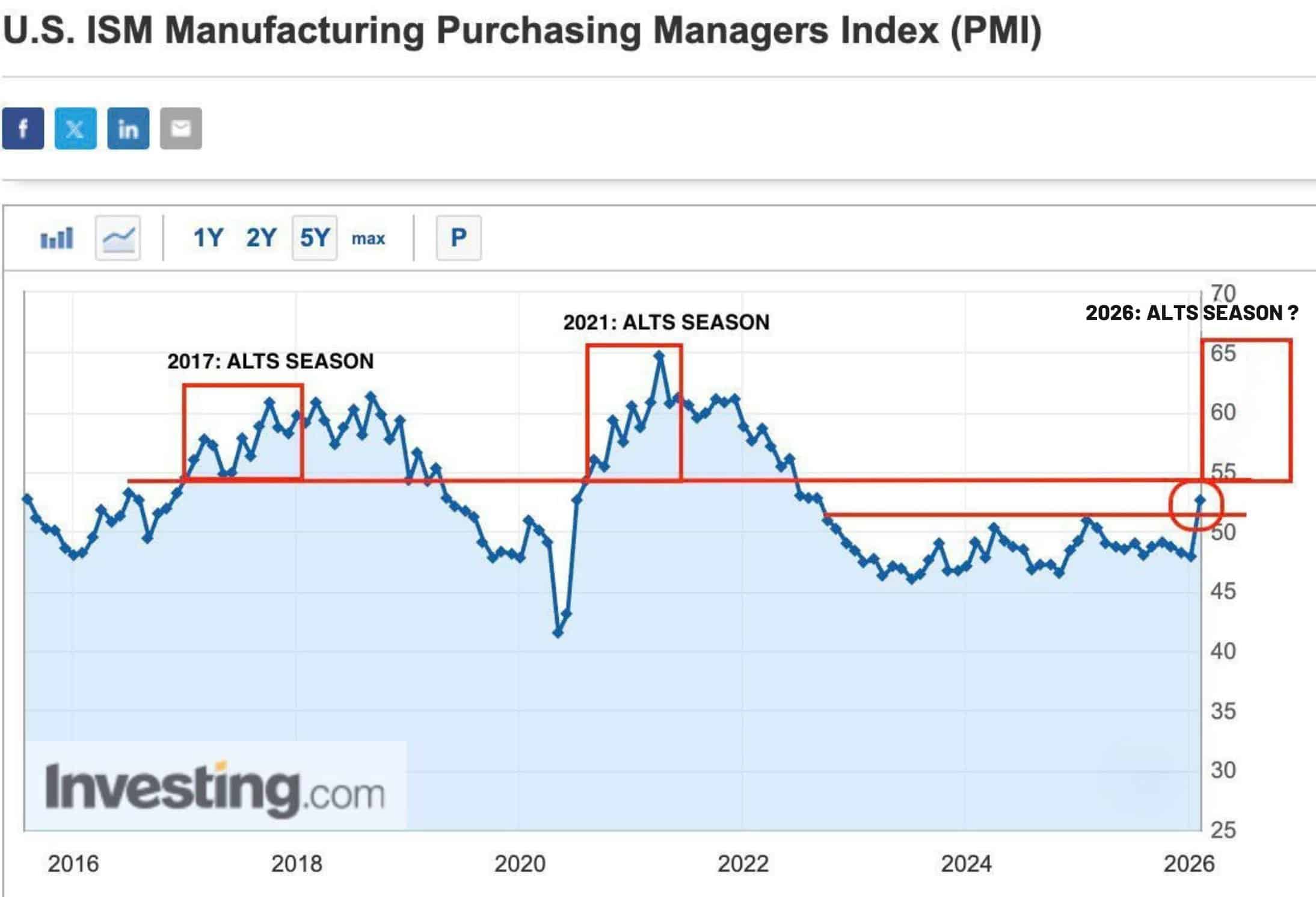
The latest ISM Manufacturing PMI came in at 52.6%, its highest reading in nearly 40 months. This pushed U.S. manufacturing back into expansion territory.

Source: X

Past altcoin rallies have tended to follow periods when ISM moved decisively higher. In both 2017 and 2021, altseasons took shape only after PMI readings climbed above the 55 mark.

While current levels remain below that threshold, it looks like a potential turning point may be in order.

But that’s not all…

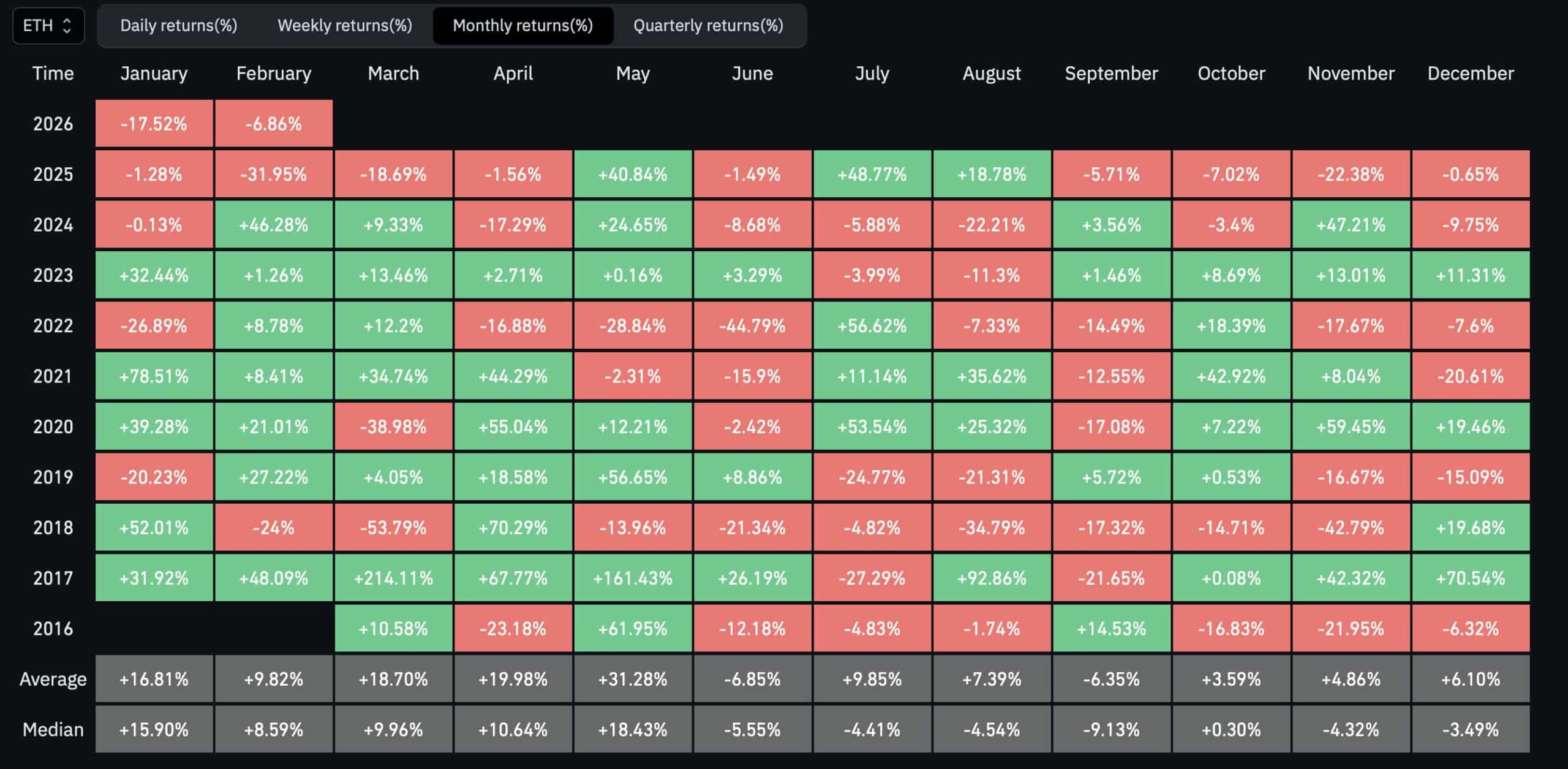
Ethereum [ETH] – famously known as a harbinger of altseason – has closed in the red in 12 of the last 15 months with a prolonged stretch of weakness.

Source: X

The monthly returns chart makes this slowdown obvious, showing uneven gains with frequent drawdowns across 2024 and into early 2026. Even during brief comebacks, follow-through has been limited.

This is important. Sustained altseasons have almost always followed a clear and consistent uptrend in Ethereum.

Altcoin signs look weak

Source: CoinGlass

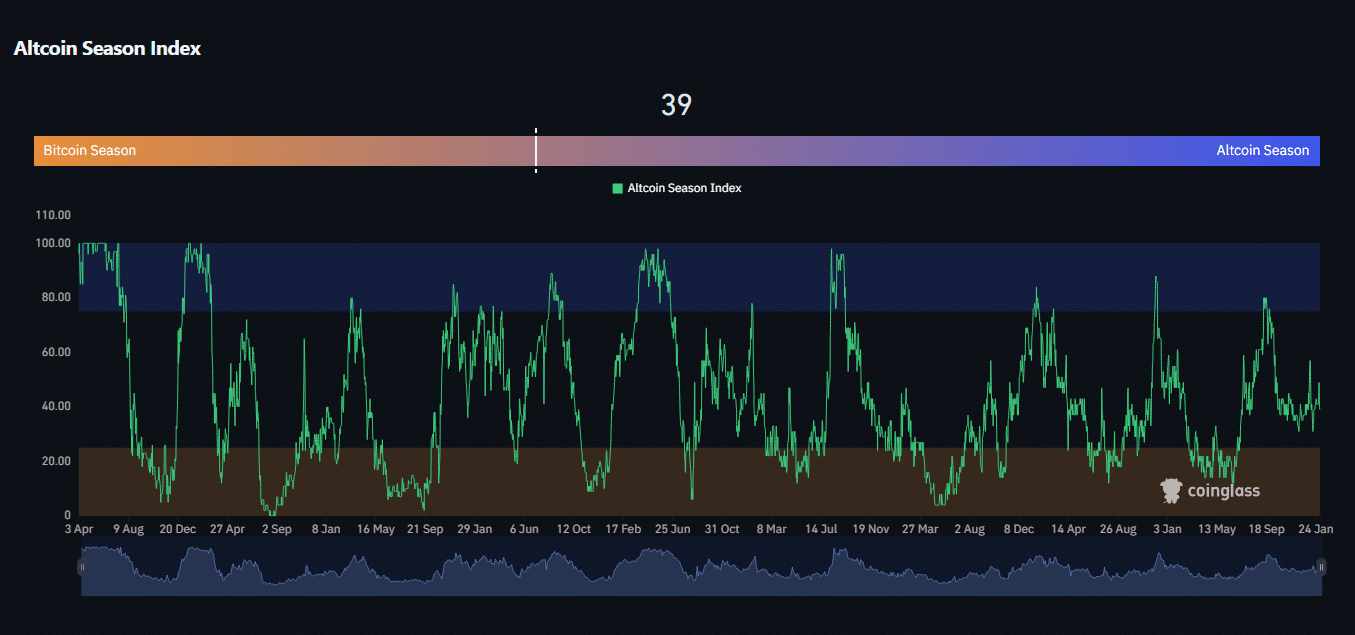
CoinGlass’ Altcoin Season Index was at 39 at the time of writing, below the level that usually indicates a rotation away from Bitcoin [BTC]. Despite growing macro optimism, capital has yet to flow into altcoins on a larger scale.

Source: TradingView

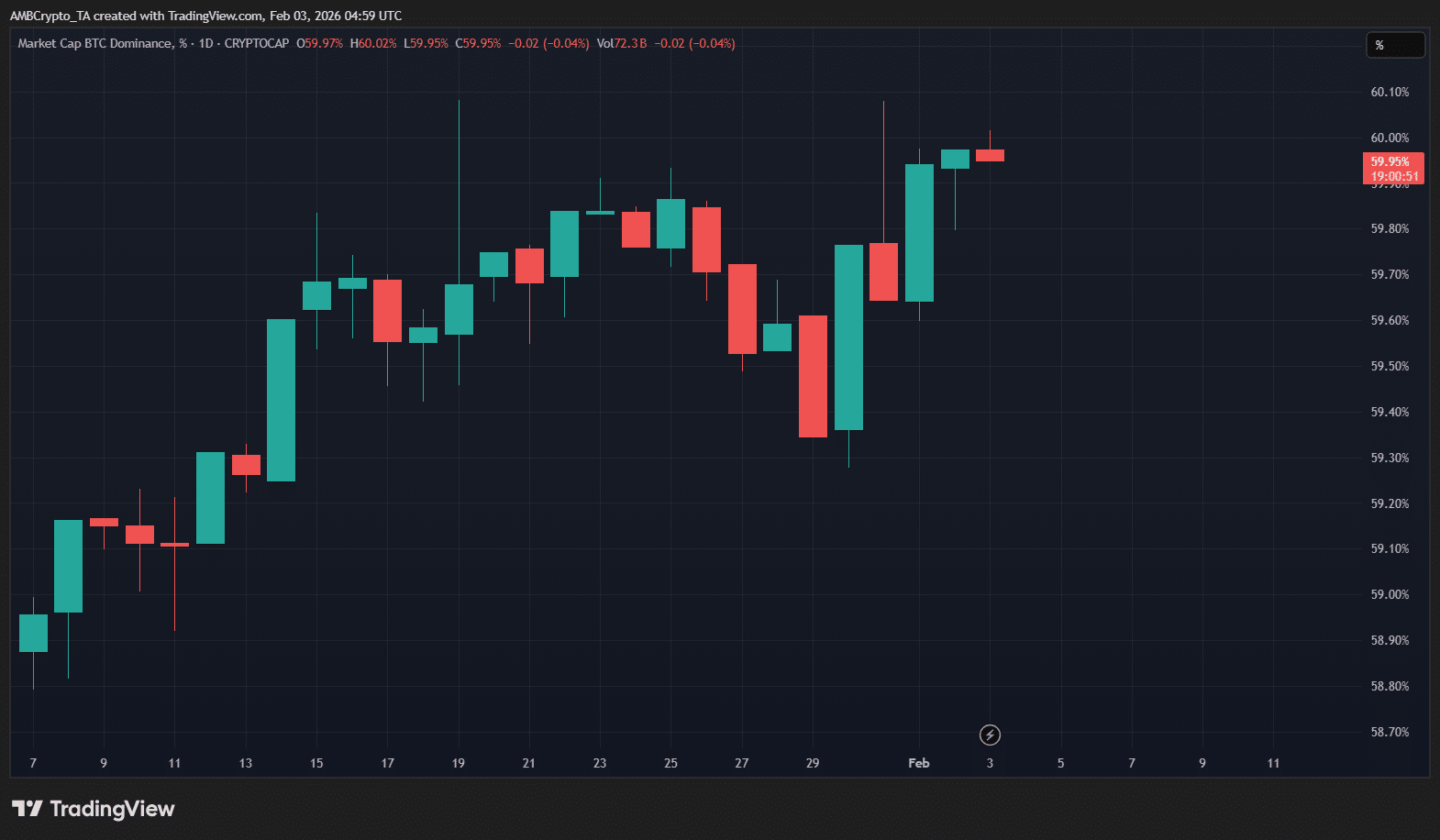
At the same time, BTC.D was close to 60% on the daily chart.

Altseasons usually started with a clear decline in BTC dominance, with investors moving down the risk curve. For now, that shift has not yet happened.

Overall, while altseason expectations are beginning to fire up, they may very well be premature. Only time will tell.


Final Thoughts

  • Early macro signals are improving, but the market lacks a trigger for a true altseason.
  • With altcoin season index at 39, capital is still firmly in Bitcoin.
Next: White House talks expose stablecoin rewards as fault line in U.S. crypto legislation
Share
  • Share
  • Tweet

İlgili Sorular

QWhat are the two key indicators that need to flip for an altseason to begin according to the article?

AThe two key indicators are the ISM Manufacturing PMI rising above the 55 mark and a clear decline in Bitcoin dominance (BTC.D) as capital flows into altcoins.

QWhat was the current reading of the Altcoin Season Index mentioned in the article, and what does it indicate?

AThe Altcoin Season Index was at 39 at the time of writing, indicating that capital is still firmly in Bitcoin and below the level that usually signals a rotation into altcoins.

QHow has Ethereum's performance been described in relation to predicting altseasons?

AEthereum has closed in the red in 12 of the last 15 months with prolonged weakness, and sustained altseasons have almost always followed a clear and consistent uptrend in Ethereum's price.

QWhat significant level did the latest ISM Manufacturing PMI reach, and why is this important for altcoins?

AThe latest ISM Manufacturing PMI came in at 52.6%, its highest reading in nearly 40 months, pushing U.S. manufacturing into expansion territory. Past altcoin rallies have followed periods when ISM moved decisively higher, particularly above 55.

QWhat is the current state of Bitcoin dominance (BTC.D) and its implication for an altseason?

ABTC.D was close to 60% on the daily chart, indicating that the shift of investors moving down the risk curve into altcoins has not yet happened, which is necessary for an altseason to start.

İlgili Okumalar

Annual Salary of Millions Competing for Electricians, Meta Rushes to Open Its Own Technical School

The AI boom is facing an unexpected bottleneck: a severe shortage of skilled construction workers and electricians. As tech giants like Meta, OpenAI, and Alphabet race to build massive data centers—such as OpenAI's $16 billion "Stargate" project—they are hitting a critical labor wall. The U.S. needs an estimated 130,000 more electricians, 240,000 construction workers, and 150,000 supervisors by 2030 for AI infrastructure alone, but tens of thousands of electrician jobs go unfilled each year. While AI companies offer high premiums, with electricians earning up to $280,000 annually, worker scarcity still causes massive losses—delays on a single project can cost $14.2 million per month. The complexity of building AI data centers, which require immense power (equivalent to powering hundreds of thousands of homes), sophisticated electrical systems, and advanced liquid cooling solutions, demands highly skilled technicians who are in short supply. To combat this, companies are investing heavily in training. Meta has committed $115 million to a free training school offering tuition, housing, and stipends, targeting 5,000 new workers. OpenAI is partnering with unions to secure skilled labor. These efforts are paying off, with a significant rise in Gen Z interest in trade schools over college. However, the power demands are staggering. AI data centers are driving a rapid surge in electricity consumption, projected to account for up to 12% of U.S. power use by 2028 and raising costs for consumers. Furthermore, the construction boom is project-based, leading to a potential future glut of trained workers once building peaks, which could depress wages industry-wide. The race for AI supremacy now depends as much on skilled hands as on advanced chips.

marsbit1 saat önce
Annual Salary of Millions Competing for Electricians, Meta Rushes to Open Its Own Technical School

marsbit1 saat önce

OpenAI No Longer Sells Its Most Expensive Model for Profit

OpenAI is shifting its business strategy away from promoting its most expensive, flagship models for every task. Recent price cuts—80% for GPT-5.6 Luna and 20% for Terra—signal a deeper change: the company now actively advises users that many tasks don't require the most powerful model. Instead, OpenAI recommends a tiered approach: use the high-end GPT-5.6 Sol for complex planning and analysis, then delegate execution to cheaper models like Luna. This mirrors moves by Anthropic, which recently launched Claude Opus 5 at half the price of its top model, Fable 5. Both companies are de-emphasizing flagship models as primary revenue drivers, using them instead for brand prestige and technological showcases. The industry is entering a "mass-market" phase, similar to automotive, where high-volume, cost-effective models handle daily operations and drive scale. OpenAI's price reductions are partly enabled by AI models themselves optimizing underlying code and infrastructure, creating a self-reinforcing cycle of efficiency gains and cost reduction. Competition is shifting from "who is smartest" to "who offers the best value." The goal is no longer selling individual models but fostering widespread API adoption and ecosystem lock-in. By making AI calls cheap and ubiquitous, companies like OpenAI aim to become the indispensable, utility-like infrastructure powering automated workflows—the "water and electricity" of software, quietly embedded everywhere.

marsbit1 saat önce

OpenAI No Longer Sells Its Most Expensive Model for Profit

marsbit1 saat önce

İşlemler

Spot
活动图片