India’s $5T crypto volume vs. policy silence: Why Budget 2026 is a ‘make or break’ moment

ambcrypto2026-01-22 tarihinde yayınlandı2026-01-22 tarihinde güncellendi

Özet

India, a $4+ trillion economy with an estimated 100 million crypto users, remains in policy limbo regarding digital assets. While cryptocurrency trading is legal, it is heavily taxed (30% on profits and 1% TDS) and monitored, yet lacks a clear regulatory framework. This uncertainty has led to a significant portion of trading activity moving offshore, with recent estimates showing Indian users generated nearly $5 trillion in volume on foreign exchanges between October 2024 and October 2025. Experts warn that continued hesitation risks capital flight and undermines India’s potential to lead in the emerging digital asset economy, making the 2026 budget a critical turning point.

Cryptocurrencies are no longer just a debate. Governments have gone from thinking of whether digital assets belong in the financial system to lining up plans for execution and usage. The market, too, for its part, has matured alongside it all.

India, however (a $4+ trillion economy), remains paused in an in-between space. The issue now is what the country’s continued hesitation means... at a time when other major economies have already gained a competitive edge.

No policy clarity? That’s okay!

India has an estimated 100 million crypto users, making it one of the largest (and fastest-growing) user bases globally. Trading crypto is legal, heavily taxed (flat 30% on profits, with 1% TDS), and closely monitored.

However, it still exists outside a coherent policy vision for what role digital assets are meant to play.

This has created a peculiar half-position.

The state benefits from participation through taxation, but stops short of formally recognizing crypto as part of the architecture. As a result, the ecosystem has grown in volume and users, but without the certainty that stakeholders treasure.

As Abhay Agarwal, Founder and CEO of GetBit, told AMBCrypto,

“...Changes would keep capital in India... and give India a great opportunity to take on the role of a thoughtful and responsible leader of the emerging digital asset economy...”

Indecision is expensive

In India’s case, the absence of a defined crypto framework has redirected participation.

Trading activity moved offshore, beyond domestic oversight and policy reach. Recent estimates say that Indian users generated close to ₹5 lakh crore (approx. $5 trillion) in trading volume on offshore crypto exchanges between October 2024 and October 2025.

İlgili Sorular

QWhat is the estimated number of crypto users in India according to the article?

AIndia has an estimated 100 million crypto users.

QWhat is the current tax rate on cryptocurrency trading profits in India?

AThere is a flat 30% tax on crypto trading profits, along with a 1% TDS (Tax Deducted at Source).

QWhy is the 2026 Budget described as a 'make or break' moment for India's crypto market?

AIt is a 'make or break' moment because India's continued policy hesitation and lack of a clear framework is causing significant trading activity and capital to move offshore, and the 2026 Budget represents a critical opportunity to establish regulatory clarity and retain its competitive edge.

QHow much trading volume did Indian users generate on offshore exchanges between October 2024 and October 2025?

AIndian users generated close to ₹5 lakh crore (approximately $5 trillion) in trading volume on offshore crypto exchanges during that period.

QWhat is the main consequence of India's lack of a defined crypto policy framework, as stated in the article?

AThe main consequence is that trading activity has moved offshore, beyond domestic oversight and policy reach, redirecting participation and capital away from the country.

İlgili Okumalar

The "Iron Rule" of Chip Equipment Is Being Broken

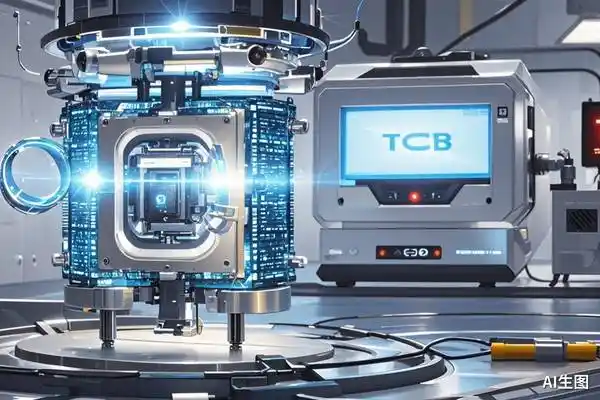
For years, the semiconductor equipment industry followed an unwritten "iron rule": suppliers offered steep discounts for new tool introductions (Design-in) and faced consistent price pressure during repeat orders, especially during market downturns. This long-standing buyer's market dynamic is now being upended. Recently, SK Hynix's primary equipment suppliers have reportedly requested a 3-4% price *increase*, a nearly unprecedented move. This shift is driven by a severe supply-demand imbalance fueled by the AI compute boom. Securing equipment has become an urgent arms race as chipmakers' expansion speed dictates their ability to fulfill massive AI chip orders. Key areas feeling the strain include: **TCB (Thermal Compression Bonding) Equipment:** Demand is exploding, driven by the simultaneous needs of HBM4 memory stacking, AI chip Chip-on-Substrate (C2S), and logic Chiplet Chip-on-Wafer (C2W) packaging. Players like Hanmi Semiconductor, Hanwha Semitech, and ASMPT are receiving major orders. While hybrid bonding is seen as the future, TCB remains the pragmatic choice for HBM4 mass production, with its lifecycle extended by relaxed specifications and ongoing technological upgrades. **Test Equipment Bottlenecks:** Ironically, AI-driven shortages are now crippling test equipment manufacturing. Critical components like FPGAs, Driver ICs, and CPUs face severe shortages and extended lead times (up to 52 weeks for FPGAs), as AI data center and server vendors prioritize supply. This creates a paradoxical cycle: AI chip shortages drive fab expansion, which requires more test equipment, whose production is delayed because its key parts are diverted to make AI chips. The industry is entering a broad, AI-powered upcycle. SEMI forecasts global semiconductor equipment sales to hit a record $156 billion by 2027, fueled by investment in advanced logic/foundry, HBM-driven DRAM, and advanced packaging (like CoWoS). Major players like TSMC, SK Hynix, and Micron are aggressively ramping capital expenditure. In conclusion, leading equipment vendors are no longer just selling tools; they are selling the critical capability to deliver AI-era capacity. Pricing power is shifting decisively to those with indispensable technology in key process nodes like advanced logic, HBM, and advanced packaging, rewriting the industry's traditional power structure.

marsbit13 dk önce

The "Iron Rule" of Chip Equipment Is Being Broken

marsbit13 dk önce

İşlemler

Spot
Futures
活动图片