In Web3 Storytelling, You Don't Need Creativity

marsbit2025-12-29 tarihinde yayınlandı2025-12-29 tarihinde güncellendi

Özet

In the Web3 content space, many creators mistakenly believe they lack creativity, but the real issue is the absence of contrast in their narratives. Contrast refers to a shift or change—such as moving from "before" to "after," "expectation" to "reality," or "belief" to "realization"—that makes content engaging and memorable. Without this transformation, content remains flat and forgettable, merely presenting information like features, data, or promises straightforwardly. The human mind is activated by unexpected changes, not linear facts. For example, instead of stating "Solana is fast and cheap," a contrast-driven approach would describe the surprise of a transaction completing instantly. This creates a relatable moment. Embracing contrast often involves acknowledging past mistakes, doubts, or uncertainties, which fosters authenticity and connection with audiences. To incorporate contrast, ask: "What changed here?" Include elements like a mistaken assumption, a moment of hesitation, or an unexpected outcome. In Web3’s noisy environment, contrast helps content stand out without needing exaggerated creativity—just genuine, relatable shifts.

Author:Noir

Compiled by: Deep Tide TechFlow

Most Web3 content creators think they're not good at storytelling because they feel they "lack creativity."

But friend, that's usually not the real issue.

Actually, the real problem is:

— Your content lacks contrast.

Hey, either the content:

Sounds the same,

Feels flat,

Or has no variation.

And when nothing changes, there's no story to tell.

What is Contrast?
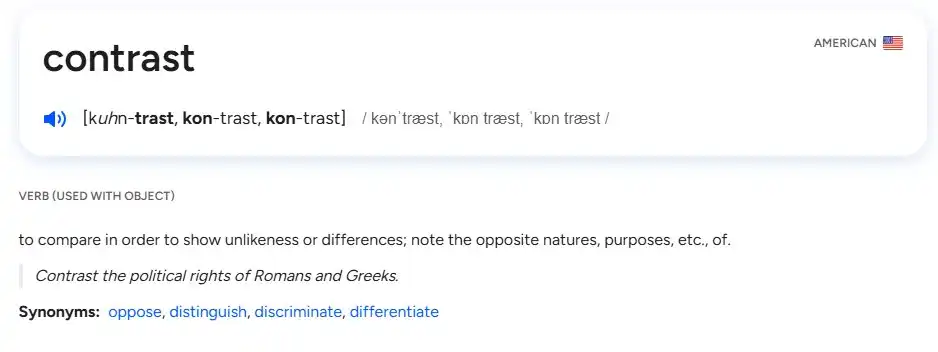
Contrast simply means something is different from what came before.

Yes, it's that simple.

It doesn't require:

Flowery language,

Unexpected plot twists,

Or background music.

At its core, contrast is a transformation, such as:

From "before" to "after"

From "expectation" to "reality"

From "belief" to "realization"

Without this transformation, your content is just information.

Yes, it might be useful, but memorable? Hmm... unlikely.

Why does a lack of contrast make content weak?

The Web3 world is full of:

Features, data, promises, roadmaps......

But most content is presented too straightforwardly:

"This is what it does."

"These are its benefits."

"This is why you should care."

However, the brain isn't interested in this linear information.

It wakes up when something unexpected happens.

Why Content Loses Appeal Without Contrast

The Web3 world is flooded with:

Features, data, promises, roadmaps......

But most content is presented too directly:

"This is its function."

"Why it's good."

"Why you need to care about it."

Yet, the brain isn't activated by this linear information.

It only wakes up when something unexpected occurs.

A Simple Example of "Contrast"

(You've definitely seen this countless times)

Expression without contrast:

Solana has fast transactions and low costs.

Your brain responds: Okay... and?

Expression with contrast:

I clicked send, switched tabs, and only then realized the transaction was already complete.

The same idea, but with a completely different impact.

The second expression creates a "moment." Get it?

Why Does "Contrast" Feel Uncomfortable?

(And why this matters)

Contrast often requires you to admit:

You were wrong, you were confused, you underestimated something.

That's why most people avoid it.

But this discomfort is precisely what makes content feel authentic.

People don't like flawless things.

They connect more easily with relatability and vulnerability.

When someone thinks: "Wait... I've felt that way too."

Congratulations, you've succeeded.

How to Add "Contrast" to Your Content?

Before publishing, ask yourself one question:

"What changed here?"

If you can't answer, try adding one of the following:

  • A mistaken assumption you once had

  • A moment of hesitation

  • An unexpected result

  • A "small decision" you almost didn't make

It really doesn't need a dramatic plot.

You just need a bit of relatable change.

Weirdo's Summary

Don't get me wrong, creativity does play an important role in storytelling.

But not everyone is born creative. This article is specifically for those who genuinely want to learn storytelling techniques.

Its core is: being sincere enough to show "transformation."

In the complex and noisy world of Web3,

"Contrast" is how you stand out without having to shout :)

Remember to follow me, or else you'll... (Content here does not comply with Mainland China norms, suggested deletion).


İlgili Sorular

QAccording to the article, what is the main reason most Web3 content creators struggle with storytelling?

AThe main reason is not a lack of creativity, but that their content lacks contrast.

QWhat is the article's definition of 'contrast' in the context of storytelling?

AContrast is defined as something that is different from what came before it, representing a transformation such as from 'before' to 'after' or from 'expectation' to 'reality'.

QWhy does the brain find content without contrast unengaging?

AThe brain is not activated by straightforward, linear information; it is awakened when something unexpected happens.

QWhat is one reason that using contrast in content can feel uncomfortable for the creator?

AIt often requires admitting that you were wrong, confused, or that you underestimated something.

QWhat is a simple question the article suggests creators ask themselves to add contrast to their content?

AAsk: 'What changed here?' and if you can't answer, add elements like a past mistaken assumption, a moment of hesitation, or an unexpected result.

İlgili Okumalar

Google and Amazon Simultaneously Invest Heavily in a Competitor: The Most Absurd Business Logic of the AI Era Is Becoming Reality

In a span of four days, Amazon announced an additional $25 billion investment, and Google pledged up to $40 billion—both direct competitors pouring over $65 billion into the same AI startup, Anthropic. Rather than a typical venture capital move, this signals the latest escalation in the cloud wars. The core of the deal is not equity but compute pre-orders: Anthropic must spend the majority of these funds on AWS and Google Cloud services and chips, effectively locking in massive future compute consumption. This reflects a shift in cloud market dynamics—enterprises now choose cloud providers based on which hosts the best AI models, not just price or stability. With OpenAI deeply tied to Microsoft, Anthropic’s Claude has become the only viable strategic asset for Google and Amazon to remain competitive. Anthropic’s annualized revenue has surged to $30 billion, and it is expanding into verticals like biotech, positioning itself as a cross-industry AI infrastructure layer. However, this funding comes with constraints: Anthropic’s independence is challenged as it balances two rival investors, its safety-first narrative faces pressure from regulatory scrutiny, and its path to IPO introduces new financial pressures. Globally, this accelerates a "tri-polar" closed-loop structure in AI infrastructure, with Microsoft-OpenAI, Google-Anthropic, and Amazon-Anthropic forming exclusive model-cloud alliances. In contrast, China’s landscape differs—investments like Alibaba and Tencent backing open-source model firm DeepSeek reflect a more decoupled approach, though closed-source models from major cloud providers still dominate. The $65 billion bet is ultimately about securing a seat at the table in an AI-defined future—where missing the model layer means losing the cloud war.

marsbit2 saat önce

Google and Amazon Simultaneously Invest Heavily in a Competitor: The Most Absurd Business Logic of the AI Era Is Becoming Reality

marsbit2 saat önce

Computing Power Constrained, Why Did DeepSeek-V4 Open Source?

DeepSeek-V4 has been released as a preview open-source model, featuring 1 million tokens of context length as a baseline capability—previously a premium feature locked behind enterprise paywalls by major overseas AI firms. The official announcement, however, openly acknowledges computational constraints, particularly limited service throughput for the high-end DeepSeek-V4-Pro version due to restricted high-end computing power. Rather than competing on pure scale, DeepSeek adopts a pragmatic approach that balances algorithmic innovation with hardware realities in China’s AI ecosystem. The V4-Pro model uses a highly sparse architecture with 1.6T total parameters but only activates 49B during inference. It performs strongly in agentic coding, knowledge-intensive tasks, and STEM reasoning, competing closely with top-tier closed models like Gemini Pro 3.1 and Claude Opus 4.6 in certain scenarios. A key strategic product is the Flash edition, with 284B total parameters but only 13B activated—making it cost-effective and accessible for mid- and low-tier hardware, including domestic AI chips from Huawei (Ascend), Cambricon, and Hygon. This design supports broader adoption across developers and SMEs while stimulating China's domestic semiconductor ecosystem. Despite facing talent outflow and intense competition in user traffic—with rivals like Doubao and Qianwen leading in monthly active users—DeepSeek has maintained technical momentum. The release also comes amid reports of a new funding round targeting a valuation exceeding $10 billion, potentially setting a new record in China’s LLM sector. Ultimately, DeepSeek-V4 represents a shift toward open yet realistic infrastructure development in the constrained compute landscape of Chinese AI, emphasizing engineering efficiency and domestic hardware compatibility over pure model scale.

marsbit2 saat önce

Computing Power Constrained, Why Did DeepSeek-V4 Open Source?

marsbit2 saat önce

İşlemler

Spot
Futures

Popüler Makaleler

T Nasıl Satın Alınır

HTX.com’a hoş geldiniz! Threshold Network Token (T) satın alma işlemlerini basit ve kullanışlı bir hâle getirdik. Adım adım açıkladığımız rehberimizi takip ederek kripto yolculuğunuza başlayın. 1. Adım: HTX Hesabınızı OluşturunHTX'te ücretsiz bir hesap açmak için e-posta adresinizi veya telefon numaranızı kullanın. Sorunsuzca kaydolun ve tüm özelliklerin kilidini açın. Hesabımı Aç2. Adım: Kripto Satın Al Bölümüne Gidin ve Ödeme Yönteminizi SeçinKredi/Banka Kartı: Visa veya Mastercard'ınızı kullanarak anında Threshold Network Token (T) satın alın.Bakiye: Sorunsuz bir şekilde işlem yapmak için HTX hesap bakiyenizdeki fonları kullanın.Üçüncü Taraflar: Kullanımı kolaylaştırmak için Google Pay ve Apple Pay gibi popüler ödeme yöntemlerini ekledik.P2P: HTX'teki diğer kullanıcılarla doğrudan işlem yapın.Borsa Dışı (OTC): Yatırımcılar için kişiye özel hizmetler ve rekabetçi döviz kurları sunuyoruz.3. Adım: Threshold Network Token (T) Varlıklarınızı SaklayınThreshold Network Token (T) satın aldıktan sonra HTX hesabınızda saklayın. Alternatif olarak, blok zinciri transferi yoluyla başka bir yere gönderebilir veya diğer kripto para birimlerini takas etmek için kullanabilirsiniz.4. Adım: Threshold Network Token (T) Varlıklarınızla İşlem YapınHTX'in spot piyasasında Threshold Network Token (T) ile kolayca işlemler yapın.Hesabınıza erişin, işlem çiftinizi seçin, işlemlerinizi gerçekleştirin ve gerçek zamanlı olarak izleyin. Hem yeni başlayanlar hem de deneyimli yatırımcılar için kullanıcı dostu bir deneyim sunuyoruz.

365 Toplam GörüntülenmeYayınlanma 2024.12.10Güncellenme 2025.03.21

T Nasıl Satın Alınır

Tartışmalar

HTX Topluluğuna hoş geldiniz. Burada, en son platform gelişmeleri hakkında bilgi sahibi olabilir ve profesyonel piyasa görüşlerine erişebilirsiniz. Kullanıcıların T (T) fiyatı hakkındaki görüşleri aşağıda sunulmaktadır.

活动图片