Hong Kong Proposes New Rules To Allow Crypto Investments For Insurers – Report

bitcoinist2025-12-23 tarihinde yayınlandı2025-12-23 tarihinde güncellendi

Özet

Hong Kong's Insurance Authority has proposed new rules to allow insurers to invest in cryptocurrencies and stablecoins, as part of the city's broader strategy to become a global digital asset hub. The proposal, subject to public consultation from February to April 2026, would impose a 100% risk charge on crypto assets, requiring insurers to hold reserves equal to their crypto investments. Stablecoins would be treated differently, with risk charges based on the fiat currency they are pegged to. The move aims to support the insurance industry and economic development. Separately, the Hong Kong Monetary Authority is expected to issue its first stablecoin licenses in early 2026, though mainland China's strict stance against stablecoins may complicate applications involving Chinese institutions or the yuan.

Hong Kong is reportedly exploring new rules that would allow insurance companies to invest in cryptocurrencies and the infrastructure sector as part of its efforts to become a leading hub for digital assets and support broader economic development.

Hong Kong Eyes Crypto Investments For Insurers

On Monday, Bloomberg reported that the Hong Kong Insurance Authority has proposed a set of new rules that could channel insurance capital into digital assets, including cryptocurrencies and stablecoins.

Hong Kong financial authorities have been actively working to develop a comprehensive framework that supports the expansion of the digital assets industry, part of its strategy to become a leading crypto hub in the world.

According to the December 4 presentation reviewed by Bloomberg, the insurance regulator would impose a 100% risk charge on crypto assets, requiring insurers to hold reserves equal to the value of their crypto investments.

Meanwhile, stablecoin investments would be approached differently under the new proposal, with risk charges based on the fiat currency the Hong Kong-regulated token is pegged to.

The Insurance Authority proposal, which could still change in the coming months, will reportedly be open for public consultation from February through April 2026, followed by legislative submissions.

The regulator told Bloomberg that it initiated the review of the risk-based capital regime this year with the main goal of supporting the insurance industry and broader economic development.

Notably, the insurance authority website states that there were 158 authorized insurers in Hong Kong as of June 2025. Moreover, the total gross premiums of the Hong Kong insurance industry were HK$635 billion, worth approximately $82 billion, in 2024.

“We are at the stage of gauging industry feedback and will also put the proposals for public consultation in due course,” a spokesperson for the regulator told the news media outlet.

The proposed insurer framework also addresses new infrastructure rules as the city seeks new growth. The regulator is reportedly planning capital incentives for investments in Hong Kong or on the mainland, as well as for projects listed or issued in the financial hub.

HK’s Stablecoin Landscape

As Bloomberg noted, the Hong Kong Monetary Authority (HKMA) is expected to grant the first batch of stablecoin issuer licenses at the start of 2026. However, some industry players believe that the regulator’s timeline could be delayed.

As reported by Bitcoinist, the People’s Bank of China (PBOC) and other top financial regulators recently affirmed that stablecoins do not qualify as legal tender in the mainland, as they don’t meet regulatory requirements and risk of being used for illegal activities.

Following the pronouncement, multiple analysts suggested that the PBOC’s recent declarations not only sank hopes that Beijing might have softened its stance on cryptocurrencies but also would affect Hong Kong’s efforts to become a hub for the stablecoin industry.

Earlier this year, the HKMA enacted the Stablecoins Ordinance, which directs any individual or entity seeking to issue a fiat-referenced stablecoin (FRS) in Hong Kong, or any Hong Kong Dollar-pegged token, to obtain a license from the regulator.

Multiple companies have applied for the license, with more than 30 applications filed this year, according to local news outlets. The list of applicants includes logistics technology firm Reitar Logtech and the overseas arm of Chinese mainland financial technology giant Ant Group.

According to the founding director of the Law, Innovation, Technology and Entrepreneurship Lab at the University of Hong Kong’s Faculty of Law, Brian Tang, Beijing’s stance means that applicants for Hong Kong’s stablecoin licenses would need to reconsider if the application submitted to the HKMA touches mainland China issuers and users.

A spokesperson stated that the HKMA was reviewing the applications and aimed to begin with a reduced number of licenses. However, they noted that even if Hong Kong proceeds with the original approval schedule, projects that involve the yuan or mainland Chinese institutions would likely be delayed.
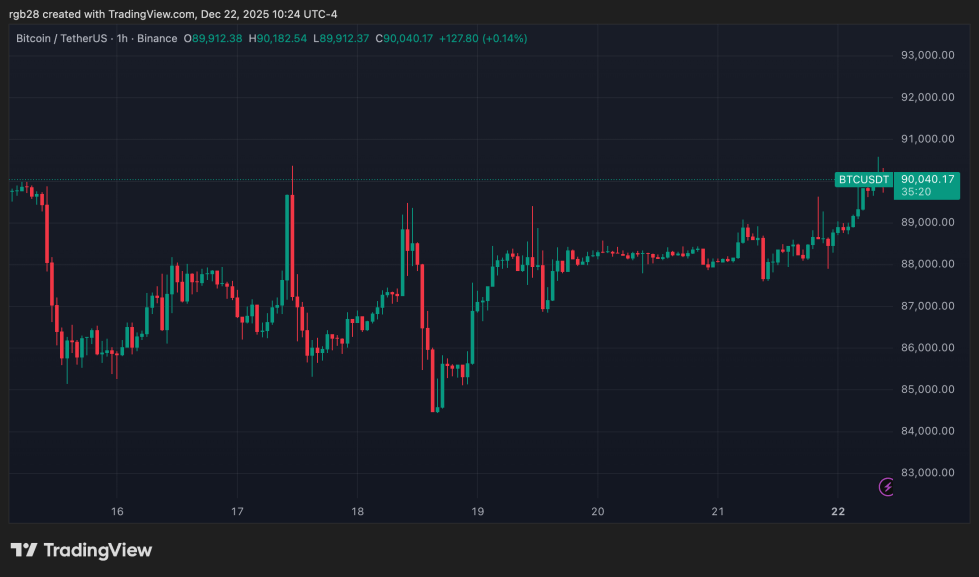
Bitcoin (BTC) trades at $90,040 in the one-week chart. Source: BTCUSDT on TradingView


İlgili Sorular

QWhat is the main purpose of Hong Kong's proposed new rules for insurance companies?

AThe main purpose is to allow insurance companies to invest in cryptocurrencies and the infrastructure sector as part of Hong Kong's strategy to become a leading hub for digital assets and support broader economic development.

QWhat specific risk charge would be imposed on crypto assets under the proposed rules?

AA 100% risk charge would be imposed, requiring insurers to hold reserves equal to the full value of their crypto investments.

QHow will the risk charge for stablecoin investments be determined according to the proposal?

AThe risk charge for stablecoins will be based on the fiat currency that the Hong Kong-regulated token is pegged to.

QWhen is the Hong Kong Insurance Authority's proposal expected to be open for public consultation?

AThe proposal is expected to be open for public consultation from February through April 2026.

QWhat potential impact did analysts suggest the PBOC's declaration on stablecoins would have on Hong Kong?

AAnalysts suggested that the PBOC's declaration, which states stablecoins are not legal tender, would affect Hong Kong's efforts to become a hub for the stablecoin industry and means license applicants must reconsider if their application involves mainland China issuers and users.

İlgili Okumalar

Annual Salary of Millions Competing for Electricians, Meta Rushes to Open Its Own Technical School

The AI boom is facing an unexpected bottleneck: a severe shortage of skilled construction workers and electricians. As tech giants like Meta, OpenAI, and Alphabet race to build massive data centers—such as OpenAI's $16 billion "Stargate" project—they are hitting a critical labor wall. The U.S. needs an estimated 130,000 more electricians, 240,000 construction workers, and 150,000 supervisors by 2030 for AI infrastructure alone, but tens of thousands of electrician jobs go unfilled each year. While AI companies offer high premiums, with electricians earning up to $280,000 annually, worker scarcity still causes massive losses—delays on a single project can cost $14.2 million per month. The complexity of building AI data centers, which require immense power (equivalent to powering hundreds of thousands of homes), sophisticated electrical systems, and advanced liquid cooling solutions, demands highly skilled technicians who are in short supply. To combat this, companies are investing heavily in training. Meta has committed $115 million to a free training school offering tuition, housing, and stipends, targeting 5,000 new workers. OpenAI is partnering with unions to secure skilled labor. These efforts are paying off, with a significant rise in Gen Z interest in trade schools over college. However, the power demands are staggering. AI data centers are driving a rapid surge in electricity consumption, projected to account for up to 12% of U.S. power use by 2028 and raising costs for consumers. Furthermore, the construction boom is project-based, leading to a potential future glut of trained workers once building peaks, which could depress wages industry-wide. The race for AI supremacy now depends as much on skilled hands as on advanced chips.

marsbit1 saat önce

Annual Salary of Millions Competing for Electricians, Meta Rushes to Open Its Own Technical School

marsbit1 saat önce

OpenAI No Longer Sells Its Most Expensive Model for Profit

OpenAI is shifting its business strategy away from promoting its most expensive, flagship models for every task. Recent price cuts—80% for GPT-5.6 Luna and 20% for Terra—signal a deeper change: the company now actively advises users that many tasks don't require the most powerful model. Instead, OpenAI recommends a tiered approach: use the high-end GPT-5.6 Sol for complex planning and analysis, then delegate execution to cheaper models like Luna. This mirrors moves by Anthropic, which recently launched Claude Opus 5 at half the price of its top model, Fable 5. Both companies are de-emphasizing flagship models as primary revenue drivers, using them instead for brand prestige and technological showcases. The industry is entering a "mass-market" phase, similar to automotive, where high-volume, cost-effective models handle daily operations and drive scale. OpenAI's price reductions are partly enabled by AI models themselves optimizing underlying code and infrastructure, creating a self-reinforcing cycle of efficiency gains and cost reduction. Competition is shifting from "who is smartest" to "who offers the best value." The goal is no longer selling individual models but fostering widespread API adoption and ecosystem lock-in. By making AI calls cheap and ubiquitous, companies like OpenAI aim to become the indispensable, utility-like infrastructure powering automated workflows—the "water and electricity" of software, quietly embedded everywhere.

marsbit1 saat önce

OpenAI No Longer Sells Its Most Expensive Model for Profit

marsbit1 saat önce

İşlemler

Spot
活动图片




