According to Glassnode's assessment, the level of consumer confidence remains "among the lowest levels in the past decade," even after two consecutive months of improvement. This weakness has not stopped households from moving funds from cash into assets, as consumers still expect the cost of living to rise further and overall economic growth to slow. However, the intrigue still lies in where exactly this capital is flowing.
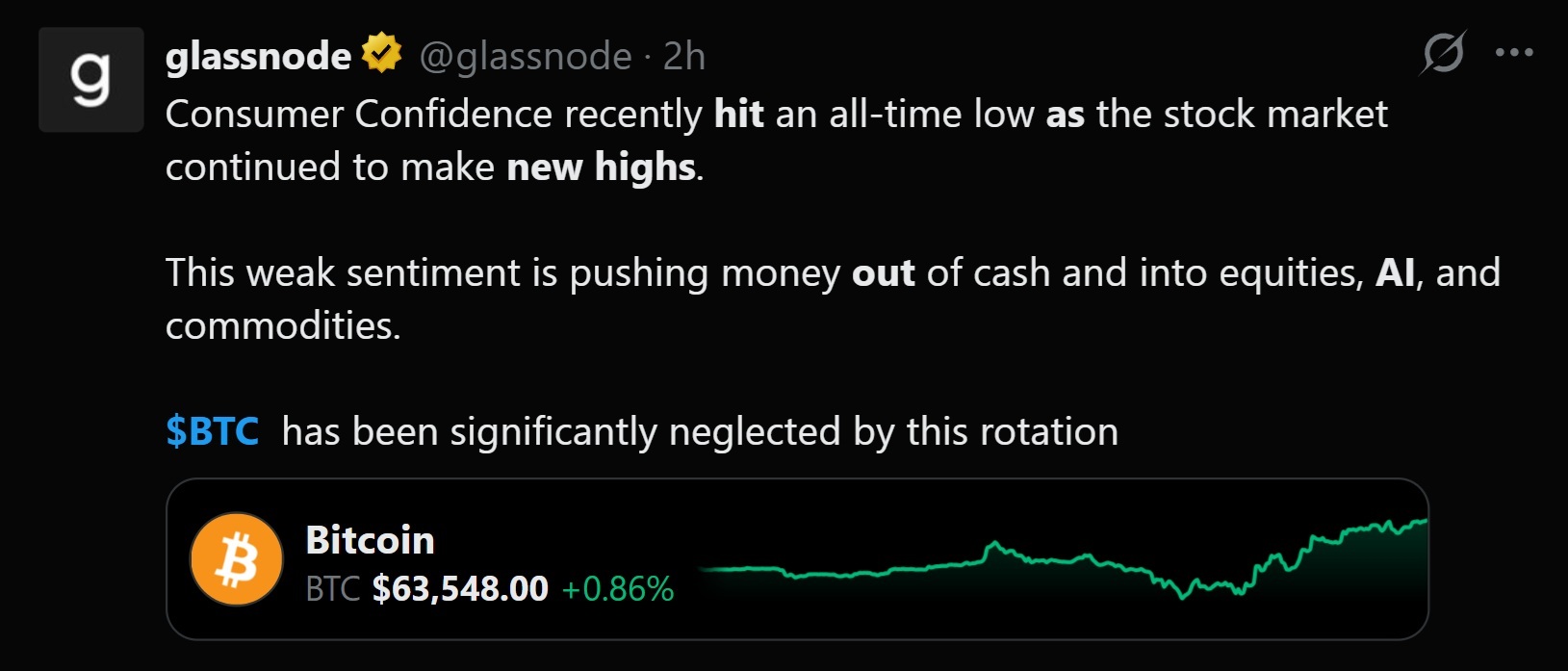
US stocks set a new all-time high on August 7th and have since held just below that level, with the gains almost entirely driven by trading in artificial intelligence (AI)-related company stocks, rather than a broad market rally.
Bitcoin, historically positioned as an asset that wins in situations where consumers lose confidence in the traditional financial system, has not been part of this move. As Bitcoin.com News reported last week, assets under management in spot Bitcoin ETFs shrank by $389.7 million in a single week, even as stock markets continued to rise—this divergence aligns with Glassnode's data on where capital is actually flowing this summer.
Where the Money is Actually Going
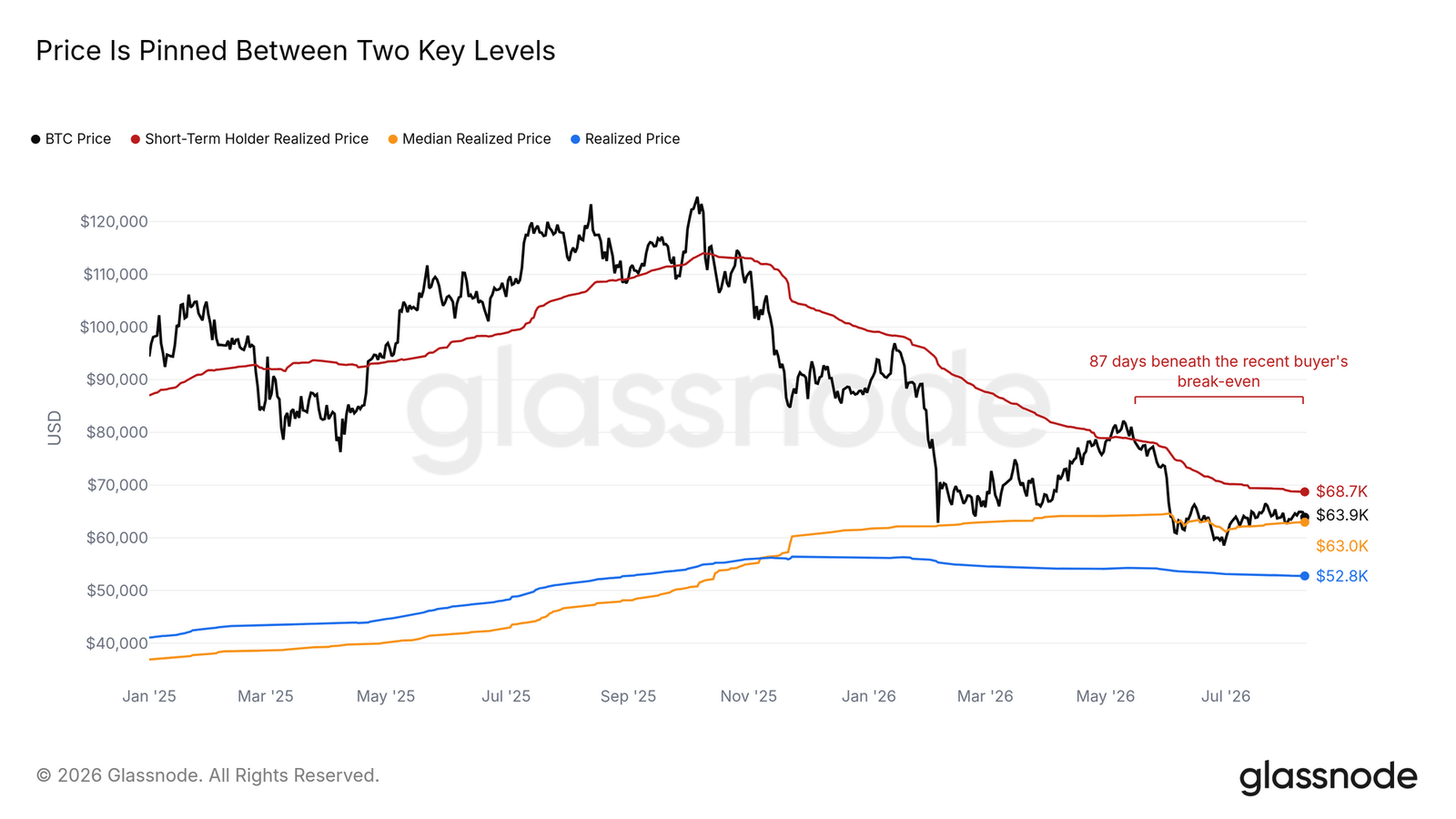
Bitcoin is currently trading at roughly half its October 2025 peak—a sharp drop that has left the asset stuck in a narrow range between its median realized price of around $63,000 and the cost basis for short-term holders of around $68,700.
Meanwhile, AI-related trading continues to attract fresh capital, as retail traders, hedge funds, and even crypto-oriented institutional investors (who once championed Bitcoin as the preferred hedging tool) are instead redirecting their investments into AI-specializing company stocks and AI-related crypto tokens.
The macroeconomic backdrop has not been hostile to Bitcoin, at least on paper: core inflation was 2.5% in July—a relatively moderate level—and the stock market took it as good news, continuing its record run. Bitcoin's muted reaction to favorable inflation data is itself a red flag noted by researchers, given that this asset is supposed to thrive amidst currency devaluation fears and loose monetary policy.
Finally, Bitcoin spot exchange trading volume has fallen to its lowest level since 2019, with recent ETF inflows constituting only a "tiny fraction of any of the past accumulation waves." This may indicate that institutional buying (which was the driver of Bitcoin's rally in 2024 and 2025) has paused.
What This Means for Bitcoin
The trend described by Glassnode—namely, the reorientation of mining and tech companies towards AI instead of digital assets—is manifesting not only in trading flows. Some Bitcoin miners have already begun pivoting their power contracts and data center capacity towards AI workloads, following the same capital rotation that Glassnode is tracking in the stock markets.
From the outside, this movement looks like a structural shift that may continue to put pressure on the narrative of Bitcoin as the "default place" for capital leaving cash.
Nevertheless, none of this actually means the arguments for Bitcoin's devaluation hedging or scarcity have been disproven—it's simply not happening on the timeline crypto optimists expected this summer. Bitcoin.com News recently analyzed a parallel argument that the growing US national debt should structurally have a positive impact on Bitcoin—a thesis that, like the AI capital rotation story, has not yet been clearly reflected in the price.
end-content