Mining as Reasoning: How Does Nockchain Achieve Dual Rewards?

marsbit2026-08-17 tarihinde yayınlandı2026-08-17 tarihinde güncellendi

Özet

"Mining as Inference: How Does Nockchain's Dual Reward System Work? After looking at macroeconomic conditions, this piece delves into Nockchain's impending 'Logos' upgrade at block height 126,000. This Layer 1 blockchain, which launched fairly in May 2025, originally uses a Zero-Knowledge Proof-of-Work (ZKPoW) consensus where miners generate useful STARK proofs for the NockVM. The Logos upgrade introduces a second mining puzzle: integer matrix multiplication, the core computation for AI inference. The network will split block production, with 30% allocated to this AI puzzle and 70% to ZKPoW. This allows miners to potentially earn both block rewards and revenue from paid AI inference clients for the same computational work. The founders posit this creates a security budget that scales with AI demand. The upgrade, proposed and internally audited by National Compute (a company founded by Nockchain's creators to be its first major client), has been tested and delayed multiple times. While the technical implementation is a significant feat, the article notes the key challenge: National Compute must successfully onboard enough paying inference clients to generate real cash flow and validate the 'security + revenue' model. Currently, the $NOCK token trades around $0.009 with a ~$22 million market cap, awaiting the materialization of this promised market."

Authored by: Luke Leasure & Nick Carpinito

Compiled by: AididiaoJP, Foresight News

First, the Macro View: Mild CPI, Stocks Continue to Outperform Crypto

On Wednesday, CPI rose 0.1% month-on-month, meeting market expectations, showing a clear rebound from last month's -0.4%. Housing contributed about two-thirds of the increase, energy continued to fall by 1.5%, and gasoline dropped by 2.9%. This data is unlikely to alter the Fed's interest rate path.

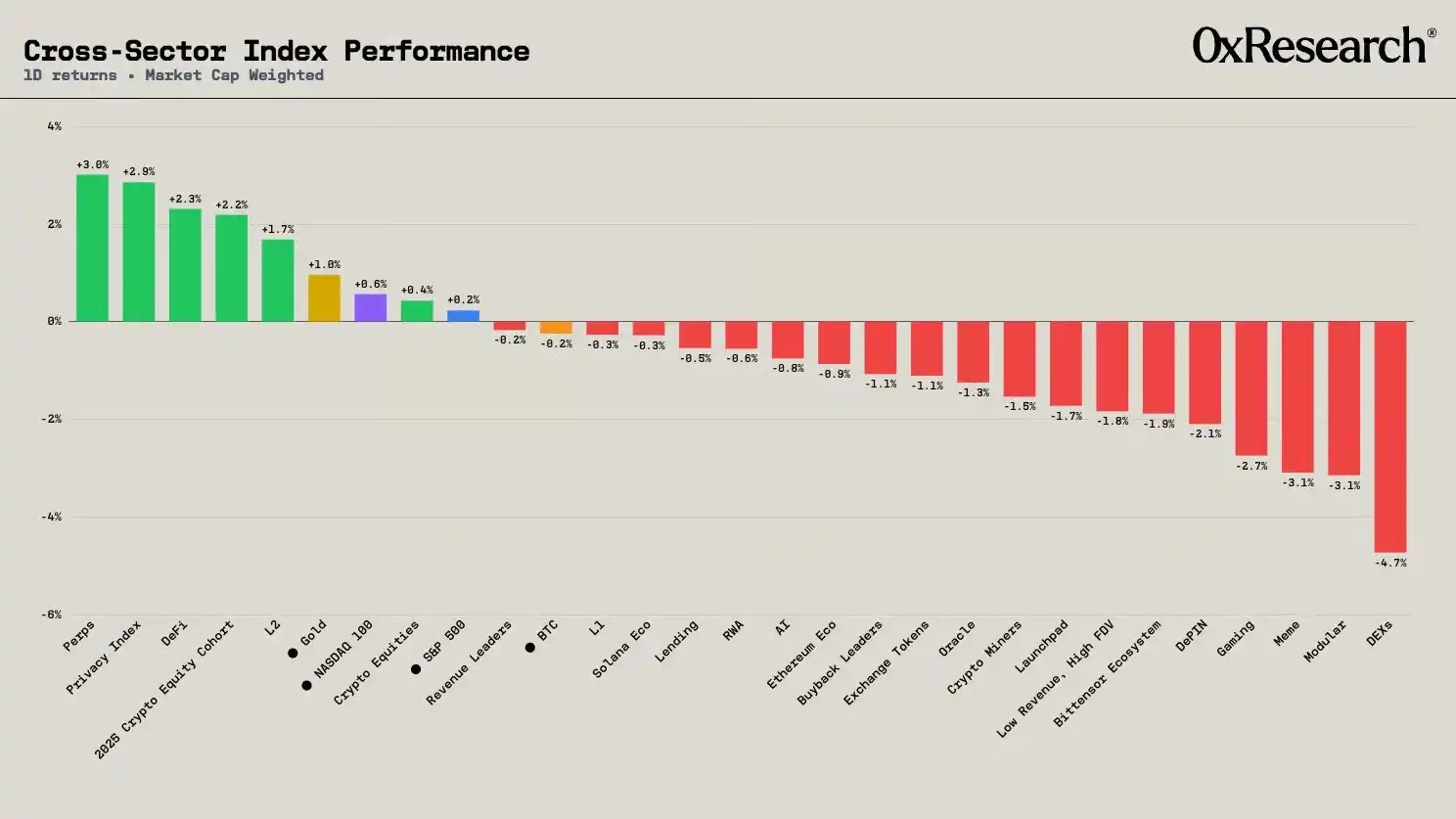
Equities outperformed cryptocurrencies that day: Nasdaq rose 0.56%, S&P 500 rose 0.23%, and crypto-related stocks gained 2.19%. BTC fell 0.25%, with most crypto indices performing even weaker—stocks beating tokens remains a persistent recent theme.
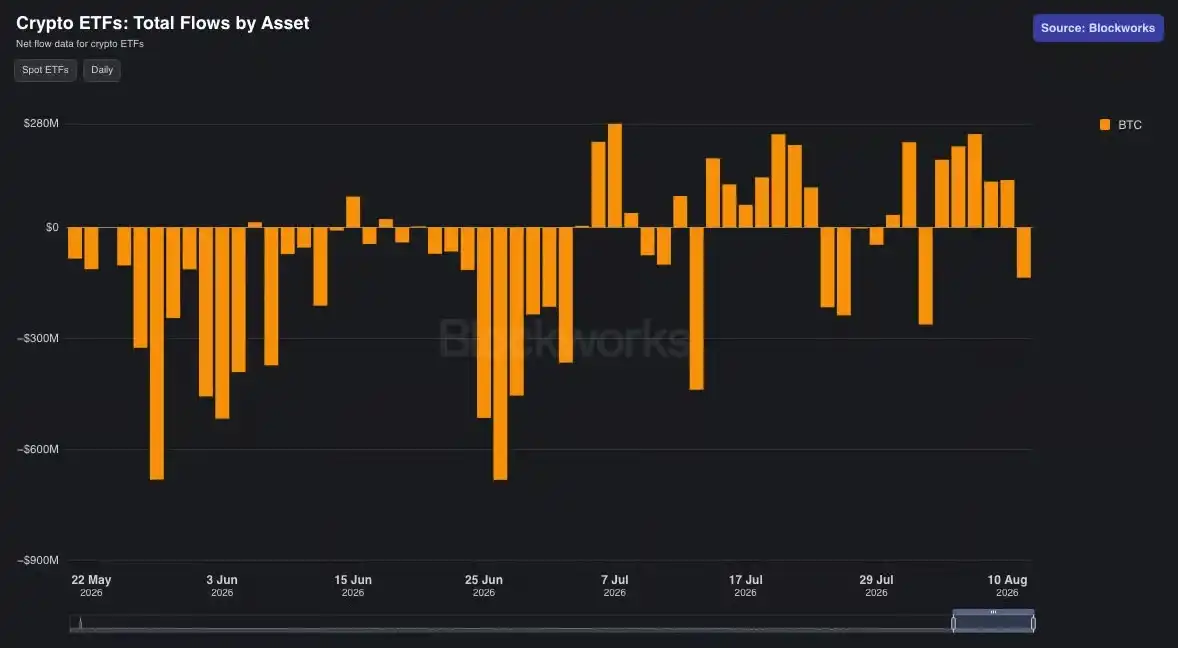
ETF flows saw a slight shift. Periods of moderate net inflows were interrupted by a single day of outflows, aligning with the weakening daily trend of BTC. However, net flows have turned positive since early July, contrasting with the significant outflows in May and June. If this trend continues, renewed ETF accumulation could provide support for BTC.
Computational Power: Paying Twice

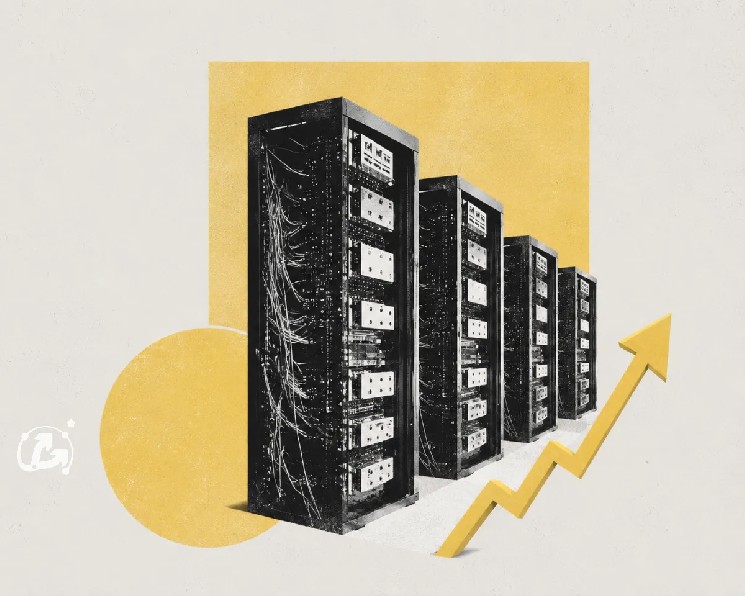
Making proof-of-work do something useful isn't a new idea. Bitcoin miners burn computational power only for hashing, serving no other purpose; AI inference service providers sell GPU time to clients but don't mine.

Tomorrow, at block height 126000, Nockchain's Logos upgrade goes live, and the line between the two disappears.

Note: Nockchain is a Layer 1 public chain that launched fairly in May 2025 (no pre-mine, no VC allocation, no team allocation). Its core innovation is Zero-Knowledge Proof-of-Work (ZKPoW): miners no longer burn computational power on useless hashing like Bitcoin, but instead generate zero-knowledge proofs (STARK proofs based on NockVM). Mining itself produces "useful work," both securing the network and providing computational power for the verifiable computing market.

Dual-Puzzle Mining: 30% for AI, 70% for ZK

Logos adds a second mining puzzle to the original ZK proof-of-work—integer matrix multiplication, the core operation of AI inference, with its own independent difficulty target.

Upon activation, network block production is allocated 30% to the AI puzzle and 70% to ZK-PoW. Miners perform matrix multiplication, and achieving the target result wins them the block. If this computation happens to be for a paying inference client, the same computational power simultaneously becomes a lottery ticket for the block reward.
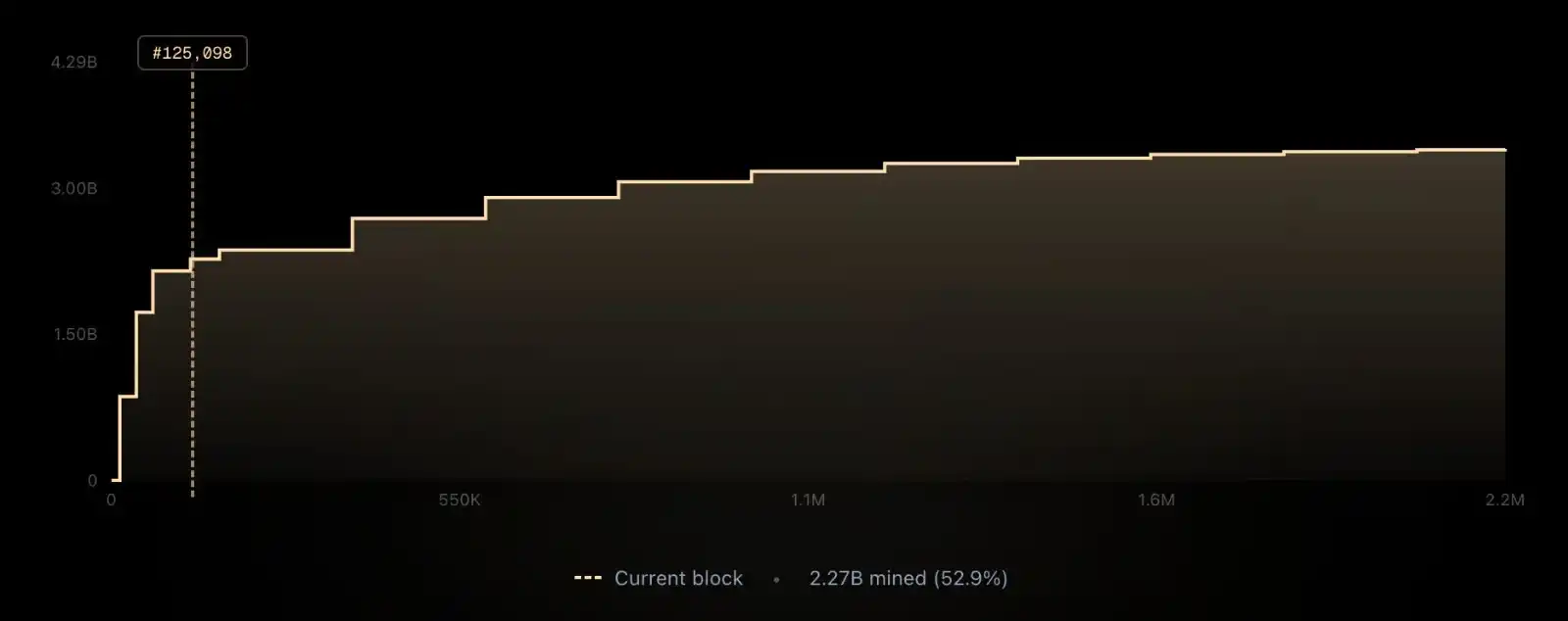
Nockchain's founders describe this mechanism as a security budget that grows with the expansion of the AI economy: as inference demand rises, more GPUs are directed towards this chain, increasing the cost of attack.

But this logic is built upon demand that hasn't yet materialized at scale. Nockchain needs genuine paying inference clients for the flywheel to start turning.

To this end, the founders established a separate company, National Compute, to specifically provide the first batch of clients. This company drafted the Logos proposal and completed the internal audit—in other words, the protocol's biggest upgrade and its first anchor client come from the same author.
Launch Timeline: Delayed Three Times

This launch coincides with Zorp (Nockchain's research company) shutting down weeks ago, transferring its trademarks and code repositories to the Nock Community Co. (a non-stock corporation managing 20% of the protocol fund).

Logos is the first upgrade under this new governance structure: it underwent a public testnet, third-party cryptography audits, a bug bounty of up to 1 million $NOCK, and a pre-announced activation block height. The dual-puzzle code ran on the public testnet for 20 days and was only merged into the mainnet this week.

Two things warrant caution:

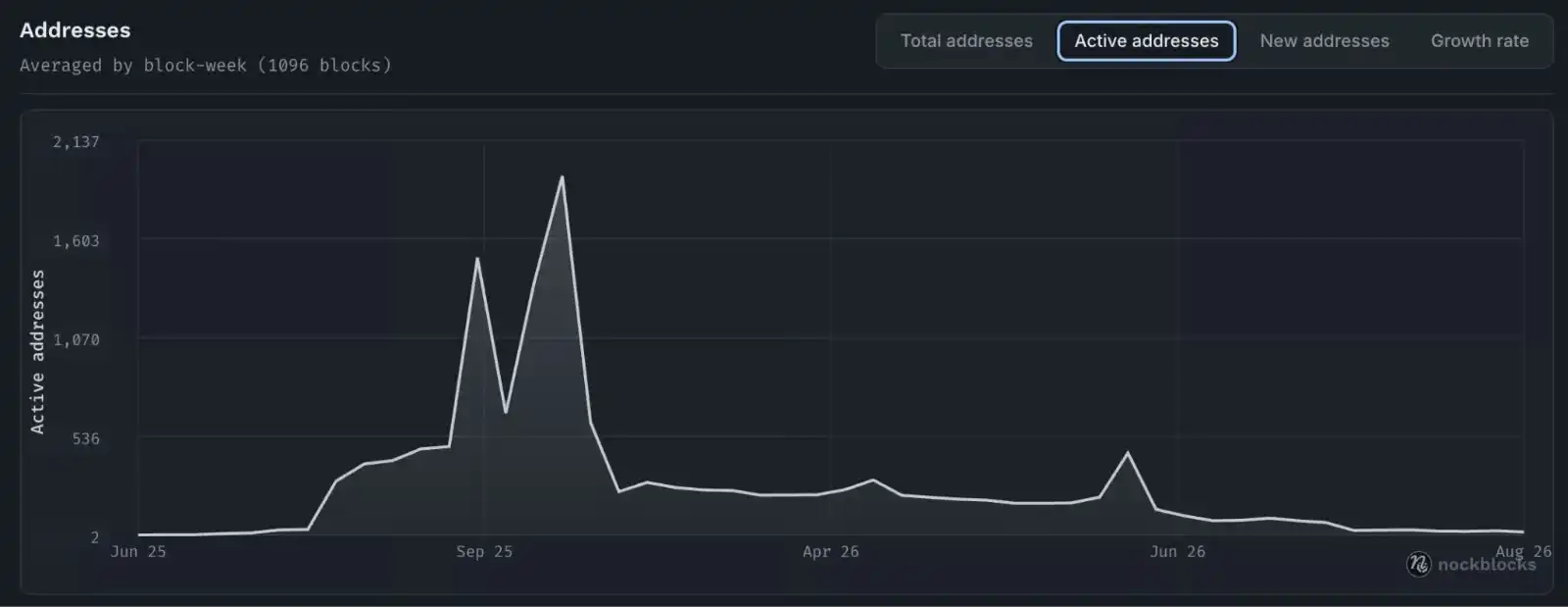
First, the activation height has been adjusted multiple times: set at 114300 in late July, changed to 122000 after the testnet, and finally set for Friday at 126000. Any launch repeatedly postponed carries the same uncertainty.

Second, the security argument is built on a puzzle with no historical track record. In early August, Nockchain patched a reusable trace mining vulnerability at height 119400 via the Zoe upgrade—a reminder that this proof mechanism is still in its early stages. Although that fix didn't alter the ZK scheme, only involving block reward capture, the AI puzzle itself also raises questions about its soundness, which is precisely why audits and bug bounties exist.
Market Pricing: $22M Market Cap, Waiting for a Market

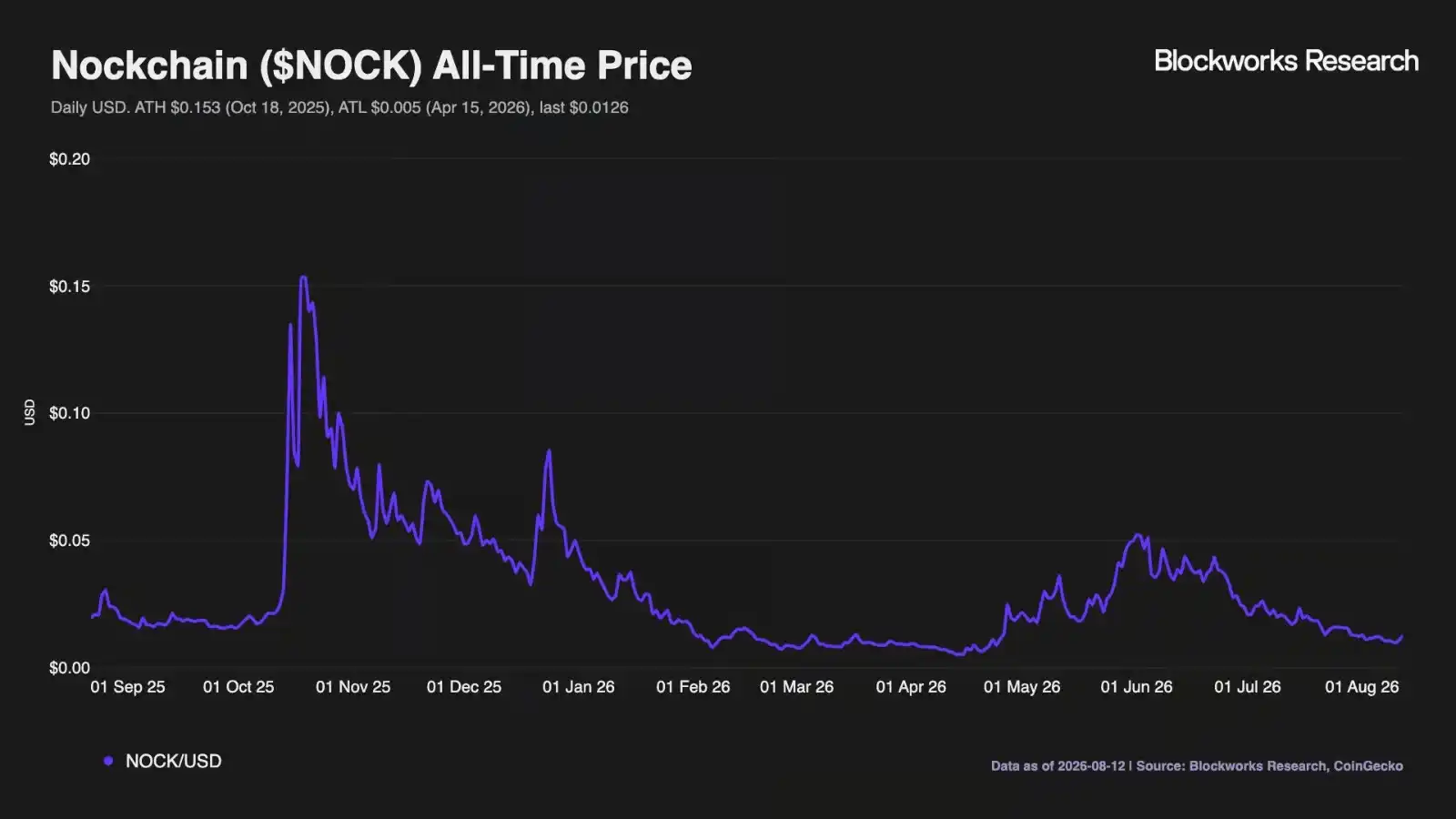
$NOCK is currently trading around $0.009, with a market cap of approximately $22 million and a fully diluted valuation of about $41 million, far from the attention it received during its fair launch last spring.

For holders, the mechanism details on Friday are less important than one question: Can National Compute channel enough paying inference traffic to the miner cluster to turn the "security + revenue" narrative into actual cash flow?

Nockchain has already accomplished the harder engineering. The market it truly needs, however, hasn't been built yet.

İlgili Sorular

QWhat is the core innovation of Nockchain's 'Logos' upgrade, and how does it differ from traditional proof-of-work mechanisms like Bitcoin's?

AThe core innovation is 'zero-knowledge proof-of-work' (ZKPoW), where miners generate zero-knowledge proofs (specifically STARK proofs) instead of performing useless hash computations. The 'Logos' upgrade adds a second mining puzzle: integer matrix multiplication, which is a core computation for AI inference. This allows miners to simultaneously earn block rewards and serve paid AI inference clients with the same computational work.

QAccording to the article, how is the block production split between the two mining puzzles after the Logos upgrade activates?

AAfter activation, network block production is allocated as 30% to the AI inference puzzle (integer matrix multiplication) and 70% to the original ZK-PoW puzzle.

QWhat is the role of the company 'National Compute' in relation to the Nockchain and its Logos upgrade?

ANational Compute is a company founded by the Nockchain founders to act as the first major, anchor client for the network's AI inference service. It is responsible for drafting the Logos upgrade proposal and providing the initial stream of paid inference demand to help bootstrap the network's economic flywheel.

QWhat are two potential risks or concerns highlighted in the article regarding the Logos upgrade's launch?

A1. The activation block height has been postponed multiple times (from 114300 to 122000, and finally to 126000), introducing uncertainty. 2. The security argument relies on a new, untested AI puzzle with no historical track record, and the underlying proof mechanisms are still in early stages, as evidenced by a prior vulnerability fix (Zoe upgrade) related to mining.

QWhat is the current market status of $NOCK token, and what does the article identify as the key challenge for its future success?

AThe $NOCK token trades around $0.009 with a market cap of approximately $22 million. The key challenge for its future success is not the technical mechanism, but the need to build a real, sustainable market with sufficient paid AI inference demand flowing through the network to turn the 'security + revenue' narrative into actual cash flow for miners.

İlgili Okumalar

The Great Ethereum "Rate Cut" Debate: Is Now the Golden Window for Staking with the Unconventional EIP-8363?

Ethereon's economic policy is under review as a new proposal, EIP-8363, sparks debate over potential "interest rate cuts" for staking. The unconventional proposal suggests gradually increasing the proportion of newly issued ETH rewards that are burned as the total staked ETH ratio rises, with issuance fully offset by burns once the ratio nears 50%. This would drive the protocol-level staking APR towards 0%, though validators would still earn transaction fees and MEV. This discussion emerges as staked ETH approaches 35% of supply, with the current protocol APR at ~2.6%. The core question is whether Ethereum needs to continue paying high issuance costs for marginal gains in security once sufficient participation is achieved. EIP-8363 aims to optimize security spending, but critics warn it could disproportionately impact solo stakers and potentially increase centralization among large, resilient operators. Paradoxically, this debate coincides with the Pectra upgrade (EIP-7251), which introduces native compounding for staking rewards, significantly improving capital efficiency for long-term holders. This creates a dual narrative: the protocol is making staking more efficient while reconsidering the economic incentive to stake. For long-term ETH holders, this environment may present a "time window" rather than a fixed-rate opportunity. While future APRs are expected to trend downward, starting staking earlier maximizes the compounding effect over time. The decision to stake depends on individual factors like investment horizon, liquidity needs, and risk tolerance regarding options like native validation, staking services, or liquid staking tokens (LSTs). The evolution from encouraging staking to managing its economic cost marks a new, mature phase for Ethereum's tokenomics, where the true value of staking may increasingly lie in the long-term power of compounding time.

marsbit9 dk önce

The Great Ethereum "Rate Cut" Debate: Is Now the Golden Window for Staking with the Unconventional EIP-8363?

marsbit9 dk önce

Analyst States Bitcoin Remains Within $61-68k Range

An analyst stated that Bitcoin is likely to remain within a trading range of $61,000 to $68,000. According to Kirill Komalenkov, director of strategic communications at Bitbanker, Bitcoin continues to trade sideways amidst declining market volatility. He attributes its current stability to high market liquidity, with volatility near three-year lows. Komalenkov warned that sustained low activity carries risks of a price decline, with potential tests of support at $62,300 and $61,600. He suggested that major market players might use the current situation to accumulate liquidity, meaning any initial breakout from the range could be a false move. The analyst expects this sideways movement to persist until the latter part of August. Key factors for determining future market direction include fund flows into Exchange-Traded Funds (ETFs) and trader activity. However, Komalenkov noted a potential negative scenario for the second half of August, where heightened geopolitical tensions or hawkish rhetoric from US monetary authorities could trigger a new decline. In such a case, Bitcoin could fall to a range of $45,000–$50,000 by early autumn, which might form a new base for a potential market recovery later in the season. Separately, a Russian deputy finance minister recently announced that non-qualified investors in Russia will soon be allowed to legally purchase Bitcoin, Ethereum, and popular stablecoins, with an annual limit of 300,000 rubles per intermediary.

cryptonews.ru11 dk önce

Analyst States Bitcoin Remains Within $61-68k Range

cryptonews.ru11 dk önce

Bitmine's Tom Lee Now Owns 4.8% of Ethereum's Total Supply. Is It Worth Buying ETH Now?

Tom Lee, founder of Fundstrat Global Advisors and a staunch cryptocurrency bull, now serves as chairman of Bitmine. Under his guidance, Bitmine has evolved from a bitcoin miner into the world's largest corporate holder of Ethereum, owning 5.81 million ETH tokens (4.8% of the total supply) as of August 10, with a target of reaching 5%. Lee, who correctly advised buying Bitcoin in 2017, is similarly bullish on Ethereum. He began recommending ETH in late 2024 at around $3,400; despite its current price near $1,900, he predicts it could reach $22,000 in the coming years and $62,000-$250,000 long-term. His optimism stems from Ethereum's role as the leading smart contract blockchain. He expects growth from increased stablecoin issuance, tokenized real-world assets (RWA), and the need for AI agents to use neutral, secure blockchains like Ethereum for identity verification and machine-to-machine payments. With a market cap of $226 billion, Ethereum remains much smaller than Bitcoin's $1.26 trillion, suggesting significant room for growth once macroeconomic headwinds ease. While past success doesn't guarantee future results, and ETH is down nearly 60% over the past year, the article argues Ethereum has clearer long-term catalysts than many altcoins. These include growing dApp usage, AI integration, and the potential for approved spot ETFs to attract more investors. The conclusion suggests that while not buying as aggressively as Bitmine, accumulating the world's second-largest cryptocurrency during market pessimism could be a prudent long-term strategy.

cryptonews.ru19 dk önce

Bitmine's Tom Lee Now Owns 4.8% of Ethereum's Total Supply. Is It Worth Buying ETH Now?

cryptonews.ru19 dk önce

İşlemler

Spot
活动图片