Former SpaceX Engineer Reconstructs Financial Execution System from First Principles

链捕手2026-06-25 tarihinde yayınlandı2026-06-25 tarihinde güncellendi

Özet

Plan Execution Lab, a financial infrastructure project founded by former SpaceX engineer Lex Li, has raised angel funding at a $50M post-money valuation. The startup is applying "first principles thinking" from Li's SpaceX experience to rethink financial market execution. Their analysis posits that while assets, liquidity, and settlement have moved on-chain, the execution layer remains fundamentally human-dependent and fragmented. In the era of AI Agents, strategy advantages decay rapidly, shifting the competitive edge from isolated algorithms to robust **execution networks**. Plan Execution Lab's solution is a two-part system: **PlanX**, a Financial Execution Protocol designed to facilitate the migration from centralized exchanges (CEX) to on-chain markets by providing core on-chain execution capabilities; and **Xgent**, an Autonomous Financial Runtime. Xgent allows users to define investment goals and constraints, then autonomously constructs and manages the execution logic—moving from **Intent to Execution Graph to Verification to Autonomous Execution**. The long-term vision is to create the "Bloomberg Terminal for Autonomous Finance"—an operating environment not for humans, but for agents and execution nodes. The future financial system, they argue, will be a collaborative network built by diverse participants contributing execution capabilities, not secret strategies. The core competition will shift to who builds the most powerful and adaptive execution network.

The financial infrastructure project Plan Execution Lab recently announced the completion of an angel round of funding led by a prominent family office in Singapore, with the company's post-investment valuation reaching $50 million. This round of funding will primarily be used to accelerate the research and development and ecosystem building of the PlanX Financial Execution Protocol and the Xgent Autonomous Financial Runtime.
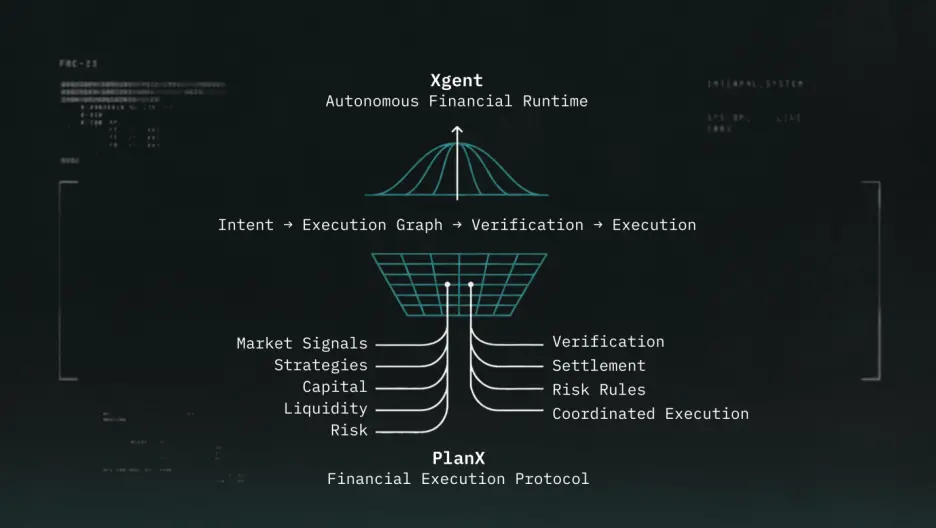
Unlike most trading platforms, Plan Execution Lab does not attempt to build a "faster exchange" or a "smarter trading bot." They aim to answer a more fundamental question: What is truly missing from the future financial markets?

From SpaceX to Financial Infrastructure

The career starting point for Plan Execution Lab founder Lex Li was not Wall Street, but SpaceX. As an engineer who joined SpaceX as a campus recruit, Lex worked there for thirteen months. In that experience, what influenced him most was not any specific technology, but the core methodology advocated by SpaceX: First Principles Thinking.
At SpaceX, engineers are required to constantly question: Why must rockets be built this way? Why must costs be so high? Why must the industry's default practices be correct? Many rules taken for granted ultimately prove to be mere historical legacies. This mode of thinking also became Lex's most important methodology when he later entered the financial industry.

"After entering the financial industry, I found everyone discussing faster trading speeds, more complex product designs, and greater liquidity," Lex said. "But few stop to think about a more fundamental question: What is the fundamental purpose of financial markets?"

Looking at Financial Markets from First Principles

In Lex's view, the core function of financial markets is not trading, but Capital Allocation. Trading is merely one expression of capital allocation, and the process that truly transforms decisions into action is Execution.
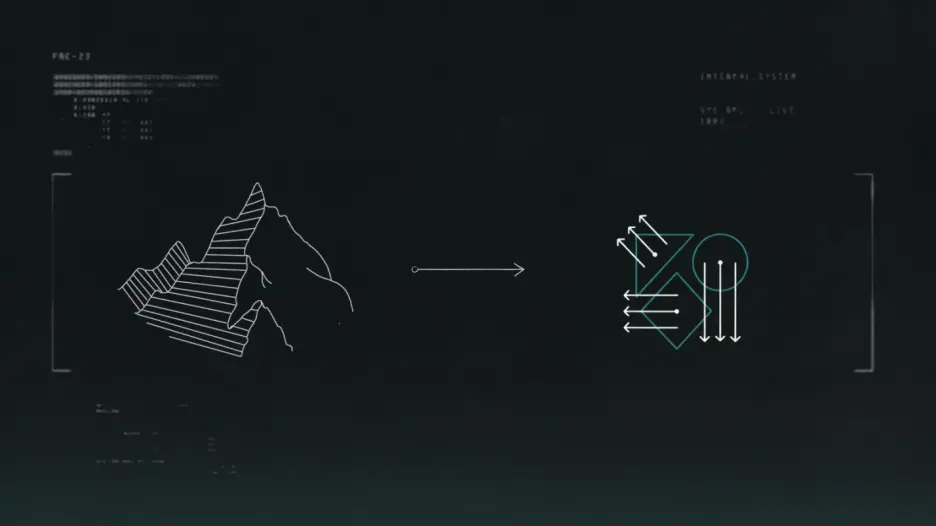
Over the past decade, financial infrastructure has undergone tremendous change: assets have migrated on-chain, liquidity has migrated on-chain, and settlement has migrated on-chain. However, the execution layer has hardly seen fundamental change. Today's market is still built upon a vast array of fragmented human workflows:

  • Human monitoring of markets

  • Human scheduling of funds

  • Human risk management

  • Human coordination of liquidity

  • Human execution of trades

Even on the most advanced trading platforms, financial execution remains Human-Native.

The Agent Era is Accelerating Strategy Decay

With the development of large language models, AI Agents, and automated systems, the market is entering a new stage. The speed of information dissemination is increasing, market reaction speeds are accelerating, and strategy decay is also speeding up.
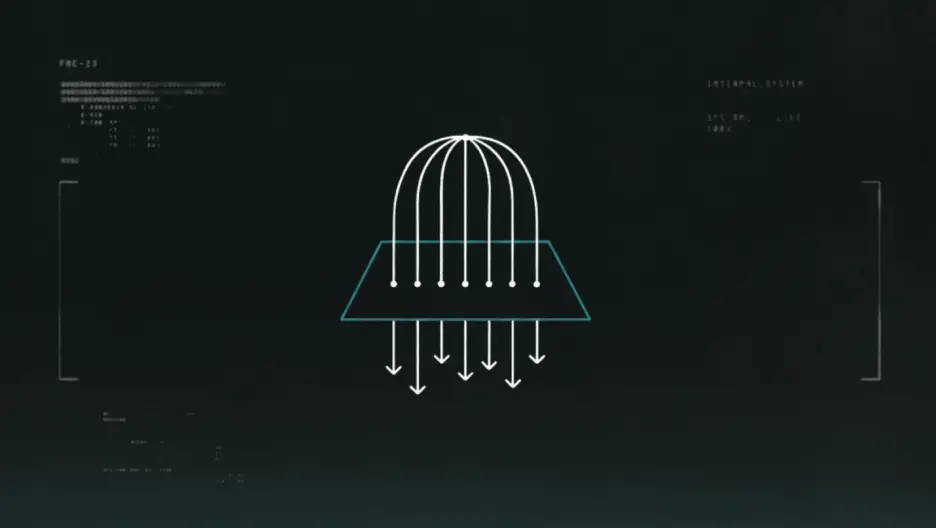
An advantage that could last for years in the past may now only last a few months. An Alpha that lasted months may now last only weeks in the future. For independent traders and even small-to-medium institutions, it is becoming increasingly difficult to sustain effective strategies.

"The biggest challenge in the future is no longer acquiring information, but how to execute consistently and efficiently," said Lex.

The Strategy is Not the Smallest Unit

Most people think of a strategy as an independent algorithm. But from first principles, a strategy is actually just a combination of multiple execution capabilities. For example:

  • Risk management

  • Capital allocation

  • Liquidity acquisition

  • Hedging logic

  • Execution timing

  • Portfolio construction

These capabilities are more like independent Nodes, which together form a larger Execution Graph. Therefore, the true object of competition for future financial systems will no longer be a single strategy, but the Execution Network. The most powerful financial system of the future will not be a single mysterious algorithm, but a collaborative network built and continuously evolving through a multitude of execution nodes.

PlanX: Facilitating the Migration from CEX to DEX

Based on this judgment, the team built PlanX. PlanX is not positioned as another DEX, but as a Financial Execution Protocol.

The team believes that one of the biggest financial migrations of the next decade will be the shift of global trading volume from centralized exchanges (CEX) to on-chain markets. But what will migrate is not just assets, but financial behavior itself. The goal of PlanX is to become the execution infrastructure for this migration process, providing the market with:

  • On-chain execution capability

  • Liquidity access

  • Risk management

  • Settlement coordination

  • Capital scheduling

Thereby constructing an open financial execution network.

Xgent: The Runtime for the Autonomous Finance Era

If PlanX is the execution infrastructure, then Xgent is the autonomous financial runtime built on top of it. Users no longer need to manually manage multiple platforms and complex workflows; they only need to define:

  • Investment objectives

  • Risk preferences

  • Constraints

  • Capital allocation rules

Xgent will automatically complete:

  • Execution logic construction

  • Risk validation

  • Liquidity coordination

  • Strategy operation

  • Autonomous optimization

The team defines this process as: Intent → Execution Graph → Verification → Autonomous Execution.

Building the Bloomberg Terminal for the Autonomous Finance Era

Lex often uses an analogy to describe the long-term vision of Xgent. In the past few decades, Bloomberg Terminal became the core operating environment for global financial markets. It not only provides data but, more importantly, provides the entire financial industry with unified workflows, a unified context, and a unified collaborative environment.

Bloomberg is the operating system for the human finance world. In the autonomous finance era, a new operating system is similarly needed. But the user is no longer humans, but Agents.

"If Bloomberg Terminal defined the Operating Environment for Human Finance, then the combination of PlanX + Xgent aims to become the Operating Environment for Autonomous Finance."

Financial Infrastructure Built by Nodes Collectively

Unlike traditional financial systems, Plan Execution Lab does not attempt to control the entire network through a single institution. The team believes that the next generation of financial infrastructure must be built collectively by participants. The future ecosystem will be jointly formed by the following participants:

  • Execution Nodes

  • Liquidity Providers

  • Strategy Contributors

  • Infrastructure Operators

  • Autonomous Financial Agents

What each participant contributes is not a single strategy, but execution capability itself. These execution capabilities will continuously combine, evolve, and ultimately form the execution network for the autonomous finance era.

The Core of Next-Generation Financial Competition
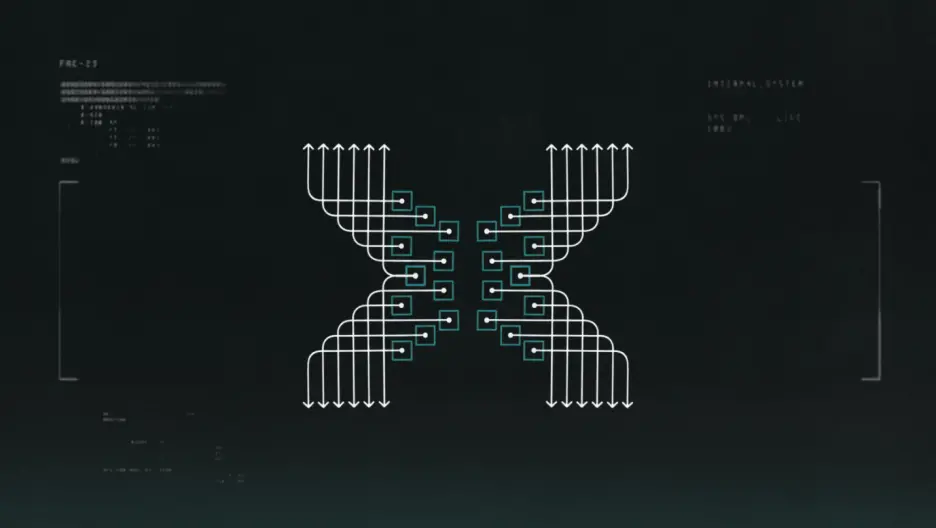
For Lex, the core competitiveness of future finance is not who has the best trading strategy, but who has the most powerful execution network.

The past decade changed the location of asset storage. The next decade will change the way financial decisions are executed. And the combination of PlanX + Xgent hopes to become the infrastructure for this transformation. The future does not belong to isolated strategies; the future will belong to autonomous execution networks.


İlgili Sorular

QWhat is the core problem that Plan Execution Lab aims to solve in the financial markets, according to founder Lex Li's 'first principles' approach?

AThe core problem is the lack of a fundamental rethinking of the financial execution layer. Lex Li argues that while assets, liquidity, and settlement have moved on-chain, the execution of financial actions remains 'Human-Native,' relying on fragmented, manual workflows. The future market lacks a robust, automated execution network that moves beyond simply speeding up transactions or creating smarter trading bots.

QWhat are the two core components developed by Plan Execution Lab and what are their respective functions?

APlan Execution Lab has developed two core components: PlanX and Xgent. PlanX is a Financial Execution Protocol designed to be the execution infrastructure for migrating financial activity from centralized exchanges (CEX) to on-chain markets. It provides capabilities like on-chain execution, liquidity access, risk management, and capital orchestration. Xgent is an Autonomous Financial Runtime built on PlanX. It allows users to define goals and constraints, and then automatically constructs execution logic, validates risk, coordinates liquidity, and runs strategies, functioning as the operating environment for the autonomous finance era.

QHow does the article describe the impact of AI and automation on trading strategies, and what does this shift the future competition towards?

AThe article states that the AI and Agent era is accelerating strategy decay, making effective strategies harder to maintain for individuals and small institutions as alpha advantages last for shorter periods. Consequently, future financial competition will not be about who has the best single trading strategy. Instead, the core competitive advantage will be 'who has the most powerful execution network' – a network of interoperable execution capabilities that can be combined and evolved continuously.

QWhat analogy does Lex Li use to describe the long-term vision for the Xgent platform?

ALex Li uses the analogy of the Bloomberg Terminal. He states that Bloomberg Terminal defined the operating environment for 'Human Finance.' Similarly, the combination of PlanX and Xgent aims to become the operating environment for 'Autonomous Finance,' serving not humans but AI Agents and automated systems.

QHow is the proposed future financial infrastructure of Plan Execution Lab different from traditional systems in terms of construction and governance?

AUnlike traditional financial systems often controlled by a single institution, Plan Execution Lab envisions a next-generation infrastructure co-built by participants. The ecosystem will consist of various contributors like Execution Nodes, Liquidity Providers, Strategy Contributors, Infrastructure Operators, and Autonomous Financial Agents. Each contributes execution capabilities rather than just strategies, which then combine and evolve to form a decentralized, collaborative execution network.

İlgili Okumalar

Bitcoin and Ethereum Soar Together! Eight Altcoins Worth Watching in the Later Market

Bitcoin and Ethereum Surge, Fueling Altcoin Speculation. Bitcoin Eyes $77,000, Ethereum Gains 20% in a Single Day. Market anticipates capital rotation from major cryptos to high-beta altcoins, but a selective rise is expected, favoring projects with genuine users, protocol revenue, and healthy tokenomics. Analysts highlight eight altcoins across key sectors: **High-Performance Blockchains:** * **SOL (Solana):** Market cap ~$51.88B. A dominant player with a strong ecosystem. Considered a relatively safe bet for potential catch-up growth. * **SUI (Sui):** Market cap ~$3.03B. High volatility potential but faces risks from its low circulating supply and future token unlocks. **DeFi Lending:** * **UNI (Uniswap):** Market cap ~$2.38B. Transitioning to a revenue-capturing asset post-fee switch implementation. * **AAVE (Aave):** Market cap ~$1.53B. Features balanced tokenomics and revenue but has seen significant recent gains. * **MORPHO:** Market cap ~$1.50B. Rapid protocol growth but weaker token value capture and opaque supply data. **Perpetual DEX:** * **HYPE (Hyperliquid):** Market cap ~$16.41B. The clear sector leader with strong revenue but high valuation and a large portion of tokens still locked, warranting caution. **RWA & On-Chain Finance Infrastructure:** * **LINK (Chainlink):** Market cap ~$8.09B. A key oracle provider positioned to benefit from multiple trends like RWA and institutional adoption, offering strong fundamentals. * **ONDO (Ondo Finance):** Market cap ~$1.77B. Shows strong business growth but carries high risks due to concentrated token holdings and a massive unlock scheduled for 2027. **Conclusion:** The altcoin rally is expected to be selective. Recommendations include a medium position in SOL, small allocations to SUI and UNI/AAVE for DeFi exposure, and caution with HYPE and ONDO due to their specific risks. LINK is suggested as a core holding for the RWA thematic.

marsbit1 saat önce

Bitcoin and Ethereum Soar Together! Eight Altcoins Worth Watching in the Later Market

marsbit1 saat önce

Shanghai's $10 Billion Unicorn Is About to Go Public

Shanghai-based automotive-grade millimeter-wave radar chip unicorn Calterah Microelectronics Technology (Shanghai) Co., Ltd. has filed for an IPO on Shanghai's STAR Market, aiming to raise 3.49 billion yuan. Founded in 2014 by Chen Jiashu, a UC Berkeley PhD graduate, and his professor Ali Niknejad, Calterah pioneered CMOS technology for 77GHz radar chips, breaking the decades-long monopoly of international giants like Texas Instruments. Its low-cost, highly integrated solutions enabled millimeter-wave radar to move from luxury to mass-market vehicles. By 2025, Calterah captured a 31.1% share in China's automotive millimeter-wave radar chip market (second domestically, fourth globally), with cumulative shipments exceeding 30 million units. Its client list includes BYD, Geely, Nio, and Volvo. The company has undergone 11 funding rounds, attracting high-profile investors such as the National Integrated Circuit Industry Investment Fund Phase II, China Capital Management, and GD Capital. Its valuation has reached tens of billions of yuan, with a projected post-IPO valuation of approximately 14 billion yuan. Despite rapid revenue growth—increasing from 206 million yuan in 2023 to 632 million yuan in 2025 with a 75.28% CAGR—Calterah remains unprofitable. It reported net losses of 323 million yuan, 334 million yuan, and 193 million yuan from 2023 to 2025, accumulating over 900 million yuan in losses over three and a half years. These losses are primarily attributed to heavy R&D investment, which totaled over 1.039 billion yuan in the reporting period, often exceeding annual revenue. The company faces significant risks, including high customer concentration (its top five customers accounted for over 99% of revenue from 2023-2025, with BYD alone representing over 50% in 2025) and supply chain concentration. Revenue pressure from key customers and dependencies on overseas suppliers for EDA tools and IP pose challenges to sustainable growth. The IPO is seen as crucial for securing capital to expand production, diversify its customer base, and reduce supply chain dependencies.

marsbit1 saat önce

Shanghai's $10 Billion Unicorn Is About to Go Public

marsbit1 saat önce

Ray Dalio's Latest Macro Analysis Full Text: Buy More Gold, Add Some Bitcoin

In his latest macro analysis, Ray Dalio applies his framework from "How Countries Go Broke: The Big Cycle" to the current global debt environment. He highlights recent events like Japan selling U.S. Treasuries and rising U.S. long-term yields as signs of an unsustainable debt dynamic. Dalio explains that excessive government debt leads to either unacceptably high interest rates, severe economic downturns, or significant currency debasement through central bank money printing. He summarizes the U.S. fiscal situation: with $5.5 trillion in revenue, $7.5 trillion in spending, a $2 trillion deficit, and total debt at six times annual revenue, debt servicing costs are immense. Without correction, U.S. debt could reach $55-$60 trillion in a decade. Dalio proposes a "3% Three-Way" solution: reducing the budget deficit to 3% of GDP through balanced spending cuts, tax increases, and interest rate reductions to avoid a traumatic adjustment. In response to FAQs, he argues that the risk of a U.S. debt crisis is high and could materialize within a few years if the current path continues. He dismisses the notion that the dollar's reserve status makes the U.S. immune, citing historical precedents of reserve currency declines. He is also unconvinced by Japan's high-debt stability, noting poor returns for yen-denominated assets. For investors, Dalio recommends diversifying globally, underweighting bonds, and overweighting assets like gold and a small allocation to Bitcoin (around 10-15% to gold) to hedge against currency debasement and poor debt returns.

marsbit2 saat önce

Ray Dalio's Latest Macro Analysis Full Text: Buy More Gold, Add Some Bitcoin

marsbit2 saat önce

Stripe’s 16-Year Chronicle: From 7 Lines of Code to a $100 Billion Valuation

Stripe's 16-year journey began with a simple promise: "7 lines of code to accept payments." Founded by Patrick and John Collison, the company started by hiding the complexity of bank integrations and merchant accounts behind a clean API, initially targeting developers at startups. This early focus on user experience and technical simplicity fueled rapid adoption. A key early milestone was establishing vital bank partnerships, a challenge overcome by hiring Billy Alvarado, who brought crucial institutional relationship skills. From this foundation, Stripe systematically expanded its product boundaries. It launched Connect for platform payments, Atlas for company formation, Radar for fraud prevention, and Billing for subscriptions. This transformed Stripe from a payment processor into a broader financial infrastructure suite for internet businesses. The COVID-19 pandemic accelerated growth but also led to over-hiring. A 14% layoff in 2022 marked a period of organizational correction. Subsequently, Stripe shifted its growth strategy towards strategic acquisitions to enter new domains quickly. It acquired Bridge (stablecoin infrastructure), Privy (wallet infrastructure), Metronome (usage-based billing), and agreed to buy OpenRouter (AI model routing). These moves signal Stripe's ambition to build a "programmable money system" for the emerging AI and agent-based economy, managing not just currency flows but also the measurement and pricing of computational resources like AI tokens. Internally, Stripe leverages AI agents (like "Minions") to boost engineering productivity. Despite scaling to nearly 8,000 employees and processing $1.9 trillion in payment volume annually, the company remains private. A recent employee tender offer valued it at $159 billion. The core question for Stripe's future is whether it can successfully integrate its expanding product matrix—spanning payments, crypto, and AI infrastructure—into a cohesive platform, positioning itself as the foundational economic layer for autonomous software agents.

marsbit3 saat önce

Stripe’s 16-Year Chronicle: From 7 Lines of Code to a $100 Billion Valuation

marsbit3 saat önce

İşlemler

Spot
活动图片