Crypto Witnesses Net Capital Flow Below $4.5 Billion For The First Time In Two Years

bitcoinist2025-12-30 tarihinde yayınlandı2025-12-30 tarihinde güncellendi

Özet

The cryptocurrency market has experienced a net capital flow dropping below $4.5 billion for the first time in nearly two years, driven by significant outflows. Reports indicate $446 million in outflows last week alone, contributing to a total of $3.2 billion leaving crypto products since mid-October. Bitcoin ETFs have seen nearly $1 billion in outflows over two weeks, suggesting institutional investors are reducing exposure. Analysts note that while a short-term bounce is possible, it may be driven by leverage rather than fresh demand, risking further declines. Despite the bearish trend, some forecasts suggest a potential recovery by Q1 2026, with Bitcoin possibly reaching $100,000-$102,000, fueled by new institutional capital, seasonal buying patterns, and historical market cycles. Currently, Bitcoin trades at $87,620, down 30% from its October peak.

For the first time in nearly two years, the cryptocurrency market has experienced a turn in net capital flows, dropping below the $4.5 billion mark. This downturn comes as Bitcoin (BTC) has led a tumultuous fourth quarter, characterized by increased selling pressure and heightened volatility.

Cash Flow Crisis In Crypto

Notably, CoinShares recently reported that crypto products witnessed outflows totaling $446 million last week, contributing to a total of $3.2 billion in outflows since the sharp price decline on October 10th.

Technical analyst Ali Martinez shared insights on social media platform X (formerly Twitter), indicating that, from a price-action perspective, a short-term bounce could be possible after such an extended downtrend, reminiscent of patterns observed following the market peak in 2021.

However, when analyzing on-chain data, the overall decline in capital inflows suggests that money is currently leaving the crypto space rather than entering it.

This is further supported by Bitcoin exchange-traded fund (ETF) net flows, which have seen nearly $1 billion in outflows over the past two weeks, suggesting that institutional investors are currently reducing their exposure rather than increasing their risk assets.

Martinez cautioned that any potential rebound would likely be propelled by leverage rather than fresh demand, which can create scenarios where late buyers get trapped, ultimately leading to further price declines. He concluded that the risk of Bitcoin hitting lower lows remains significant as capital continues to exit the market.

Could Bitcoin Recover $100,000 In Q1 2026?

Despite the prevailing bearish sentiment, some optimistic forecasts have emerged for the first quarter of 2026. Crypto Rover highlighted that Q1 could be particularly bullish for both Bitcoin and altcoins for several reasons.

First, fresh capital is typically deployed at the beginning of the year, as hedge funds, asset managers, and institutional players allocate new money to work.

With traditional assets like gold, silver, and stock indices already nearing all-time highs, Rover believes that institutions may see crypto as an attractive opportunity, especially since Bitcoin and various altcoins still fall below their previous peaks.

Second, end-of-year selling often transitions into buying come January. This behavior is frequently driven by tax-loss harvesting, where investors sell losing positions in December to lock in losses, only to re-enter those positions in January.

Lastly, Bitcoin has been known to follow a four-year market cycle. The previous cycle saw Bitcoin drop from $69,000 to $32,000, before rebounding to around $48,000 and reclaiming its 50-week exponential moving average (EMA).

Currently, this EMA stands near $98,200, and if Bitcoin adheres to similar patterns in Q1 2026, a move toward the $100,000 to $102,000 range is entirely plausible, marking an 18% increase from current levels.

Historically, a 20% increase in Bitcoin often correlates with a 35-40% rise in Ethereum (ETH) and large-cap altcoins, while smaller altcoins may see even more dramatic increases of 60-80% before momentum stabilizes.

The 1-D chart shows BTC’s consolidation below the key $90,000 mark. Source: BTCUSDT on TradingView.com

At the time of writing, the market’s leading cryptocurrency is trading at $87,620 — a 30% drop from the all-time high of $126,000 reached in October.

Featured image from DALL-E, chart from TradingView.com
İlgili Okumalar

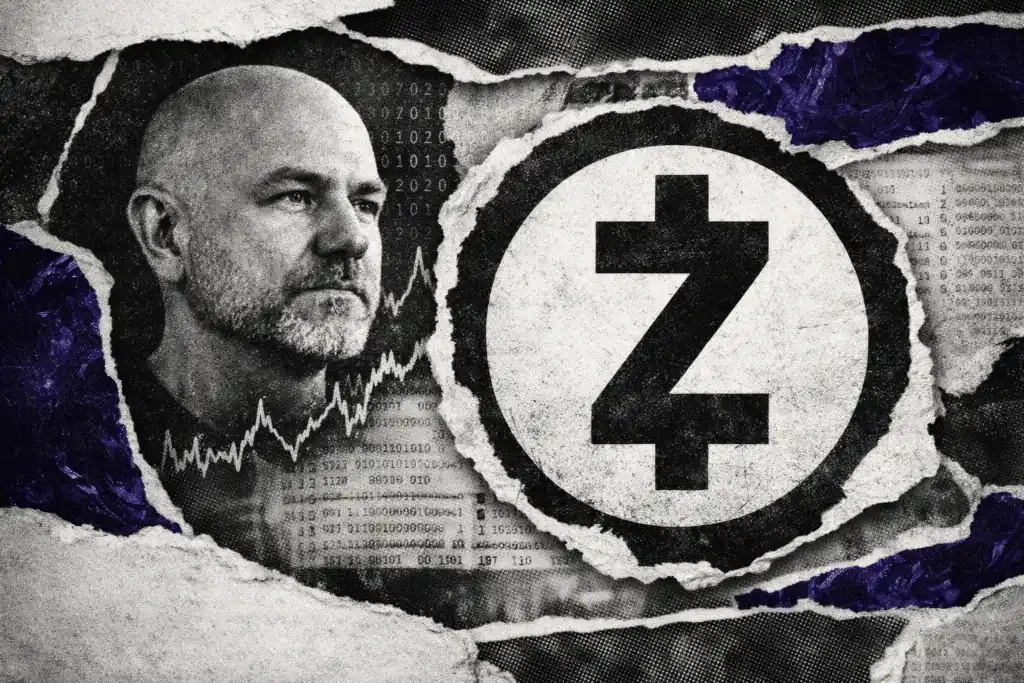
From Survival to Accelerated Growth: The Journey of Zcash's Three-Year Rise as Told by the Founder of ZODL

**From Survival to Accelerated Growth: Zcash Founder Details the 3-Year Rise** Three years ago, Zcash (ZEC) was a struggling pioneer in privacy technology, with a price near $30, low shielded supply (11%), and a community mired in governance disputes. Today, ZEC trades around $600, with over 31% of its supply (~$3B) in user-controlled shielded pools. This transformation resulted from breaking key constraints. First, **governance shackles were removed**. The old model guaranteed funding to two entities (ECC and ZF) regardless of performance, creating a monopoly. In 2024, ECC rejected further direct funding, forcing a change. The NU6 upgrade ended direct funding, allocating 8% to community grants and 12% to a protocol-controlled treasury for retroactive rewards, expiring in 2028 unless renewed by overwhelming consensus. The entities also relinquished their trademark-based veto power, freeing community governance. Second, the **product focus shifted** from pure cryptography to user growth. Previously, engineering excelled at privacy tech but failed to attract users. In early 2024, the team (later ZODL) pivoted to building products users wanted, like the Zodl wallet (default privacy, hardware support, cross-asset swaps). This drove shielded supply to grow over 400% in ZEC terms, with 86.5% of recent transactions being shielded, representing real user adoption. Third, the **narrative evolved** from the limiting "privacy coin" label to "unstoppable private money." This clarified Zcash's value proposition: a Bitcoin-like monetary policy with verifiable private payments via advanced cryptography. This structural narrative—protocol (Zcash), asset (ZEC), gateway (Zodl)—enabled broader exchange listings, institutional interest, and ETF filings. Finally, **organizational constraints were broken**. In early 2026, the ECC team left its non-profit structure after disputes over control, forming Zcash Open Development Lab (ZODL). ZODL raised $25M from top VCs (Paradigm, a16z, etc.), gaining the capital and agility of a startup to scale consumer products. Current metrics show strong momentum: social discussion volume for ZEC surged 15,245% in a year, with 81% positive sentiment. The focus is now on enhancing user experience (Zodl wallet), scalability (Tachyon project targeting Visa-level throughput with 25-second blocks), and post-quantum security (quantum-recoverable wallets coming soon). Zcash is positioned to become faster, more usable, scalable, and quantum-resistant.

marsbit3 dk önce

From Survival to Accelerated Growth: The Journey of Zcash's Three-Year Rise as Told by the Founder of ZODL

marsbit3 dk önce

Five Counterparty Risk Architectures: A Settlement-Layer Methodology for Classifying TradFi Models in Crypto Exchanges

**Summary:** This companion piece reframes the five TradFi-on-crypto exchange architectures, previously classified by "architectural fingerprint," through the lens of counterparty risk. The core question is: whose balance sheet bears the loss first in a stress scenario, and has it historically done so? Each of the five models corresponds to a distinct risk holder with its own documented failure modes. * **Model 1 (Stablecoin-Settled CEX Perpetuals):** Risk is held by the stablecoin issuer (e.g., reserve composition, bank connectivity) and the CEX's own book. History includes Tether's banking disconnections (2017) and reserve misrepresentations (CFTC 2021 Order). * **Model 2 (CFD Brokers):** Risk resides on the broker's balance sheet (B-book model). Regulatory differences (e.g., ESMA's mandatory negative balance protection vs. Mauritius FSC's lack thereof) define loss allocation rules, as seen in the 2015 SNB event (Alpari UK insolvency). * **Model 3 (Off-Chain Custody & Transfer Agent Chain):** Risk lies with the off-chain custodian/platform. User asset recovery depends on Terms of Use and corporate structure, exemplified by the Celsius bankruptcy ruling (2023) where Earn Account assets were deemed property of the estate. * **Model 4 (DEX Perpetual Protocols):** No single balance sheet bears risk. Loss absorption relies on a protocol's insurance fund and Auto-Deleveraging (ADL) mechanism, as demonstrated in the GMX V1 (2022) and dYdX v3 YFI (2023) incidents. * **Model 5 (Regulated CCP - DCM-DCO-FCM):** The most institutionalized model concentrates risk in the Central Counterparty (CCP). However, history shows CCPs can employ non-standard tools under extreme stress, such as mass trade cancellation (LME Nickel, 2022) or enabling negative price settlements (CME WTI, 2020). The report argues that regulatory choices and counterparty risk structures are co-extensive, not in an upstream-downstream relationship. It concludes with five separate observation checklists (not predictions) for monitoring the structural vulnerabilities of each risk model.

marsbit20 dk önce

Five Counterparty Risk Architectures: A Settlement-Layer Methodology for Classifying TradFi Models in Crypto Exchanges

marsbit20 dk önce

İşlemler

Spot
Futures

Popüler Makaleler

FLOW Nasıl Satın Alınır

HTX.com’a hoş geldiniz! Flow (FLOW) satın alma işlemlerini basit ve kullanışlı bir hâle getirdik. Adım adım açıkladığımız rehberimizi takip ederek kripto yolculuğunuza başlayın. 1. Adım: HTX Hesabınızı OluşturunHTX'te ücretsiz bir hesap açmak için e-posta adresinizi veya telefon numaranızı kullanın. Sorunsuzca kaydolun ve tüm özelliklerin kilidini açın. Hesabımı Aç2. Adım: Kripto Satın Al Bölümüne Gidin ve Ödeme Yönteminizi SeçinKredi/Banka Kartı: Visa veya Mastercard'ınızı kullanarak anında Flow (FLOW) satın alın.Bakiye: Sorunsuz bir şekilde işlem yapmak için HTX hesap bakiyenizdeki fonları kullanın.Üçüncü Taraflar: Kullanımı kolaylaştırmak için Google Pay ve Apple Pay gibi popüler ödeme yöntemlerini ekledik.P2P: HTX'teki diğer kullanıcılarla doğrudan işlem yapın.Borsa Dışı (OTC): Yatırımcılar için kişiye özel hizmetler ve rekabetçi döviz kurları sunuyoruz.3. Adım: Flow (FLOW) Varlıklarınızı SaklayınFlow (FLOW) satın aldıktan sonra HTX hesabınızda saklayın. Alternatif olarak, blok zinciri transferi yoluyla başka bir yere gönderebilir veya diğer kripto para birimlerini takas etmek için kullanabilirsiniz.4. Adım: Flow (FLOW) Varlıklarınızla İşlem YapınHTX'in spot piyasasında Flow (FLOW) ile kolayca işlemler yapın.Hesabınıza erişin, işlem çiftinizi seçin, işlemlerinizi gerçekleştirin ve gerçek zamanlı olarak izleyin. Hem yeni başlayanlar hem de deneyimli yatırımcılar için kullanıcı dostu bir deneyim sunuyoruz.

234 Toplam GörüntülenmeYayınlanma 2024.12.10Güncellenme 2025.03.21

FLOW Nasıl Satın Alınır

Tartışmalar

HTX Topluluğuna hoş geldiniz. Burada, en son platform gelişmeleri hakkında bilgi sahibi olabilir ve profesyonel piyasa görüşlerine erişebilirsiniz. Kullanıcıların FLOW (FLOW) fiyatı hakkındaki görüşleri aşağıda sunulmaktadır.

活动图片