Crypto Tycoons Grace the Cover of 'Vanity Fair', Only to Face Widespread Ridicule Online

比推2026-03-18 tarihinde yayınlandı2026-03-18 tarihinde güncellendi

Özet

Crypto industry leaders, including Cathie Wood (ARK Invest), Olaf Carlson-Wee (Polychain), and Michael Novogratz (Galaxy Digital), were featured in a *Vanity Fair* cover story titled “Crypto’s True Believers Want to Be Taken Seriously.” However, the article and its accompanying photos were widely mocked across social media. Rather than portraying the figures as serious innovators, the publication depicted them as eccentric and out-of-touch billionaires—highlighting their interests in extraterrestrial life, extreme survivalism, and going barefoot in public. Critics within the crypto community accused *Vanity Fair* of intentional ridicule, pointing to unflattering photo compositions and dismissive writing that reinforced negative stereotypes. The piece has sparked debate about the crypto industry’s relationship with mainstream media. Some, like Noelle Acheson, acknowledged the awkward portrayal but suggested it reflects how the industry is perceived externally. Others, including Jinelle D’Lima of Nozomi, argued that seeking validation from traditional gateways like *Vanity Fair* contradicts crypto’s original anti-establishment ethos. The incident underscores a cultural disconnect: despite the industry’s financial influence and political lobbying, it remains marginalized in mainstream cultural narratives. The backlash serves as a reminder that crypto’s real strength lies in its technology and decentralized values—not in mainstream approval.

Author: Gu Yu, ChainCatcher

Original Title: Overnight, Crypto Tycoons Were Severely Played by 'Vanity Fair'


Overnight, a group photo of crypto tycoons flooded the X timelines of all crypto practitioners, accompanied by overwhelming ridicule and criticism.

The main subjects in the picture include industry heavyweights such as ARK Invest CEO Cathie Wood, Polychain founder Olaf Carlson-Wee, and Galaxy Digital founder Michael Novogratz, but this still couldn't stop the storm from escalating even further.
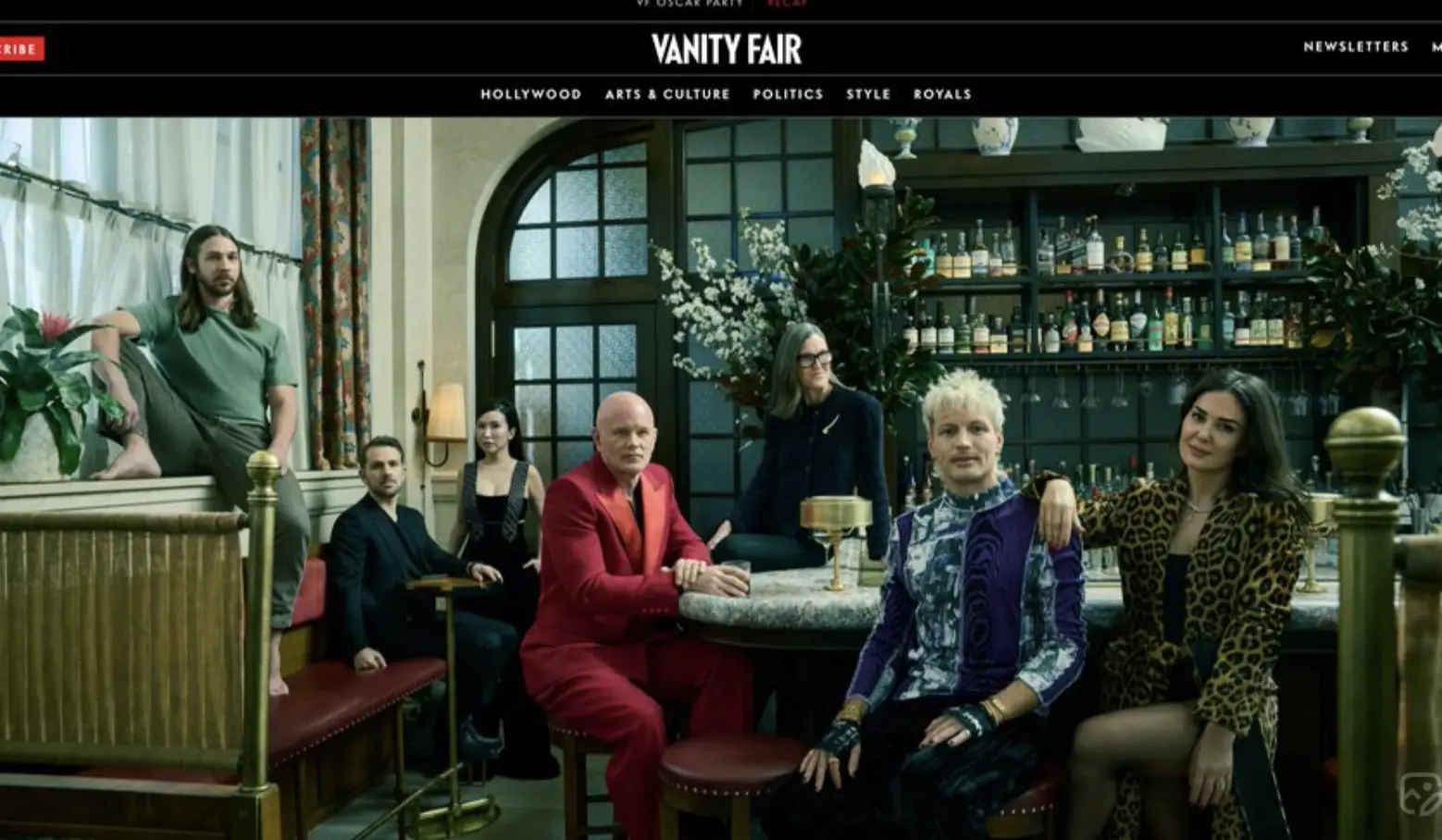
Upon closer examination of this group photo, it becomes clear that it is a work from the venerable celebrity magazine 'Vanity Fair,' featured on the cover of its latest issue's report titled 'Cryptocurrency's True Believers Demand to Be Taken Seriously.'

This article, through close observation of the industry's core circle, delves into how the crypto industry, after enduring multiple rounds of regulatory storms and market crashes, is attempting to redefine the global power landscape in 2026 with massive political donations and a 'savior-like' grand narrative.

Although the stories of crypto industry tycoons have already appeared in a series of traditional magazines such as 'Fortune' and 'The New York Times,' 'Vanity Fair,' as a media outlet deeply versed in celebrity culture, clearly has a more 'sinister' reporting perspective. The article doesn't dwell too much on complex industry trends but instead spends a significant amount of ink on the starkly contrasting private life details of these 'power redefiners.'

In the author's portrayal, these billionaires are depicted as a group of eccentrics who are both detached from reality and eager to dominate it: on one hand, they discuss the future of human civilization in mansions in Puerto Rico, while on the other, they are obsessed with searching for extraterrestrial life, practicing extreme survivalism, and even often going barefoot in public.

Triple Crown Digital partner Noelle Acheson commented on this, saying, 'We can laugh all we want (and we really do want to laugh) at these 'Vanity Fair' photos, at the awkward poses and perplexing character portrayals... but the deeper question is: Is this how the mainstream media views the cryptocurrency industry? If so, we have a lot of work to do.'

In the eyes of most industry insiders, this article not only fails to positively portray the image of cryptocurrency practitioners but also highlights stereotypes about the crypto industry.

Tally co-founder Dennison Bertram further revealed that this article is 'Vanity Fair' magazine deliberately mocking cryptocurrency and its related figures, with both the text and photos filled with deep disdain and sarcasm. Before getting involved in cryptocurrency, he had worked as a fashion photographer for over a decade.

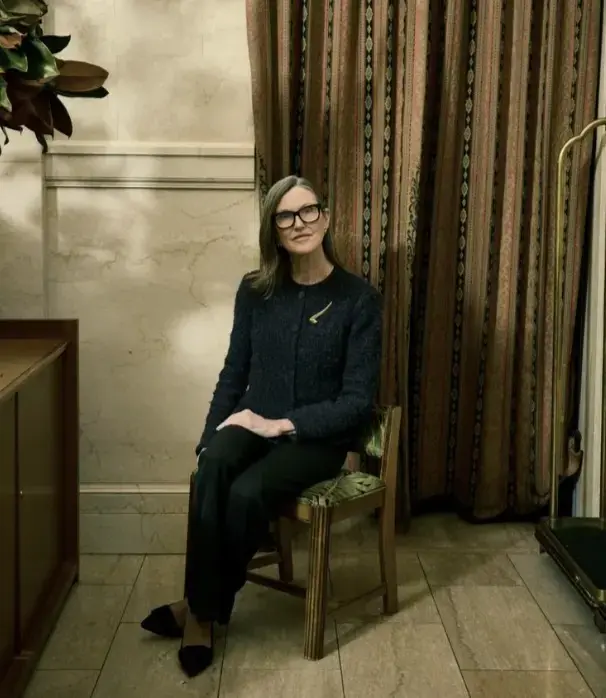
Analyzing Cathie Wood's close-up photo as an example, he said, 'Here, Cathie Wood is deliberately made to appear small. The camera shoots down on her, and the composition deliberately downplays her stature. The messy curtains, her crossed ankles, and the intentionally placed luggage cart all contribute to the deliberately created冷酷无情 (cold and ruthless) atmosphere in the picture. Could there be a more mean-spirited visual effect than this?'
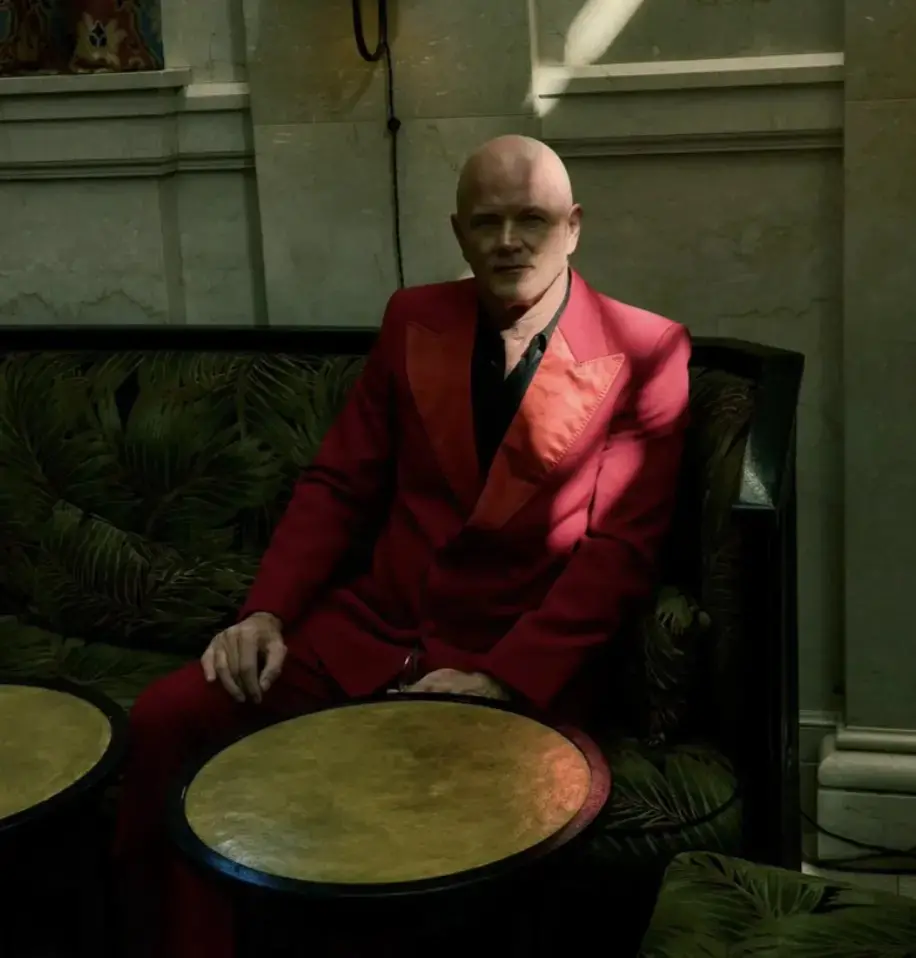
Looking at Michael Novogratz's photo, 'His eyes are squinted, looking fierce. Why? Because he's wearing glasses. He's holding them, almost invisible. His face is deliberately cast in shadow, appearing very menacing. It's another mess, everything is crooked, nothing is整齐划一 (neat and uniform). Is this a positive image? I don't think so at all.'
A group of tycoons who rose to the top through the crypto industry originally attempted to seek more recognition and support from the outside world through 'Vanity Fair' magazine, but they didn't realize it was a huge 'trap,' instead appearing as clown-like figures in the public eye. This is undoubtedly a painful lesson.

At this point, the act of seeking recognition in mainstream magazines itself has become a target of criticism. Nozomi founder Jinelle D'Lima believes that Satoshi Nakamoto and the cypherpunks never sought approval. 'The key point is, you don't need their approval: capital flows don't need it, network operation doesn't need it, the functioning of everything doesn't need it. We weren't built to cater to 'Vanity Fair' or 'Forbes.' We were built to resist everything they represent: gatekeepers, the system, and those who decide what is legitimate and what is illegal.'

'Now we're on the cover. Could it be any more ironic? This isn't like us. We were never supposed to be these people,' Jinelle D'Lima said.

The reason 'Vanity Fair's' report has become a vortex of controversy is that it reveals an awkward predicament for the crypto industry: even if the industry tries to exchange astronomical political donations and 'capitulation' to the mainstream financial system for 'serious treatment' from mainstream circles, within the aesthetic and value systems of mainstream culture, these nouveau riche are still viewed as a subcultural group with cult-like overtones.

This PR disaster might be telling everyone: the true power of the crypto industry has never been in the glossy reports of mainstream media, but in the code that can operate just fine without needing to be 'taken seriously.'


Twitter:https://twitter.com/BitpushNewsCN

Bitpush TG Discussion Group:https://t.me/BitPushCommunity

Bitpush TG Subscription: https://t.me/bitpush

Original link:https://www.bitpush.news/articles/7620917

İlgili Sorular

QWhy did the group photo of crypto leaders on the cover of Vanity Fair spark widespread ridicule online?

AThe photo and accompanying article portrayed crypto leaders as eccentric and out-of-touch billionaires, highlighting their unconventional lifestyles and using unflattering visual compositions, which many in the industry felt reinforced negative perceptions and stereotypes.

QWhat was the main criticism from industry experts like Dennison Bertram regarding Vanity Fair's portrayal of crypto leaders?

ADennison Bertram, a former fashion photographer, criticized the magazine for intentionally mocking the figures through deliberate visual choices, such as unflattering angles, messy backgrounds, and shadowy lighting, which made them appear awkward or sinister.

QHow did the Vanity Fair article describe the private lives of crypto billionaires?

AThe article depicted them as 'weirdos' who are disconnected from reality yet aspire to dominate it, mentioning their interests in topics like alien life, extreme survivalism, and often going barefoot in public, while discussing humanity's future from luxury homes in Puerto Rico.

QWhat deeper issue did Noelle Acheson highlight about the Vanity Fair coverage?

ANoelle Acheson pointed out that the deeper issue is whether this portrayal reflects how mainstream media views the cryptocurrency industry, suggesting that if so, the industry still has significant work to do to improve its image and understanding.

QAccording to Jinelle D'Lima, why is seeking validation from mainstream publications like Vanity Fair contrary to crypto's original ethos?

AJinelle D'Lima argued that figures like Satoshi Nakamoto and cypherpunks never sought approval, as crypto was built to resist gatekeepers, institutions, and those who decide legitimacy—not to conform to mainstream validation through publications like Vanity Fair or Forbes.

İlgili Okumalar

Winter for Crypto IPOs: Consensys and Ledger Withdraw Applications

The crypto IPO window is tightening significantly in 2026, marked by prominent companies delaying or pausing their public listing plans. Following a successful 2025 "harvest year" that saw Circle, Bullish, and Gemini go public amidst a bull market, the tide has turned. Consensys, developer of MetaMask, recently postponed its IPO until at least fall 2026. Hardware wallet leader Ledger also suspended its planned US listing due to unfavorable market conditions, with Kraken having previously delayed its own plans. This shift is driven by a cooling market in 2026, characterized by a significant Bitcoin price correction, declining trading volumes, and reduced investor risk appetite for crypto stocks. The poor post-IPO performance of 2025 listings like Circle and Bullish, which saw major share price declines, has heightened investor caution. This contrasts sharply with the current AI sector, where companies like SpaceX, OpenAI, and Anthropic are commanding massive valuations and investor enthusiasm based on narratives of stable, exponential growth. Crypto companies now face pressure to transition from hype-driven models to demonstrating reliable cash flows and robust compliance. While the paused IPO plans may lead to valuation resets and affect ecosystem liquidity, they also accelerate industry consolidation toward stronger, more compliant infrastructure players. A potential recovery in Bitcoin's price and clearer regulations could reopen the IPO window in the latter half of 2026.

marsbit42 dk önce

Winter for Crypto IPOs: Consensys and Ledger Withdraw Applications

marsbit42 dk önce

ChatGPT Can Manage Your Money for You. Would You Trust It with Your Bank Account?

OpenAI has launched a personal finance tool for ChatGPT, currently in preview for US-based ChatGPT Pro users. This feature allows users to connect their bank and investment accounts (via Plaid, supporting over 12,000 institutions) directly to ChatGPT. It analyzes transactions, generates visual dashboards, and offers conversational financial advice—such as budgeting or planning for major purchases—based on the user's actual data. This move follows OpenAI's acquisitions of fintech startups Roi and Hiro Finance, signaling a strategic push into vertical "super assistant" applications, similar to its earlier health-focused feature. However, the launch has sparked significant privacy concerns. Critics question the safety of granting such sensitive financial access to an AI, especially amid ongoing lawsuits alleging OpenAI shared user chat data with third parties like Meta and Google. OpenAI emphasizes that ChatGPT only reads data (no transaction capabilities), deletes it within 30 days if disconnected, and offers opt-out options for model training. Yet, trust remains a major hurdle. The trend reflects a broader industry shift: AI companies like Anthropic and Perplexity are also targeting high-value, data-rich domains like finance and health. While technically promising, the tool operates in a regulatory gray area—it provides personalized guidance but disclaims formal financial advice or liability. Ultimately, OpenAI's challenge is convincing users to trust an AI with their most private financial information.

marsbit43 dk önce

ChatGPT Can Manage Your Money for You. Would You Trust It with Your Bank Account?

marsbit43 dk önce

İşlemler

Spot
Futures
活动图片

