Crypto Systems Could Be Outpaced By Quantum Tech By 2033, Says Hoskinson

bitcoinist2026-05-18 tarihinde yayınlandı2026-05-18 tarihinde güncellendi

Özet

Cardano founder Charles Hoskinson warns that quantum computers could break current blockchain cryptography by 2033, with a probability exceeding 50%. He highlighted Bitcoin Improvement Proposal (BIP) 361 as a potential path for Bitcoin to migrate to quantum-resistant addresses. Most blockchains, including Bitcoin, rely on encryption vulnerable to quantum attacks. Cardano is proactively researching lattice-based cryptography and plans to adopt federal quantum-resistant standards (FIPS 203-206), leveraging its scheduled annual hard forks for seamless upgrades. Hoskinson noted that while Cardano's transition could be straightforward, Bitcoin's path is less clear due to its slower, more contested upgrade process. The broader crypto industry faces an urgent deadline to overhaul its security systems.

Crypto may need a major overhaul sooner than most people think. Cardano founder Charles Hoskinson pointed to a specific proposal — Bitcoin Improvement Proposal BIP-361 — as a potential path forward for gradually moving Bitcoin users away from older wallet addresses toward ones built to resist quantum attacks.

Speaking at Consensus Miami, Hoskinson said the window to prepare may be closing faster than the industry has assumed.

A Deadline The Industry Cannot Ignore

Hoskinson put the odds of a capable quantum computer arriving before 2033 at above 50%. That kind of machine, he said, would be powerful enough to crack the cryptographic systems that currently protect digital wallets, private keys, and transaction signatures across most major blockchain networks.

If that happens, bad actors could potentially access wallets without authorization, forge transaction signatures, or disrupt how blockchains reach agreement. He was direct: this is no longer a problem for the next generation to solve.

Most blockchains today — Bitcoin included — rely on traditional encryption methods that were never designed with quantum computing in mind.

Those systems work by making certain math problems extremely difficult for classical computers to solve. A sufficiently advanced quantum machine could blow through those same problems in a fraction of the time.

Cardano’s Quantum Defense Plan

Cardano is not waiting around. According to Hoskinson, the network already has a research program focused on quantum security, with partners involved and specific technical goals in place.

The main focus is lattice-based cryptography, a form of encryption that quantum systems would find far harder to break than older models.

Bitcoin is currently trading at $78,371. Chart: TradingView

Cardano also plans to adopt federal quantum-resistant standards — known as FIPS 203 through 206 — which were developed to protect digital systems against future quantum-powered attacks.

Hoskinson noted that rolling out these changes on Cardano would be relatively straightforward. The network runs scheduled hard fork upgrades annually, which gives it a built-in mechanism for adopting new security standards without major disruption.
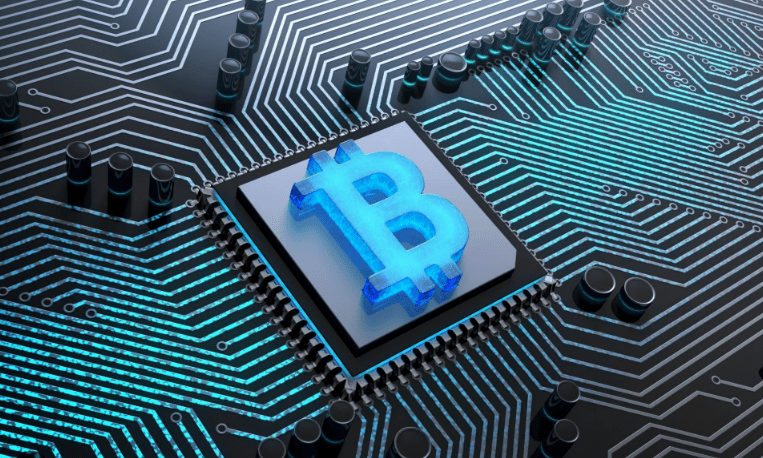
Source: Getty Images

Crypto Faces A Longer Road

For Bitcoin, the path is less clear. BIP-361 has been proposed as a way to phase in quantum-resistant wallet addresses over several years, but Bitcoin’s upgrade process is slower and more contested than Cardano’s.

Hoskinson acknowledged the difficulty but said a migration of that kind is achievable. He suggested Cardano could carry out a similar transition with relative ease given its existing upgrade structure.

Whether Bitcoin moves fast enough remains an open question — one the broader crypto industry may not be able to put off much longer.

Featured image from Unsplash, chart from TradingView

Trend Kriptolar

İlgili Sorular

QAccording to Charles Hoskinson, by what year is there more than a 50% chance that quantum computers could threaten current cryptographic systems?

ABy 2033.

QWhat is the specific Bitcoin Improvement Proposal (BIP) mentioned as a potential path for moving towards quantum-resistant wallets?

ABIP-361.

QWhat type of cryptography is Cardano focusing on for its quantum security research program?

ALattice-based cryptography.

QWhy does Hoskinson suggest Cardano could transition to quantum-resistant standards more easily than Bitcoin?

ABecause Cardano has a scheduled annual hard fork upgrade mechanism, making adoption more straightforward.

QWhat are the potential risks if quantum computers break current blockchain cryptography, as stated in the article?

ABad actors could access wallets without authorization, forge transaction signatures, or disrupt how blockchains reach consensus.

İlgili Okumalar

Analyzing the Impact of AI on Economic Growth and Productivity

**Title: Analyzing AI's Impact on Economic Growth and Productivity** This article examines three contrasting views on AI's influence on economic growth and productivity. **The Optimistic View** posits that AI, especially through automating R&D ("recursive self-improvement"), could dramatically accelerate growth, even triggering a technological "singularity" with explosive, potentially infinite, economic expansion. **The Moderate/Mainstream View** acknowledges AI's productivity benefits but emphasizes significant real-world constraints that could limit its impact. These include: limited cost savings per task, structural ceilings on which jobs and industries are "exposed" to AI, adoption bottlenecks (e.g., compute, energy, regulatory hurdles), and the "weak link" effect where non-automatable tasks cap overall gains. Consequently, the realized AI dividend may be far lower than optimistic projections, with estimates typically ranging from 0.1% to 1.3% annual productivity growth. **The Pessimistic View** stems from two strands. The first aligns with the moderate view but applies extremely conservative assumptions about task exposure and efficiency gains, yielding minimal projected impact. The second introduces a demand-side critique: if AI primarily replaces rather than augments labor, it could depress labor's share of income, weaken consumer demand, and create a "demand trap" that ultimately stifles growth, unless offset by redistribution policies. **The authors' assessment** is nuanced: * **Short-term (1-2 years):** AI will support growth primarily through investment spending, not significant productivity gains. * **Medium-term (3-5 years):** Three potential paths emerge based on AI demand and bottleneck severity: 1. **"Optimistic Path":** High demand, few bottlenecks. Rapid productivity gains but risk of major job displacement and social conflict without redistribution. 2. **"Moderate Path" (most likely):** High demand but significant, surmountable bottlenecks. Leads to moderate productivity gains, financial market volatility (K-shaped returns), and sectoral job losses. 3. **"Pessimistic Path":** Low demand or severe bottlenecks. Minimal productivity and growth impact, triggering financial market corrections but allowing a smoother societal transition with less labor disruption. * **Long-term:** AI holds potential for a major productivity revolution and prosperity. The conclusion stresses that no path is smooth. Technologically "optimistic" outcomes could be socially detrimental, while "pessimistic" technological diffusion might be more socially stable. Policymakers must monitor developments and prepare balanced responses to manage economic, financial, and social sustainability.

marsbit23 dk önce

Analyzing the Impact of AI on Economic Growth and Productivity

marsbit23 dk önce

The New Cold War is a Tech Stock War

The New Cold War is a Tech Stock War The article argues that the contemporary geopolitical and economic rivalry between the US and China represents a "New Cold War," but one fundamentally fought through technology and financial markets, not physical barriers or conventional trade. Historically, US dominance was secured through financial systems. The Soviet Union, reliant on the rigid "Transferable Ruble," was ultimately undermined by its dependency on the US dollar for oil trade. Later, Japan's semiconductor challenge was countered not just by tariffs (e.g., Plaza Accord, 301 investigations) but by binding it to US Treasury bonds. China presents a more complex, "embedded" challenger. While it holds vast dollar reserves and US debt like Japan, its industrial base is stronger and more diversified than the Soviet Union's. Surviving the initial 2018 trade war phase, the conflict has evolved into a "tech-financial war." The core battlefield is now the stock market. US tech stocks (AI, semiconductors) are treated as sovereign assets, buoyed by bipartisan national will. China is pushing to strengthen its own financial markets to convert industrial strength into financial power and fund its tech ambitions. Companies like ChangXin (semiconductors), Moonshot AI, and DJI compete not just for market share but as financial proxies for their respective systems. The new paradigm is moving from globally efficient monopolies (Apple, Google) towards companies that achieve monopolistic profits within their respective geopolitical spheres. This competition over "pricing power" and financial valuation in segmented markets defines the current era, making the stock market the primary arena for this tech-centric struggle.

marsbit32 dk önce

The New Cold War is a Tech Stock War

marsbit32 dk önce

RWA Weekly: Ten European Financial Institutions Establish Tokenized Asset Cooperative; Ondo Launches New Execution Network Ondo Network

RWA Weekly: European Banks Form Tokenized Asset Cooperative; Ondo Launches New Execution Network Ondo Network Covering July 24-31, 2026, the RWA sector saw a steady on-chain total value locked (TVL) of $36.8 billion, with holder count hitting a record high. However, stablecoin transfer volumes fell sharply (~30%), indicating low on-chain settlement demand. Key regulatory moves include South Korea advancing stablecoin legislation and a push to scrap crypto taxes, Kenya lowering capital requirements for stablecoin issuers, and Zimbabwe approving seven projects for its crypto sandbox. In project developments, BIS-led Project Agorá successfully tested cross-border payments with tokenized funds across six currencies. Ten major European financial institutions formed the RL1 blockchain cooperative to build tokenized asset infrastructure. Other notable updates: Aviva launched a tokenized dollar liquidity fund on XRPL, POSCO International tokenized commercial invoices on Injective, and a Brazilian farmer used tokenized cattle as collateral for a loan. Additional progress includes BNY Mellon migrating its core transfer agent operations to blockchain, Securitize gaining SEC investment advisor registration, and Tether’s compliant stablecoin USA₮ launching on Celo. Ondo Finance introduced Ondo Network, a new execution layer focused on speed and privacy, moving away from its initial chain plans. An analysis highlights that despite the growing scale of on-chain RWAs (~$32B), approximately 90% remain underutilized in DeFi, pointing to a critical challenge in unlocking liquidity and fostering real-world application beyond mere issuance.

marsbit33 dk önce

RWA Weekly: Ten European Financial Institutions Establish Tokenized Asset Cooperative; Ondo Launches New Execution Network Ondo Network

marsbit33 dk önce

İşlemler

Spot

Popüler Makaleler

ADA Nasıl Satın Alınır

HTX.com’a hoş geldiniz! Cardano (ADA) satın alma işlemlerini basit ve kullanışlı bir hâle getirdik. Adım adım açıkladığımız rehberimizi takip ederek kripto yolculuğunuza başlayın. 1. Adım: HTX Hesabınızı OluşturunHTX'te ücretsiz bir hesap açmak için e-posta adresinizi veya telefon numaranızı kullanın. Sorunsuzca kaydolun ve tüm özelliklerin kilidini açın. Hesabımı Aç2. Adım: Kripto Satın Al Bölümüne Gidin ve Ödeme Yönteminizi SeçinKredi/Banka Kartı: Visa veya Mastercard'ınızı kullanarak anında Cardano (ADA) satın alın.Bakiye: Sorunsuz bir şekilde işlem yapmak için HTX hesap bakiyenizdeki fonları kullanın.Üçüncü Taraflar: Kullanımı kolaylaştırmak için Google Pay ve Apple Pay gibi popüler ödeme yöntemlerini ekledik.P2P: HTX'teki diğer kullanıcılarla doğrudan işlem yapın.Borsa Dışı (OTC): Yatırımcılar için kişiye özel hizmetler ve rekabetçi döviz kurları sunuyoruz.3. Adım: Cardano (ADA) Varlıklarınızı SaklayınCardano (ADA) satın aldıktan sonra HTX hesabınızda saklayın. Alternatif olarak, blok zinciri transferi yoluyla başka bir yere gönderebilir veya diğer kripto para birimlerini takas etmek için kullanabilirsiniz.4. Adım: Cardano (ADA) Varlıklarınızla İşlem YapınHTX'in spot piyasasında Cardano (ADA) ile kolayca işlemler yapın.Hesabınıza erişin, işlem çiftinizi seçin, işlemlerinizi gerçekleştirin ve gerçek zamanlı olarak izleyin. Hem yeni başlayanlar hem de deneyimli yatırımcılar için kullanıcı dostu bir deneyim sunuyoruz.

1.5k Toplam GörüntülenmeYayınlanma 2024.12.10Güncellenme 2026.06.02

ADA Nasıl Satın Alınır

Tartışmalar

HTX Topluluğuna hoş geldiniz. Burada, en son platform gelişmeleri hakkında bilgi sahibi olabilir ve profesyonel piyasa görüşlerine erişebilirsiniz. Kullanıcıların ADA (ADA) fiyatı hakkındaki görüşleri aşağıda sunulmaktadır.

活动图片