Crypto Gains Ally As Former CFTC Chair Becomes Full-Time Adviser

bitcoinist2026-04-15 tarihinde yayınlandı2026-04-15 tarihinde güncellendi

Özet

Former CFTC Chairman Chris Giancarlo, known as "Crypto Dad," has retired from legal practice to work full-time as an adviser in the cryptocurrency and fintech sectors. He will focus on advising founders, CEOs, and boards, along with policy research and nonprofit work. Giancarlo, who served as CFTC commissioner and later chairman, played a key role in approving the first Bitcoin futures markets in the U.S. He has been a vocal advocate for clear crypto regulations rather than restrictive policies. His move follows a trend of senior regulators transitioning into the industry, similar to Caroline Pham’s shift to MoonPay last year. Giancarlo believes current regulators have sufficient authority to bring structure to crypto, though he acknowledges that regulatory uncertainty continues to hinder broader banking involvement.

Caroline Pham did it in December. Now Chris Giancarlo is following suit. The man once nicknamed “Crypto Dad” has walked away from law entirely to work full-time with cryptocurrency and financial technology companies, the latest in a string of senior regulators crossing into the industry they once helped oversee.

Giancarlo announced his departure from Willkie Farr & Gallagher on Sunday, posting on X that he was done with legal practice for good.

Going forward, he said, his time would be spent advising founders, chief executives, and company boards in the fintech and digital assets space, alongside policy research and writing, and work with nonprofit programs.

From Government Office To Industry Adviser

His credentials in this area run deep. Giancarlo was sworn in as a Commodity Futures Trading Commission commissioner in 2014 under the Obama administration. US President Donald Trump later tapped him as chairman, a role he held from August 2017 through July 2018.

During that stretch, the first Bitcoin futures markets in the US were given the green light on his watch — a milestone that helped open the door to mainstream financial participation in crypto.

The “Crypto Dad” nickname was earned honestly. Giancarlo was openly supportive of the sector at a time when most regulators kept their distance, and he pushed for clear rules rather than outright restriction.

His advisory work is not new, either. He has been guiding the crypto-focused bank Sygnum on regulatory affairs and strategic partnerships, according to reports. The full-time shift, though, marks a clean break from his legal career.

BTCUSD now trading at $74,432. Chart: TradingView

Banks And The Push For Clearer Rules

Just weeks before the announcement, Giancarlo appeared on Scott Melker’s podcast and weighed in on the state of crypto regulation in the US.

He played down concerns about major legislative packages stalling in Congress, arguing that the CFTC and the Securities and Exchange Commission retain enough authority to bring meaningful structure to the industry on their own.

At the same time, he acknowledged that regulatory ambiguity continues to hold banks back from deeper involvement in digital assets. Getting financial institutions comfortable with the space, he said, requires modern rules that match where finance is actually heading.

Pham’s move to MoonPay as chief legal officer drew attention when it happened last year. Giancarlo’s exit from law adds fresh weight to a trend that shows no sign of slowing — experienced regulators planting their flags in an industry they spent years watching from the other side.

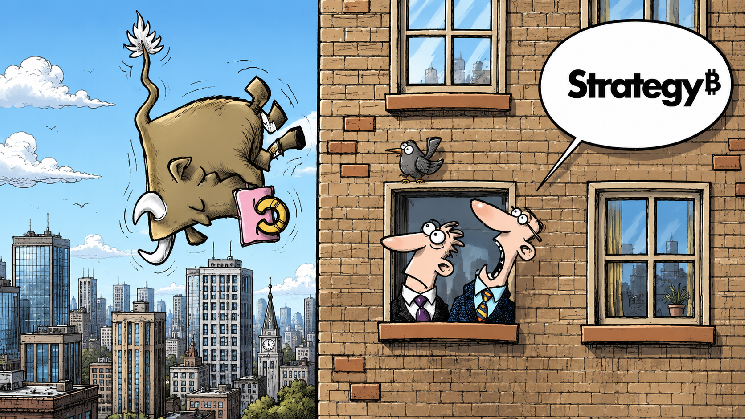
Featured image from Jsbarefoot, chart from TradingView

İlgili Sorular

QWho is the former CFTC chairman that recently left his legal career to become a full-time adviser in the crypto and fintech industry?

AChris Giancarlo, the former CFTC chairman nicknamed 'Crypto Dad', has left his legal career to work full-time as an adviser in the crypto and fintech industry.

QWhat significant milestone in the US crypto market occurred under Chris Giancarlo's watch as CFTC chairman?

AUnder Chris Giancarlo's leadership, the first Bitcoin futures markets in the US were approved, which was a major milestone for mainstream financial participation in crypto.

QWhy was Chris Giancarlo given the nickname 'Crypto Dad'?

AHe was given the nickname 'Crypto Dad' because he was openly supportive of the crypto sector at a time when most regulators kept their distance, and he advocated for clear rules instead of outright restrictions.

QWhich crypto-focused bank has Chris Giancarlo been advising on regulatory affairs and strategic partnerships?

AChris Giancarlo has been advising the crypto-focused bank Sygnum on regulatory affairs and strategic partnerships.

QAccording to Giancarlo, what is needed to get financial institutions more comfortable with involvement in digital assets?

AGiancarlo stated that getting financial institutions comfortable with digital assets requires modern rules that align with the actual direction of finance, addressing current regulatory ambiguity.

İlgili Okumalar

Arthur Hayes Analysis: AI Bubble Nears Burst, Crypto Market Faces Short-Term Pressure

Arthur Hayes argues that the current AI market is a bubble poised to burst, which will exert downward pressure on the crypto market in the near term. The core trigger is rising oil prices due to the US-Iran conflict and a blockade of the Strait of Hormuz. Higher energy costs directly increase the operational expenses of AI data centers, squeezing profit margins for companies like Google, Anthropic, and OpenAI. Hayes predicts that persistent inflation from high oil prices will force Trump, in a bid to win the November election, to turn public sentiment against the AI industry. He may propose regulations and taxes on data centers and AI companies to appeal to voters concerned about costs and job displacement. Such political rhetoric could shatter market confidence. Furthermore, the market is unlikely to healthily absorb the massive concurrent IPOs of SpaceX, Anthropic, and OpenAI, which together seek valuations in the trillions. The combination of soaring energy costs, overwhelming equity supply, and negative political pressure will puncture the AI bubble. Hayes notes that nearly all new USD liquidity since 2022 has flowed into AI, leaving crypto like Bitcoin behind. When the AI bubble bursts, liquidity will contract sharply, pulling down all risk assets, including cryptocurrencies. In response, Hayes's fund, Maelstrom, has sold all AI-related stocks and non-core cryptocurrencies. It maintains core positions in Bitcoin and Ethereum while increasing exposure to energy sector equities, betting on rising oil and gas prices. He expects Bitcoin to bottom after the AI-led market decline, before rallying again with future monetary easing.

Foresight News14 dk önce

Arthur Hayes Analysis: AI Bubble Nears Burst, Crypto Market Faces Short-Term Pressure

Foresight News14 dk önce

To C, To B, and the Next Big Thing Called To A

After To C and To B, the Next Wave is To A: Serving AI Agents In a recent quarterly earnings call, Meituan's Wang Xing introduced a new concept: To A (To Agent), signifying that future business services will increasingly target AI Agents as primary clients, not just consumers or merchants. This shift implies that internet giants must now consider how to make their services more appealing for AI Agents to recommend, fundamentally altering traditional distribution logic. This "To A era" is prompting an unusual trend of alliances among major tech companies. Unlike previous competitive battles, firms like Meituan, Tencent, JD.com, Huawei, OPPO, and OpenAI are rapidly forming partnerships. The reason is strategic: as AI Agents become the primary user interface, handling tasks from a single command (e.g., "Book a Japanese restaurant for tomorrow"), the risk for platforms is being bypassed entirely. Companies are positioning themselves within this new value chain. Three primary strategies are emerging: 1. **Super-Entry Points + Service Providers:** Platforms like Tencent's Yuanbao, WeChat, and ChatGPT aim to be the first-stop Agent, integrating various services (food delivery, shopping, travel) from partners like Meituan and JD.com. 2. **Apps as Callable Services:** Companies like Meituan, JD.com, and Uber are ensuring their core services remain accessible and callable by external Agents, shifting from front-end apps to back-end capabilities. 3. **System-Level Agent Entry Points:** Smartphone makers (Huawei, Honor, OPPO) are leveraging their OS-level AI assistants to control the initial user command, redistributing it to relevant service apps. While alliances offer mutual benefit—entry points gain service capabilities, and service providers gain traffic—inherent conflicts of interest exist. A dominant Agent platform could eventually attempt to connect directly with suppliers (restaurants, hotels), bypassing current aggregators like Meituan or Ctrip. Other unresolved challenges include the potential for Agent recommendations to become a new form of paid ranking and unclear accountability for faulty recommendations. The current rush to form alliances is a defensive move by service providers to secure their position before the landscape solidifies. In this To A-driven restructuring, the greatest risk is not losing the race but failing to hear the starting gun.

marsbit23 dk önce

To C, To B, and the Next Big Thing Called To A

marsbit23 dk önce

The More Lifelike the Robot, the More Terrifying? Unveiling the 'Uncanny Valley Effect' in the Era of Humanoid Robots

As humanoid robots become increasingly lifelike, they confront a significant psychological barrier known as the "Uncanny Valley Effect," a concept proposed by Japanese roboticist Masahiro Mori in 1970. This phenomenon describes a dip in human comfort and acceptance when robots appear almost, but not perfectly, human. Minor imperfections in facial expressions, eye movements, or skin texture trigger a subconscious sense of unease, as the brain detects something trying, yet failing, to mimic a person. Examples range from the controversial human-like robot Sophia to animated characters in films like *The Polar Express*. The effect poses a key design challenge for robotics companies. Some, like Boston Dynamics, avoid it entirely by creating highly capable but visibly mechanical robots. Others, like Hanson Robotics, push for greater human likeness despite the risk. For consumer robots, especially in homes, most manufacturers opt for stylized or clearly mechanical designs to ensure broader acceptance. While the Uncanny Valley remains a powerful force, its impact may diminish over time through technological advancements that achieve near-perfect realism or through generational familiarity as people grow accustomed to interacting with humanoid machines. Ultimately, navigating this psychological frontier requires as much understanding of human perception as of robotics technology itself.

marsbit23 dk önce

The More Lifelike the Robot, the More Terrifying? Unveiling the 'Uncanny Valley Effect' in the Era of Humanoid Robots

marsbit23 dk önce

İşlemler

Spot
Futures
活动图片