Compliance Guide for Utility Token Issuance

marsbit2025-12-17 tarihinde yayınlandı2025-12-17 tarihinde güncellendi

Özet

"Functional Token Issuance Compliance Guide" This guide outlines the legal framework for issuing utility tokens, emphasizing that regulatory risk depends not on the token's description, but on its economic reality. A token's classification as a security is determined by market behavior and investor expectations, not technical promises, as seen in cases like Telegram's TON. Projects fall into two main categories with different compliance paths: Infrastructure projects (e.g., Bitcoin, Celestia) often use fair launches for lower risk, while Application-layer projects (e.g., DeFi, GameFi) require careful legal structuring due to higher regulatory scrutiny. Key stages and actions are detailed: * **Testnet Phase:** Separate development (DevCo) and token/ecosystem (Foundation) entities. Use equity + token warrants for fundraising, not direct token sales, to avoid triggering securities laws prematurely. * **Mainnet Launch (TGE):** This is a high-risk phase. Ensure clear disclosure of token utility, allocation, lock-ups, and conduct KYC/AML. Avoid marketing that promises profit. Public airdrops and sales are closely watched. * **DAO Stage:** Achieve true decentralization by relinquishing team control to community governance (e.g., Uniswap DAO). This "verifiable exit" is crucial for reducing securities risk. The core compliance challenge is proactively demonstrating the token is *not* a security by emphasizing its functional use, avoiding profit promises, and progressively de...

Original Author: Shao Jiadian

Introduction

In recent years, "issuing tokens" has become the most sensitive term in the Web3 world. Some have become famous overnight because of it, while others have faced investigations, refunds, or account bans. The issue isn't with "issuing" itself, but with "how to issue." While some projects list on major exchanges, build communities, and establish DAOs, others are deemed illegal securities offerings. The difference lies in whether it's done within a legal framework.

In 2025, utility tokens are no longer a gray area. Regulators are scrutinizing every TGE, every SAFT, and every "airdrop" with a magnifying glass.

This article is for every Web3 project founder: On the journey from Testnet to DAO, the legal structure is the skeleton of your project. Before issuing tokens, learn to build that skeleton.

Note: This article is based on an international legal perspective and does not target or apply to the legal environment of mainland China.

Token "Identity" Isn't Determined by Your Whitepaper

Many teams claim, "Our token is just a utility token with no profit distribution, so it should be fine, right?"

But reality is different. In the eyes of regulators, a token's "identity" depends on market behavior, not how you describe it.

A classic case is Telegram's TON project.
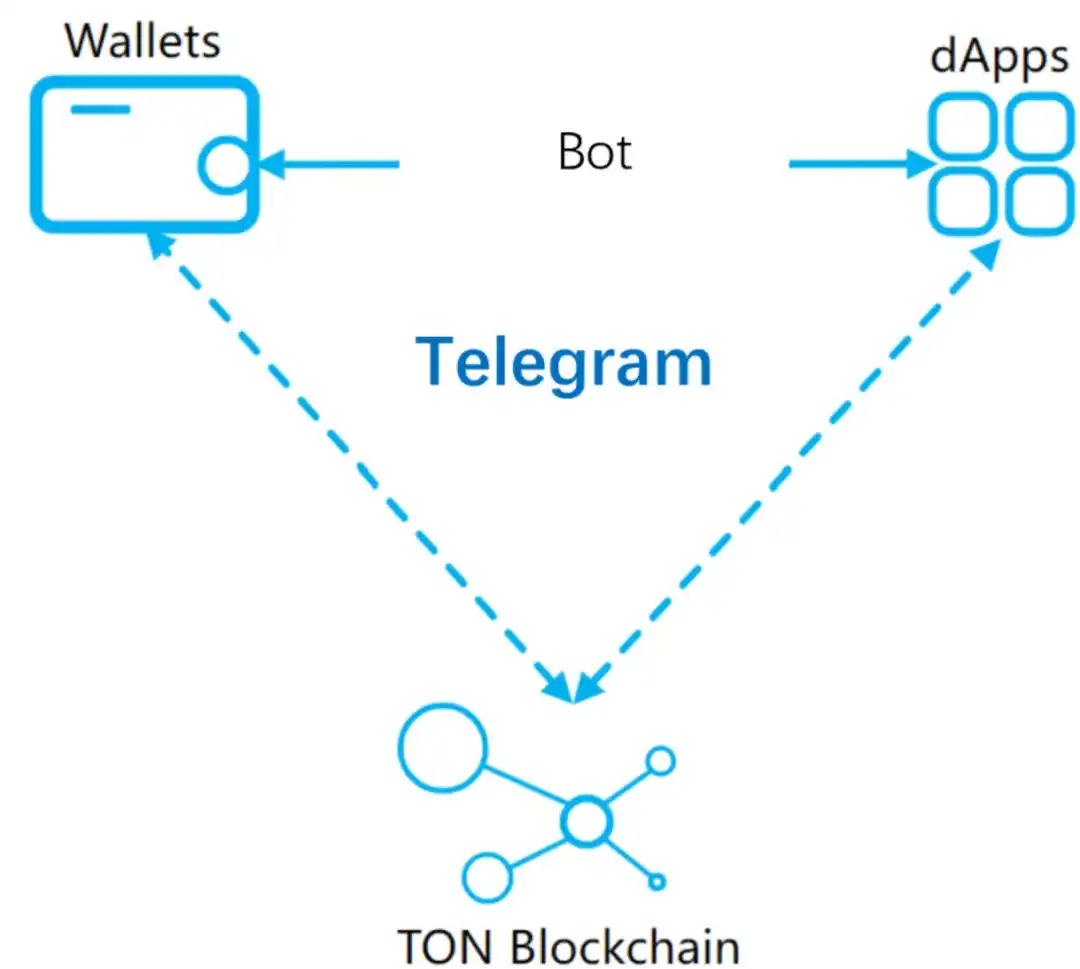
Telegram raised $1.7 billion from private investors, claiming the tokens were merely "fuel" for a future communication network;

However, the U.S. SEC deemed this financing an unregistered securities offering—because investors' intent was clearly "future appreciation," not "immediate use."

The result: Telegram refunded investors and paid fines, and the TON network was forced to operate independently from Telegram.

Lesson: Regulators focus on "investment expectations," not "technical vision." As long as you use investors' money to build an ecosystem, it carries securities attributes.

So, don't幻想 use the "utility" label to eliminate risks. Token nature evolves dynamically—early stages may constitute investment contracts, and only after mainnet launch can they become genuine usage credentials.

First, Identify Your Project Type

What determines your compliance path is not the token's name or total supply, but the project type.

  • Infrastructure (Infra):

Such as Layer1, Layer2, public chains, ZK, storage protocols.

Typically adopt "Fair Launch," with no pre-mining or SAFTs; tokens are generated by node consensus.

Examples include Bitcoin, Celestia, EigenLayer.

Advantages: Naturally decentralized, low regulatory risk; Disadvantages: Difficult to fundraise, long development cycles.

  • Application Layer Projects (App Layer):

Such as DeFi, GameFi, SocialFi.

The team pre-mints tokens (TGE) and manages the ecosystem treasury. Typical examples include Uniswap, Axie Infinity, Friend.tech.

Clear business models but high compliance risks: Sales, airdrops, and circulation all require regulatory disclosure and KYC handling.

Conclusion: Infrastructure survives on consensus; application projects rely on structure for survival. Without proper structure, all "Tokenomics" are empty talk.

Testnet Phase: Don't Rush to Issue Tokens; Build the "Legal Skeleton" First

Many teams start seeking investors, signing SAFTs, and pre-mining tokens during the Testnet phase.

But the most common mistake at this stage is:

Taking investors' money while still claiming "this is just a utility token."

The U.S. Filecoin is a cautionary tale. It raised about $200 million via SAFT before mainnet launch. Although it received an SEC exemption, delays in launch and temporary unusability led investors to question its "securities attributes," resulting in massive compliance costs to rectify.

The correct approach:

  • Separate two entities:
  • DevCo (Development Company) handles technical development and intellectual property;
  • Foundation / TokenCo manages ecosystem building and future governance.
  • Fundraising method: Use equity + Token Warrant structures instead of direct token sales.

Investors obtain rights to future tokens, not immediate token assets.

This method was first adopted by projects like Solana and Avalanche, allowing early investors to participate in ecosystem building without directly triggering securities sales.

Principle: The legal structure in the early stages is like the genesis block. One logical error, and compliance costs may multiply tenfold.

Mainnet Issuance (TGE): The Moment Most Likely to Attract Regulatory Attention

Once tokens can be traded and have a price, they enter regulatory radar—especially during public distributions like airdrops, LBPs (Liquidity Bootstrapping Pools), or Launchpad events.

  • Public Chain Projects:

Such as Celestia, Aptos, Sui, etc., typically generate tokens automatically via validator networks at TGE.

The team doesn't directly participate in sales; the distribution is decentralized, posing the lowest regulatory risk.

  • Application Layer Projects:

Such as Arbitrum and Optimism airdrops, or Blur and Friend.tech community distributions,

have drawn attention from regulators in some jurisdictions regarding whether "distribution and voting incentives constitute securities sales."

The safety line at TGE lies in disclosure and usability:

1. Clearly define token use cases and functionality;

2. Disclose token allocation ratios, lock-up periods, and vesting mechanisms;

3. Implement KYC/AML for investors and users;

4. Avoid "expected returns" promotions.

For example, during TGE, Arbitrum Foundation explicitly stated: its airdrop was solely for governance purposes, not representing investment or profit rights; and it gradually reduced foundation control in community governance—key to "de-securitizing" the token.
DAO Phase: Learn to "Let Go" and Truly Decentralize the Project

Many projects end after "issuing tokens," but the real challenge is—how to relinquish control and let tokens become public goods.

Take Uniswap DAO as an example:

  • Early development and governance were led by Uniswap Labs;
  • Later, Uniswap Foundation managed the treasury and funded ecosystem projects;
  • The community votes with UNI to decide protocol upgrades and parameter adjustments.

This structure makes it harder for regulators to identify a "centralized issuer" and boosts community trust.

In contrast, projects that fail to handle the DAO transition well, such as some GameFi or NFT ecosystems, where teams still control most tokens and voting rights, are seen as "pseudo-decentralized" and retain securities risks.

Decentralization isn't about "neglect," but "verifiable exit." A safe DAO architecture balances code, foundation, and community.

What Regulators Look For: Can You Prove "This Is Not a Security"?

Regulators aren't afraid of token issuance; they're concerned when you say "it's not a security" but act like it is.

In 2023, the SEC's lawsuits against Coinbase, Kraken, and Binance.US listed dozens of "utility tokens," asserting that during sales and marketing, they exhibited "investment contract" characteristics. This means that if a project promotes "expected returns" during token sales, even if the token has utility, it may be deemed a security.

Thus, compliance key is dynamic response:

  • Testnet → Focus on technology and development compliance;
  • TGE → Emphasize use cases and functional attributes;
  • DAO → Reduce team control, strengthen governance mechanisms.

Risks vary at each stage; every upgrade requires re-evaluating token positioning. Compliance isn't a stamp but continuous iteration.

Conclusion: Projects That Endure Cycles Rely on "Stability," Not "Speed"

Many projects fail not due to poor technology but flawed structure. While others talk about "gains," "airdrops," and "exchange listings," truly smart founders are already building legal frameworks, writing compliance logic, and planning DAO transitions.

Utility token issuance isn't about bypassing regulation but using law to prove you don't need it. When code takes over rules, law becomes your firewall.

İlgili Sorular

QWhat is the legal identity of a utility token determined by, according to the article?

AThe legal identity of a utility token is determined by market behavior and investment expectations, not by how the project describes it in its whitepaper. Regulators focus on whether the token sale constitutes an investment contract, based on the expectation of profit, rather than its technical vision or intended use.

QWhat are the two main types of projects mentioned, and how do their compliance paths differ?

AThe two main types are Infrastructure projects (e.g., Layer1, Layer2, public chains) and Application Layer projects (e.g., DeFi, GameFi). Infrastructure projects often use a 'Fair Launch' with no pre-mining or SAFTs, leading to lower regulatory risk but greater difficulty in fundraising. Application Layer projects typically pre-mint tokens, have clearer business models, but face higher compliance risks requiring careful handling of sales, airdrops, and regulatory disclosures.

QWhat is the recommended legal structure during the Testnet phase to avoid regulatory issues?

AThe recommended structure is to separate the project into two entities: a DevCo for technical development and IP, and a Foundation/TokenCo for ecosystem building and future governance. Funding should be raised using 'equity + Token Warrant' structures instead of direct token sales, granting investors rights to future tokens rather than immediate assets to avoid triggering securities regulations prematurely.

QWhat are key steps to enhance compliance during a Token Generation Event (TGE)?

AKey steps during TGE include: 1) Clearly defining the token's use cases and functionality, 2) Disclosing token allocation, lock-up periods, and release mechanisms, 3) Implementing KYC/AML procedures for investors and users, and 4) Avoiding promotional language that suggests an expectation of profit or investment return.

QHow does the article define the transition to a DAO for achieving true decentralization and reducing regulatory risk?

AThe transition to a DAO involves the project team gradually relinquishing control to the community. This is achieved by establishing a verifiable exit strategy where code, a foundation, and the community form a balanced governance structure. This reduces the perception of a centralised issuer and demonstrates that the token is a public good rather than a security, as seen in successful models like Uniswap DAO.

İlgili Okumalar

Anthropic Cries Wolf: Is the AGI Threat Real, or Just an IPO Story?

Anthropic has published an article titled "When AI builds itself," discussing the emerging concept of "recursive self-improvement," where AI begins to actively participate in designing, training, testing, and optimizing its own subsequent versions. The company presents internal data showing that by May 2026, over 80% of code merged into its codebase was written by Claude, its AI model. Claude's capabilities have expanded to handling complex, open-ended engineering tasks, achieving a 76% success rate in such areas, and even contributing to research processes, such as optimizing code performance and conducting AI safety experiments. Anthropic outlines an evolution from human-driven development to AI-assisted workflows, culminating in the current stage where AI agents can autonomously write, run, and delegate code. The company cautions that the path toward a "closed loop," where AI continuously improves itself, is becoming visible. It calls for coordinated global mechanisms to potentially slow or pause frontier AI development to allow safety research and societal structures to catch up. However, the timing of this warning coincides with Anthropic's preparations for an IPO, framing the narrative not just as a safety concern but also as a demonstration of Claude's advanced capabilities and its integral role in accelerating Anthropic's own R&D—creating a potential "flywheel" effect for competitive advantage. This contrasts with OpenAI's recent, more policy-oriented discussion of the same risks, highlighting the competitive dynamics in the AI industry as companies position themselves in both the technological and regulatory landscape.

marsbit45 dk önce

Anthropic Cries Wolf: Is the AGI Threat Real, or Just an IPO Story?

marsbit45 dk önce

BIT Research: ETF Purchases Have Slowed, Strategy (MicroStrategy) Has Slowed, What Else Can Drive Bitcoin's Rise?

Market Refocus on Inflation and Rate Expectations Weighs on Bitcoin Currently, the market is in a phase of macro-repricing dominated by inflation and interest rate expectations. Bitcoin, which previously benefited from easy liquidity and low inflation, is seeing its core bullish drivers weaken. These drivers were market expectations for interest rate cuts and strong inflows from Bitcoin ETFs and institutions like MicroStrategy (referred to as "Strategy" in the text). The logic has shifted. Recent high inflation data (e.g., CPI hitting 3.8% in a May 2026 report) has caused the market to sharply reduce its rate cut expectations for 2025 and even price in potential hikes. This is a key constraint for Bitcoin, as it lacks cash flows and is highly sensitive to rate expectations. Concurrently, institutional capital flows have slowed significantly. Following the hot CPI data, Bitcoin ETFs saw accelerated outflows, with around $4.3 billion leaving over a period. MicroStrategy's ability to keep adding substantial Bitcoin to its balance sheet is also diminishing. Together, ETF and MicroStrategy holdings total roughly $110 billion, but their momentum as growth engines is cooling. In summary, Bitcoin's current pressure stems not from its own fundamentals but from a changing macro environment. As long as inflation stays elevated, Bitcoin is likely to remain in a consolidating phase. However, historically, inflation eventually peaks. Once it recedes and rate cut expectations rebuild, institutional capital could return, potentially fueling a new and more robust recovery phase for Bitcoin.

marsbit52 dk önce

BIT Research: ETF Purchases Have Slowed, Strategy (MicroStrategy) Has Slowed, What Else Can Drive Bitcoin's Rise?

marsbit52 dk önce

Earning 1000 Trillion in Half a Year, 'Pocketing' 20 Million per Capita: This Round of Wealth Creation in the Korean Stock Market is Unprecedented in Scale

The South Korean stock market is experiencing an unprecedented wealth surge in 2026, with household equity and fund asset values soaring by over 1,000 trillion KRW (~$730bn) year-to-date. This translates to an average per capita wealth increase of roughly 20 million KRW, fueled by a historic 109% rally in the KOSPI index. The boom is driven by three converging forces: an AI-driven semiconductor supercycle boosting giants like Samsung and SK Hynix; the government's "Value-Up" market reforms addressing long-standing corporate governance issues; and aggressive real estate regulations that have locked capital within financial markets, preventing profits from flowing back into property. This has triggered a wealth effect, boosting high-end consumption significantly. However, the gains are highly concentrated. The two semiconductor behemoths account for over half the index's value, but retail investors own relatively low stakes in them, systematically missing the biggest rallies. Wealth and consumption benefits are skewed towards luxury goods and imported cars, bypassing mainstream retail. Further risks stem from excessive leverage, with high trading volume in leveraged ETFs, and a market sentiment heavily reliant on the AI sector's fortunes and speculative rumors. While this cycle marks a potential shift from real estate to equities as a primary wealth generator for Koreans, its sustainability, amid structural imbalances and leverage, remains a critical test.

marsbit58 dk önce

Earning 1000 Trillion in Half a Year, 'Pocketing' 20 Million per Capita: This Round of Wealth Creation in the Korean Stock Market is Unprecedented in Scale

marsbit58 dk önce

Behind ZEC's Over 30% Plunge: An 'Unlimited Minting' Vulnerability with No Way to Prove if It Was Ever Exploited

A critical vulnerability was discovered in Zcash's Orchard privacy pool, allowing for the theoretical creation of undetectable counterfeit ZEC. Researcher Taylor Hornby found the flaw on May 29th, 2024, within the Orchard circuit's cryptographic constraints, which could let an attacker bypass asset conservation rules. Although a rapid emergency fix was deployed within days via a coordinated soft and hard fork, a core uncertainty remains: due to Orchard's privacy features, it is impossible to cryptographically prove whether this "unlimited mint" flaw was exploited in the nearly four years since the pool's 2022 launch. This uncertainty, rather than the patched flaw itself, triggered a market panic, causing ZEC's price to drop over 30%. While the Zcash Foundation stated no evidence of exploitation was found, independent entity Shielded Labs emphasized the impossibility of definitively proving no counterfeit ZEC was ever created. The incident highlights the unique trust challenge in privacy systems. To address this, developers are proposing a new network upgrade with enhanced auditing to allow verifiable proof of supply integrity. Notably, the researcher utilized the newly released AI model Claude Opus 4.8 as a tool during the security review, signaling the growing role of advanced AI in uncovering complex cryptographic vulnerabilities.

marsbit1 saat önce

Behind ZEC's Over 30% Plunge: An 'Unlimited Minting' Vulnerability with No Way to Prove if It Was Ever Exploited

marsbit1 saat önce

İşlemler

Spot
Futures
活动图片